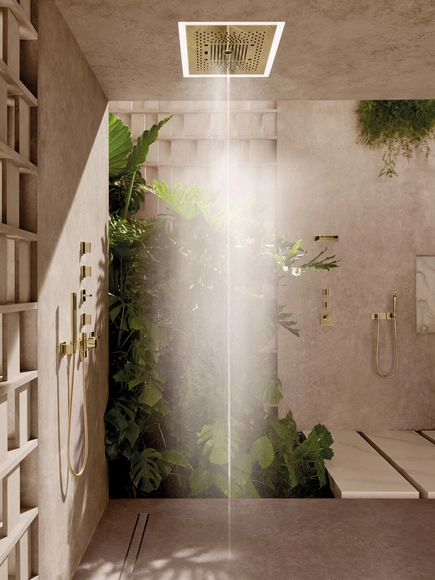
Water is fundamental to human life on several levels, and encompasses a spectrum of meanings that transcend the biological sphere, reaching the cultural and spiritual spheres. Biologically, it is indispensable, making up approximately 70% of our bodies and playing a central role in our physiological functions, from temperature regulation to vital cellular processes. Culturally and spiritually, water has deep significance, symbolizing purification, renewal and spiritual rebirth in a multitude of rituals and ceremonies performed in different cultures over the centuries.
In architecture, the presence of water is equally important, going beyond its basic cleansing function to encompass a rich diversity of meanings and influences. From the majestic Roman baths, where water was used for hygiene and also represented social status, offering moments of entertainment and relaxation; to contemporary bathrooms, where water is skillfully integrated to create luxurious and invigorating spa experiences. Its presence goes beyond the functional aspect and is also deeply symbolic. Evoking feelings of purification, renewal and serenity, water enriches architecture with an emotional and aesthetic dimension that transcends the boundaries of time and culture.
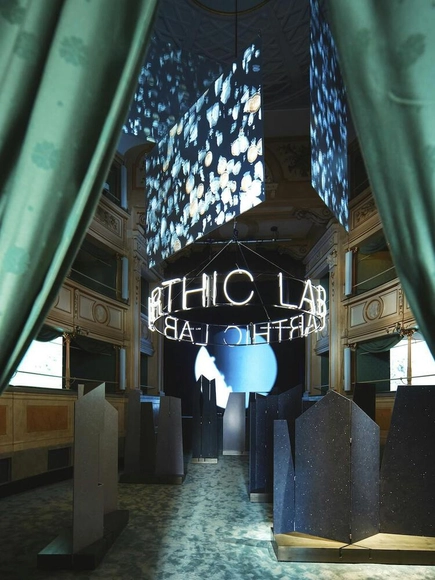
Milan Design Week is a celebration of creativity, innovation and excellence in design, captivating audiences from all over the world. It is an event that encompasses various design-related exhibitions and activities in Milan, while Salone del Mobile is Milan Design Week's main trade fair focused specifically on furniture and interior design. Every year, the city is transformed into a vibrant hub where designers, architects, artists and enthusiasts converge to explore the latest trends, ideas and innovations in the world of design. The instance is a catalyst for inspiration, promoting dialogue, collaboration and discovery across a range of design disciplines, from furniture and interior design to architecture, fashion and more.
In the Brazilian architectural scene, Felipe Savassi stands out for being a unique mix of designer and communicator. He shares his passion for architecture and his entrepreneurial vision with his thousands of students and followers on social media, with content that seeks to promote an approach centered on the promotion of industrialized and modular construction. With a degree in Architecture and Urbanism from the Isabela Hendrix Institute in Belo Horizonte, his professional activity is supported by four essential pillars: design and execution of architectural projects, education, mentoring and consulting, and a strong commitment to communication and content dissemination.
Courtesy of Feldman Architecture and Western Window Systems
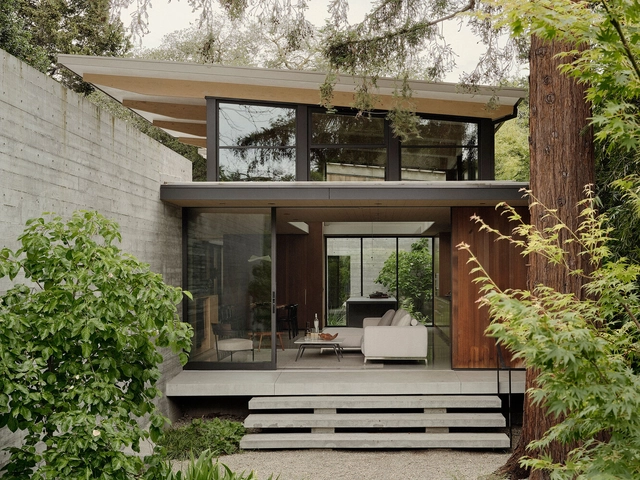
When it came to designing a nature-embracing modern home in Palo Alto, California, USA, architect Tai Ikegami took his responsibility to protect and venerate the magnificent trees on the lot seriously.
When Wallace S. Broecker first introduced the concept of global warming in the 1970s, society probably didn't anticipate the implications of this phenomenon. Today, more than 50 years later, we have stopped predicting an adverse climate scenario and have begun witnessing it directly. It is now evident that the earth is breaking temperature records year after year, as a result of a disparity in the global response to the issue and a slow-moving reduction in carbon emissions.
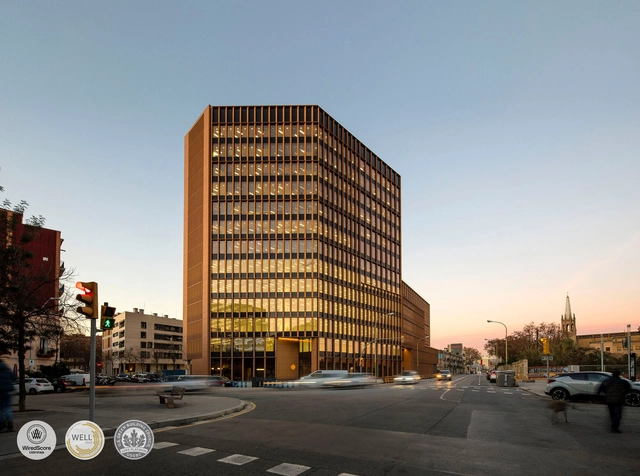
https://www.archdaily.com/1016044/the-curtain-a-key-element-in-the-certification-of-sustainable-buildingsEnrique Tovar
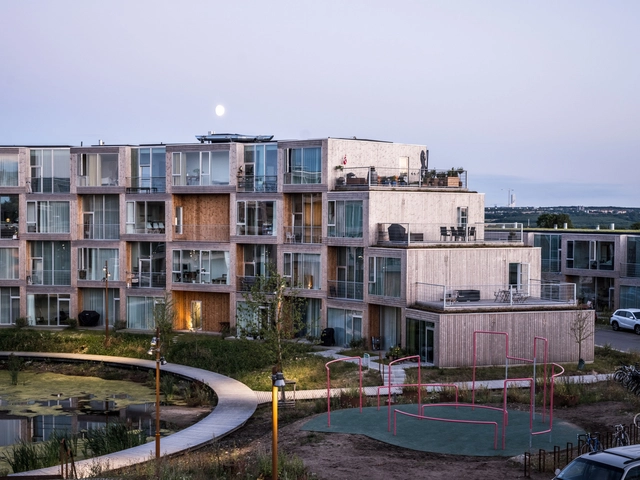
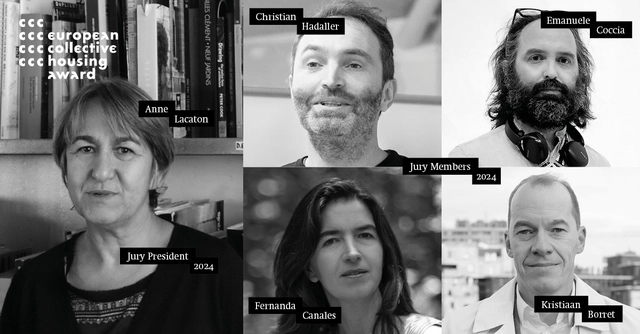
Architectural awards serve as a fundamental platform within the profession and the wider community. They recognize and celebrate outstanding achievements in architectural projects, promoting excellence and innovation, while also providing visibility and exposure for architects and companies, highlighting projects that might otherwise go unnoticed. This impact is particularly evident in collective housing projects, which face a range of challenges, from issues of cost and compliance with urban planning legislation to the need to create welcoming and functional environments for residents. By highlighting diverse initiatives and approaches, awards inspire and educate, stimulate dialogue and the exchange of ideas, and contribute significantly to the advancement of architecture by recognizing projects that address specific themes such as sustainability or social impact.
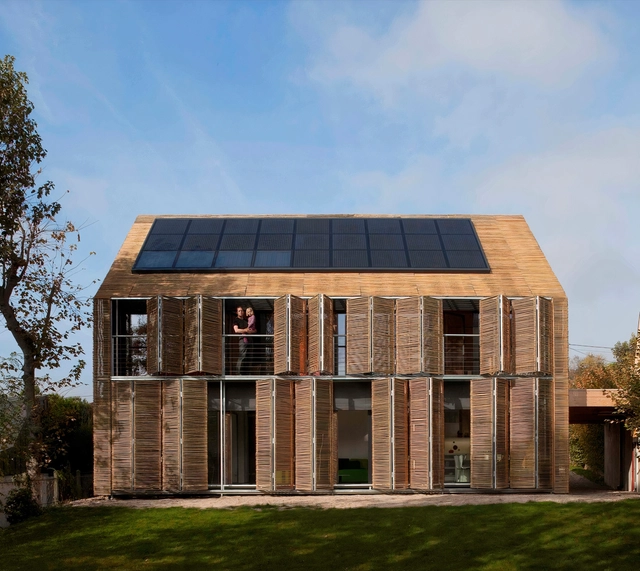
It seems like everyone is going solar these days. In the United States, the net solar power generation has increased by more than 113,000 million kilowatt hours in the last decade. Solar integration with residential projects saves homeowners money on energy bills and increases property value over time. As solar integration technology advances, the advantages span beyond financial and environmental; solar panels are assuming an aesthetic role in modern architecture, too.
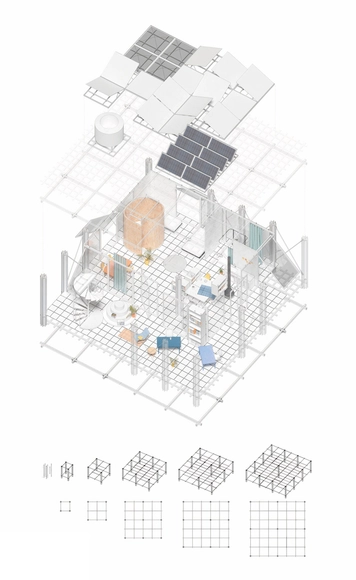
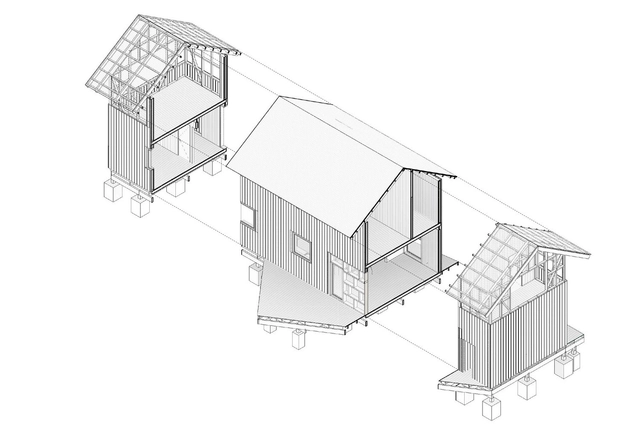
Housing is a diverse architectural typology whose configuration is determined not only by those who design it but also by the use of those who live in it. Therefore, homes are fundamentally adaptable structures that evolve in line with their time and users, undergoing constant changes manifested in the ways of living. The house conceived today will not be the same as the one built tomorrow, so it becomes necessary to maintain a critical and profound approach to the role it plays in the built environment.
https://www.archdaily.com/1015545/how-can-modular-design-be-used-to-revolutionize-housing-architectureEnrique Tovar
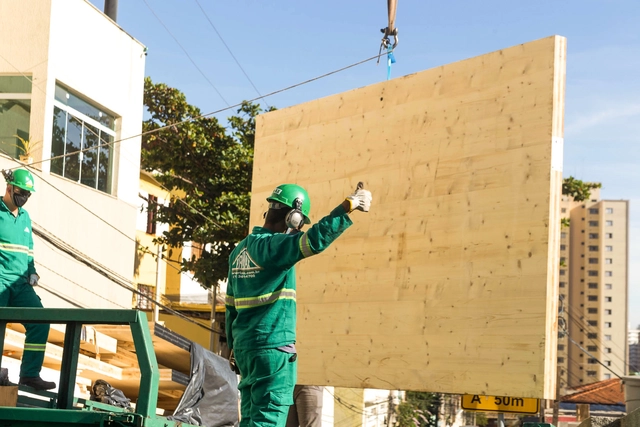
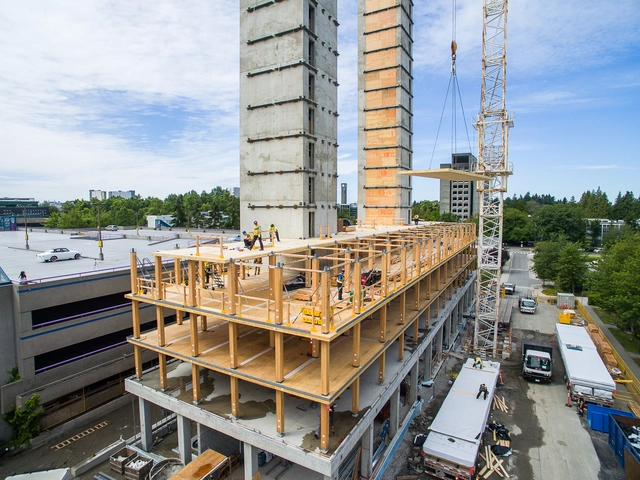
Obra realizada com Mass Timber Urbem. Image Cortesia de Urbem
At a time when sustainability and ESG (environmental, social, and governance) concerns are prevalent, there is a crucial need to focus on a sector that accounts for 38% of all global CO₂ emissions and consumes 30% of global resources: the construction industry. In 2022, at COP27, the United Nations announced the Clean Construction Accelerator, a program with actions designed to reduce greenhouse gas production by up to 50% by 2030. A report by ARUP and the World Business Council for Sustainable Development suggests that half of building emissions come from embodied carbon, which is generated in the manufacturing and transportation of materials, not just in construction sites and buildings themselves. It is precisely in this scenario that we see an opportunity for the sector. What is the only renewable material in construction that retains carbon instead of emitting it? Wood.
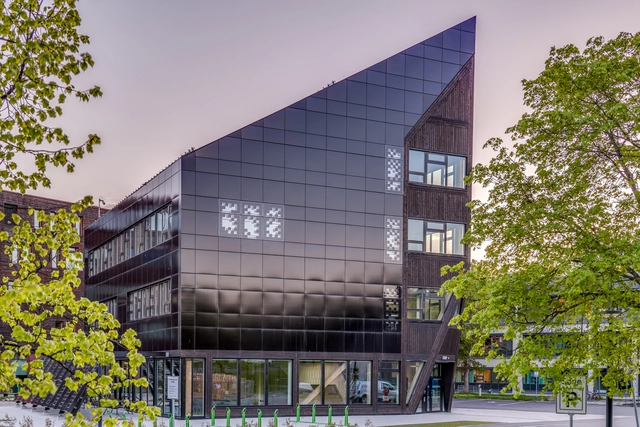
ZEB Living Lab is a research building that stands out for its pioneering initiative among zero-emission buildings, seeking to have a significant impact on the future. Located in Trondheim, Norway, it is much more than just a building; it is a tangible manifestation of the global commitment to sustainability and innovation. Conceived as an advanced research laboratory and a practical example of sustainable construction practices, it represents the point of convergence between architecture, technology and environmental awareness. Managed in collaboration between NTNU (Norwegian University of Science and Technology) and SINTEF (Scandinavian Institute of Technology), this center of scientific excellence is a platform for living experimentation, where innovative materials and solutions are developed, tested and demonstrated in direct interaction with the building occupants.
Among the "Five Points of New Architecture" formulated by Le Corbusier, terrace gardens figure as a way to take advantage of a building's so-called fifth facade, either as leisure areas or landscaping spaces. Thanks to technological advances in reinforced concrete in the mid-twentieth century, usable flat roofs are far from new. There are traces in Mesopotamia and vernacular architecture from Greek and Arab civilizations. However, problems that frequently arise relate to infiltration and leaks. Water is relentless in finding a place to drain, and flat roofs are exposed to this when execution and design are not carefully thought-out. In fact, as documented in several letters, this was a source of disagreement between the owner and the Swiss-French architect in the case of the influential Villa Savoye. Today, nonetheless, there are good waterproofing options on the market that provide durability, resilience, adaptability and, above all, avoid headaches and fights between builders and owners. Elevate is built on 40 years of history in the production of roofing membranes, as well as insulation and vapor barriers, and develops solutions for waterproofing flat roofs with a low inclination.
El Tume House / abarca+palma. Courtesy of abarca+palma
The current demands of the industry lead architects to design based on construction solutions that accelerate processes without compromising quality, while reducing waste and dependence on intensive labor. Among these options, SIP panels stand out as a modular alternative that combines thermal and acoustic insulation with speed and construction precision.
Named after their acronym, SIP panels are self-supporting elements consisting of a rigid foam core sandwiched between two structural claddings, typically OSB boards. Strong yet lightweight, these panels are manufactured under strict factory controls and transported to the construction site, facilitating the rapid assembly of floors, walls, and ceilings, while creating an airtight thermal and acoustic envelope. The thickness of the panel depends on the combined thickness of its components, and its weight typically does not exceed 20 kg per square meter.
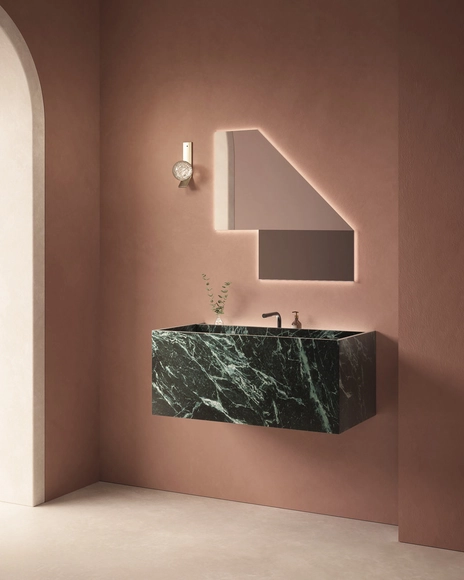
MyStreet washbasin in Verde Alpi marble _Design AL Studio. Image Cortesia de antoniolupi
Marble held profound significance in Greek and Roman architecture due to its abundance, luminous surfaces, and subtle veining. Its durability ensured structures' longevity, while its cultural symbolism of purity and divine favor made it ideal for temples, theaters, and amphitheaters. As a symbol of perfection, marble facilitated intricate craftsmanship for decorative elements, inspiring architectural marvels and exquisite art, leaving a legacy of sophistication and refinement.
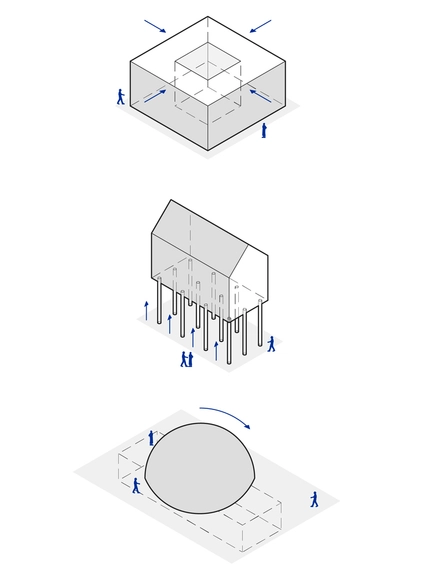
Introspection, Elevation, Covering-Up. Image Courtesy of Enrique Tovar
The flexibility of architecture allows it to continuously change and adjust its form in response to technological progress, social and artistic trends, and the collective experiences we undergo. Large-scale global events, such as the transatlantic migrations of the 19th century, the impact of tuberculosis on design, and most recently, the effects of the last major global health crisis (COVID-19), have all played significant roles in shaping the evolution of architecture.
https://www.archdaily.com/1015368/introspection-elevation-covering-up-radical-architectural-operations-for-adverse-climatesEnrique Tovar
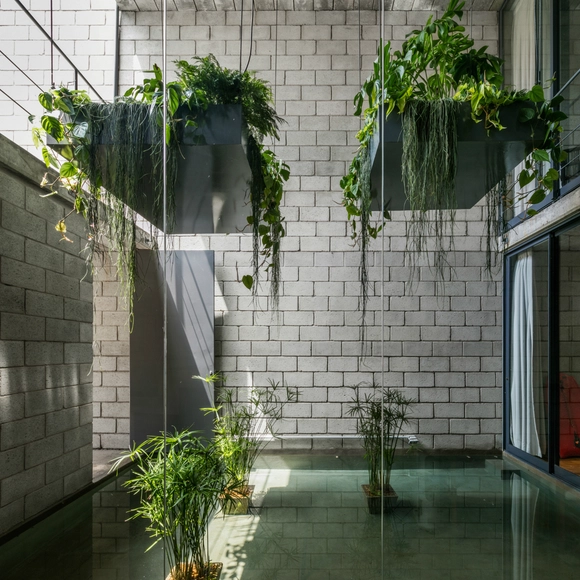
Concrete blocks are prefabricated materials primarily used for constructing walls. Similar to bricks, these blocks are stacked together and bonded with mortar, typically composed of cement, sand, and water. They are hollow inside to accommodate steel bars and mortar filling.
For some, it may be terrifying to think that we inhabit a sphere orbiting the Sun, whose core has temperatures of up to 6,000°C and all human activities are located on the Earth's crust, the smallest layer in thickness, in the so-called tectonic plates. These plates float on the mantle, more precisely in the asthenosphere, and sometimes collide, causing earthquakes. As we can see in this interactive map, earthquakes are much more frequent than we imagine, with dozens occurring daily around the world, many of them unnoticed. But some are extremely potent, and when they occur near urban areas, they are one of the most destructive forces on Earth, causing death and damage to the built environment.
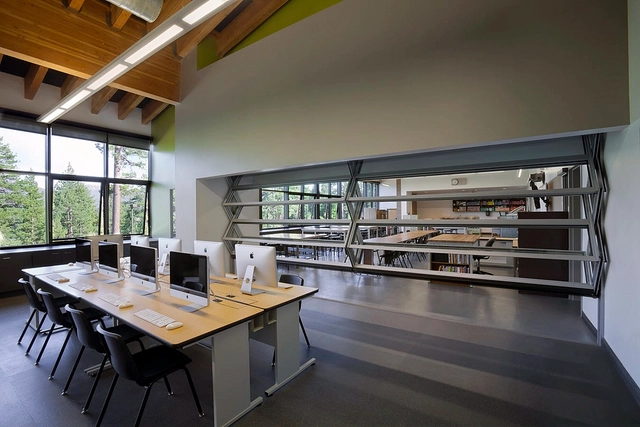
Flexibility has become a distinctive feature of contemporary interiors, driven by factors like the evolution of architectural programs and the progressive reduction of interior spaces, among others. This transition has shifted interiors from static to dynamic, aiming to achieve a state-of-the-art balance in space configuration. This sentiment is well encapsulated by Ricardo Bofill's statement that "architecture is the art of structuring space."
https://www.archdaily.com/1014623/movable-walls-the-transformative-effect-of-retractable-and-folding-partitionsEnrique Tovar
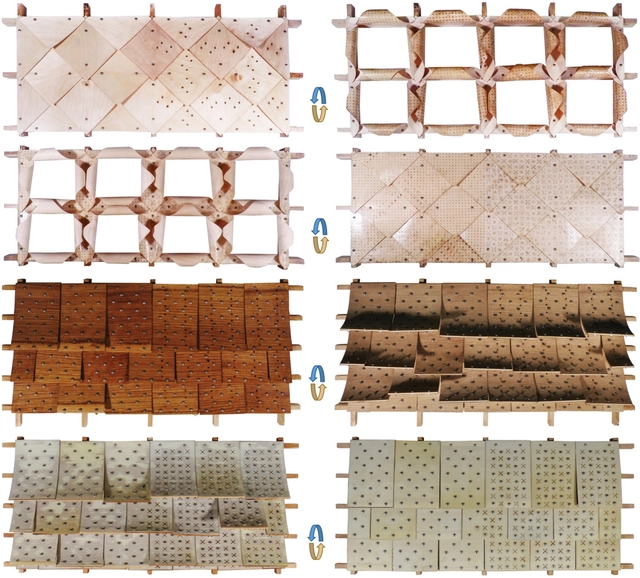
When discussing sustainability in construction, we are used to an approach based on complex technological solutions, expensive sensors, costly materials and, most recently, artificial intelligence. But what if everything we are looking for (in terms of sustainability) could come from the materials themselves, taking advantage of their intrinsic properties, without even relying on electricity? The use of hygromorphic materials offers an innovative perspective and sheds light on little-explored possibilities in the field. These materials can adapt to variations in environmental humidity, changing their shape, size or other physical properties. Examples in nature include wood, hygroscopic proteins such as collagen, polysaccharides such as cellulose and chitin, hygroscopic minerals such as certain salts and silica gel, as well as spores and pollen grains; all of which exhibit the ability to absorb or release moisture in response to changes in humidity. In architecture, researchers have been striving to develop materials, particularly for façades, that can take on a life of their own and make buildings more comfortable naturally.