Last week I asked how architecture can ramp up its efforts to do all it can to help limit climate change. Sandy is a turning point. It will take action on the part of the profession and its members to make this turning point meaningful. Turning points are easily forgotten after the panels have been convened and the articles written. The vicarious thrill of crisis abates and everyone returns to business as usual, feeling better for having contributed to the discussion. If we listen to the scientists, we must not lose that sense of crisis and we must do more.
TomDavid Architects shared with us their first prize winning proposal for the Sustainable Market Square competition in Casablanca. In their proposal, they successfully combine indigenous techniques for shelter and heat control, the accountability of it’s residence, and innovative low-maintenance materials. In doing so, they create an efficient and pragmatic icon for the next generation market which serves as a catalyst for improvement. More images and architects’ description after the break.
At the gardens of the Arsenale designed by Piet Oudolf, a small pavilion, the Casa Scaffali, encloses a fantastic world of smells, textures and artifacts, a Wunderkammer (wonder-room) curated by NY-based Tod Williams Billie Tsien Architects.
A special group of architects and artists from around the world were invited to share the artifacts that inspire them, shipped in boxes to the Biennale.
We had the chance to interview Tod Williams and Billie Tsien during the opening of Wunderkammer, and we also got a chance to see them both and their team setting up the installation during the previous days, a special atmosphere as they were opening these boxes now turned into chests full of surprises.
The group includes Anthony Ames, Marwan Al Sayed, Matthew Baird, Shigeru Ban, Marlon Blackwell, Will Bruder, Wendell Burnette, Johan Celsing, Taryn Christoff and Martin Finio, Annie Chu and Rick Gooding, W.G. Clark, Brad Cloepfil, Chen Chen and Kai Williams, Elizabeth Diller, Ricardo Scofidio and Charles Renfro, Peter Eisenman, Steven Holl, Stephen Iino, Toyo Ito, Bijoy Jain, Claudy Jongstra, Diébédo Francis Kéré, Jennifer Luce, Thom Mayne, Richard Meier, Murray Moss, Glenn Murcutt and Wendy Lewin, Enrique Norten, Sheila O’Donnell and John Tuomey, Juhani Pallasmaa, Mack Scogin and Merrill Elam, Brigitte Shim and Howard Sutcliffe, Karen Stein, Elias Torres and José Antonio Martínez Lapeña, Ursula Von Rydingsvard, and Peter Zumthor.
Who will run the world for the next 100 years? Envision Solar President and CEO Desmond Wheatley argues that it will be whoever has abundant sources of power. That is constructive power, rather than destructive power, which is essential to run the information and technology industries that our world is entirely dependent on. Additionally, Wheatley states that energy equals water. And, with less than 1% of the world’s fresh water available for use, desalination is becoming an increasingly plausible solution. The only problem now is that energy is expensive. But, once cities have the will to switch over to renewables, that will no longer be an issue. Could you imagine San Diego as an net exporter of water? Desmond Wheatley can.
In the wake of Hurricane Sandy, as communities band together to clean up the devastation and utility companies work tirelessly to restore the infrastructure that keeps New York City running, planners and policy makers are debating the next steps to making the city as resilient to natural disaster as we once thought it was. We have at our hands a range of options to debate and design and the political leverage to make some of these solutions a reality. The question now is, which option or combination of options is most suitable for protecting New York City and its boroughs? Follow us after the break for more.
Designed by the Tongji University Team, the “Para Eco House” combines both parametric and ecological strategies into the logic of the architectural language used in the house design. By using both “passive” and “active” energy systems, they go beyond the functional and environmental requirement to create a paradigm for a low carbon future. The concept of creating a multi-layer skin emerges from a combination of Dao theory in eastern philosophy and the theories of Michel Foucault in western thought, especially the ideas of autonomy in architecture. More images and the team’s description after the break.
It’s rare to find someone willing to pay for opinions these days, and rarer still to be known for them. Yet, Paul Goldberger has crafted a career by objectively navigating the subjective. As an arbiter of quality in architecture and design for nearly four decades, he spends a few moments with me to reminisce about the “short break” he took from journalism that led to, among many accolades, the Pulitzer Prize in 1984 and, more recently, the Scully Prize.
Andrew Caruso: You’re being recognized this year by the National Building Museum with the Vincent Scully prize. Given your relationship with Scully began when you were a student at Yale, this must be a very meaningful award.
Paul Goldberger: Scully was very much a teacher and mentor to me. Actually my first exposure to him was a high school visit to Yale. I observed one of his classes and was blown away. He was one of the reasons I wanted to go to Yale in the first place and I was lucky to work with him through college and as my thesis adviser.
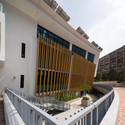
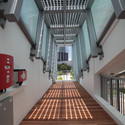
The Friends Center at Angkor Hospital for Children was designed by COOKFOX Architects as an accessory to the existing Angkor Hospital founded by Kenro Izu. The pediatric care facility provides free, quality medical services to over 500,000 patients in Siem Reap, Cambodia while also training health care professionals. The center is an outreach pavilion to welcome visitors to the hospital without compromising patient privacy. The center is a space of exchange where visitors, learning about the program may also experience elements of Cambodia’s heritage through exhibitions of art work and the architecture itself.
Winners of the 2012 Land Art Generator Initiative Competition for Freshkills Park in Staten Island, NYC are out. With 4 placed winners and a long list of shortlisted projects, the range of ideas shows how designers are exploring many different options for sustainable energy infrastructure.
The Winners:
First: Scene-Sensor // Crossing Social and Ecological Flows byJames Murray and Shota Vashakmadze
Second: Fresh Hills by Matthew Rosenberg, Structural Engineering Consultant: Matt Melnyk, Production Assistants: Emmy Maruta, Robbie Eleazer
Third: Pivot by Yunxin Hu and Ben Smith
Fourth: 99 Red Balloons by Emeka Nnadi, Scott Rosin, Meaghan Hunter, Danielle Loeb, Kara McDowell, Indrajit Mitra, Narges Ayat and Denis Fleury
When Wired correspondent Lauren Hilgers arrived to Broad Town, the headquarters of the Broad Sustainability Group in Changsha, China, she soon realized that this was not your typical workplace environment. At Broad Town, employees must be able to run 7.5 miles over the course of 2 days; recite company “policy” - covering everything from how to save energy to how to brush your teeth - at a moment’s notice; and refer to their boss as “my chairman.”
It may sound strict, but the workers at Broad are on a higher mission. The CEO and founder of the company, Zhang Yue, a.k.a the chairman, doesn’t just consider himself the head of a construction company, but of a “structural revolution.”
In a few years, Zhang has turned the world of skyscraper design on its head, pushing the technical and structural capabilities of pre-fabrication to its utmost (perhaps you’ve heard of the 30-story hotel he built in just 15 days). Not only do Broad’s techniques save time and money, they represent a potentially game-changing opportunity for China to maintain its unfathomable rate of growth in a way that’s both safe and sustainable.
But where does innovation enter in this revolution? China, for years an intellectual playground for Western architects, has become increasingly concerned with nurturing its own latent intellectual capital. However, if Broad’s paradigm takes hold (which, pragmatically-speaking, it should), what will that mean for architectural innovation? In a world of pre-fab structures, can architecture exist?
Loisos + Ubbelohde just received the highest award at the 2012 Architecture at Zero competition for their proposal, ‘Silver Streak’. The contest, sponsored by PG&E and AIA San Francisco, was conceived as a response to the lofty zero net energy targets set out by the California Public Utility Commission. As the recipient of one of two honor awards, their design for the University of California, Merced campus features an administration building that acts as both a threshold to campus and an energy field in the large plane of the agricultural valley. More images and architects’ description after the break.
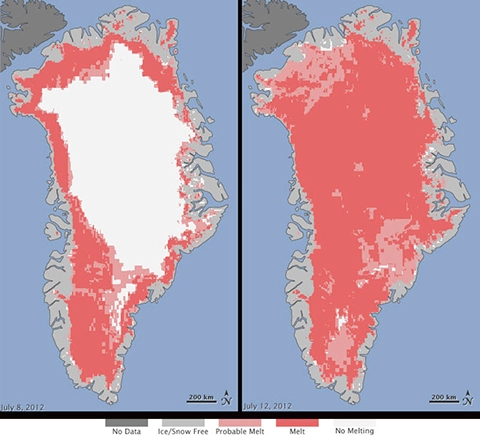
Maybe Sandy, the colossal hurricane that has barreled across the East Coast this week, will finally get the message across: "We are all from New Orleans Now."
Thanks to climate change, America's coastal cities, and particularly New York, have become increasingly vulnerable to nature's wrath. Over two years ago, MOMA asked five architects to come up with a redesign of lower Manhattan that would prevent damage in the event of major flooding. Barry Bergdoll, the Curator of the "Rising Currents" exhibit, put it to the architects this way: “Your mission is to come up with images that are so compelling they can’t be forgotten and so realistic that they can’t be dismissed.”
Unfortunately, they were. As the many images from traditional news sources and social media users reveal, Sandy's damage has been extensive - and perhaps, in many ways, preventable.
It often takes tragedy to instigate change. Let's hope that Sandy will finally get the conversation of New York's vulnerable urban landscape on to the table.
More images of Sandy's damage, as well as plans from MOMA's "Rising Currents" Exhibit, after the break...
From October 22-26, Cannon Design will host a prominent and diverse group of speakers to present at the Chicago firm’s 11th Annual EnvironmentalAwareness Week.
In this video, JA+U interviews minimalist Japanese architect Shinichi Ogawa of Shinichi Ogawa and Associates. Ogawa describes the “austerity” and “organization” of minimalist design in regard to different projects. In residences, where flexibility and options are important, he says that the minimalistic approach grants a wide range of possibilities, providing open and flexible spaces that connect with the site. Ogawa describes the a range of projects that use simple forms and expressions to interact with the environment and accentuate the surroundings.
Norman Foster is undoubtedly one of the most influential architects of our time. Since establishing his award-winning practice in 1967 – originally titled Foster Associates – the Pritzker Prize laureate has grown Foster + Partners into an international powerhouse, with project offices in more than twenty countries.