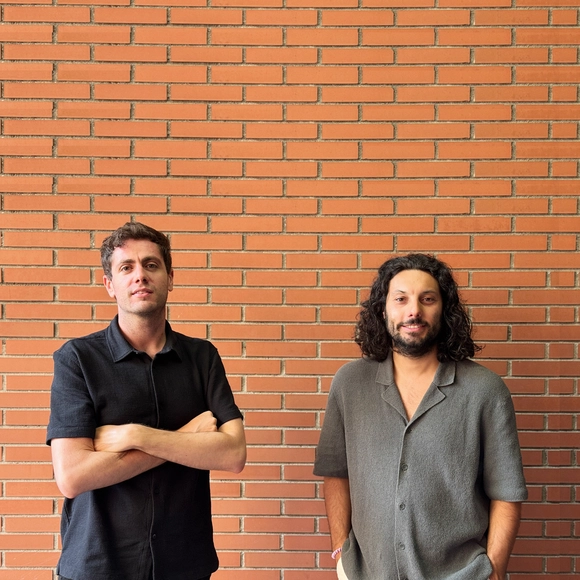
Miguel Ramón López y Ander Bados Sesma, comisarios de la XVII Bienal Española de Arquitectura y Urbanismo. Image Courtesy of XVII Bienal Española de Arquitectura y Urbanismo
The seventeenth edition of the Spanish Biennial of Architecture and Urbanism (BEAU) will take place in December 2025. The event consists of an exhibition hosted in a former thermal power station repurposed as a cultural center in Ponferrada, in northeastern Spain. This edition will be curated by architects Ander Bados Sesma, from Atelier Ander Bados, and Miguel Ramón López, a Ponferrada native and architect at Estudio Lamela, under the curatorial proposal titled flujos comun.es ("common flows"). Their curatorial proposal responds to the theme of the open call: Architecture as a Policy for Change, an invitation to reflect on the role of the discipline in processes of social, economic, and environmental transformation. Within this framework, flujos comun.es presents a critical perspective on the challenges associated with hyperconnectivity. The call for proposals and project submissions is currently open, and will be until the end of July, depending on the category.
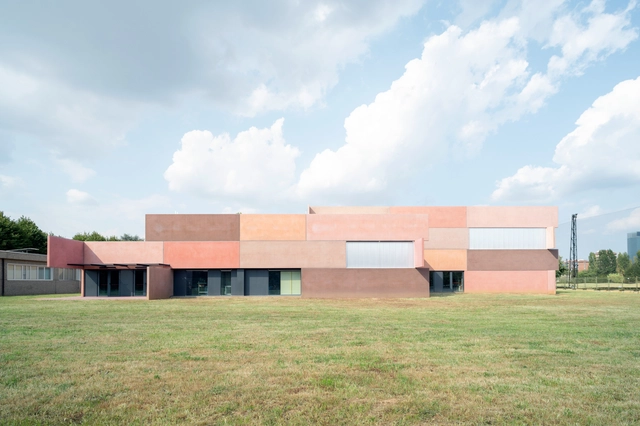
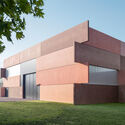
Architecture studio ELASTICOFarm, led by Stefano Pujatti, has been awarded the Premio Italiano di Architettura (Italian Architecture Prize), promoted by the Triennale di Milano and MAXXI. The award, now in its fourth edition, is received in recognition of their S-LAB project, a new building in Turin, Italy, for the Istituto Nazionale di Fisica Nucleare (INFN). The prize highlights works of architecture with high design quality and an attentive approach to innovation and the social role of architecture.
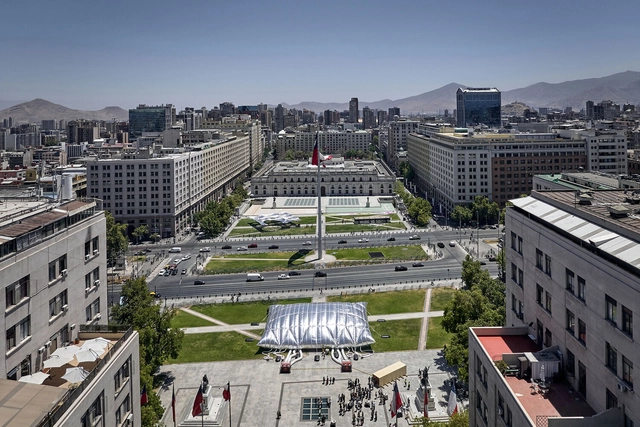
After the interruption of the 2019 edition due to the Social crisis in Chile, the Chilean Architecture Biennial returned to Santiago in January 2023 under the theme of 'Vulnerable Habitats', addressing issues such as "the emergence of the housing deficit in a context in which slums, informality, and illegal land takeovers have increased in recent years" and "the vulnerability and deterioration of public spaces; the urgent protection of tangible heritage; and environmental vulnerability in a context of a climate crisis."
This video is part of a partnership between ArchDaily and the Spanish photographer Jesús Granada. Granada's stock images of the Biennale can be obtained on his website, here. ArchDaily’s complete coverage of the 2016 Biennale can be found, here; with coverage focused on the Spanish Pavilion, here.
In an interview conducted by Jesús Granada, the curators of this year’s Spanish Pavilion at the 2016 Venice Biennale, Iñaqui Carnicero and Carlos Quintáns, discuss their reasoning and intentions for the Golden Lion awarded national pavilion’s design. Titled “Unfinished,” Quintáns describes the project’s influence as “the detection of reality that we show only through photography, of what happened (in Spain) after the housing bubble, first the real estate boom and then the crisis, and how we can offer solutions thanks to the many talented architects of the many projects which have been realized in Spain and have been partially obscured.” The pavilion answers Director Alejandro Aravena’s call for national pavilions that identify domestic responses to architectural dilemmas that could be the solutions for other places facing similar issues.
As part of ArchDaily's coverage of the 2016 Venice Biennale, we are presenting a series of articles written by the curators of the exhibitions and installations on show.
Spain is one of the countries where the practice of architecture has been most affected by the economic crisis. There are few places on earth where such large numbers of buildings were built in such a short period of time. The lack of reflection over whether these projects were necessary or valid resulted in the subsequent abandonment of many buildings when their completion or maintenance was discovered not to be economically viable. Their appearance throughout Spanish territories has generated a collection of unfinished buildings where the factor of time was eliminated from the formula for making architecture.
Iñaqui Carnicero and Carlos Quintáns have been selected as co-curators of the Spanish Pavilion at the Venice Architecture Biennale 2016, directed by Chilean architect Alejandro Aravena, under the theme "Reporting from the Front."
Iñaqui Carnicero is an architect and a Visiting Professor at Cornell University, and has been recognized by numerous international awards such as the Design Vanguard Award, AIANY Housing Award, Emerging Architects Award, FAD and COAM Award.
Carlos Quintáns is Professor of the Architectural Construction Department of the A Coruña Architecture School and director of the Tectónica magazine, recognized with awards such as the COAG, FAD or at the Spanish Architecture Biennale.
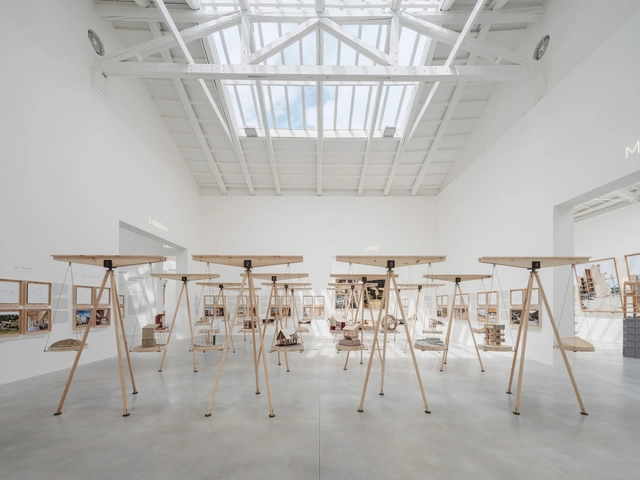
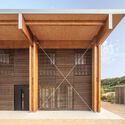
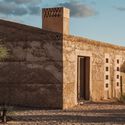
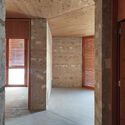
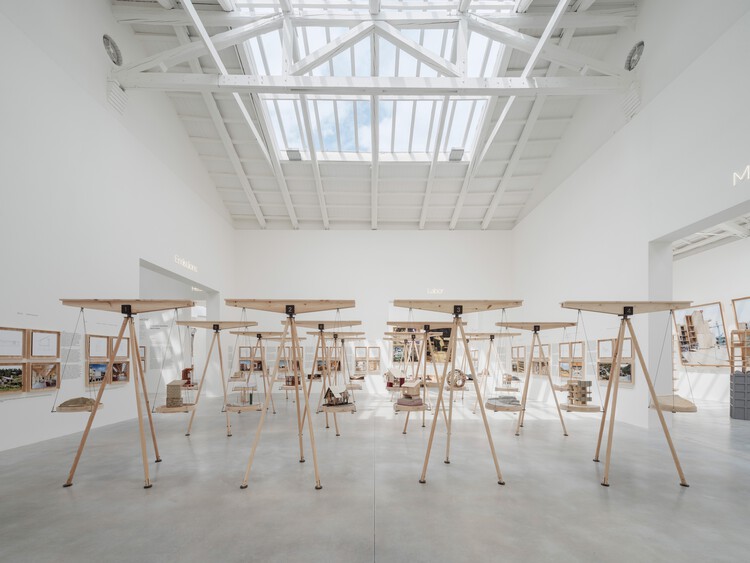

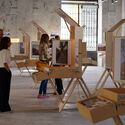





.jpg?1464435141 "UNFINISHED / curated by Iñaqui Carnicero & Carlos Quintáns. Spanish Pavilion at the 2016 Venice Biennale. Image © Laurian Ghinitoiu")
.jpg?1464435180 "UNFINISHED / curated by Iñaqui Carnicero & Carlos Quintáns. Spanish Pavilion at the 2016 Venice Biennale. Image © Laurian Ghinitoiu")
.jpg?1464435102 "UNFINISHED / curated by Iñaqui Carnicero & Carlos Quintáns. Spanish Pavilion at the 2016 Venice Biennale. Image © Laurian Ghinitoiu")
.jpg?1464435069 "UNFINISHED / curated by Iñaqui Carnicero & Carlos Quintáns. Spanish Pavilion at the 2016 Venice Biennale. Image © Laurian Ghinitoiu")
.jpg?1464435092)
