Fact-finding Mission to Germany: Energy Efficiency in Buildings
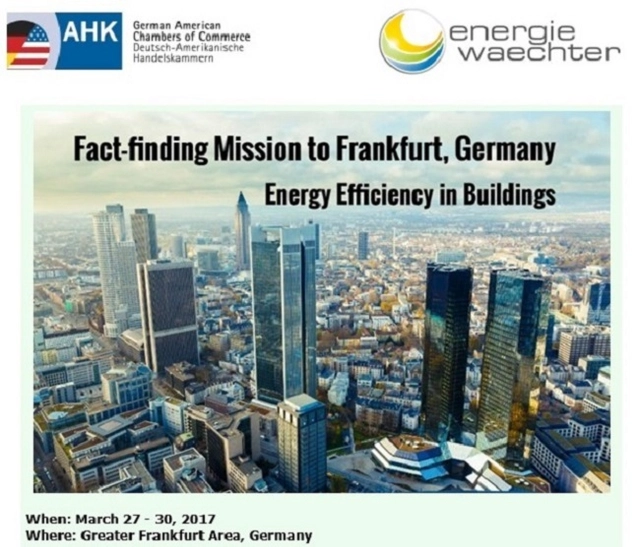
The fact-finding mission to Germany for US Architects is part of the "Energy Efficiency - Made in Germany" initiative of the Federal Ministry of Economic Affairs and Energy and is organized by energiewaechter GmbH and the German American Chamber of Commerce, Inc. in New York. Joining the fact-finding mission to Frankfurt and Darmstadt will give US Architects the opportunity to learn about innovative German technologies and services in the field of energy efficient buildings and passive house.
The workshop is organized by SADAS-PEA (Greek Architects Association) in order to promote the principle of environmentally friendly architecture. It is addressed to young architects and students of architecture. It will take place at the Stamos Stournas guesthouse near the city of Volos, Greece between September 17th and September 25th 2016.
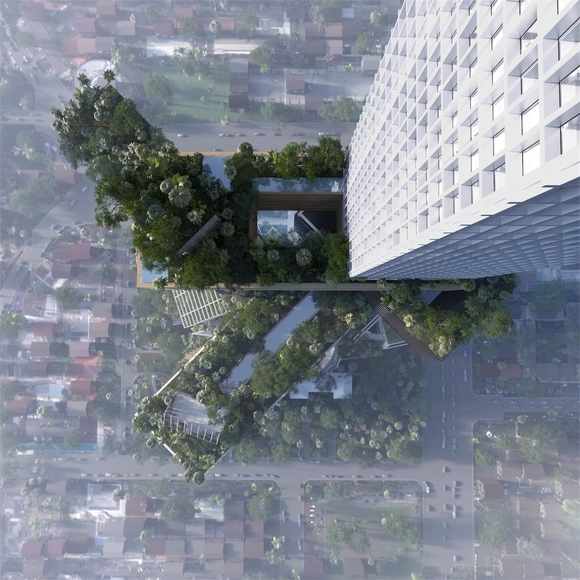
Peruri 88, a 400-meter proposal by MVRDV for Jakarta. Image Courtesy of RSI-Studio
Are tree covered buildings really in tune with ecological and sustainable principles, or are they just a form of greenwashing? This is the question posed by Kurt Kohlstedt in his essay, Renderings vs. Reality: The Improbable Rise of Tree-Covered Skyscrapers, for 99% Invisible. The author notes that vegetated designs come about for myriad reasons – the appearance of sustainability, better air and views, investment intrigue – but that most of these concepts will never leave the realm of paper or virtual architecture. For as many reasons that these buildings have become popular, there are detractors for why they simply cannot be built, including daunting construction hurdles (extra concrete and steel), vast irrigation systems, added wind load complexities, and the trees themselves having difficulty adapting to their vertiginous conditions.
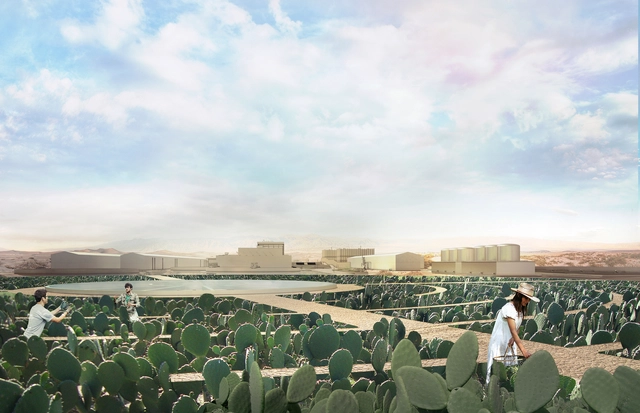
Although global warming may only be partially to blame for California’s now four-year, record-breaking drought – intensifying it by 15 to 20 percent, say scientists – the long term implications of the weather phenomenon are a preview of a drier future with less predictable weather patterns.[1] As ecology and architecture begin to share responsibility in the implications of climate change, future solutions will need to balance architectural needs with ecological imperatives. Many designers are accounting for water scarcity in schemes for the drought-stricken state, but only recently have ideas addressed this issue head-on. “Grassroots Cactivism,” an award-winning proposal by Ali Chen, suggests that the drought-tolerant nopales cactus, with a variety of uses, is an ideal candidate for aiding water-conservation in California.
Read on for more about this biological breakthrough in water conservation.
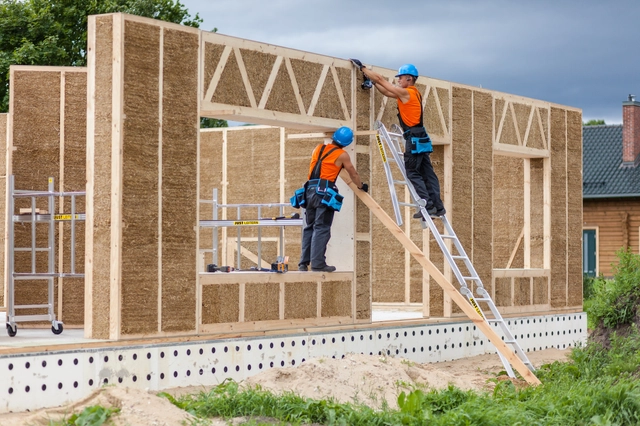
Straw Paneling System Among Finalists. Image Courtesy of Ecococon via Cradle to Cradle
In attempts to better define what it really means to be green, the Cradle to CradleProducts Innovation Institute, in partnership with Make it Right, has selected products from ten companies as finalists in the Product Innovation Challenge. 144 applicants were screened by toxicologists and building professionals, proposing new alternatives from insulation grown from fungi and bricks from living organisms, to roofing made from waste limestone and recycled plastic. The ten finalists represent the shared values of practical sustainability and entrepreneurship, creating "a building product that is safe, healthy, affordable, effective and designed to be returned safely to nature or industry after use."
Three winners will ultimately be announced on November 15, 2013 at the Institute's Innovation Celebration in New York City, offering a $250,000 cash prize: $125,000 for first place, $75,000 for second and $50,000 for third. The jury members, who include executives from Google, US Green Building Council and the Schmidt Family Foundation, will judge each product based on five categories: material health, material reutilization, water stewardship, renewable energy and social fairness.
Without further ado, the 10 finalists are…
https://www.archdaily.com/429522/finalists-create-next-generation-of-sustainable-building-productsJose Luis Gabriel Cruz
The U.S. Green Building Council has recently announced that Harvard University has achieved a worldwide first – the construction and completion of 50 LEED certified buildings. It is also a great feat for an institution as large as Harvard. They were able to successfully coordinate a decentralized campus with separate buildings that each have their own organizational structures. Read more about the five lessons they learned along the way after the break.