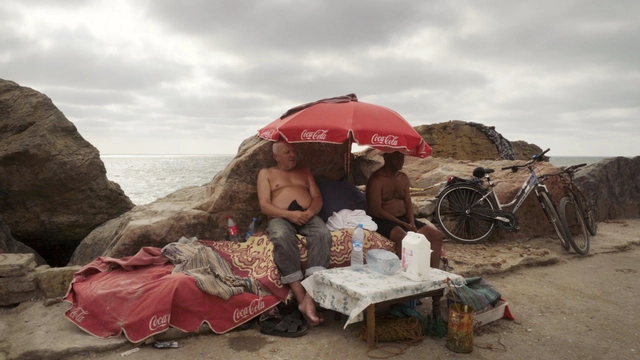
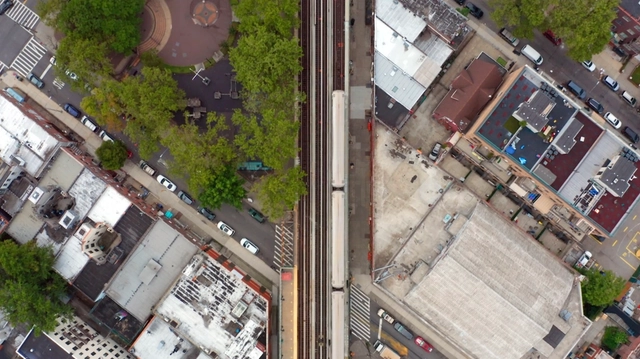
The festival’s International Film Competition [OPEN CALL] received over 270 submissions from 40 countries worldwide, competing for awards across six different categories. From this group, 18 shortlisted films will be featured during the festival, and awarded films will be announced in an online ceremony on June 25, 2021.
Videos
Toronto's Dundas and Ossington intersection, re-imagined as 1962 Baltimore by special effects studio MR. X for the film The Shape of Water. Image Courtesy of The Canadian Pavilion
Canada’s contribution to the 17th Venice Architecture Biennale explores Canadian cities’ established “career” in cinema as stand-ins for the world’s metropoles, raising questions of authenticity, architectural identity and the collective understanding of the built environment. Curated by David Theodore of McGill University and realized by Montréal architecture and design practice T B A / Thomas Balaban Architect, the exhibition Impostor Citieshighlights the diversity and versatility of Canada’s cityscapes as portrayed on film.
Rare are the fields, from arts and culture, that have so many things in common with architecture, as film does. Acknowledging that this is far from new, this topic has been debated by theorists and authors from both fields ever since the beginning of the 20th century. Architecture has been trying to embody subtle and poetical features from film while cinema has historically served as a means to discuss, represent, and denounce topics tightly related to architecture and cities.
An interesting example of this overlapping can be found in the contemporary production of French-Italian film company Bêka & Lemoine, whose works show a sensible look towards the details and the simplicity of the architecture and urban spaces. Currently encompassing thirty feature films, Ila Bêka's and Louise Lemoine's portfolio casts light on the everyday life of different cities around the world, revealing an attentive gaze to the most trivial aspects of human existence in the urban realm.
In the last decades, architecture has embraced the medium of film to explore new readings of spaces and atmospheres. Crafting a visual narrative of the underlying design concepts while also establishing a connection with the viewer, architecture films use cinematic camera movements and carefully curated sound designs to convey emotion and create a compelling impression of the built object. The article looks into architecture films as a means of capturing the experience of a space, with films by 9sekunden, a team of young designers who combine their passions for film and architecture into an alternative means of exploring architectural atmospheres.
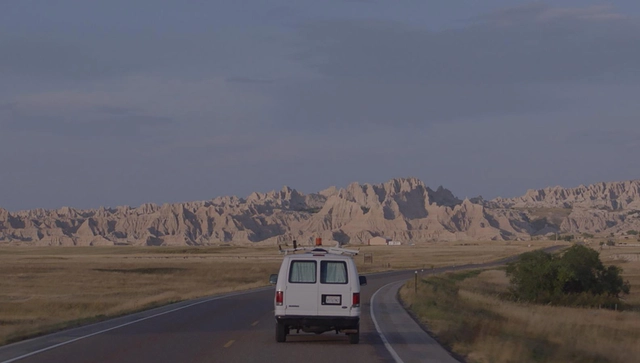
“No, I’m not homeless. I’m just houseless. Not the same thing, right?" Questioning the notion of home and house, Nomadland tells the story of a sixty-year-old woman who loses everything during the great recession, leaving her hometown after the collapse of the sole industry that supported the rural settlement and the death of her husband. She decides consequently to embark on a journey and experience life as a modern-day nomad, setting off in her van through the vast landscape of the American West.
In Design and the City's fifth episode - a podcast by reSITE on how to make cities more liveable - filmmaker and visual artist Gary Hustwit was interviewed on his creative process and evolution, and what motivates him to make films that strive to make design more accessible to the general public. The interview delves into the process behind Hustwit's filmography, from documentaries such as Helvetica, which explores the use of type in urban spaces, to films such as Rams, a personal and intimate portrait of the influential German industrial designer Dieter Rams.
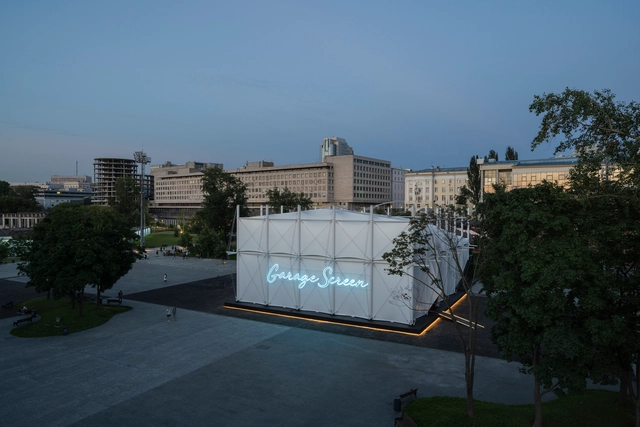
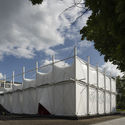
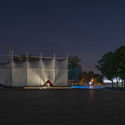
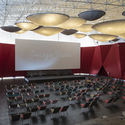
The new Garage Screen cinema designed by SNKH Architects was just unveiled in Moscow. The winning project of the second Garage museum of contemporary art competition for the design of a pop-up summer cinema “resembles an inverted Bedouin tent”. Selected out of 136 submissions from Armenia, Belarus, Kazakhstan, Kyrgyzstan, and Russia, the intervention is not instantly recognizable as a cinema, reinventing the usual design.
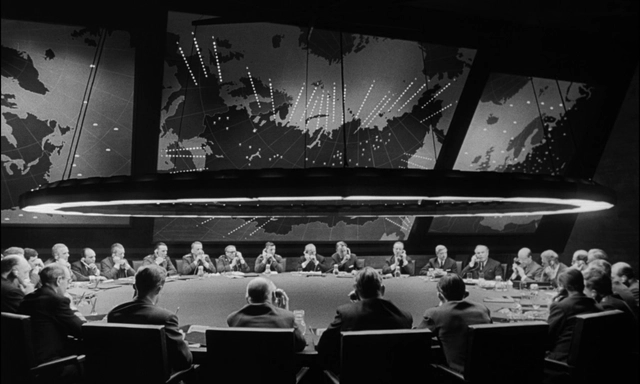
Dr. Strangelove or: How I Learned to Stop Worrying and Love the Bomb is one of those rare movies that not only gets better with time but also presents a new layer of meaning with each viewing. Recently I’ve come to believe that it’s the most important movie about environmentalism ever made, not only because of its warning about nuclear annihilation, which is obvious, but because of its sly critique of the idea of professionalism and the nature of work.
https://www.archdaily.com/944214/dr-strangeloves-strange-environmental-lesson-for-architectsChristopher L. Cosper
Representation of the real world is, without any doubt, in the genesis of cinema, an art originated from photography, by creating a sequence to convey the impression of movement to the viewer. In fact, the earliest known film recording is from 1895, picturing the arrival of a train at Ciolat station in France, a trivial event in the daily life of 19th-century European cities.
However, even though tangible reality plays a big role in cinema, one cannot ignore that the fascination caused by this art comes, to a great extent, from its capacity to create imaginary worlds, to activate mental spaces, and to unleash emotions. In this sense, the real world may often provide insufficient fuel, inspiration, or background for the directors' and screenwriters' storytelling, so the art direction and scenic design teams are required to create other intangible realities that serve as a basis for the narrative.
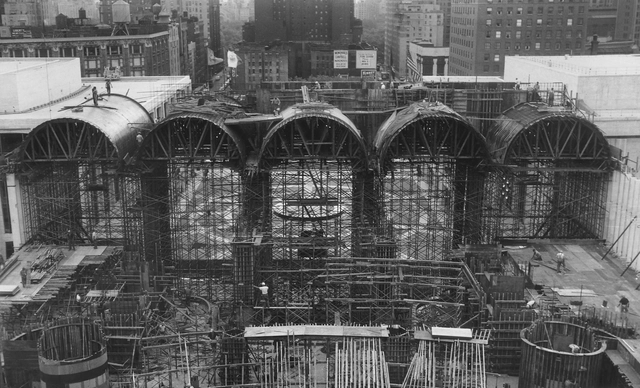
The new Met under construction in May 1964 (Photo: Metropolitan Opera Archives)
The Metropolitan Opera offers a free stream each night on the Met website for a period of 23 hours, from 7:30 p.m. EDT until 6:30 p.m. EDT the following day.
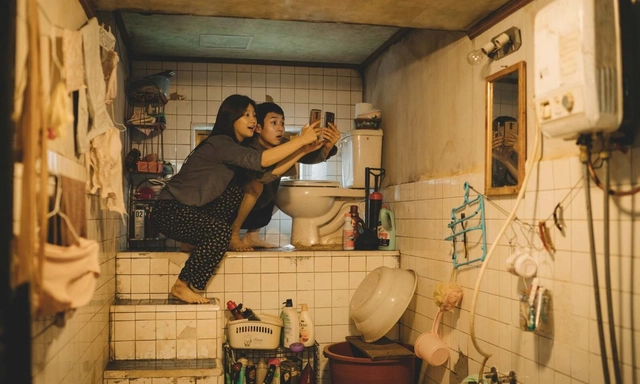
The recent success of Parasite, the award winning film directed by South Korean director Bong Joon Ho, has created a conversation around the emphasis of architecture and interior spaces in movies. This particular film does an excellent job of blurring the boundaries between the two disciplinary fields, to the point where the architecture is not just the background of the set, but it has been placed at the forefront of the storyline, and takes on the leading role in many scenes.
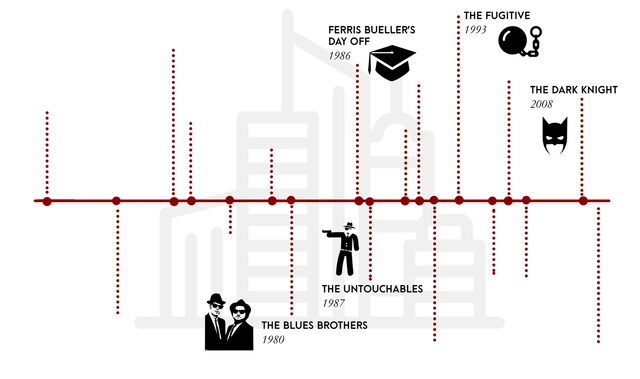
Timeline showing iconic films set in Chicago. Created by the authors. Image Courtesy of Kathryn H. Anthony, Fernando Nebot Gómez, and Yashasvini Rao
Chicago is one of the most photogenic cities in the world. Its sparkling lakefront, dramatic skyline, diverse ethnic neighborhoods, and gritty industrial sites have long captured the attention of locals and visitors alike, including Hollywood movie producers. Here the city often serves as not only a backdrop, but also as a starring role--almost as important as the characters themselves.
https://www.archdaily.com/930654/from-gangster-city-to-gotham-city-the-changing-image-of-chicago-in-hollywood-filmsKathryn H. Anthony, Fernando Nebot Gómez, Yashasvini Rao
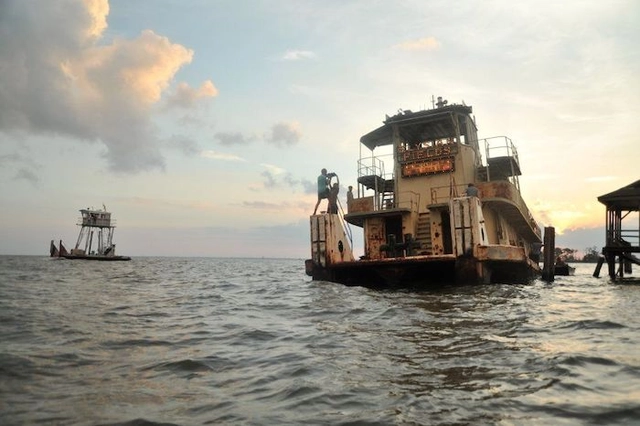
Beasts of the Southern Wild. Image: screenshot do filme
Architecture enjoys a close connection with moving picture, perhaps because of the limitless imagination it allows. Our mind can be taken far away to utopian worlds where we live different realities with our eyes and skin; movies can carry us to new and distant places, where we face new unusual realities.
However, besides carrying us to distant places, movies can also be a vehicle of social criticism. This is not news, as it has been done for almost as long as cinema has existed. The evolution of this role is relative to the topic of critique that has developed over time, as have our habits and ways of living. In this sense, one of the most emerging problematic of nowadays is climate change.from architecture to arts and, clearly, the movies.
The field of architecture is not exactly a hot topic of study for most undergraduate students. The closest they might get to the subject is an art history survey course in which architecture is presented as a parade of styles across the millennia—just another form of visual expression.
https://www.archdaily.com/932965/teaching-an-appreciation-for-architecture-through-filmMichael J. Crosbie
With the exception of Hollywood, there isn’t another place in the world that has become so inextricably linked to the film industry as the city of Cannes. For more than 70 years, everyone who’s anyone in the film world — and lots of other cinema enthusiasts— have migrated to the French Riviera in May for the biggest event of the year: the Cannes Film Festival, which combines glitzy red-carpet premieres with long and intense days of screenings, discussions and networking. Even though there are many obvious differences between a 12-day film festival and an awards show, Cannes is as big a deal as the Oscars. The local city economy not only thrives on it; it depends on it. Be it the murals on streets or the photographs adorning the walls of cafes and bars, cinema is deeply rooted in the fabric of the city.
The Architecture & Design Film Festival celebrates the unique creative spirit that drives architecture and design. With a curated selection of films, events and panel discussions, ADFF creates an opportunity to entertain, engage and educate all types of people who are excited about architecture and design.
![[OPEN CALL] International Film Competition 2021 - Featured Image](https://snoopy.archdaily.com/images/archdaily/media/images/60b0/01d2/f91c/81d9/db00/0224/slideshow/open-uri20210527-2137-1vez1f.jpg?1622147530&format=webp&width=640&height=580)