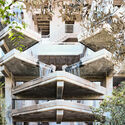
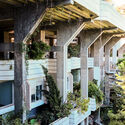
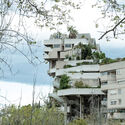
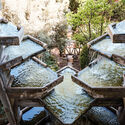
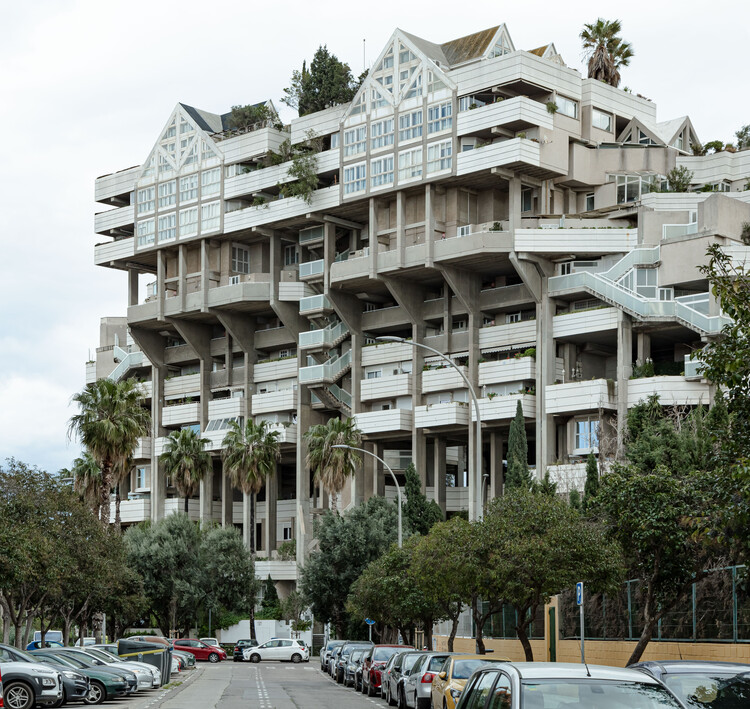
Even the most distracted passerby is captured by the monumental presence of this structure located in the established Valencian neighborhood of Benimaclet. Before it, any attempt at rational comprehension dissolves. The constructive logic seems to slip away as space unfolds in tensions and detours where nothing is immediately revealed. Between masses of concrete and the insurgency of vegetation, an almost choreographic play of planes, angles, and rotations emerges. In the vertigo of this encounter, one realizes that the building was not designed to be understood, but to be experienced.
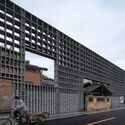
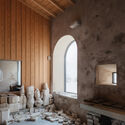
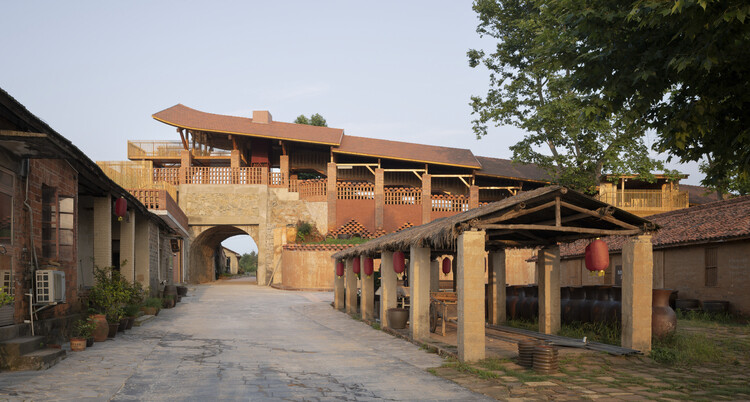
There is an ancestral gesture in shaping the earth. Long before architecture was established as a discipline, clay was already shaped by human hands and transformed by fire, turning raw material into domestic utensils and cultural objects. In the history of this craft, ceramic factoriesmarked the transition from manual craftsmanship to mass production, expanding their scale without entirely breaking from their material origins. Scattered across diverse territories, these structures record the relationship between technique, landscape, and time. Over the decades, however, many of them eventually lost their original function, replaced by more advanced technological processes or swallowed up by surrounding urban development, leaving them in an intermediate state between permanence and obsolescence.
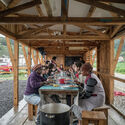
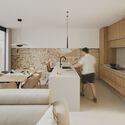
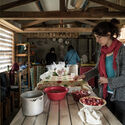
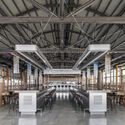
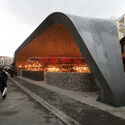
Can architecture be built from food? Between the fire that warms, the aromas that spread, and the bodies that gather around the table, the apparent banality of cooking and eating reveals itself as a choreographed dance of spatial appropriation and belonging. These are gestures that organize routines, forge bonds, and transform the built environment into a lived place. The kitchen—whether domestic, communal, or urban—thus ceases to be merely a functional space, asserting itself instead as a territory for connection.
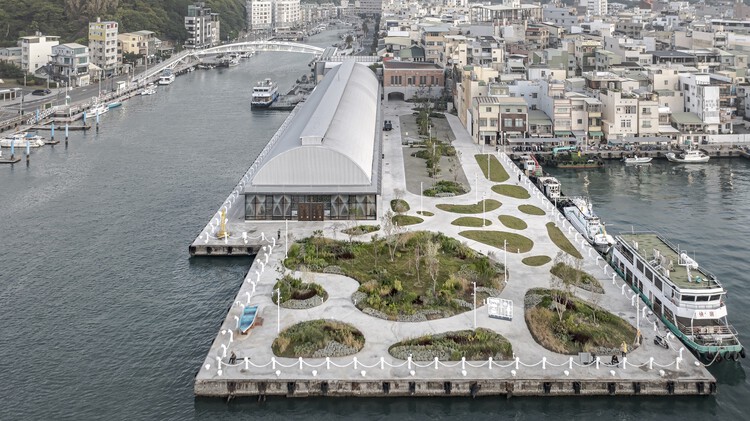
Throughout history, fish markets have played a singular role in mediating the relationship between city and sea. From the port agoras of antiquity, through medieval markets established along docks and estuaries, to the large covered structures of the 19th century, these spaces have been instrumental in shaping coastal cities. More than simple infrastructures for food supply, fish markets express cultural practices and modes of occupation rooted in proximity to water, consolidating themselves as intense and highly social public spaces. Within them, architecture, landscape, and social dynamics intertwine directly, revealing how the built environment can translate maritime traditions and reinforce the identity of coastal and port communities.
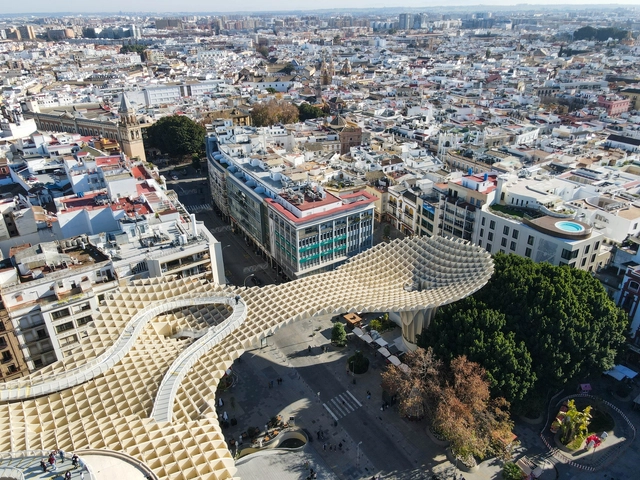
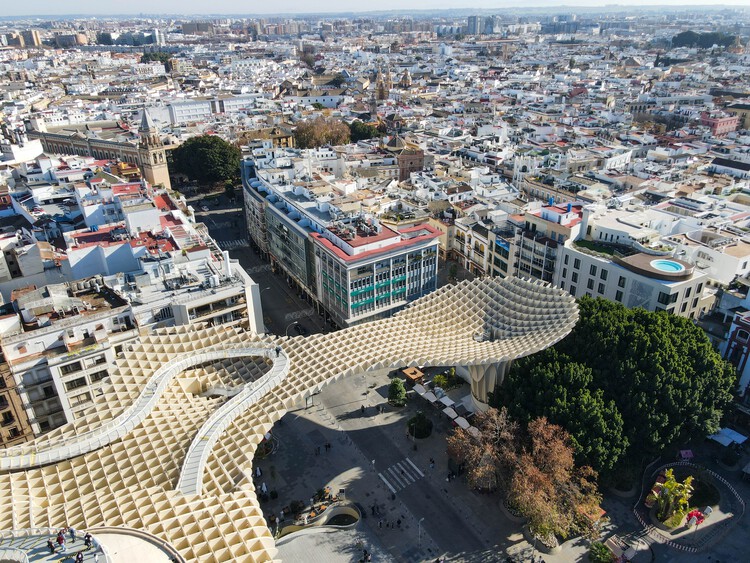
Located in southern Spain, Seville unfolds as a layered city shaped by centuries of cultural intersections. As the former capital of Al-Andalus and a central port during the Spanish Empire's expansion, its built environment reflects a deep historical complexity. From Roman foundations to Islamic geometries, from Renaissance palaces to contemporary interventions, Seville presents a unique spatial narrative in which architecture directly reflects its political, religious, and social transformations.
The city's architectural heritage is inseparable from its climate and geography. Narrow shaded streets, inner courtyards, and water as spatial elements reveal a deep knowledge of environmental adaptation that still informs how public and private spaces are articulated today. While monumental landmarks such as the Alcázar, the Giralda, or the Cathedral preserve and reinterpret historic legacies, modern projects have begun introducing new materials, programs, and spatial typologies, challenging conventional forms and proposing alternative ways to inhabit the city.