1. ArchDaily
  2. Elevated Rail

Elevated Rail: The Latest Architecture and News

Elevated Infrastructure and Public Space: Reclaiming the Ground Below

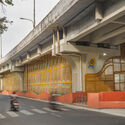
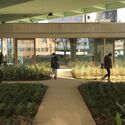
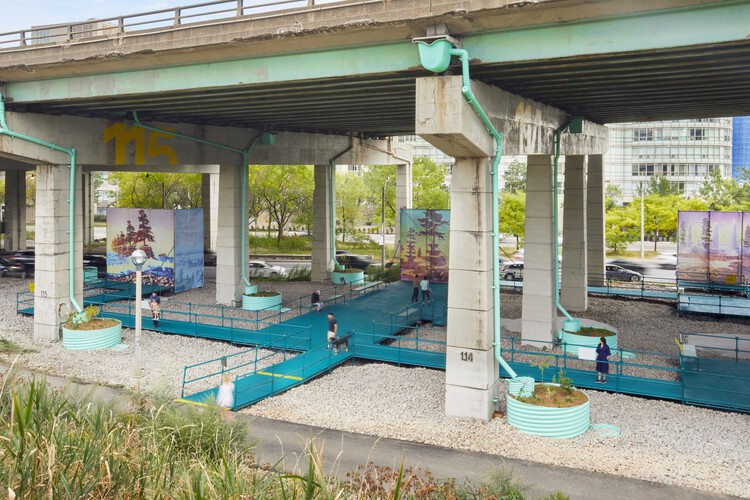
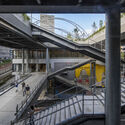
Elevation is often framed as progress, lifting movement above the friction of the city and smoothing circulation into uninterrupted flow. Every act of lifting produces a secondary condition in its wake. Beneath flyovers, metro lines, and railway viaducts, a second ground emerges as shaded, ambiguous, and rarely planned with the same intent as what moves above. These spaces are not incidental leftovers. They are the spatial consequence of a design decision that privileges speed, clearance, and efficiency, redistributing value and visibility across the city in the process.

What lies below is not empty. It is structured, constrained, and defined by infrastructure, left without a clear role. Studies on elevated highways consistently describe these undercroft zones as residual spaces, formed when transport systems are conceived independently of the ground they pass through. An Arup report on spaces beneath viaducts notes how they often disrupt pedestrian continuity while remaining outside formal planning frameworks. Similarly, recent academic reviews of under-flyover environments highlight that these areas are rarely integrated into urban design strategies at all. The result is a peculiar condition: space that is physically present and structurally determined, but programmatically undefined.

Elevated Infrastructure and Public Space: Reclaiming the Ground Below - Image 1 of 4Elevated Infrastructure and Public Space: Reclaiming the Ground Below - Image 2 of 4Elevated Infrastructure and Public Space: Reclaiming the Ground Below - Image 3 of 4Elevated Infrastructure and Public Space: Reclaiming the Ground Below - Image 4 of 4Elevated Infrastructure and Public Space: Reclaiming the Ground Below - More Images+ 16

Beyond the Street: Climate, Commerce, and the Evolution of Hong Kong’s Elevated Networks

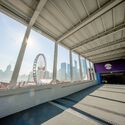
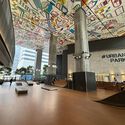
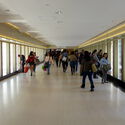
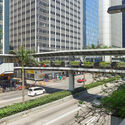
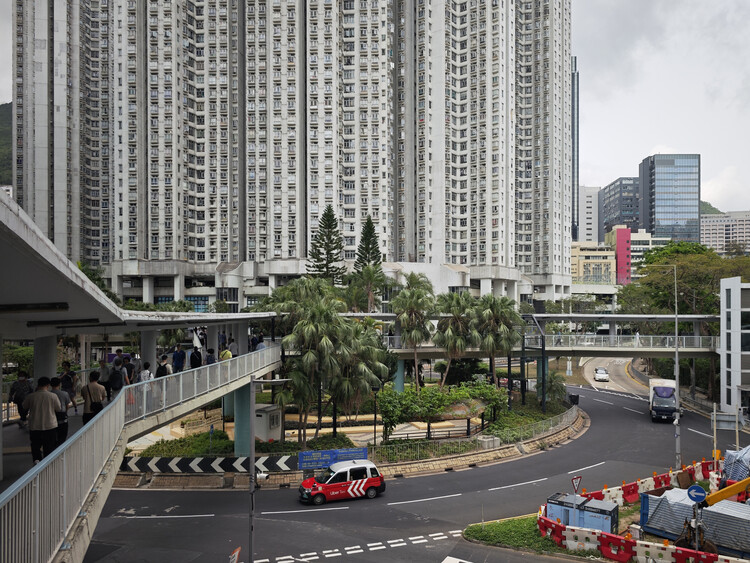
In 2012, Cities Without Ground: A Hong Kong Guidebook offered one of the clearest documentations of a condition that many residents experience intuitively but rarely name: Hong Kong's dependence on elevated, second-storey urbanism. Through drawings and careful mapping, the book captured how the city's pedestrian networks are routinely lifted above the street—separating people from traffic, extending commercial frontage beyond ground level, and negotiating a hilly topography where "flat" circulation is often an engineered achievement. Since its publication, these systems have only grown in prominence—not only for their sheer spatial complexity, but for the way they recast public space as something continuous yet selective, connective yet curated.

This fascination, however, has always carried a parallel unease. Elevated passages can be generous and effective, offering sheltered movement and reliable connectivity. Yet they also raise persistent questions: where do these routes lead, who gets to connect, and what kinds of programs are invited—or excluded—by this "privileged" level of circulation? The second-storey city does not simply bypass vehicles; it can also bypass the street as a civic stage. Over time, it risks shifting architectural attention away from ground-level public life, relieving designers from having to negotiate pedestrian scale, frontage, and the messy reciprocity of the street. In its worst moments, the result is a landscape of podium clusters and sealed megastructures—buildings that perform connectivity at Level 2 while remaining indifferent to the neighborhood at Level 0.

Beyond the Street: Climate, Commerce, and the Evolution of Hong Kong’s Elevated Networks - Image 1 of 4Beyond the Street: Climate, Commerce, and the Evolution of Hong Kong’s Elevated Networks - Image 2 of 4Beyond the Street: Climate, Commerce, and the Evolution of Hong Kong’s Elevated Networks - Image 3 of 4Beyond the Street: Climate, Commerce, and the Evolution of Hong Kong’s Elevated Networks - Image 4 of 4Beyond the Street: Climate, Commerce, and the Evolution of Hong Kong’s Elevated Networks - More Images+ 17

Independent, Community Lead Initiative Looks at "Leftunder" Infrastructure Land in Melbourne

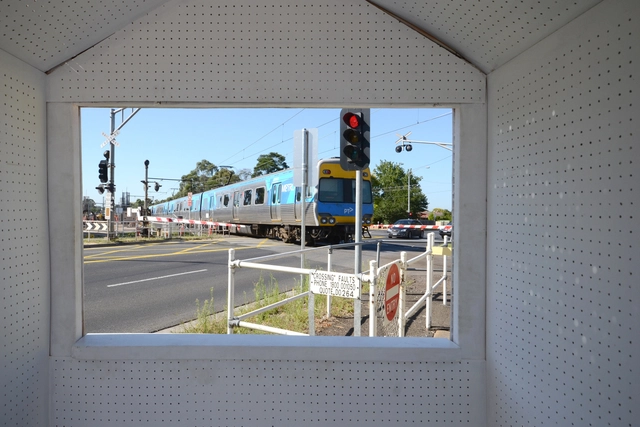
With Melbourne’s contentious elevated rail project starting construction, an independent group has taken the opportunity to critique the way that this key piece of infrastructure is engaging with the public. The project, leftunder, is a platform for alternate, community driven proposals for the public space being made available adjacent to this new infrastructure, that which might normally be overlooked and undermaintained. Run by not-for-profit OFFICE, the project has recently culminated in an exhibition at The National Gallery of Victoria's Design Week.