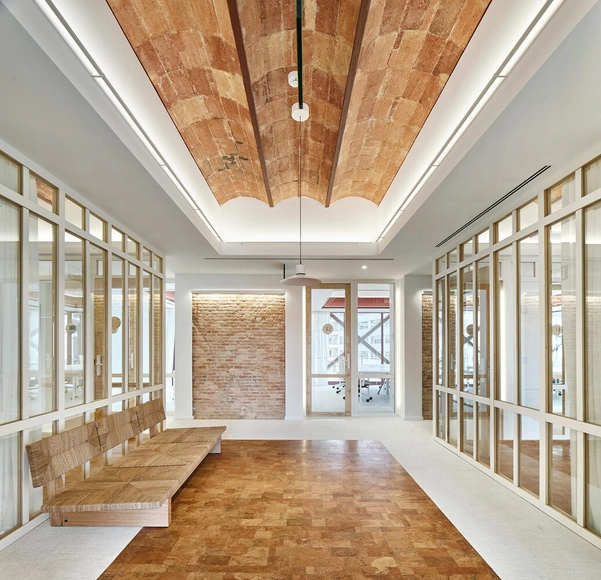
Designers and architects have a mountain of modern, high-performance flooring options at their disposal. From standard choices like wood, carpet, ceramic tiles, or natural stone; to heavy-duty commercial favorites like terrazzo, concrete, or poured epoxy. Add less well-tread options like cork and leather and then multiply them all with imitation solutions like laminate and luxury vinyl, and it’s easy for decision-makers to get lost in indecision.
Despite the size of the marketplace, however, we tend to just make our choices and stick with them, using just one type of floor for each room. Not so in the case of the following four projects, which select and arrange various flooring types together in the same room, adding functionality to the floor and helping to improve how we interact with the spaces above.
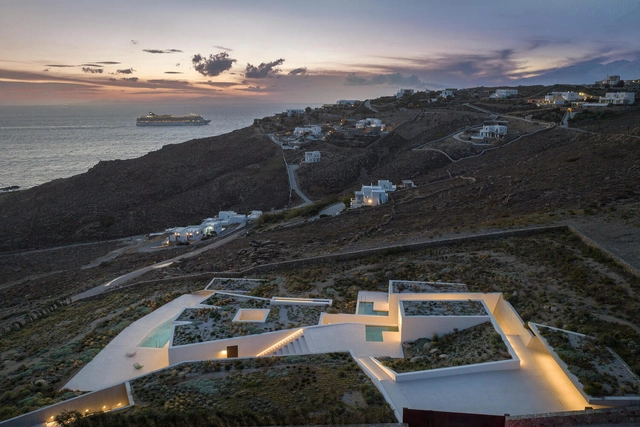
By building houses like the Latypi residence on hillsides, we can reduce the impact construction has on the landscape, while keeping the views for ourselves. Image
Ever since humans started building (about 10,000 years ago), settlers looking for sites to build new villages or homesteads have kept a simple list of criteria: access to water, proximity to arable land, and, ideally, as flat as possible. Modern development sites instead look for industry and transport links rather than water and farmland, but a level site is still the preferred option.
Whether you cut and fill into the landscape by digging in a retaining wall, or balance the structure above the hillside on stilt supports, building on sloping ground always adds time, cost, and difficulty to the project. With immense views and extra space both inside and out, however, the results can be worth the extra effort.
At first, adding a mezzanine floor to a layout either seems like a complete waste of good floorspace or a clumsy attempt to squeeze two stories into one – like wearing skinny jeans after Christmas – both spaces end up feeling constricted and uncomfortable.
But whether the intermediate-level floor is achieved by addition – erecting an extra level in a high-ceilinged room, or by subtraction – removing part of the floor to connect with the one below, mezzanines are a relatively simple way to dramatically change and improve how we use and interact with our existing environments.
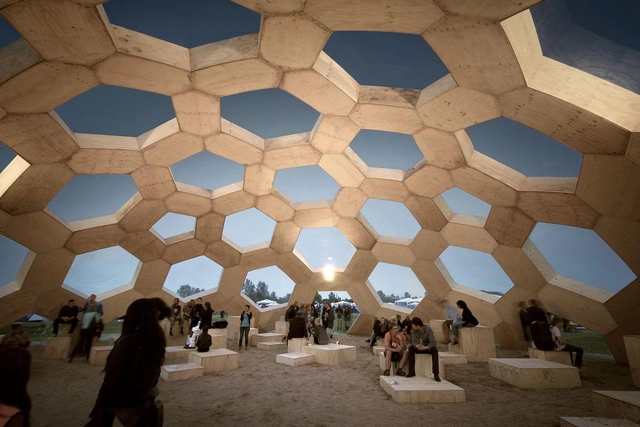
Houses and buildings are one of the first subjects children learn to draw. The simple arrangement of squares and rectangles with a triangle on top is easy and efficient, and quickly identifiable. Once we graduate from drawing to building, however, perhaps there is a better way. These five examples of domed buildings, pavilions, and installations support the thinking that there is an easier way to do it when you think outside the square.
Einstein’s Special Theory of Relativity introduces the mind-blowing concept that time – as we know it – is not as stable and reliable as it first seems. As a defining characteristic upon which all of human history is referenced, the fallibility of time is a confusing prospect. 15 minutes, for example, seems an eternity while waiting in line, and yet the 300,000 years of human history equates to less than a day in the lifetime of the Earth.
So when we talk about ‘saving the planet’ by slowing and reversing climate crisis, what we really mean is extending our own existence upon it. Because no matter what we do, this rock will continue to spin for billions of years yet. In reality, humanity itself is only a temporary installation.
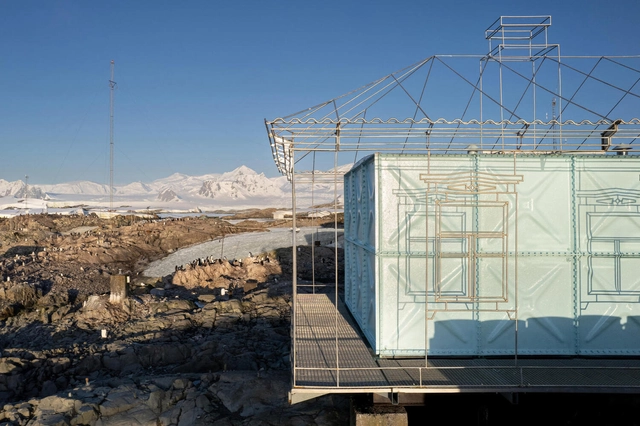
These four outdoor installation projects use the Earth’s environment and borrow its resources to investigate our human relationship with time, and how it affects our lives down here on the surface.
I always consider myself fortunate to have grown up outside the city, where my ‘cross-country’ lessons, for example –national right of hardship for 11-16-year-olds– were through the actual countryside rather than the high street. For many children, however, modern school life is not so close to nature.
Already over-populated cities are continuing to expand, meaning more schools are suffering from the limitations presented by inner-city architecture including noise, air, and light pollution; a lack of space, especially green space; restrictive budgets and building regulations resistant to change.
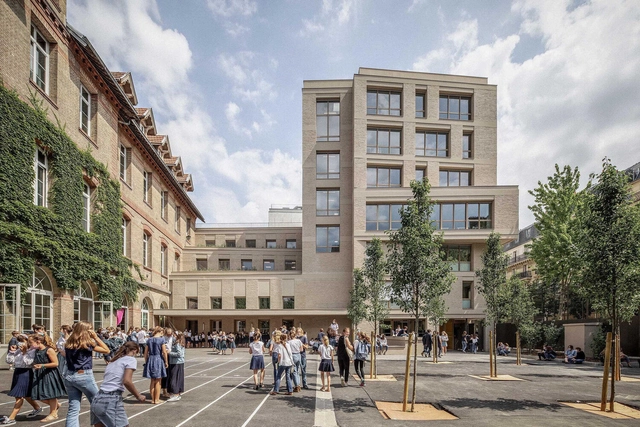
With innovative and considered design solutions, however, these four inner-city schools show the rest of the class how to work through their architectural answers and provide quality, green spaces for all.
Let’s talk. Good communication is key to building and maintaining working relationships, be they personal, romantic, business, or geopolitical. The importance of communication with and respect for one’s neighbors is a lesson that has featured heavily in many texts and teachings from all religions and cultures for millennia, possibly sparking civilization itself.
Some of the fastest growing economies are keen to shout from their garden rooftops about their growing environmentalism, infrastructure, attractive investment opportunities, and rising architectural scene, but also to keep alive the history and culture of their past, and build socially active environments.
These four building projects from across East Asia and Europe both visually and symbolically invite guests inside to see how they operate, building positive relationships with residents of the building and the city, and visitors from beyond.
There’s a lot of undeserved stigma surrounding social housing. Although many projects start off well enough with shiny ribbon-cutting photoshoots, the cameras move on and investment tends to dry up, and maintenance cut. A lack of suitable green spaces follows – due to low-maintenance, and eventually results in forgotten, isolated communities, eventually spiraling down the plughole of ghettoisation.
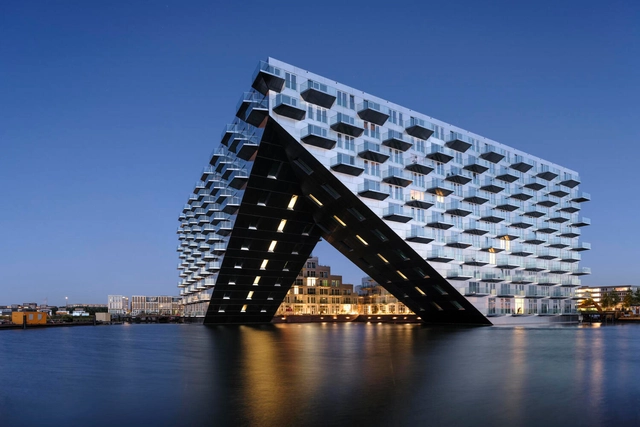
Although easily blamed, the architecture of high-rise social housing blocks is not the cause of the problem, but can instead be part of the solution. Building up instead of out still offers a sensible route through both the current housing and social crises – sharing space and resources.
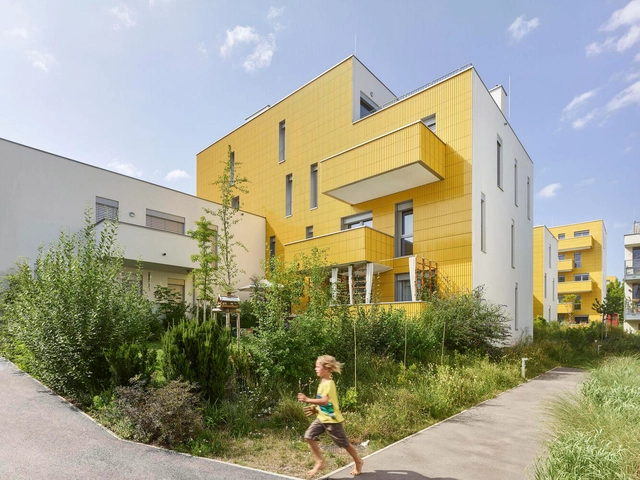
Moreover, these four projects from across Europe show, integrating social housing developments around accessible courtyards of sustainable green space helps bring and keep communities together.
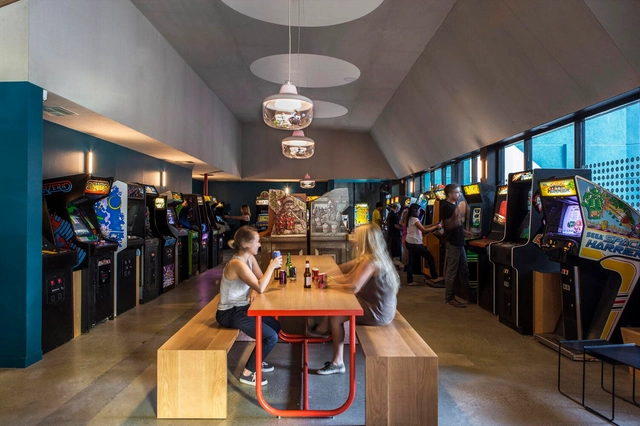
The main purpose of public houses and eateries is to provide customers – both individuals and groups – with an environment and an atmosphere in which to release the stresses of their day or week so far, either with a quiet drink in a quiet corner, or in larger, more social groups.
Even before COVID brought with it more permanent closing times, the rise of on-demand TV and food delivery services meant that staying ‘in-in’ –with the comforting embrace of their pillow just a short hike up the wooden hill to Bedfordshire– was becoming a more popular choice. Perhaps it’s no surprise, then, to see the growing emergence of establishments that offer more active entertainment than a quiz night and karaoke box.
Here are five examples of bars and restaurants designed for life’s players.
The importance of lighting in interior design cannot be overstated: done right, it not only accentuates a space's architectural features but also makes inhabitants feel at ease. As Carmelo Zappulla of Lighting Studio External Reference explains in an interview with Architonic, light is a crucial tool to add an emotional element and 'animate a space.'
There are a plethora of artificial lighting options to choose from. Which works best is usually determined by the nature of the interior they're in and the desired spatial effect. One of the most common is indirect lighting. This technique uses fixtures to aim light onto surfaces that act as reflectors, softening the emitted rays to prevent pillar-like, bulky beams in favor of a more evenly distributed glow.
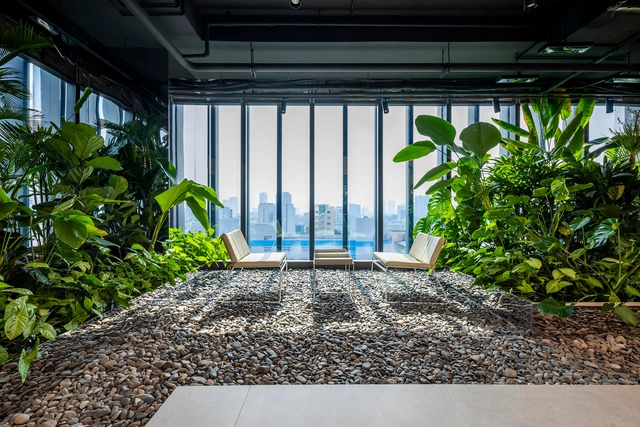
In the world of contemporary architecture and design trends, the topic of biophilia is ruthlessly spreading itself across floor plans, mood boards, and finished interiors like butter on hot toast. So talk of outdoor spaces with natural materials, fresh air, natural light, and expansive views may seem like a broken record, but sometimes you just want to keep on pressing repeat. Also like butter on hot toast, you can never have too much of a good thing.
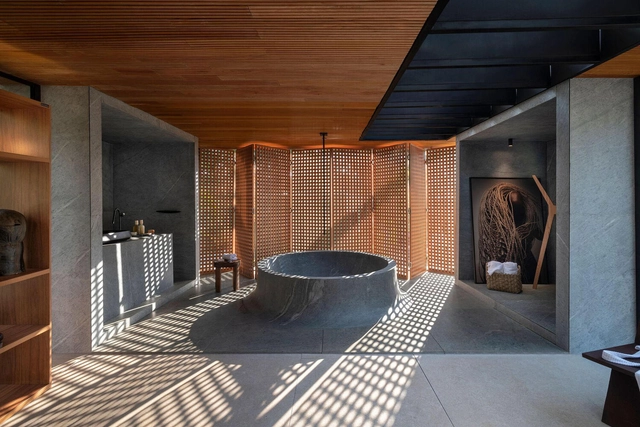
These outdoor bathroom spaces open themselves up, both figuratively and literally, to outdoor environments in a variety of worldwide climates, without forgetting their main purpose: to provide a sanctuary of comfortable calm, in a stressful world.
As summer in the Northern Hemisphere is inching ever closer and nature is rapidly responding to the increase in temperature, our desire to spend time outside (by ourselves and collectively) is growing at an equally fast pace. And although public parks are a great option for those of us who live in urban centers, the luxury of having one's very own, at-home access to nature cannot be overstated.
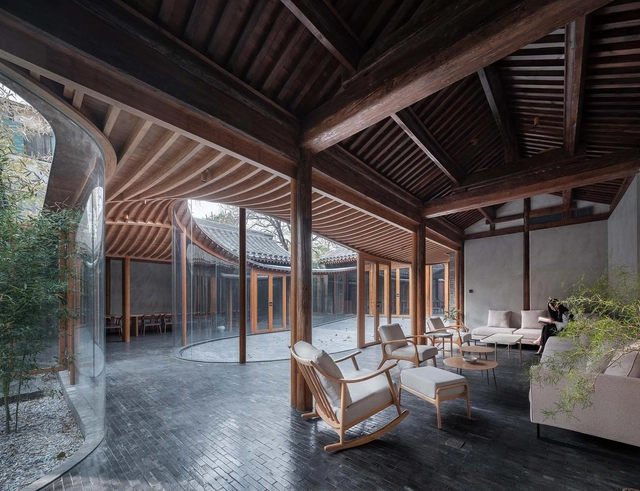
For residential projects in particular, gardens are the most common way of connecting with the natural world in this way. But, as these four examples show, courtyards can provide an equally satisfying window into changing seasons – and, when viewed through glass by way of patio doors, skylights, or frameless windows, can give us a glimpse of greenery from the weatherproof comfort of almost any room in the house.
Biophilic office design is not just a passing trend. It rather represents a seismic shift in how we design and build our office spaces and work environments, with every employer from multi-national giants of the industry to two-person bedroom startups getting on board. But this weighed-down bandwagon of empathetic, wellness-focused workspace still has plenty of room on the back.
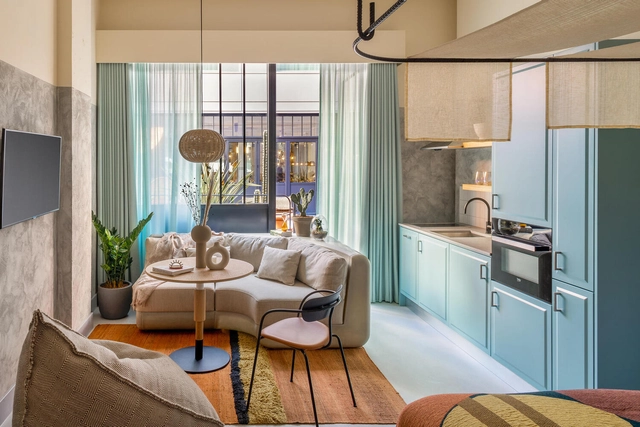
No matter how long, how far, or how restful a trip away is, one of the most relaxing moments of any vacation is when you get home. When every muscle in the body relaxes as you collapse into your own chair, greeted by the comforting features of a home you didn’t previously realize you missed.
After the rise of Airbnb and other likeminded travel accommodation sites and services, providing real homes –or at least characterful spaces dressed up as them– to travelers searching for more familial home comforts, hoteliers, designers, and architects are taking note, and implementing features that turn the hotel room into a home away from home.
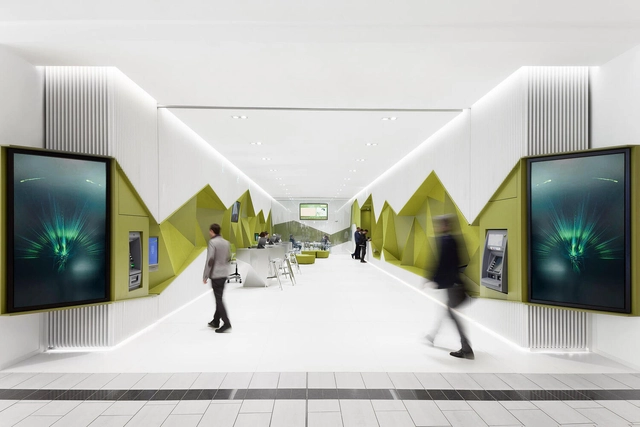
Popping down to a high-street bank branch to pay in a cheque, get out some cash or even open an account are to-do list tasks of the past. With almost all financial services now available online and digital transactions taking more of the market share (up from 28% to 41% from 2019 to 2022), more and more retail branches are shutting up shop.
The complicated worlds of both technology and finance, however, continue to fill many customers with confusion and dread, so perhaps the friendly face of a physical bank storefront with actual humans still has a place. These evolved retail banking interiors hark back to a longed-for time when we knew our local bank manager’s name, but work in conjunction with technology to offer hybrid financial services alongside more personal advice, in comfortable and comforting surroundings.
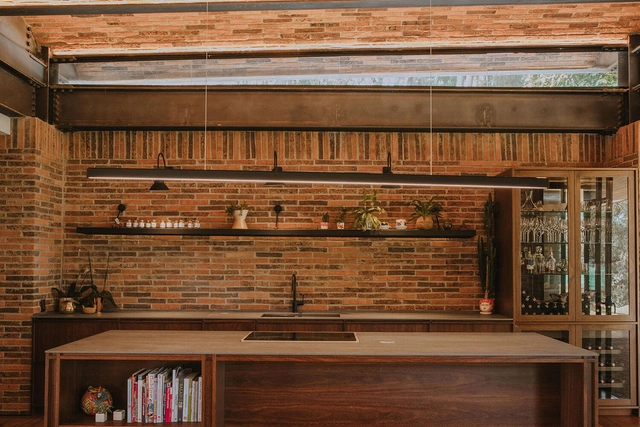
The most important rule for a kitchen backsplash to stand by is right there in the name. An imperative part of kitchen design, backsplashes are there to guard walls and unreachable undercabinet space from problematic stains, splashes, and spills. They also, however, represent a useful creative outlet for kitchen designers and interior architects.
By adding outlandishly striking slivers of color, pattern, and texture, kitchen backsplashes can cut a strong, confident line straight through the monotony of the kitchen’s color palette.
Here are some of the different materials and design techniques that help backsplashes keep kitchens both clean and creative.
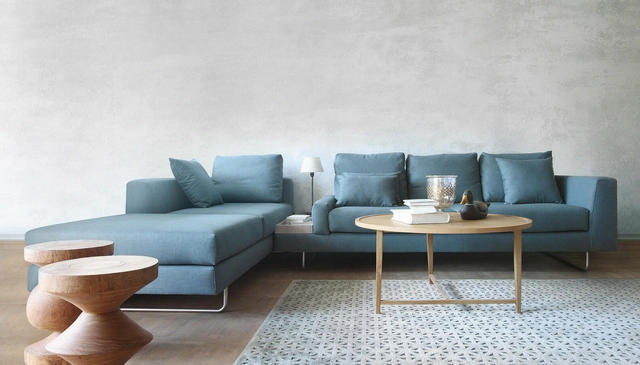
Falling in love is easy. When eyes meet tufting over a crowded showroom, the beauty of a sofa’s slender legs, soft fabric skin, and inviting curves are like a siren song, blinding you from the truth. Then, six-eight weeks after the night before, the bubble bursts.
There’s nothing better after a hard day than cozying up on a comfortable sofa. In fact, there’s nothing better after an easy day either. But what if that settee stunner you fell head over cushion for, isn’t as nice to live with when you get it home?
In order to avoid relationship pain (and neck and back), and ensure long-term compatibility, here are some rules for selecting the right sofa.
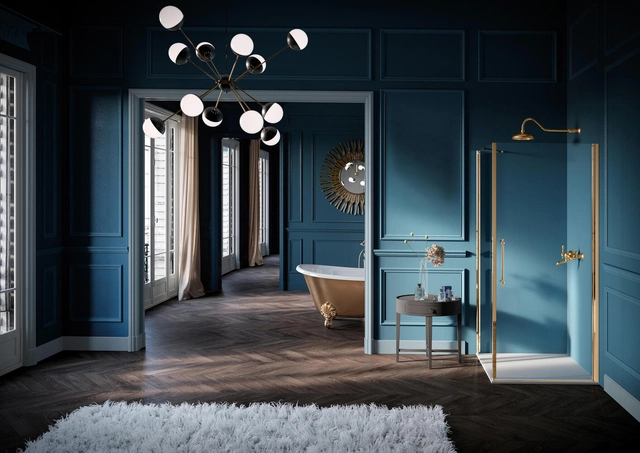
With frames and surrounding waterproof panels in any colour to match or contrast the surrounding decor, shower enclosures like Eterna from Samo are a useful tool in bathroom design. Image Courtesy of Samo
I’ve written before about my preference for showers over baths in the sanitation stakes. An instant hit of hygiene therapy, they’re quicker, cleaner, more energy efficient, and use less water than their horizontal siblings.
Thankfully, I’m not in the minority. Shower popularity means there’s a huge range of shapes, sizes, and types on the market. However, bathroom planning can be exhausting with so many to choose from. Here are six simple questions to ask when looking for the perfect shower enclosure to fit any type of space, lifestyle, or preference.