An online search away from any computer are eye-level views of many of the world’s cities. This technology is powerful – allowing people to have an in-depth look at the cities they might one day visit, live in, or work in. It’s a useful tool for understanding buildings on a more comprehensive level than photographs. This technology is, of course, Google Street View – which recently turned fifteen years old.
We are still at the dawn of the Metaverse, the next wave of the Internet. The current “mainstream” Metaverse platforms serve as experimental containers to host the wildest dreams of virtual worlds where we are supposed to unleash the imagination. However, from a spatial design perspective, they have so far been lame and ordinary. Without the constraints in the physical world, how do we draft the urban blueprints in the metaverse? I believe metaverse planners can find inspiration from Italo Calvino’s Invisible Cities, in which he revealed a poetic and mathematical approach to “urban planning” in the imaginary worlds.
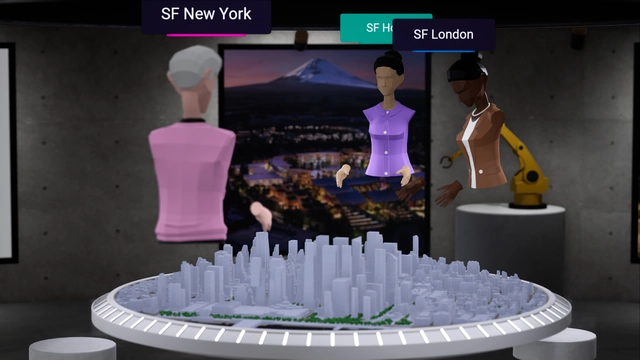
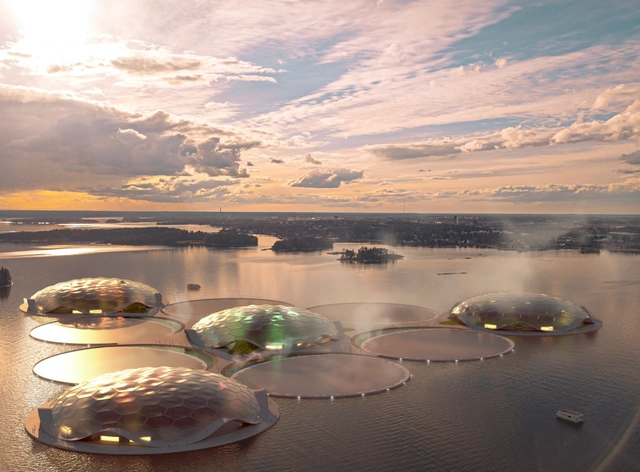
In 2021, CRA-Carlo Ratti Associati’s proposal to create sustainable alternatives for urban heating networks was selected as one of four winners of the global Helsinki Energy Challenge. The project entitled Hot Heart proposed “island-like, floating seawater reservoirs to heat the city of Helsinki in a green way”. Using Twinmotion, Epic Games’ real-time visualization platform for the architecture industry to design the intervention, the large scale infrastructural project needed a digital representation tool to possibly put scale into perspective, offer a real immersive experience to engage the client, and exhibit instant changes related to natural factors such as daylight. Come SpaceForm, a data-driven virtual presentation and design tool. Created to facilitate remote cooperation, the technology allows clients or stakeholders to be more immersed in the story of the design.
Nike recently acquired RTFKT, a design studio that was founded in Jan 2020, and is known for its virtual “metaverse-ready sneakers and collectibles”. Metaverse land purchases are making headlines with multi-million dollar price tags. We’ve also seen mainstream adoption for NFT art this year and the sales are expected to surge to $17.7 billion by the end of 2021.
Beneath the hype and frenzy, we can spot a fundamental shift that unlocks a new creator economy. It provides the creators with direct access to the market, builds ongoing relationships with fans, and unites strangers in self-governed communities. In this article, we will discuss why every 3D designer/architect should embrace the Web 3.0 movement to adopt a new business logic and benefit from the creator economy in the metaverse?
Courtesy of Balenciaga Launches a Video Game for Its Fall 2021 Collection
You might have heard that Mark Zuckerberg wants Facebook to become a Metaverse Company, and earlier this year, Epic Games, the company that develops the Unreal Engine announced that it completed a 1 billion round of funding to support the long-term vision for the metaverse. Metaverse is definitely the hottest buzzword in the tech scene. In this article, we will briefly discuss what is Metaverse, who will build it, and most importantly why it matters for architects, and how can designers play a significant role in this upcoming digital economy?
Henning Larsen has been creating projects that address cross-cultural design, tackle diverse climatic zones, and try to achieve ambitious sustainability objectives. All of this wouldn’t be possible without the use of technology and specially crafted digital and generative design tools that allow architects to treat any element as a parameter in design.
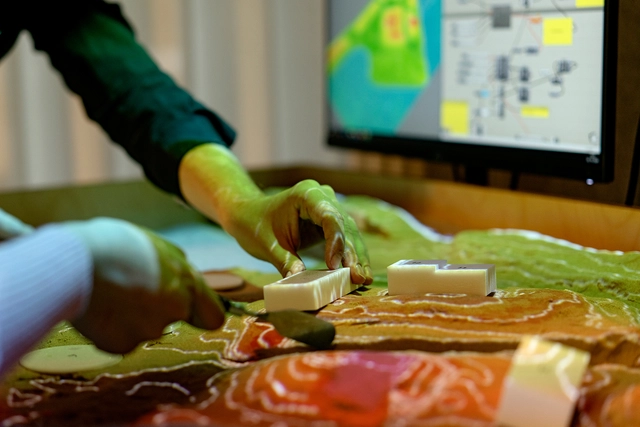
In a special interview with ArchDaily, Jakob Strømann-Andersen, Partner and Director of Henning Larsen’s Innovation and Sustainability Department talks about digital tools and their incorporation in the design process. Focusing specifically in this conversation on Sandworm, a new modeling program that uses sandboxes, Anderson explains how they have achieved to scan and directly transfer manipulated landscapes into a 3D model.
UNStudio and Bjarke Ingels Group have partnered up with Squint/Opera to develop SpaceForm, a virtual, cloud-based platform that facilitates design, review and collaboration processes for architects and developers. The new virtual workspace explicitly developed for the architecture and construction industry aims to fill a gap by creating a viable and sustainable way of collaborating and designing remotely across global teams, thus reducing the need for travel.
Perhaps nothing can kill a project budget or give an owner heartburn quite like costly code fixes during (or in the worst case, after) construction. As architects, we do our best to navigate construction codes during design, but there’s no denying their complexity. Projects have to comply with multiple different codes at both the federal and local levels; different codes sometimes even contradict one another, leading to headaches for the design team.
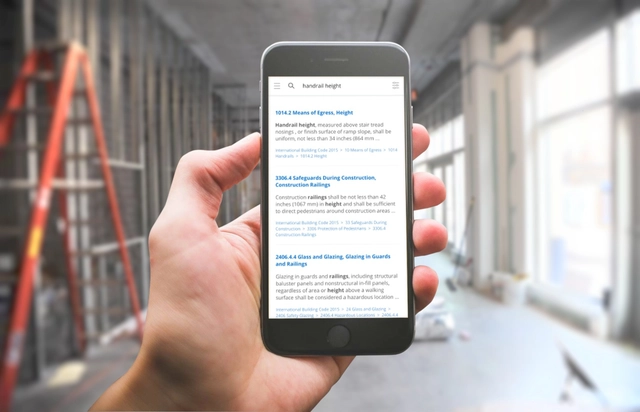
However, a new website and mobile app hopes to make understanding and complying with building codes easier for architects and designers. “The solution we provide is a search engine tailored for architecture,” explains Scott Reynolds, co-founder of UpCodes. With his background in architecture, Reynolds has partnered with his brother Garrett Reynolds—who has a PhD in machine learning—and through UpCodes, the pair to ease some of that building code-driven frustration.
















.jpg?1632299699&format=webp&width=640&height=580)
.jpg?1632299688 "Courtesy of Mars House")
.jpg?1632299564 "Courtesy of Refik Anadol installation")
.jpg?1632299617 "Courtesy of User interface of City Engine")
.jpg?1632299643 "Courtesy of Townscraper, developed by Oskar Stålberg")
.jpg?1632299699)