1. ArchDaily
  2. Common Edge

Common Edge: The Latest Architecture and News

A Letter to the Parents of Prospective Architecture School Students

This article was originally published by Common Edge as "A Letter to Prospective Architecture School Parents."

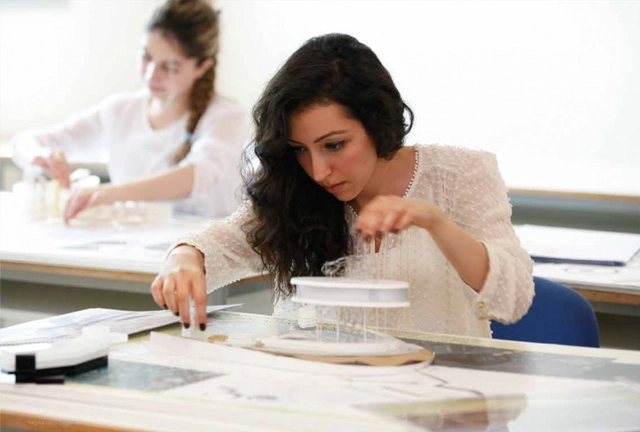
Is your child suddenly wearing angular clothes and pretending to need glasses and talking about things like maylines (sorry, forgot we’re not in the 90s anymore) and 3d-printing and the power of the research lab to change the world studio? Has your child started rejecting your Frank Lloyd Wright photo books and started asking for that super sweet punched-out Chora L Works thing that makes no sense to you because there are literally holes in it? Has your child refused to go on anymore holiday house tours because, seriously mom, this is what I do all day at school?

Then congratulations! You now have an architecture school student child. And as much as we have—and need—the framework of, say, Adult Children of Alcoholics, just as deeply do we need a framework for Adult Parents of Architecture Students. You may be panicking right now. You may be wondering why Bessie is suddenly hating prints (unless she’s wearing all the prints at the same time); why Mark is rolling his eyes when you say there’s a nice-looking house for sale down the block. Rest assured, these are phases that will pass.

I would like to offer you the Phases of Architectural Education, so that you may feel calmer as you embark on this new journey:

The One Big Problem That Advocates of Copenhagen-Style Urbanism Often Overlook

The One Big Problem That Advocates of Copenhagen-Style Urbanism Often Overlook - Image 3 of 4
© Flickr user diversey licensed under CC BY 2.0

This article was originally published on Common Edge as "What We Can (and Can’t) Learn from Copenhagen."

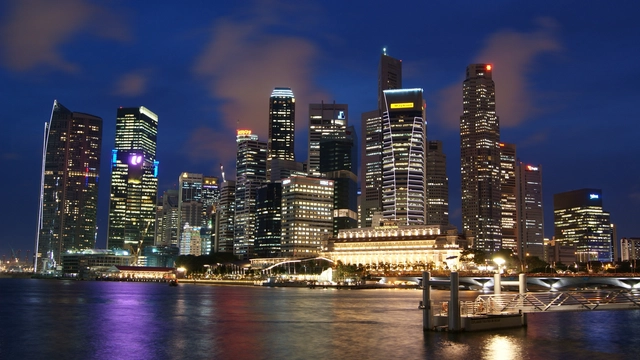
I spent four glorious days in Copenhagen recently and left with an acute case of urban envy. (I kept thinking: It’s like... an American Portland—except better.) Why can’t we do cities like this in the US? That’s the question an urban nerd like me asks while strolling the famously pedestrian-friendly streets, as hordes of impossibly blond and fit Danes bicycle briskly past.

Copenhagen is one of the most civilized cities on the planet. The world’s “most livable,” it’s often called, with some justification. (Although a Danish relative did caution me, “Spend a few weeks here in January before you make that pronouncement.”) But the seemingly effortless civility, Copenhagen’s amazing level of grace, is not an accident of place or happenstance. It’s the product of a shared belief that transcends urban design, even though the city is a veritable laboratory for pretty much all of the best practices in the field.

How Photography Helped to Dehumanize Our Cities

This article was originally published on Common Edge as "How Photography Profoundly Reshaped Our Ideas About Cities."

Early in the 19th century, an invention arrived that would change the form and function of cities for generations.

Like all new technologies, it started out rudimentary, expensive, and nearly ineffectual. But it caught many imaginations and developed dramatically, eventually reaching the point of mass accessibility. Soon enough, it took aim at the public realm, with consequences that were indirect and unintended yet profound.

It reconfigured streets. It influenced the height of buildings. It altered foot traffic. It recast the relationship between buildings and streets. It changed how people felt about their cities and changed their points of reference. It turned cities into abstractions and, in some ways, turned city-dwellers against each other. Its influence nearly complete by the close of World War I, the invention has remained fundamentally unchanged, and is still universally celebrated, to this day.

All this with the press of a button.

The Tragic Human Cost of Africa's New Megacities

This article was originally published by Common Edge as "Tale of Two Cities: Unravelling the Brutal Backstory Behind Africa’s Emerging Megacities."

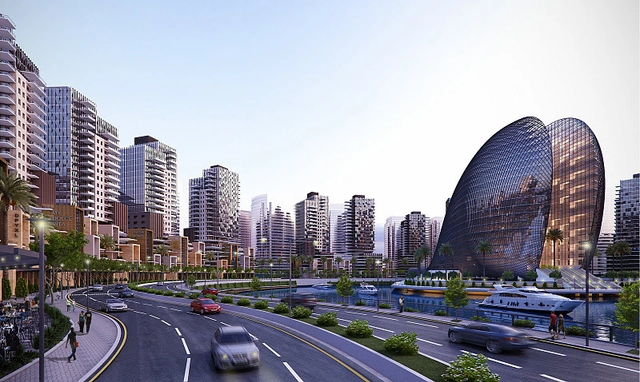
In the last two decades, the African narrative has changed phenomenally. The tired, age-old storyline—largely woven around the stereotypes of poverty, disease, and bloody civil wars—has been replaced with one celebrating the continent’s unprecedented economic growth and relative political stability. This new narrative is also about Africa’s gleaming skyscrapers, massive shopping malls, and ambitious “smart” cities being designed and built from scratch: Ebene Cyber City in Mauritius; Konza Technology City in Kenya; Safari City in Tanzania; Le Cite du Fleuve in DR Congo; Eko Atlantic in Nigeria; Appolonia City in Ghana, and others.

There are currently at least twenty of these new cities under construction in Africa and about twice that number in the works. These developments have permanently altered the continent’s urban outlook, and have offered it something different from the bland pastiche of colonial architecture that it was once known for. As a designer, I was initially excited by the quality of some of the architecture. Though I must admit that these new cities are eerie mimicries of similar developments in China, Singapore and even the UAE, and that they’re largely bereft of any cultural connection to Africa.

10 Years On, How the Recession Has Proven Architecture's Value (And Shown Us Architects' Folly)

This article was originally published by Common Edge as "Building Madness: How the Boom and Bust Mentality Distorts Architecture."

Architects are economically bipolar; for us it is either the best or the worst of times. And it’s not just architects. The entire construction industry is tuned to these extremes, but only architects are psychologically validated by booms and crushed by busts. All professions have a larger source of dependency—medicine needs insurance, law needs the justice system—but the construction industry has a starker equation: building requires capital.

Contractors tend to react to market flows in purely transactional ways. Booms mean more work, more workers, more estimates, business expansion. For architects, a boom means life validation. Every architect wants to make a difference, and many want to offer salvation, like the architect Richard Rogers, who once said, “My passion and great enjoyment for architecture, and the reason the older I get the more I enjoy it is because I believe we—architects—can affect the quality of life of the people.” But salvation can only be earned if buildings are created.