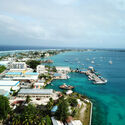
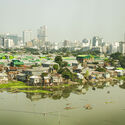
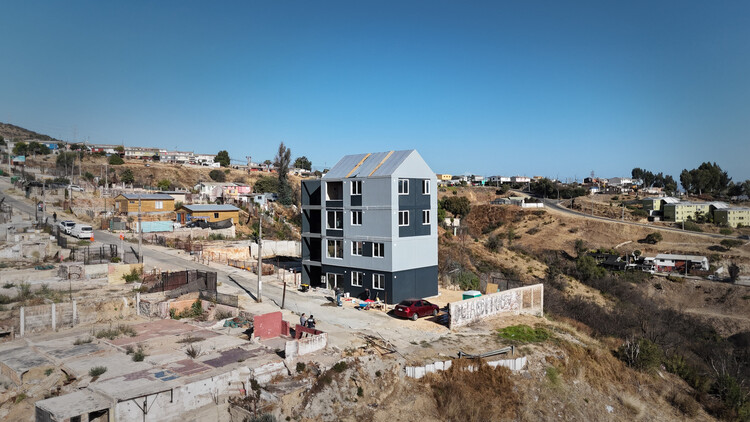
Prefabricated Building Viña del Mar by ELEMENTAL. Image Courtesy of ELEMENTAL
Displacement is usually understood through movement: the moment people are forced to move from one place to another. Yet from an architectural perspective, that movement is only the beginning of what comes next. A house may need to be rebuilt, an entire community relocated, or everyday life reestablished somewhere completely new. What is lost through displacement is not always something architecture can simply replace.
This question is particularly relevant in Latin America, where displacement has shaped communities under different circumstances and at different scales. What happens afterward depends on why people were forced to move, whether they can return, and what remains of the places they inhabited. Some communities rebuild within familiar surroundings. Others must establish everyday life somewhere new. These differences shape what architecture is being asked to do.
December 18 marks the United Nations' International Migrants Day, which aims to highlight the need for safer, fairer, and more inclusive migration systems. Proclaimed on December 4, 2000, the day seeks to recognize the multiple dimensions of migration beyond its economic and humanitarian aspects. According to the UN, mounting evidence indicates that international migration is beneficial for both countries of origin and destination. In this sense, International Migrants Day offers an opportunity to spotlight the value of the possibility to migrate and the contributions of millions of migrants worldwide to the cities and cultures in which they are integrated.
Aligned with this perspective, the UN's 2025 theme, "My Great Story: Cultures and Development," emphasizes how human mobility drives growth, enriches societies, and helps communities connect, adapt, and support one another. At the same time, International Migrants Day also acknowledges the increasingly complex environment in which migration occurs. Conflicts, climate-related disasters, and economic pressures continue to force millions of people from their homes in search of safety or opportunity. From both perspectives, it is essential to recognize the role of architecture in building integrated, multicultural communities and in responding to the conditions that lead people to migrate from their territories in the first place.
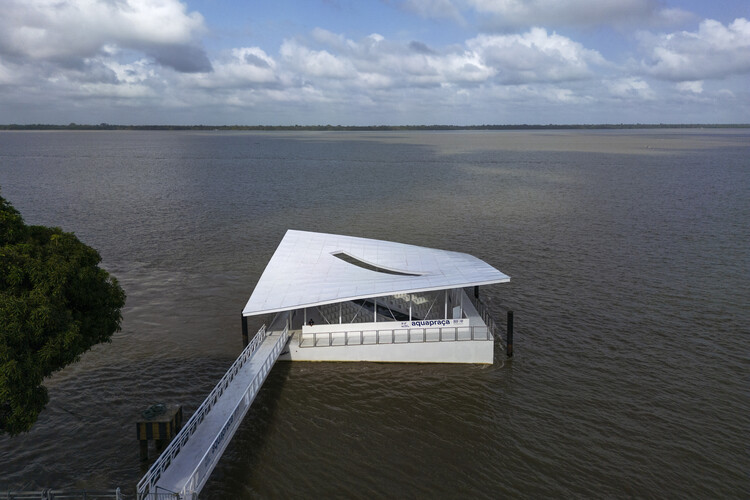
On November 21, 2025, the closing day of the 30th edition of the Conference of the Parties (COP) took place, the yearly gathering of United Nations member states to negotiate international climate agreements and assess global progress toward emissions reduction. This year, the event was held in Belém, Brazil, a port city of fewer than 1.5 million people, widely known as a gateway to Brazil's lower Amazon region. First convened in 1992, UN Climate Change Conferences (or COPs) are an international multilateral decision-making forum on climate change involving 198 "Parties" (197 countries, nearly all of them, depending on definitions of country, and the European Union). Their purpose is to assess global efforts toward the central Paris Agreement aim of limiting global warming to as close as possible to 1.5 °C above pre-industrial levels. The event brings together leaders and negotiators from member states, business figures, young people, climate scientists, Indigenous Peoples, and civil society around issues considered essential to that climate goal. This year, COP30 was marked by strong criticism of its ties to the fossil fuel industry, descriptions of agreements as fragile and insubstantial, and the struggle to move climate finance "from pledge to lifeline."
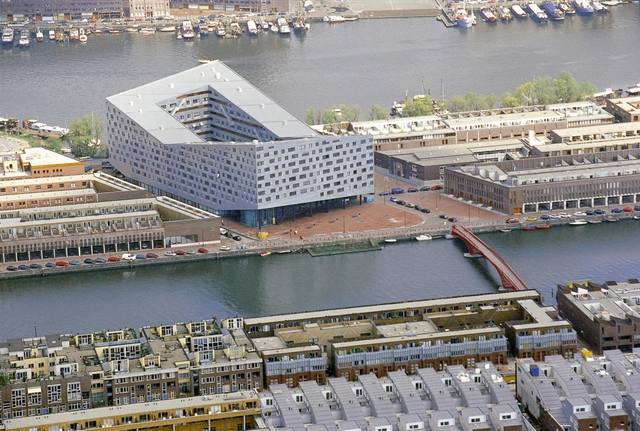
In 2020, in the midst of the first wave of lockdowns due to the pandemic, the municipality of Amsterdam announced its strategy for recovering from this crisis by embracing the concept of the “Doughnut Economy.” The model is developed by British economist Kate Raworth and popularized through her book, “Doughnut Economics: Seven Ways to Think Like a 21st-Century Economist”, released in 2017. Here, she argues that the true purpose of economics does not have to equal growth. Instead, the aim is to find a sweet spot, a way to balance the need to provide everyone with what they need to live a good life, a “social foundation” while limiting our impact on the environment, “the environmental ceiling.” With the help of Raworth, Amsterdam has downscaled this approach to the size of a city. The model is now used to inform city-wide strategies and developments in support of this overarching idea: providing a good quality of life for all without putting additional pressure on the planet. Other cities are following this example.
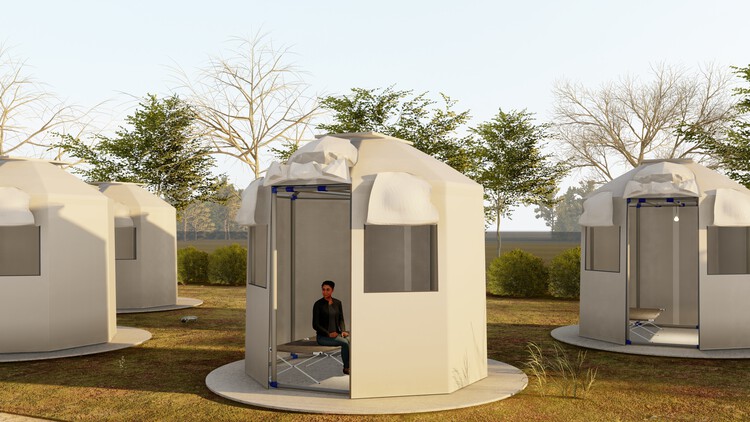
2025 Creatives For Our Future - AllSpace Modular Home. Image Courtesy of Swarovski Foundation
Nigerian-born architect Blossom Eromosele has developed AllSpace, a modular housing design inspired by traditional African architecture. The design was created as part of the Swarovski Foundation's fourth edition of the Creatives for Our Future global mentorship and grant program, developed in collaboration with the United Nations Office for Partnerships. Among the six selected projects, AllSpace seeks to respond to the current Nigerian refugee crisis with a low-cost, solar-powered housing solution for camps.
In November of 2022, the coastal city of Sharm El Sheikh, Egypt, hosted the 27th convention of the United Nations Conference of the Parties, known as COP27. Since signing the Paris Agreement in 2015, the nearly annual conference has gained momentum as a global leader in sharing knowledge and developing frameworks to mitigate climate change worldwide. While the more recent COP28, held in Dubai in 2023, focused on conversations of energy production, this previous conference focused on urban contexts, as they deal with the urgent need for incorporating loss, damage, and climate reparations into climate action plans. As two years have now passed since COP27, it is important to revisit these discussions and hold governing bodies accountable for the promises made and the benchmarks set for climate change mitigation. One of the most ambitious plans from COP27 highlights an urgent debate in our urban environments: how will we define loss, damage, and climate reparations in the twenty-first century?
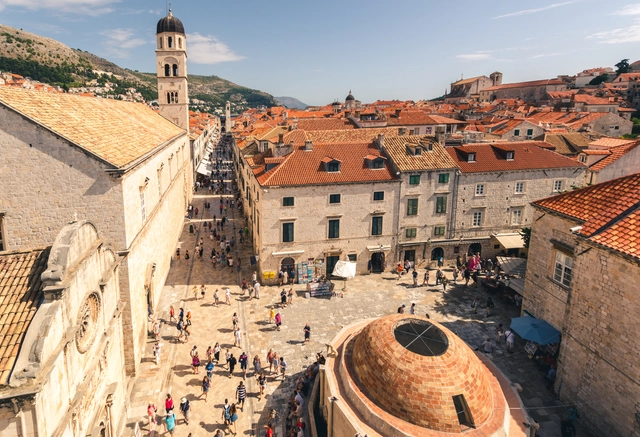
Eastern and Southern Europe is enduring a severe heatwave, with temperatures reaching over 40 degrees Celsius in many countries including Greece, Croatia, Macedonia, and Romania. Driven by hot air from North Africa, this prolonged heatwave has raised significant threats for residents and has strained the cities’ mechanisms for protection and climate mitigation. As the heatwaves expose the vulnerabilities of urban infrastructures, cities across Europe are striving to implement measures to address these challenges.
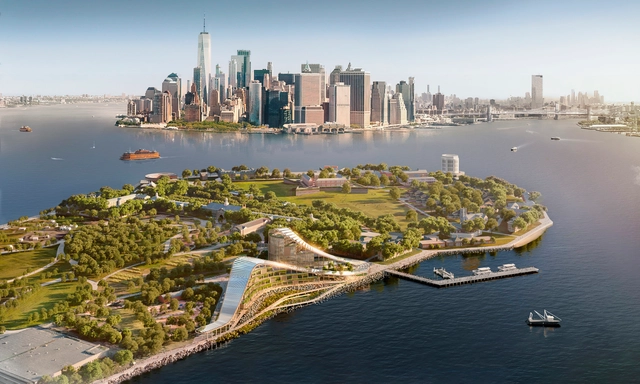
Skidmore, Owings & Merrill have been selected to design the New YorkClimate Exchange in partnership with Stony Brook University, a public research institute in New York. The new net-zero campus, located on Governors Island, New York, is planned to serve as an anchor institution for the development of new climate solutions. As a first-of-its-kind international center, “The Exchange” will also act as a regional hub for the green economy.
Every year since its establishment in 1970, Earth Day aims to bring into focus not only the increasingly threatening effects of climate change but also highlight the effective measures and adaptation efforts that can improve the quality of our environment. This year’s event comes after a report from the United Nations’ Intergovernmental Panel on Climate Change (IPCC) in March, which presented another warning on the magnitude of changes produced by human-induced global warming and its impact on people and ecosystems. The same report does offer some hopeful prospects as well, showing that adaptation measures can build resilience, but those urgent systemwide transformations are needed to secure a net-zero future. In response to these findings, the 2023 Earth Day is focused on the theme of “Investing in Our Planet,” as an encouragement for governments, institutions, businesses, and civil society to accelerate the change. Read on to discover several citywide initiatives aligned with these objectives of building resilience and a more sustainable future through legislation, civic involvement, and innovative systems.
Starting on November 6, world leaders are gathering in Sharm el Sheikh, Egypt, for COP27. The name stands for the 27th conference of parties, an almost annual event started under the 1992 UN framework convention on climate change (UNFCCC). The purpose of these conferences is to ensure that counties around the world are committed to taking action to avoid dangerous climate change and find ways to reduce greenhouse gas emissions globally in an equitable way. The effectiveness of these meetings varied throughout the years, with some successful initiatives, like the 2015 Paris Agreement, a legally binding international treaty adopted by 196 Parties with the goal of limiting global warming below 2, preferably 1.5 degrees Celsius, compared to pre-industrial levels.
Architecture, by its very definition, involves the construction of structures. Structures that are meant to serve as spaces for work, living, religious devotion, amongst many other purposes. Architectural projects and interventions, however, need land – and it is this intrinsic relationship, between land and architecture, that has massive ramifications not only regarding reducing carbon emissions but more importantly in forming an equitable future rooted in climate justice.
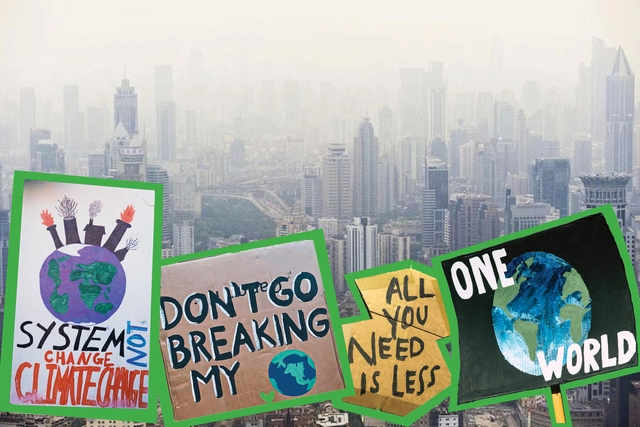
The impact that the climate crisis has had on the globe over the last decade is a critical influence on how architects and urban planners design future cities. It’s clear that both at an individual and corporate level, it’s important to take action and protect the earth before the negative impacts change our familiar environments forever- and time is running out fast. When it comes to creating ways to save our cities from “the next big one”, whether it be a hurricane, flood, snowstorm, or fire, the way that we design the preventative infrastructure neglects a significant number of people. Climate change doesn’t just impact the wealthiest places in the world, it actually has greater effects on the most impoverished.
Since the 2015 Paris agreement, mitigating climate change has been established as a common, world-encompassing goal; however, both the impacts of the climate crisis and the actions currently being taken vary widely across the globe. At the moment, the most prominent cities are outpacing governments in addressing the climate crisis and fostering a green transition, but their actions are counteracted by inaction and an increase in carbon emissions elsewhere. Moreover, the vulnerabilities and adaptive capacity to different levels of climate disruptions vary across nations. Discussing environmental inequalities through the lens of climate risks and mitigation actions, the following highlights the need for a global coordinated and transdisciplinary effort in addressing the climate crisis.
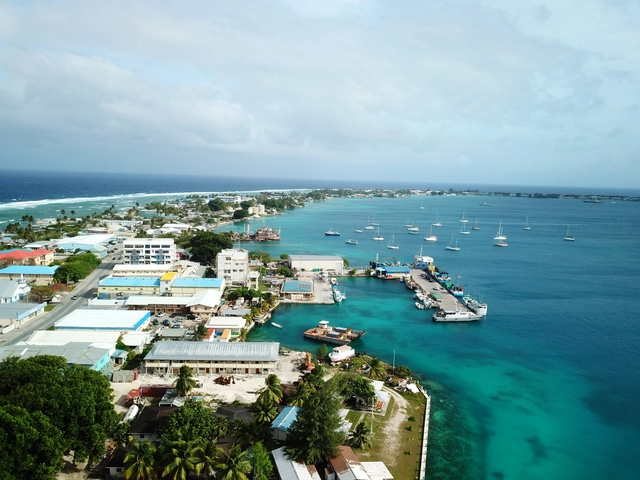
Over the past week, I’ve seen at least two largemainstream press articles on climate migration, and as more people seem to be tossing around their next move locale—something between North Dakota and anywhere else with the word “north” it. Often, in a simplified, single-issue flattening of the full-range of shifts happening around us.































.jpg?1632124377)