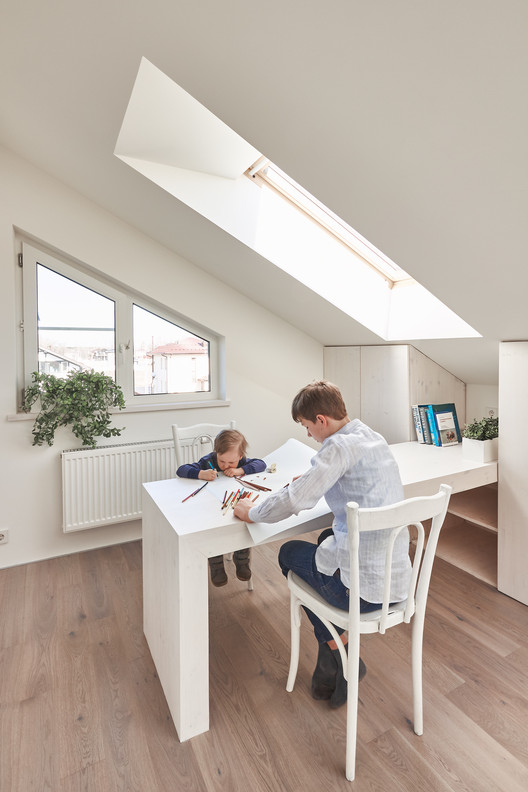
Children's furniture is all furniture –fixed or mobile– that is designed according to the ergonomic guidelines and anatomical dimensions of children specifically. Following this definition, we can identify two types of furniture: (1) those that facilitate a relationship between the caregiver and the child, and (2) those that allow the child to use them independently.
The big difference between these two types is that the first has dimensions that mainly adapt to the ergonomics of the adult, while the second is designed to meet the ergonomic needs of the child at each stage of their development. Since the growth of children occurs relatively quickly, it is common for the furniture of this second group to be multifunctional or even extendable.
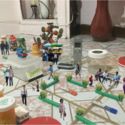
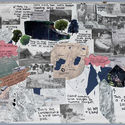
Final Project by Khalya. Image Courtesy of PennPraxis x Fresh Air Fund
This past summer, the nonprofit design practice, PennPraxis, in partnership with The Fresh Air Fund, piloted a new program, Virtual Design Studio, that sparked the imaginations of nearly 150 students to show how design has the power to change the built environment. Their courses, which were taught by University of Pennsylvania Stuart Weitzman School of Design graduate students, generated multiple designs for a nature center operated by The Fresh Air Fund and public spaces in New York City and offered children an introduction to explore future careers in design that could have a lasting impact on their communities and the design professions for years to come. Over the course of seven weeks, these students committed over 150 hours to the program while also receiving a stipend.
Emmi Pikler was a Hungarian pediatrician who introduced, in the years after World War II, a new philosophy on early childhood care and learning for children up to the age of 3. It was after the birth of her first child that she began to question: what happens when a child is allowed to develop freely? The observed results culminated in the introduction of a new methodology.
The Pikler approach facilitates the free development of children by caring for their physical health and providing affection but largely respecting their individuality and autonomy. Following this logic, intervention by adults becomes mostly unnecessary. Rather, for the child to experience space while moving freely, certain care must be taken in the preparation of the environments themselves.
In early 2020, along with the implementation of worldwide social isolation measures, we published several articles in order to help our readers increase productivity and comfort in their home offices. After months of continued isolation, surveys show that more than 80% of professionals want to continue working from home even after quarantine ends. In addition, a good number of companies are similarly satisfied with current work practices, showing a high tendency to adopt this practice indefinitely, since the majority of companies observed that remote work was as or more productive than face-to-face work.
However, with respect to children and home studying during the pandemic, the result was not as positive. One of the main reasons for this difference is that it can be difficult to get students to concentrate and motivate themselves for a long time in front of screens. Lack of physical interaction with other children is also a contributing factor. Yet until the global situation improves, it is likely that the return to schools will continue to be postponed. With this situation in mind, we decided to share in this article a series of efficient strategies to transform study spaces at home into better spaces for learning.
It is unquestionable that environments directly influence the behavior and emotions of their users. Human beings spend approximately 90% of their lives indoors, making it imperative that the spaces we inhabit stimulate positive behavior and emotions, or at least don't influence us negatively. There exists a specific term describing the stimuli that the brain receives from its environment: neuroarchitecture. Several studies have been published on this topic, most focusing on its impact on work environments. This article approaches this concept through a different, yet essential lens: emphasizing its importance in the design of spaces for children in early childhood.
In her Sesc Pompéia theater, architect Lina Bo Bardi designed a central stage revealing the structure and all the functions of the theater's program, and renouncing traditional theater seating. Her seats were not upholstered, were close to each other, and encouraged a more aware, attentive, and upright posture among the audience, thus honoring, according to her, the ancient art of theater.
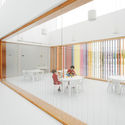
In the same way that the characteristics of architectural spaces alter our mood, feelings, concentration, and learning, so does the integral design element of furniture, which must be taken seriously when considering comprehensive user experiences. Regarding schools and learning environments in particular, the same attention given to teaching materials is often not conferred on furniture and physical structure.
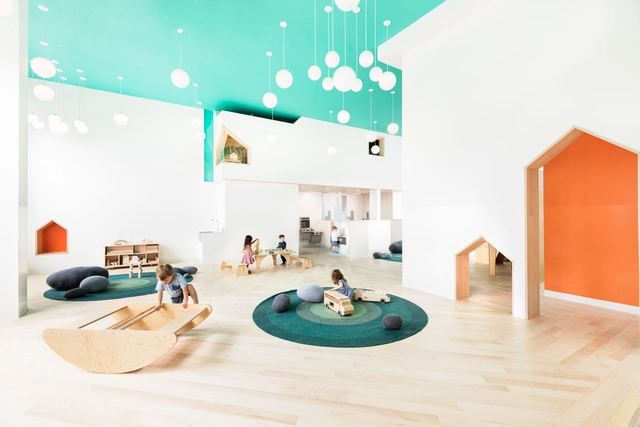
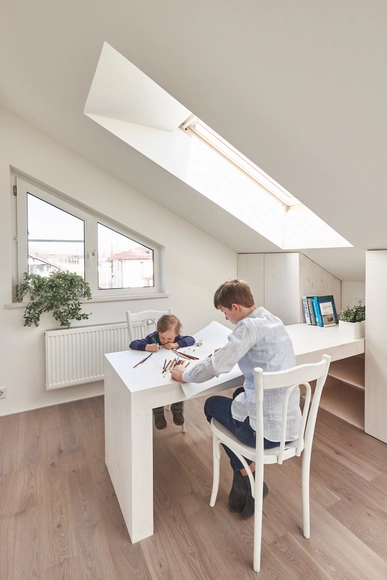
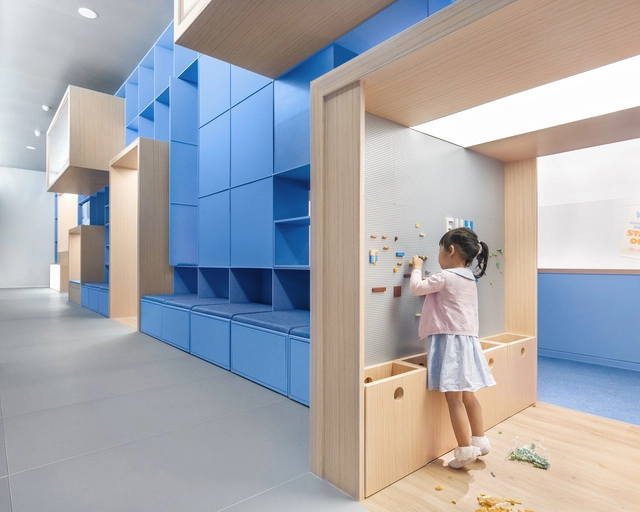
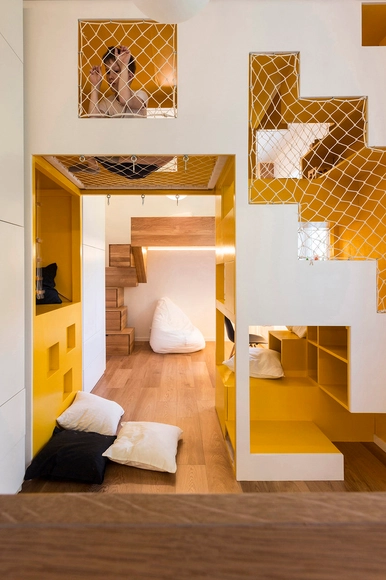
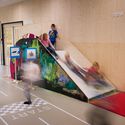
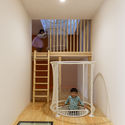
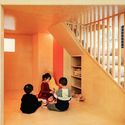
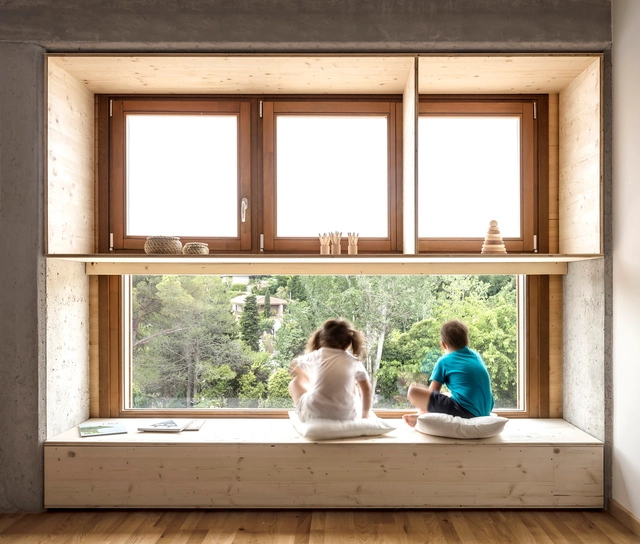
The environment we inhabit influences us directly. For kids, this environment must be especially safe and accessible, yet simultaneously stimulating, so that they can move and develop freely without jeopardizing their physical safety. We have already written about how to create playgrounds in interior spaces. Today, we put together a series of examples that use the warmth and versatility of wood to create interactive, creative, and fun interiors for children.
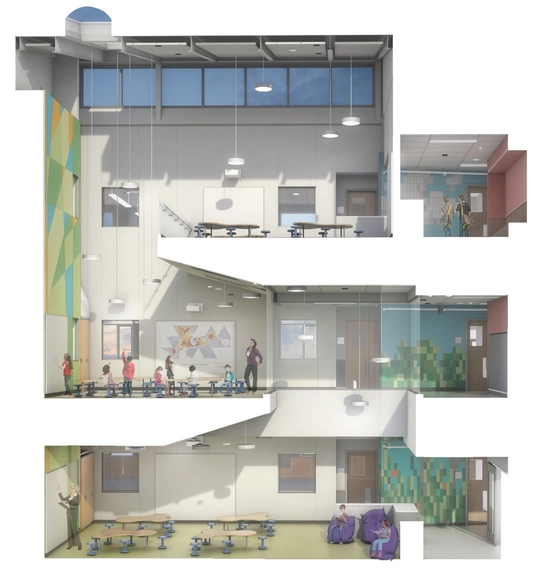
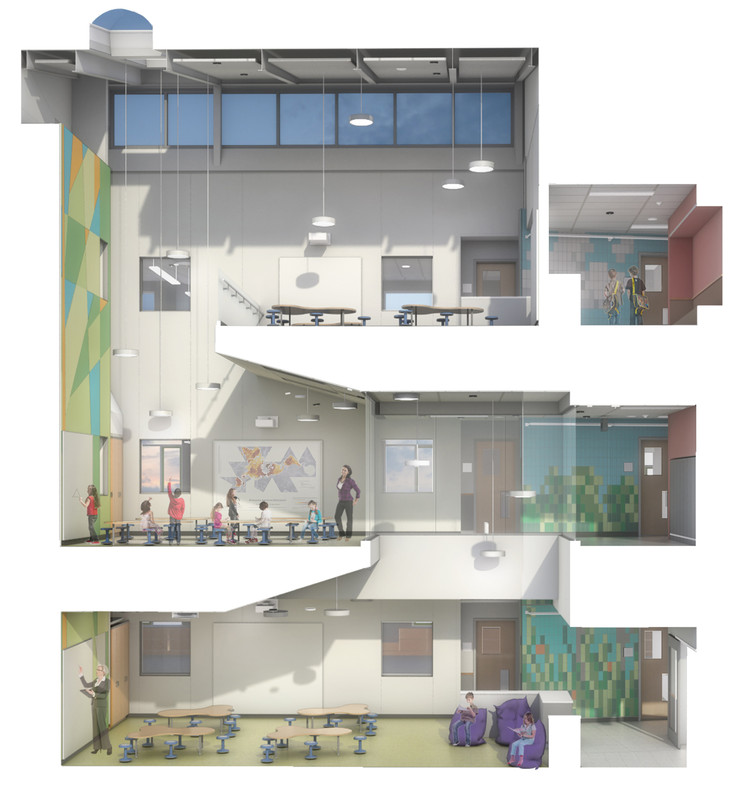
Woodland Elementary School / HMFH Architects. Image Cortesia de HMFH Architects
It is a student's right to be educated in a safe, healthy, and even aesthetically appealing environment, especially young students for whom these factors are even more important. For example, it has been shown that when the ergonomics of chairs are inadequate, they can greatly affect levels of concentration and the development of skills such as calligraphy. At the same time, the effectiveness of traditional teaching methods is increasingly being questioned and the quality of alternative methodologies increasingly being considered. In other articles, we discussed in more detail the design of Montessori schools and the atmosphere of Waldorf interiors.
Today, we will cover the importance of choosing furniture and address some aspects to consider when organizing them in classroom design for the schools of the future.
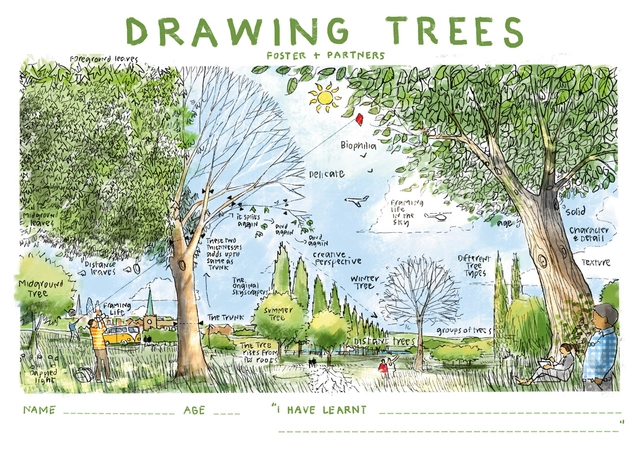
Foster + Partners has created a series of architectural challenges for kids, to learn and have fun during the lockdown. Available templates and activities include making paper skyscrapers, creating your own city, drawing trees, and imagining the future.
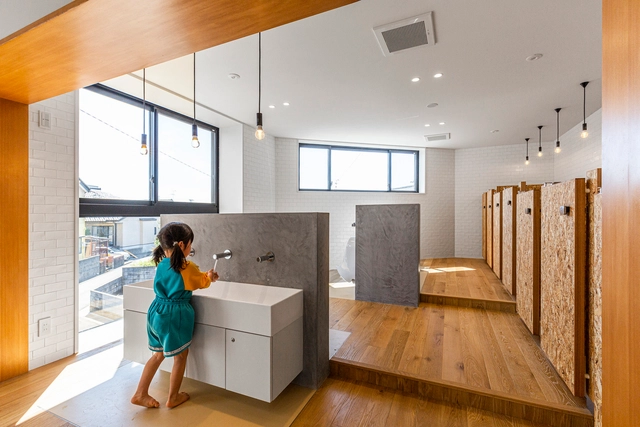
We often use the term accessibility when designing spaces for the elderly or for people with special needs. However, to guarantee effective universal design for children, it is necessary to understand and cater to their specific needs as well, especially through ergonomics, safety, lighting, colors, and some particular accessories. In this article, we will cover the most important parameters to consider when choosing dimensions and materials in public bathrooms for young children.
Introduced by Rudolf Steiner, Waldorf pedagogy draws on the principles of anthroposophical philosophy. One of the theory's foundational characteristics is its holistic approach to the human being: feelings, imagination, spirit, and intellect are considered unique to every individual, and thoughts, feelings, and actions are understood to always be linked.
Thus, the focus of the philosophy is to cultivate individuals who are capable of relating both to themselves and to society (inter and intrapersonal intelligence) - fundamental skills for overcoming the challenges of the 21st century. This kind of learning takes place in schools that follow Steiner's method, introducing families to the school environment and bringing them into the community. Below, we review the operations and implications of this pedagogy.
via Cities for Play. Designing Child Friendly High Density Neighbourhoods
'Cities for Play' is a project whose main objective is to inspire architects and urban planners to create stimulating, respectful, and accessible cities for children.
Natalia Krysiak, its creator, is an Australian architect who believes that children's needs should be placed at the center of urban design to ensure resilient and sustainable communities. In 2017, she produced 'Cities for Play,' studying examples of cities that are concerned with providing environments that are capable of promoting the health and well-being – physical and emotional – of children through a focus on play and "active mobility” in public spaces.
Did you know that 64 million European children spend more time at school than anywhere else other than their home? European children spend approximately 200 days each year at their primary schools. With this information, how do we go about designing healthier classrooms that create productive learning environments? This question is perhaps more important than ever, as this will be the first time since the 1970s that Europe and the UK will see a boom in the construction and renovation of schools. What a tremendous opportunity this is for both architects and educators to rethink what an educational facility should be and how the physical environment can be designed to have a positive impact on learning.
The tale began with a simple idea - a toy that every child, regardless of age and ability, can play, dream, and learn with. But things turned out less than simple. Fights, lawsuits, and even a death all mark the road it took to make a now-ubiquitous toy a reality. The object in question? Lego.
It’s tales such as this one that Alexandra Lange explores in her new book, The Design of Childhood: How the Material World Shapes Independent Kids. Some may scoff at the seemingly trivial subject matter. Surely children, with their boundless imaginations and appetite for play, can discover ways to find fun in anything.
Le Corbusier stated in his seminal text, Towards a New Architecture, that “...man looks at the creation of architecture with his eyes, which are 5 feet 6 inches from the ground.” Logical and rational codes such as this form the standard for much of architectural production - but of course, these "norms" are as constructed as architecture itself. This particular standard is especially irrelevant when designing for children, for whom the adult-centric assumptions of architecture do not and should not apply.
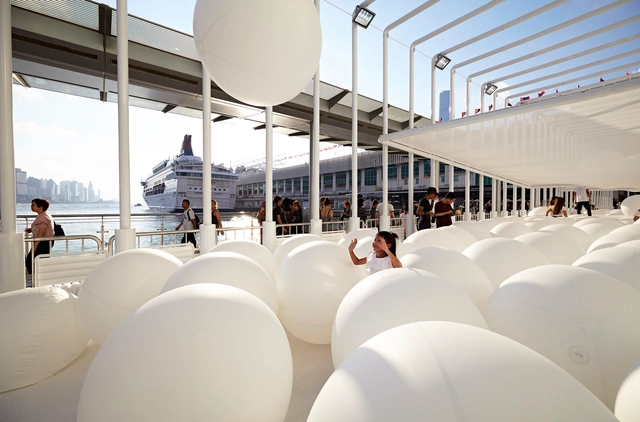
New York-based collaborative and design studio Snarkitecture have unveiled their newest interactive installation, bringing a surreal sense of play to Hong Kong’s waterfront. Titled “BOUNCE,” the installation features hundreds of 300% sized bouncing balls contained in a cage-like stadium, inviting the public to “create their own unique playing experiences.”
The program is spread across three locations, with the feature installation along the Harbour City waterfront, an indoor installation at the Ocean Center titled “Gallery by the Harbour,” and a children’s “Eyeball Maze” at the Ocean Terminal.
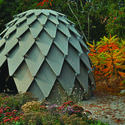
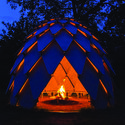
Designed by Czech designers Atelier SAD and distributed by mmcité1, this mobile, nature-inspired gazebo is a playground must-have for children and adults alike. 109 waterproof, plywood scales are treated with resistant glaze and connected by galvanized joints to create a self-supporting, sustainable structure.
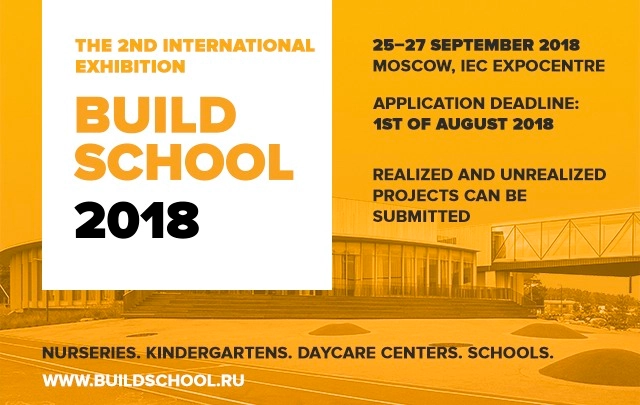
The Union of architects of Russia invites you to participate in the 2nd Russian competition with international participation "Build School Project 2018" on nursery, kindergarten and school designs and constructions
The Union of architects of Russia invites you to participate in the 2nd Russian competition with international participation "Build School Project 2018" on nursery, kindergarten and school designs and constructions, which will be held in the framework of the 2nd international exhibition "Build School 2018" from 25 to 27 September 2018 in Moscow in "Expocentre".


.jpg?1602872084&format=webp&width=640&height=580)
.jpg?1602872196 "Photo: 1931, Kaunas, Lithuania. Two children working on reading/writing words at Maria Varnienė's Children's House. The child on the left is Stasys Ragaišis, who later became a medical doctor.. Image via @montistory101")

.jpg?1602872084)
















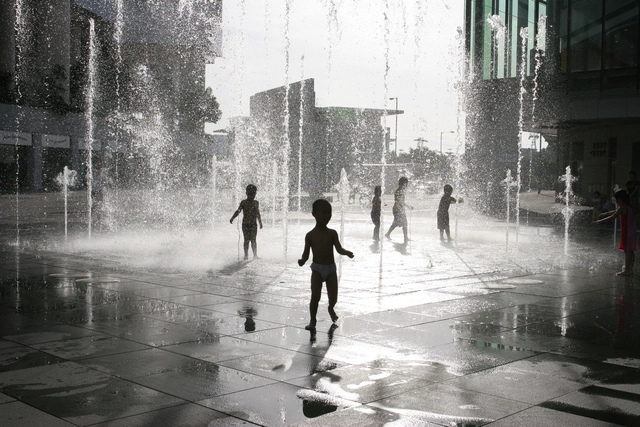



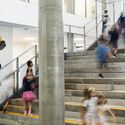



_Katsuhisa_Kida_2.jpg?1535707378 "© Katsuhisa Kida")
_Antoine_Espinasseau_2.jpg?1535707302 "© Antoine Espinasseau")
_John_Donat_RIBA_Library_Photographs_Collection.jpg?1535707315 "© John Donat RIBA Library Photographs Collection")
_Dorte_Mandrup.jpg?1535707286 "© Dorte Mandrup")