The Zero Carbon policy is intended to create a kind of ecological balance to neutralize greenhouse gas emissions. Several studies report that the construction sector is one of the main responsible for the unbalance in which we find ourselves today, after all, it consumes natural resources on a gigantic scale and still builds buildings that do not collaborate with the maintenance of the environment. Therefore, searching for paths towards a carbon neutral architecture has become fundamental and one of them is learning from past masters, such as the Brazilian architect João Filgueiras Lima, known as Lelé.
Carbon footprints and CO2 emissions are large topics in our conversations about how we create a more sustainable future. Over time, different companies, organizations, and individuals have pledged to alter their lifestyles and habits to make changes that show that they are dedicated to combating climate change. Especially in the design industry, where buildings generate nearly 40% of annual CO2 emissions broken down between daily operations and construction/demolition, architects have long been feeling the pressure of exploring ways to prove that we are doing our part.
When we take a look at the different scales of emissions, one question commonly occurs- how can we measure the different levels of impact? Is it on us individually to recycle and ensure we never use plastic straws again? Does this even have a major impact? Do more car manufacturers need to find alternates for gasoline-fueled automobiles? Do architects need to only source sustainable materials? What are the actionable steps that truly have an impact?
The climate crisis has reshaped contemporary architecture. Sustainability has become a central guiding force in design, and in turn, architects are rethinking how to build today. For CO Adaptive Architecture, addressing the climate crisis begins with a process oriented practice. Together, Ruth Mandl and Bobby Johnston have created a firm that embodies how a values-based approach can tackle the most pressing issues of our time. The result is elegant and impactful architecture brought to life with poise and finesse.
A carbon neutral building is achieved when the amount of CO2 emissions is balanced by climate-positive initiatives so that the net carbon footprint over time is zero. Considering their unmatched ability to absorb CO2, planting trees is often viewed as the best carbon offsetting solution. But as cities become denser and the amount of available horizontal space for green areas drastically reduces, architects have been forced to explore other approaches. Therefore, to address these climatic challenges and connect people to nature, exterior green walls have become a rising trend in increasingly vertical cities. Even if there is research to claim that these can positively impact the environment, many question if they can actually contribute to a carbon neutral architecture. Although the answer may be quite complex, there seems to be a consensus: green walls can be effective, but only through good design.
Among the many difficulties that the construction industry currently faces, confronting the climate emergency continues to be one of the main challenges. In fact, considering that the sector is responsible for around 40% of global greenhouse gas emissions, aiming towards net-zero, carbon-neutral architecture should and must be the top priority. Although there is a long way to go for most buildings to cancel out the amount of carbon dioxide they produce, the concept is quickly gaining traction and will certainly become the new norm as we look into the not-too-distant future. As a result, the following question arises: how can architects, designers and other actors involved in the industry contribute to sustainable design and net-zero architecture?
As revolutionary as the construction sector may seem nowadays, it currently accounts for nearly 40% of the world’s carbon dioxide emissions, 11% of which are a result of manufacturing building materials such as steel, cement, and glass. Fast forward a couple of years later, after a life-changing global pandemic and indisputable evidences of climate change, CO2 emissions are still on a rise, reaching a historical maximum in 2020 according to the 2020 Global Status Report for Buildings and Construction. Although a lot of progress has been made through technological advancements, design strategies and concepts, and construction processes, there is still a long way to go to reduce carbon emissions to a minimum or almost zero in the development of built environments.
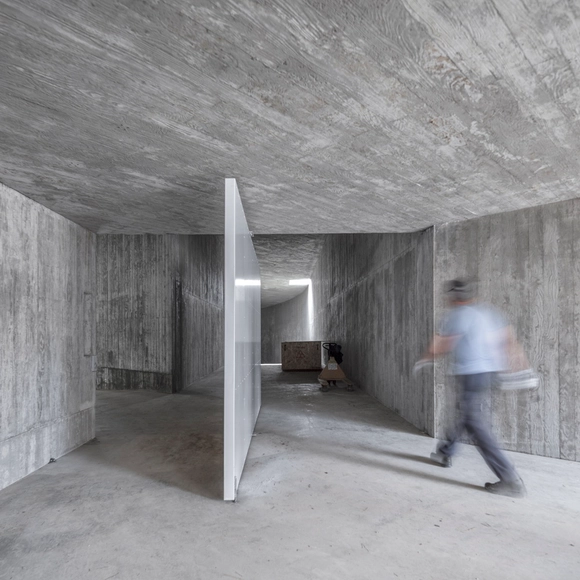
Concrete and sustainability are two words that are often considered incompatible. Used as early as the Roman era, concrete has shaped much of our built environment, being the most widely used manufactured material in the planet thanks to its resistance, versatility, cost-effectiveness, and accessibility, among other inherent benefits. Its popular use in buildings and infrastructure forms the foundations of cities, connects communities, and will continue to play a vital role in providing solutions to the challenges of the future – especially as cities must respond to a growing global population. But with cement as its key ingredient, it also comes with several environmental costs, being responsible for at least 8% of the world’s carbon emissions in a climate-change context. However, it doesn’t necessarily have to be that way. With the rise of innovative technologies and products, there are many ways to make concrete greener.
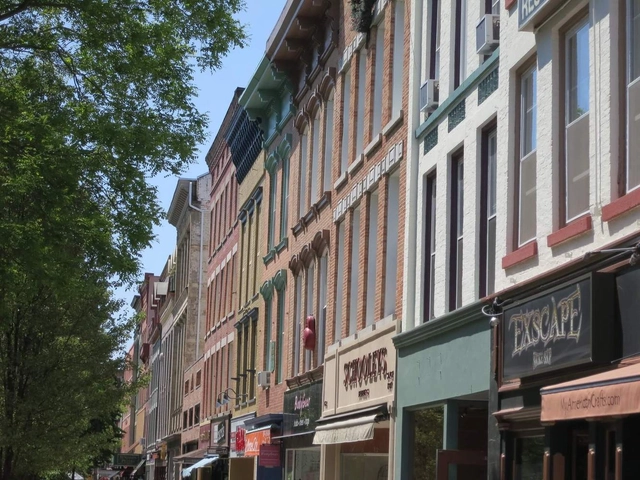
The Ithaca Commons, a downtown pedestrian mall, pictured in 2012.. Image via Paul Sableman/Flickr/CC BY 2.0
Last week, the Common Council of Ithaca, New York, voted to approve a first-in-the-nation decarbonization plan in which the roughly 6,000 homes and buildings located within the notably “enlightened” lakeside college town will be electrified to meet goals established by the city’s impressively aggressive Green New Deal (GND) plan. That carbon-neutral-by-2030 GND plan was adopted unanimously by the Common Council in June 2019 to “address climate change, economic inequality, and racial injustice,” per the city.
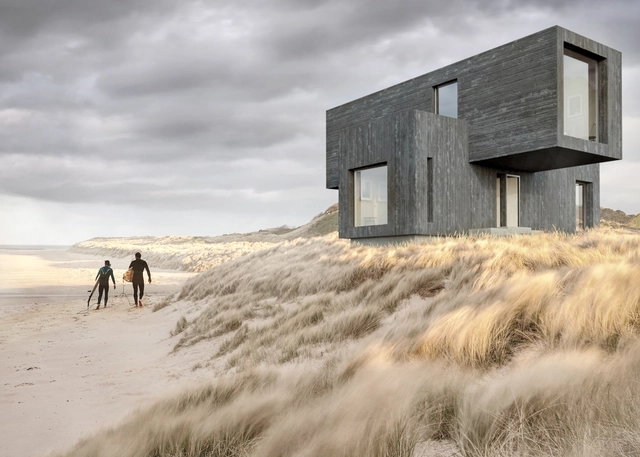
Dedicated to sustainability, Plant Prefab has partnered up with Koto Design to create 2 new Net-Zero LivingHomes. The prefabricated modular homes inspired by Scandinavian architecture, embrace biophilic and sustainable living.
Modernism always wanted to have it both ways: on the one hand, modernist architecture was supposed to be, in theory, the same in all places; that's one reason why modernism in architecture was also called the International Style. If all modernist buildings look the same, when you see one you have seen them all: no need for further travel. Yet throughout the 20th century modernist culture and technology enthusiastically endorsed and favored travel. In the 60s we traveled to the Moon, and civil aviation made the world smaller. In modernist culture, travel was good. It made all travelers better, happier humans. It was good to learn foreign languages and to go see distant places. High modernist travel was not only good; it was also cool. The jet setters of the 60s were the coolest citizens of the world. Even later in the 20th century the general expectation was that borderless, seamless travel would keep getting easier and more frequent. Most Europeans of my generation grew up learning two or more foreign languages, and it was not unusual until recently to be born in one country, to study in another, and find one's first job in a third one. That was seen as an opportunity, not as a deprivation.
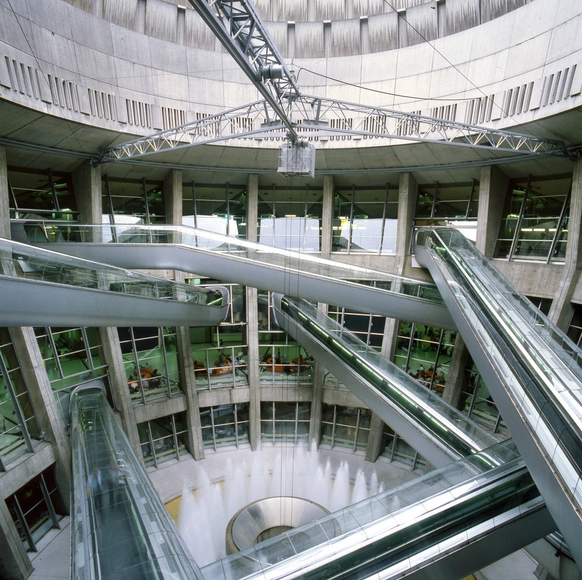
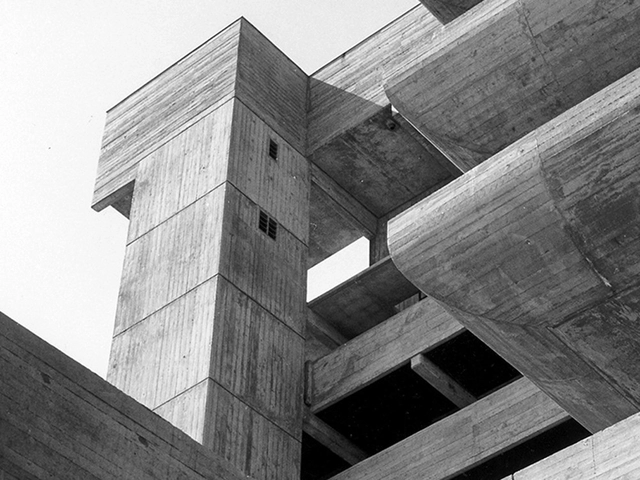
Tricorn Shopping Centre, Portsmouth, 1965. Credit: RIBA Library Photographs Collection
Concrete has long been considered particularly harmful to the environment. However, Architect Magazinerecently published an article on Nature Geoscience, which may offer some concrete (pun intended) findings regarding the issue.