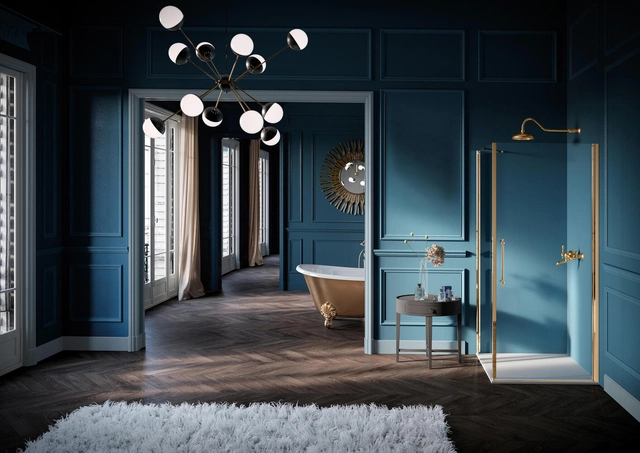
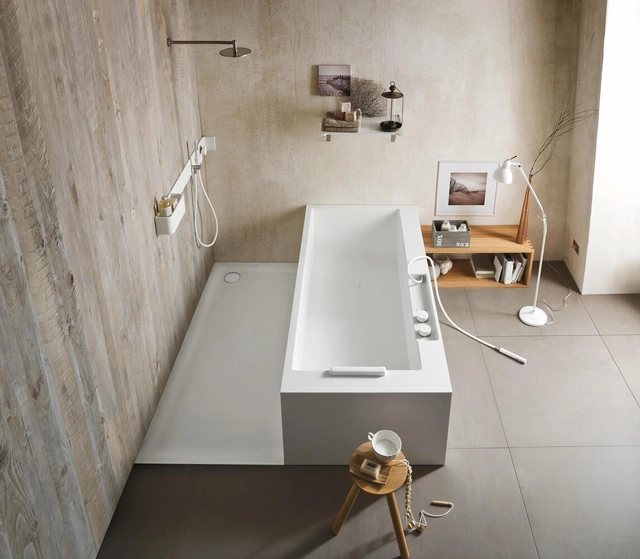
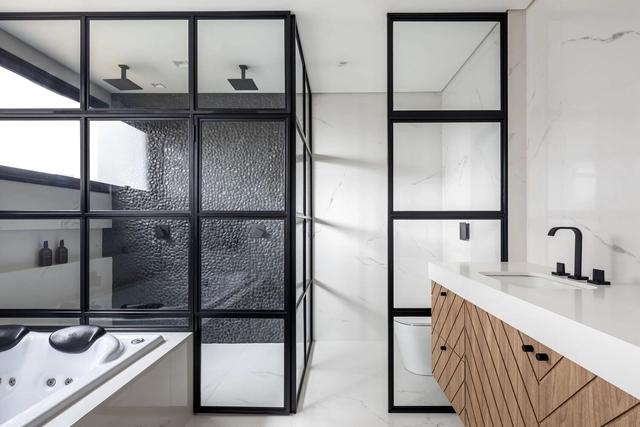
With frames and surrounding waterproof panels in any colour to match or contrast the surrounding decor, shower enclosures like Eterna from Samo are a useful tool in bathroom design. Image Courtesy of Samo
I’ve written before about my preference for showers over baths in the sanitation stakes. An instant hit of hygiene therapy, they’re quicker, cleaner, more energy efficient, and use less water than their horizontal siblings.
Thankfully, I’m not in the minority. Shower popularity means there’s a huge range of shapes, sizes, and types on the market. However, bathroom planning can be exhausting with so many to choose from. Here are six simple questions to ask when looking for the perfect shower enclosure to fit any type of space, lifestyle, or preference.
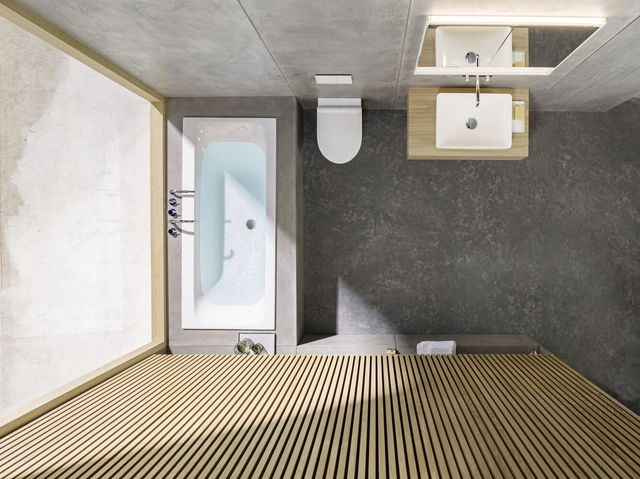
Winning Design. Bjerg Arkitektur, Denmark. Image Courtesy of Geberit
As living spaces are becoming more scarce and expensive, design must create innovative strategies that maintain a balance between functionality and aesthetic expression, enhancing the creation of smaller spaces. With this goal in mind, Geberit has launched a competition across six European countries –Germany, France, Great Britain, Switzerland, Czech Republic and Denmark– to reimagine the bathroom inside a 6 m2 space, a common size in the urban environment that still allows for different layouts.
While offering a realistic approach, these proposals work as a guide on how to design bathrooms that optimize space and, at the same time, combine different products, materials and colors accordingly (and creatively).
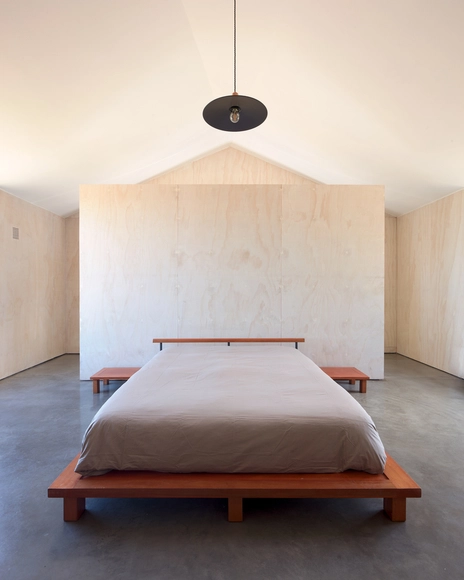
Unlike classical architecture, characterized by a series of rooms with very defined functions and spaces, the current architectural design seeks to integrate spaces to achieve high degrees of adaptability and flexibility. In this way, the boundaries of the enclosures are blurred and new solutions appear that are worth analyzing. In the case of bedrooms, bathrooms are often no longer a small and secluded adjoining room – instead, they are now integrated to form a multifunctional space that is subtly concealed. Just like Mies van der Rohe, who used to group services in strategic areas to create open floors, let's review some cases that have adopted the specific solution of the hidden bathroom just behind the bed.
After a few atypical years, the hustle and bustle of a day in the city is back to what it used to be: leaving the house and going to the office, taking the car, bus or plane, grabbing a quick bite to eat in a restaurant, stopping by a museum or a bookshop to get some fresh air and, if we have any energy left, hitting the gym before heading home. In less than 24 hours we pass through several buildings with all kinds of rooms, but they all have one thing in common: the bathroom.
Designing a bathroom can be one of the most challenging but exciting tasks for architects, as both its elements and fittings must provide a safe and hygienic experience for all those who use it on a daily basis. Before COVID-19 came along, there was already a growing trend: the use of non-contact infrared taps. As the name suggests, these are taps that are activated by a sensor that detects the movement of the hand - almost as if by magic.
Many associate bathrooms with small, simple and practical rooms with no defining design characteristics. Historically, they have been conceived as merely functional environments strictly programmed for hygiene, privacy and ease of maintenance –often with no room for creativity. But as lifestyle changes have placed health and wellness as a top priority, contemporary bathroom design has been reimagined accordingly, shifting towards spacious personal retreats intended for comfort, relaxation and recuperation; an escape from a chaotic outside world. Because we tend to spend most of our time inside the home, many recent discussions naturally revolve around residential bathrooms, overlooking another setting where we also spend a significant number of hours in (around one third of our lives to be exact): the workplace.
Thinking about woodworking in wet areas is one of the key parts of interior design. In the case of bathrooms, besides creating spaces for storing toiletries or towels, woodworking can serve as an element that composes the space by bringing different possibilities of decoration or even hiding pipes.
Over the years, interior design has evolved according to the needs that arise, but above all, according to the experiences it seeks to evoke in the user. In the last two years, we have witnessed a radical change and a particular interest in this subject because the pandemic forced us to pay specific attention to the configuration of the places we inhabit. This brought about much more holistic designs that seek to address the user's wellbeing, combining colors, sensory experiences, technology, and natural elements that promote health.
Hospitality is an industry made of people being hospitable to people, and our interaction with places is its foundation. If the zeitgeist of our era lies in the perpetual dance of shock and awareness of how we treat each other and the planet we live on, what considerations should we pose to inform and shape what’s next for hotels? If there’s ever been a moment to think about the future of hospitality, this is it.
Achieving the perfect bathroom design and layout for each user comes with a lot of very detailed decision-making. One example is the shower versus bath debate, which includes valid arguments in favor of each option, and no objective right or wrong. When designing a bathroom, architects must use their experience and perception to make decisions that will best respond to the layout’s spatial needs. Shower or bathtub standard dimensions, placement of elements, and material selection are some of the factors that must be studied before adjusting to the user’s requirements.
With an analysis of four factors –spatial needs, user needs, innovation, and sustainability– the following article aims to discuss the pros and cons of bathtubs and showers. Through a selection of innovative, accessible and space-saving bathroom layouts, all of which include products from the Bathroom category on Architonic, the discussion exemplifies solutions to possible shower and bathtub problems.
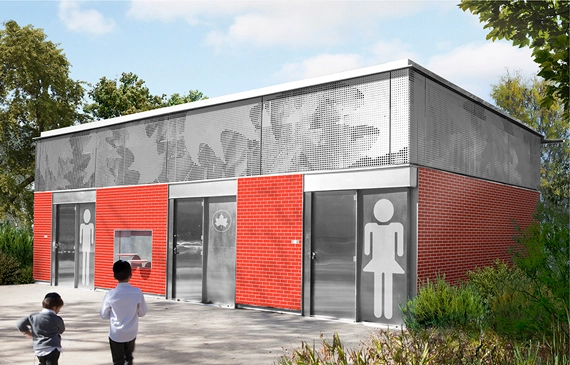
Fairview Park Comfort Station, Staten Island. Image via NYC Parks, Design by Sage and Coombe Architects
In the realm of design, we often talk about ensuring that there are enough public spaces to serve a community. We discuss the need for public parks so that people have access to outdoor spaces. We think about public transportation, and how our dwindling reliance on cars will help to ensure that we have a healthier planet. But what about the public spaces we lack? What happens when we don’t have enough public restrooms?
Although the design and layout of bathrooms we use nowadays date back millennia, they are still considered as one of the most difficult to design and renovate. During the earliest stages of planning a bathroom, there are plenty of rules of thumb to follow, especially since it involves a lot of association and "pre-planning" with plumbing, electrical circuits, angular or uniquely-shaped fittings, and small floor areas. We will explore the basics of bathroom plumbing and where to allocate each fixture to optimize the bathroom's layout, facilitating your DIY remodel project or creating the space from scratch.
“Creating an equitable city implies that every citizen has their needs met”, states architect Wanda Dalla Costa at a time when metropolises were noticing change. Architects and the public have started to acknowledge the gender-driven design of public spaces. Across the world, urban areas have been a site of discrimination and danger to the LGBTQ+ community. Gender is demonstrated in public zones that promote visibility and interaction between people. An arduous challenge lays upon architects and planners to design fair environments and equitable spaces.
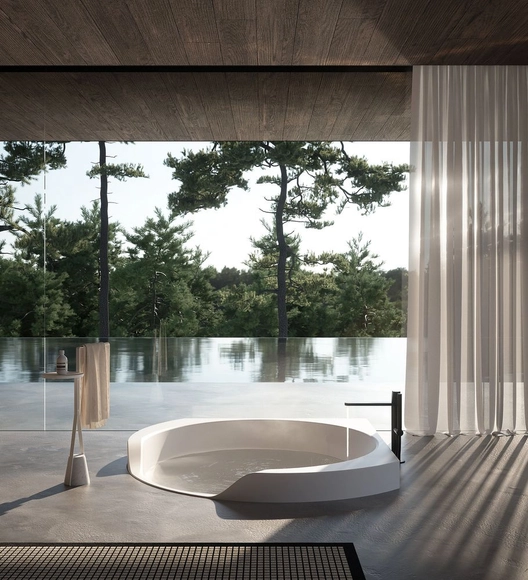
Throughout the years, bathrooms have been viewed as purely functional spaces strictly programmed for hygiene and privacy. Becoming smaller and more practical, the utilitarian, space-saving shower stall has often been considered the norm, pushing the bathtub into obsolescence or as an additional luxury for those with extra space (and money). Recently, however, as lifestyle changes driven by the pandemic have placed wellness as a top priority, the notion of the bathroom as a sanctuary has really taken hold. Contemporary bathrooms have thus been reimagined, shifting towards open spaces of relaxation, comfort and recuperation. And tubs – with their inherent meditative nature – have returned to the spotlight.
Despite being the smallest rooms of houses, bathrooms have always been one of the most challenging and critical to design, which often left them fairly simplified. The past few years, however, saw these spaces undergo significant change; what was once only limited to functionality, ease of maintenance, and privacy, is now being given a strong character with pops of color, classic fixtures, and patterned surfaces. Similarly for public bathrooms, where "functionality" and "ease of maintenance" are now complimented with aesthetics, technology, and high quality finishing. In this interior focus, we explore the three main bathroom typologies used in residential projects, and look at how architects have employed them through 12 examples.
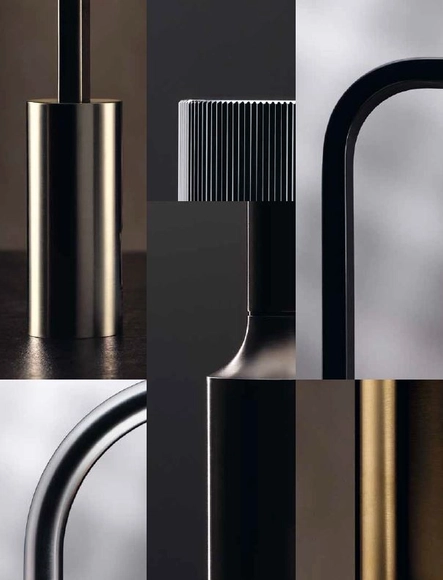
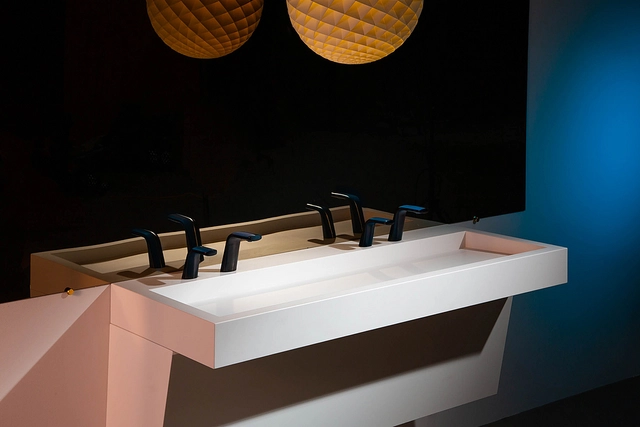
CYO Metropolitan bathroom. Image Courtesy of Dornbracht
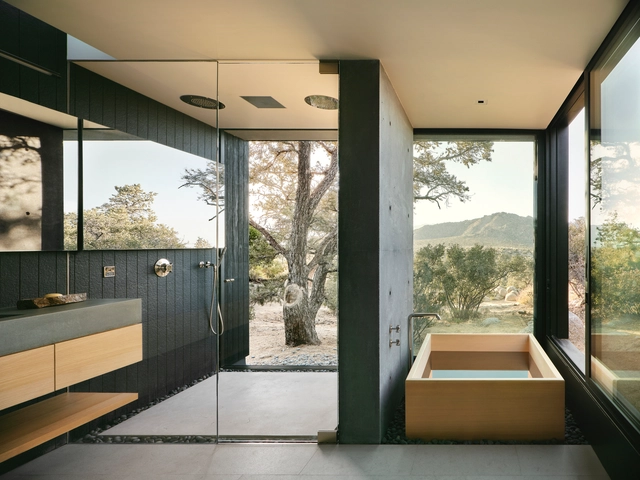
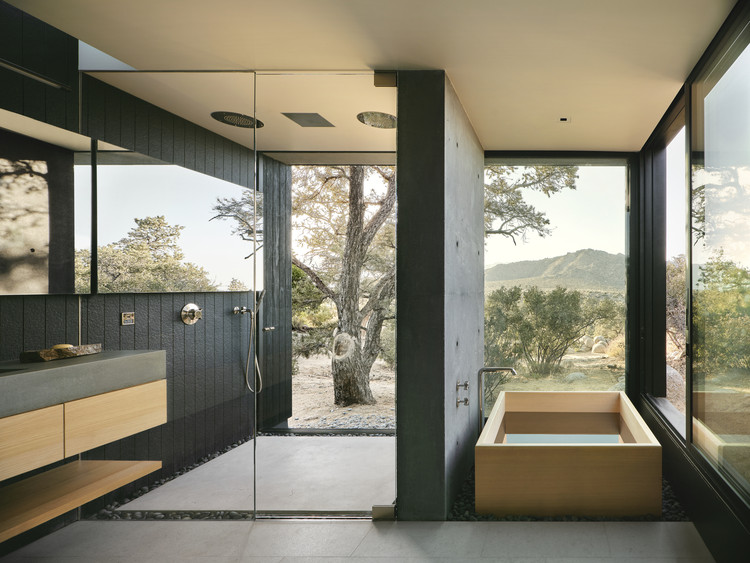
As cities become denser and the pandemic continues to shape living and working patterns, people have become well aware that the space they inhabit greatly influences their physical and mental well-being. As a result, the interior design of homes has focused on promoting sensitivity, comfort and calmness as a way of escaping the uncertain outside world. As a safe space where we practically start and end each day, the modern bathroom has also adapted accordingly, taking on a key role as an environment dedicated to relaxation and self-care. Hence, what used to be a purely functional zone is now perceived as an energizing personal retreat and flexible living space that can even adopt other functions – from a gym to a private spa.
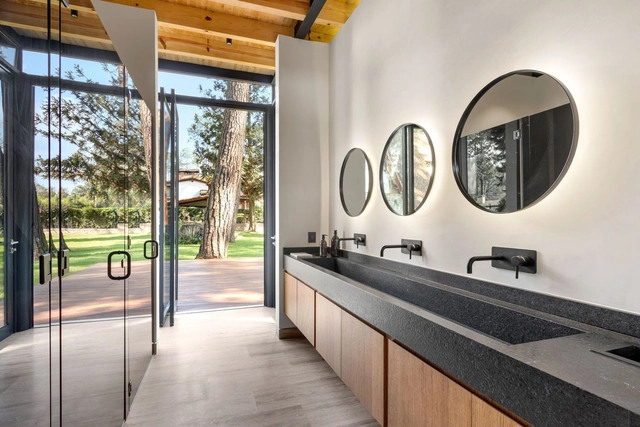
Puerto Vallarta ensuite bathroom / Studio Utkan Gunerkan. Image Courtesy of Studio Utkan Gunerkan
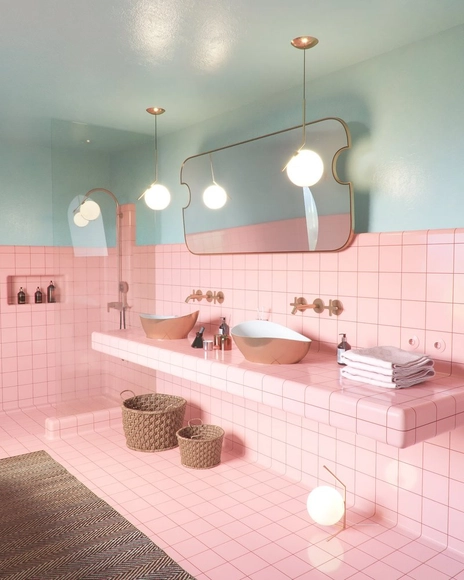
Even though white minimalism remains the norm, retro trends are making a serious comeback in modern bathroom designs, with homeowners incorporating pops of color, classic fixtures, and patterned surfaces. Despite often being static and traditional spaces in homes, bathrooms have certainly undergone significant transformations throughout the years. While those of the outspoken 1970s brought vibrant colors like avocado green and mustard yellow, the ‘80s introduced ceramic tiles in more muted, pastel shades. On the other hand, this century has set the ideal on white and marbled surfaces, slick gloss finishes, and silver fixtures. However, even as this all-white look continues to be the protagonist, bold retro enhancements are reviving and blending in with contemporary elements to create elegant, yet lively atmospheres with a strong character.
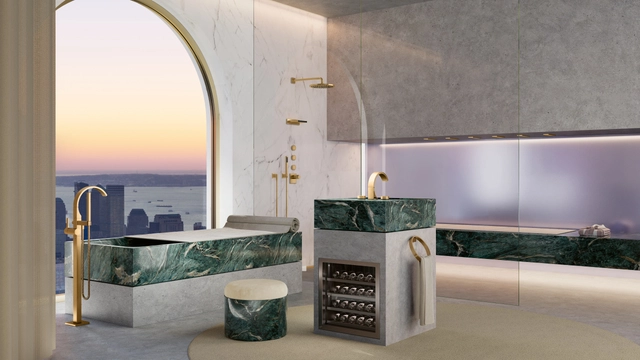
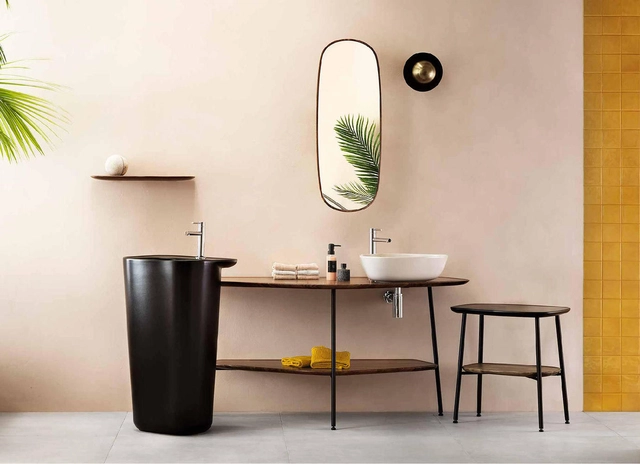
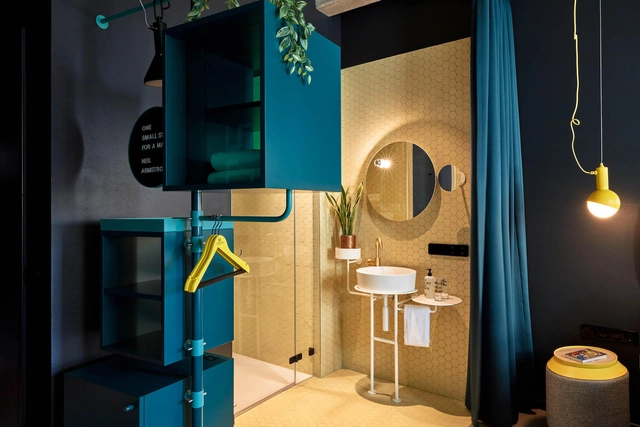
Today, bathroom and sanitaryware design is witnessing a concerted move away from the mild-mannered minimalism and washed-out pastel accents of the turn of the millennium. Bathrooms increasingly feature either bolder colors or more pronounced textures and patterns, and these are found in ceramics as well as fixtures and accessories, providing a more layered, multi-sensory experience.
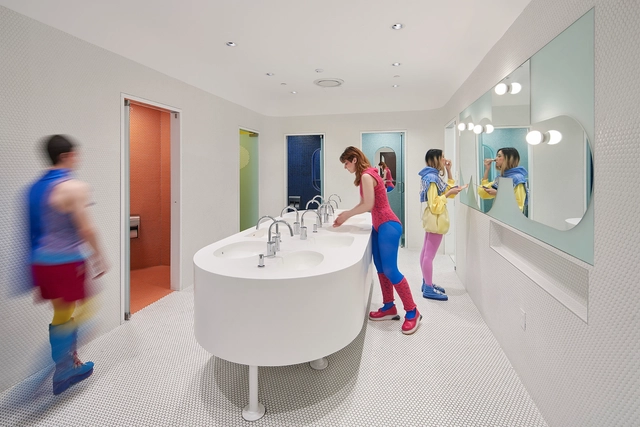
As a room everyone needs to visit, no matter what their social standing (or sitting), bathrooms can be one of the best ways to add character to a project. Used when we are at our most vulnerable, bathrooms are calm, solitary arenas, giving a few minutes of peace in an otherwise hectic environment. So the originality of the user experience can really stand out.
Whether they bring relaxation to hospitality, individuality to residential or drama, and culture to public space, bathrooms can both surprise and delight users, while allowing them to rest. Here are eight projects where a designer bathroom is an integral part of interior architecture.