1. ArchDaily
  2. Artesanato

Artesanato: The Latest Architecture and News

Belonging to the Earth: Architecture in the Worldviews of Indigenous Peoples of Latin America

Audio available

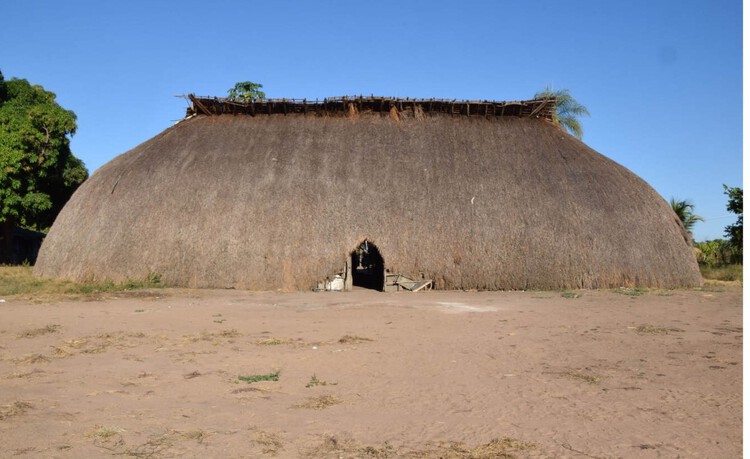
Anyone expecting the following words to discuss materiality, sustainable construction techniques, woodworking methods, or ways of weaving thatch will be mistaken. This article seeks precisely to shift the focus beyond the aspects that so often define discussions about Indigenous cultures when the subject is "architecture."

In a universe where the very term "architecture" is foreign, approaching Indigenous constructions—or whatever word might best describe them—through an exclusively material or technological lens is itself an attempt to fit their ways of producing space into Western categories. In doing so, a complex cosmology is reduced to a set of measurable attributes, as if it could be transformed into a checklist applicable to any form of architecture, erasing precisely what makes it distinct: the relationships between territory, body, and memory.

Belonging to the Earth: Architecture in the Worldviews of Indigenous Peoples of Latin America - 1 的图像 4Belonging to the Earth: Architecture in the Worldviews of Indigenous Peoples of Latin America - 2 的图像 4Belonging to the Earth: Architecture in the Worldviews of Indigenous Peoples of Latin America - 3 的图像 4Belonging to the Earth: Architecture in the Worldviews of Indigenous Peoples of Latin America - 4 的图像 4Belonging to the Earth: Architecture in the Worldviews of Indigenous Peoples of Latin America - More Images+ 2

"This Building Belongs to the People": Cape Verde’s New Centre for Art, Crafts and Design

Subscriber Access | 

There are two ways to get to Cape Verde, by sea or sky. Either way, we are surprised by the landscape of immense rocky masses sprouting from the Atlantic’s navel before setting foot on land. Unpopulated until the middle of the 15th century, the volcanic archipelago is made up of ten islands, nine of which are currently inhabited, with unique characteristics in each one of them — some more touristy, like Sal, others more rural, like Santo Antão — and a version of Kriolu Kabuverdianu, which is not the official language (Portuguese occupies this place), but which is by far the most widely spoken.

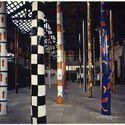
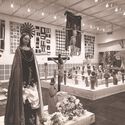
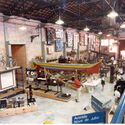
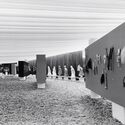
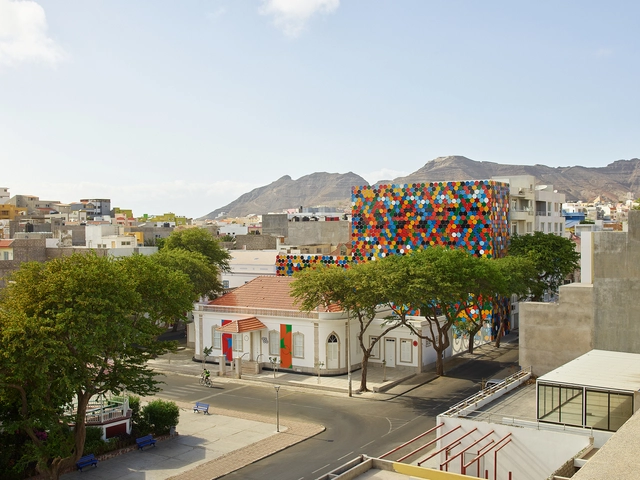
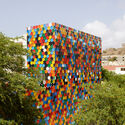
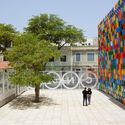
São Vicente is the second most populous island in the country and makes up the northern insular group called Sotavento, along with Santo Antão, Santa Luzia, São Nicolau, Sal and Boa Vista. Its largest city, Mindelo, has a port vocation and has historically been the point of departure and arrival for people and goods. Marked by traffic, the city is a place of passage and intense cultural exchanges. It is also home to the first museum built in the country, the National Centre for Art, Crafts and Design — CNAD.

"This Building Belongs to the People": Cape Verde’s New Centre for Art, Crafts and Design - Image 1 of 4"This Building Belongs to the People": Cape Verde’s New Centre for Art, Crafts and Design - Image 2 of 4"This Building Belongs to the People": Cape Verde’s New Centre for Art, Crafts and Design - Image 3 of 4"This Building Belongs to the People": Cape Verde’s New Centre for Art, Crafts and Design - Image 4 of 4This Building Belongs to the People: Cape Verde’s New Centre for Art, Crafts and Design - More Images+ 13