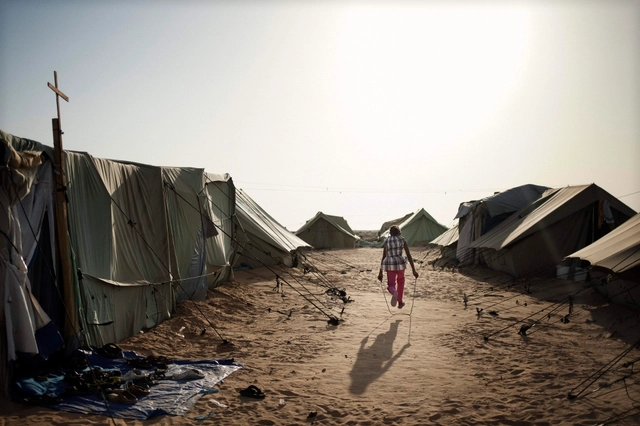
In 2013 alone some 1 million people have poured out of Syria to escape a civil conflict that has been raging for over two years. The total number of Syrian refugees is well over 2 million, an unprecedented number and a disturbing reality that has put the host countries under immense infrastructural strain.
Host countries at least have a protocol they can follow, however. UN Handbooks are consulted and used to inform an appropriate approach to camp planning issues. Land is negotiated for and a grid layout is set. The method, while general, is meticulous – adequate for an issue with an expiration date.
Or at least it would be if the issue were, in fact, temporary.
https://www.archdaily.com/435492/beyond-the-tent-why-refugee-camps-need-architects-now-more-than-everKatherine Allen
Videos
At the Clinton Global Initiative (l to r) Robert Ivy, FAIA; New Orleans Mayor Mitch Landrieu; Cameron Sinclair, co-founder Architecture for Humanity; Former U.S. President Bill Clinton; Martyn Parker, Chairman Global Partnerships at Swiss Re; Alex Karp, co-founder Palantir; Judith Rodin, Ph.D, President of The Rockefeller Foundation. Image Courtesy of The AIA
Last week, we noted how the American Institute of Architect's (AIA) participation with the Clinton Global Initiative (CGI), as well as it's many other initiatives, signify the organization's commitment to putting resiliency on the agenda. The following article, written by Brooks Rainwater, the Director of Public Policy at the AIA, outlines these efforts and emphasizes how architects are tackling today's most pressing global challenges.
Architects are increasingly demonstrating their ability to help solve large-scale problems in the areas of resilience and health. At the same time the continued ascendancy of social impact design has helped elevate the conversation and prescribed a needed emphasis on equity considerations, uplifting global populations, and the idea that design should be for and impact all people.
With more than 1,000 global leaders convened in New York last week for the Clinton Global Initiative Annual Meeting it is an ideal time to ask the question, how does design fit into the global conversation?
Videos
At the Clinton Global Initiative (l to r) Robert Ivy, FAIA; New Orleans Mayor Mitch Landrieu; Cameron Sinclair, co-founder Architecture for Humanity; Former U.S. President Bill Clinton; Martyn Parker, Chairman Global Partnerships at Swiss Re; Alex Karp, co-founder Palantir; Judith Rodin, Ph.D, President of The Rockefeller Foundation. Image Courtesy of AIA
The AIA has decidedly found its latest buzz word: Resiliency.
Just this week at the 2013 Clinton Global Initiative Annual Meeting, former-president Bill Clinton announced the American Institute of Architects' participation in the 100 Resilient Cities Commitment: an initiative of the Rockefeller Foundation to provide 100 cities with "chief resilience offers," responsible for developing and financing new, resilient urban infrastructures. So far, over 500 cities have requested to participate; on December 3rd, the Rockefeller Foundation will announce the winning cities.
Along with Architecture for Humanity, the AIA will then train those cities' resilience officers, "architects in their communities," by creating "five Regional Resilient Design Studios that build on our profession’s collective expertise in helping communities recover in the wake of major disasters."
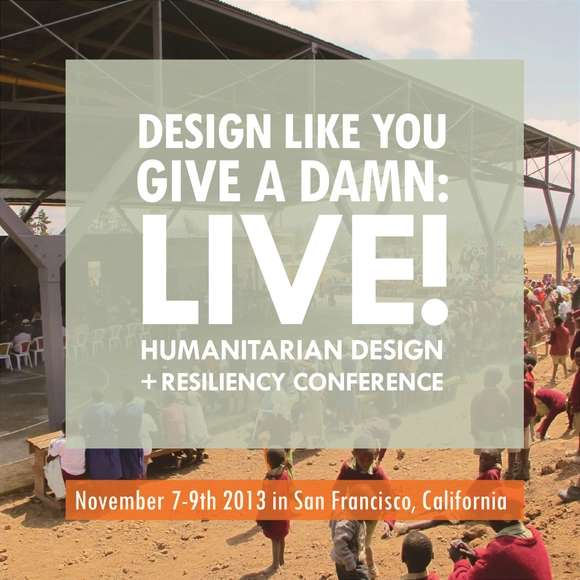
On November 7-9th, 2013, your favorite humanitarian design and resiliency conference presented by Architecture for Humanity is back for another round of innovative panel discussions, workshops, Design Open Mic, and inspiring dose of industry networking. This year’s theme, Designing for a More Resilient World, will highlight the intensifying need to protect livelihood in a world which is continuously dealing with the aftereffects of issues like climate change, urbanization and population shock.
“It's great to see something you started evolve into an institution. We are excited about the future of the organization and plan to continue lending support in whatever ways we can.”Kate Stohr, co-founder
Architecture for Humanity founders, Kate Stohr and Cameron Sinclair, will step down after 15 years of leading the San Francisco based non-profit organization to focus on new ventures. Upon leaving, they have drafted a five year strategic vision, reiterating the organization's purpose and needed areas of improvement. Matt Charney, Board President of Architecture for Humanity, is confident that 'Kate and Cameron's vision and years of dedication leaves the organization in a solid place." To further expand operations, board directors will begin an international search for a new executive director by the end of September.
https://www.archdaily.com/425693/founders-of-architecture-for-humanity-step-down-launch-five-year-planJose Luis Gabriel Cruz
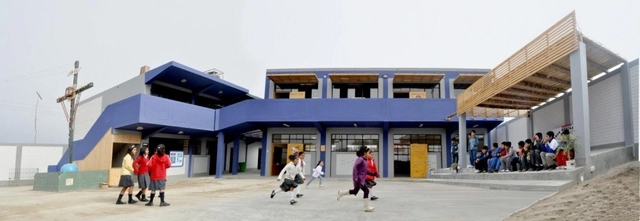
Maria Auxiliadora School / Architecture for Humanity
Why is it that the Bay Area can suffer a 6.9 earthquake and lose just 63 people, while Haiti suffers a slightly stronger quake and loses about 100,000? The answer: shoddy construction. As Bryan Walsh of TIME points out, “We tend to focus on the size of an earthquake, but death toll has more to do with the quality of buildings. [...] Poverty — and even more, poor governance and corruption — is the multiplier of natural disasters. [...] That’s why one of the most vulnerable places in the world is south-central Asia.” Learn more about the dangers of poorly constructed buildings here and see what the "true value" of architecture is here.
“When you build a beautiful building, people love it. And the most sustainable building in the world is the one that’s loved.” - Cameron Sinclair, Co-founder of Architecture for Humanity
Cameron Sinclair is a man who sustains his passion for helping improve the world, one project at a time, by tapping into the skilled enthusiasm of like-minded architects from all over the globe. Since co-founding of his non-profit organization with Kate Stohr in 1999, Sinclair and his interdisciplinary teams of citizen architects have provided shelter for more than two million people worldwide.
Under his leadership, Architecture for Humanity’s infectious mantra has inspired thousands to join its cause every year, allowing the organization to expand at an unbelievable rate and become the exemplar of public interest design. Considering this, it is no surprise that Sinclair was selected to be the keynote speaker on day two of the 2013 AIA National Convention.
As his speech continued the momentum of yesterday’s inaugural presentation, in which TOMS founder Blake Mycoskie shared his success story of “doing well by doing good,” Sinclair urged architects to hold close the true value of their profession.
Learn what Cameron Sinclair believes to be the true value of architects after the break.
When we think of emergency architecture, what usually comes to mind are villages razed by flooding, by a hurricane or tornado. Families who have lost everything. From catastrophe emerges a new home for a new life, a new future to rebuild from the debris. But there are many other emergencies of an equally - if not more - dramatic nature.
Political and armed conflicts displace tens of millions of people every year. In the 2012 census collected by ANCUR, it was estimated that “43.3 million people in the world were displaced by force due to conflict and persecution. Children constitute 46% of this population.” These are not people who are starting from 0 with a new home, but rather who have run to save their own lives, taking with them only what they can carry - the things that will furnish houses that aren’t houses, because their inhabitants aren’t citizens.
The American Institute of Architects (AIA), Make It Right, St. Bernard Project and Architecture for Humanity has formed a strategic partnership to launch “Designing Recovery,” an ideas competition created to aid in the rebuild of sustainable and resilient communities.
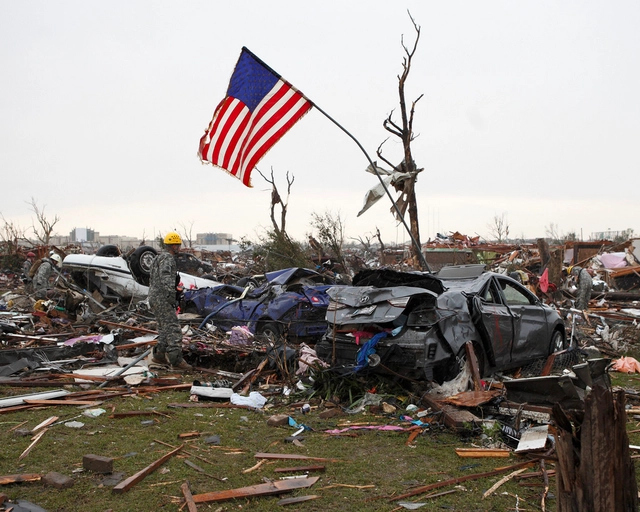
Recovery efforts are underway in the Oklahoma City suburb of Moore after a deadly, 1.3-mile-wide tornado carved a 20-mile-long swath of destruction through neighborhoods and schools on Monday afternoon. With winds up to 210 miles per hour and a death count that currently stands at 24, President Obama has declared this tornado to be “one of the most destructive in history,” ranking it at a Category 5.
In an effort to help, Architecture for Humanity and the American Institute of Architects(AIA) have mobilized their teams to provide instant assistance and aid in long term reconstruction efforts. Although professional design and construction volunteers from both organizations are already on the ground, the community needs your help. Find out how you can help the residents of Moore after the break.
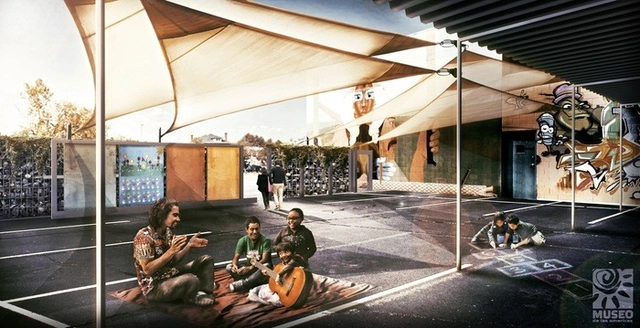
Architecture for Humanity-Denver is seeking to raise money for the transformation of a museum parking lot into an outdoor classroom for children in need. The goal of Denver's Museo de las Americas is to educate the community about the diversity of Latino Americano art and culture from ancient to contemporary through innovative exhibitions and programs, but the museum is lacking the necessary space for its increasingly popular youth summer camp.
With love in the air this Valentine’s Day season, there is undoubtedly no better way to express your feelings to the architecture enthusiast in your life with these one of a kind architecture love cards. Made especially to share with your loved ones and those you care about most, celebrate this year’s loveliest season with these simple, yet elegant cards featuring well-known architectural wonders throughout the world from the Eiffel Tower to the Golden Gate Bridge. Thanks to Architecture for Humanity, just by visiting here, you can easily download one, two, or several of these cards which remind you why you love architecture so much! More images of love cards available can be viewed after the break.
On August 15th, 2007 a powerful earthquake hit the region of Ica, Perú, destroying the small Maria Auxiliadora School. The first responders left after a matter of months, but the damage remained. Resources were shuffled to the big cities, and the small school waited, for years, for the authorities to take on the reconstruction. They never did.
And so, with help from Architecture for Humanity Design Fellow, Diego Collazo, and with funding from the Happy Hearts Fund and the SURA Group, the community decided to take the school’s - and their children’s - future into their own hands. This SEEDoc, the latest installment of inspirational mini-documentaries from the Design Corps and SEED (Social Economic Environmental Design), tells their story.
Architecture for Humanity has had a busy year. From continuing efforts in Haiti and Japan to their Post-Sandy initiative to open two new offices in New York and New Jersey, they could use a little help to get to their annual goal.
So they're auctioning off 7 sketches from famous architects - from Steven Holl to Renzo Piano to Frank Gehry. Everyday this week (starting today!), they will announce which architect's sketch is the piece of the day on their web site. The first $5K donation before 12pm PST gets the artwork.
Check out which other famous architects have contributed their sketches, after the break...
"As whenever disaster strikes, it will be many days before the full impact of the storm is brought to light, and which communities will be in largest need of design support as the broader reconstruction effort proceeds. However we are not waiting for water to recede before preparing a reconstruction campaign." - Cameron Sinclair, Architecture for Humanity co-founder
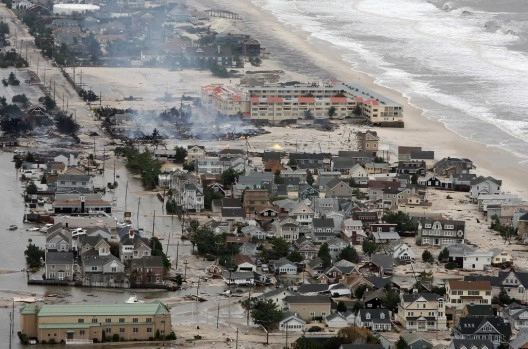
Following Hurricane Sandy’s devastating path through the Caribbean, up the Atlantic and into the East Coast of the United States, hundreds of communities are in need of immediate relief and facing the daunting challenge of rebuilding. In effort to help,Architecture for Humanity and the American Institute of Architects (AIA) are mobilizing their teams to provide instant assistance and plan for the long term reconstruction efforts. Professional design and construction volunteers from both organizations will be working together to help households, schools, heath facilities, small businesses and local government rebuild in the coming days and weeks. However, relief and reconstruction cannot happen without your support. Learn how you can help after the break.
As previously announced, the Portuguese architects behind “OCO – Ocean & Coastline Observatory” have won Habitat for Humanity’s Open Architecture Challenge: RESTRICTED ACCESS 2011. Over 500 teams from 74 countries submitted innovative solutions for the recovery and reuse of disabled and abandoned military sites. These submissions were filtered down to 13 finalists by a jury of 33 esteemed professionals. The Lisbon-based architects of OCO claimed grand prized with their vision to redevelop a desolate military site, that once defended the coast of Trafaria in Portugal, into a civic space that promotes coastal preservation.








![OCO – Ocean & Coastline Observatory wins [UN] RESTRICTED ACCESS 2011 - Image 5 of 4](https://images.adsttc.com/media/images/55f7/1111/ab63/c20c/5d00/0009/medium_jpg/03_12490_image-03.jpg?1442255093)