1. ArchDaily
  2. AI

AI: The Latest Architecture and News

Towards a Robotic Architecture

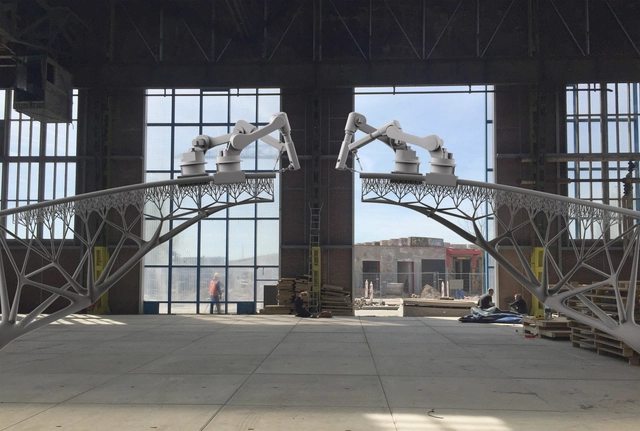
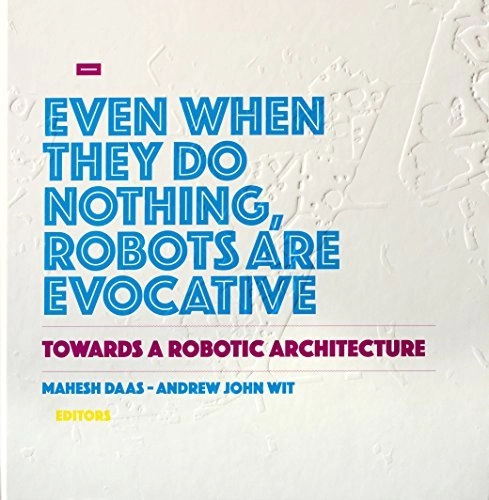
The field of robotics is coming of age. Robotics and artificial intelligence represent the next cutting edge technology to transform the fields of architecture and design. The past decade's surge towards more computationally defined building systems and highly adaptable open-source design software has left the field ripe for the integration of robotics wither through large-scale building fabrication or through more intelligent/adaptive building systems. Through this surge, architecture has not only been greatly influenced by these emerging technologies, but has also begun influencing other disciplines in unexpected ways. The purpose of this book is to provide systems of classification, categorization and

Amazon's Futuristic Checkout-Free Convenience Store Opens with Just a Few Kinks

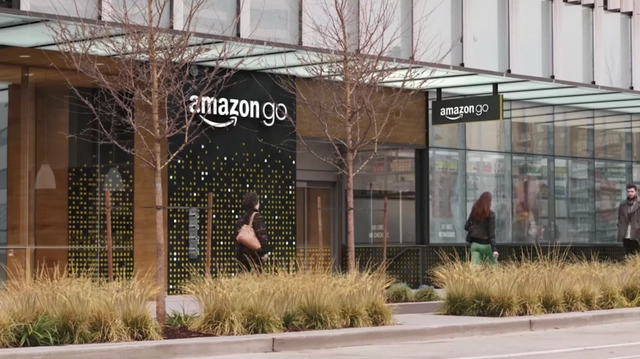
Amazon’s innovative, checkout-free convenience store concept, Amazon Go, has opened to the public in Seattle.

Located in the base of an existing Amazon office building, the 1,800-square-foot (167-square-meter) store offers grocery and convenience items. To begin shopping, customers simply scan an Amazon Go smartphone app and pass through a turnstile.

Using machine learning, computer vision and artificial intelligence technologies (incorporated into the software powering cameras and weight sensors), the store can then track the actions of customers as they remove items from the shelves, creating a virtual shopping list as they go. When a customer is finished shopping, they simply exit the store through the turnstiles and the user’s Amazon account is automatically charged.

Installation Showing the Perspective of a Self-Driving Car Aims to Evoke Empathy for Artificial Intelligence

Subscriber Access | 

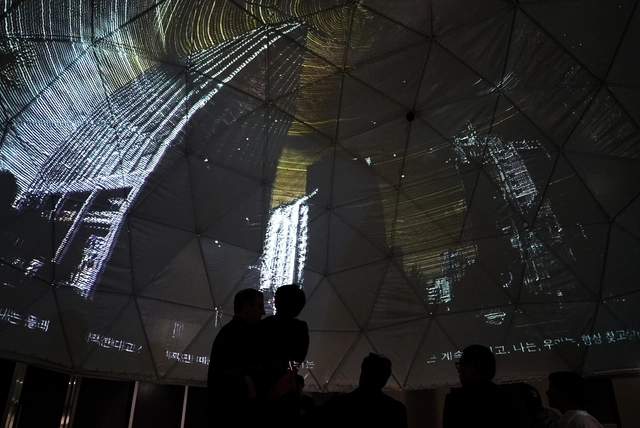
Driver Less Vision, an installation at the 2017 Seoul Biennale of Architecture and Urbanism by Guillermo Fernandez-Abascal, Urtzi Grau and Daniel Perlin, is an immersive 3D video experience comprised of spatial scans of Seoul, projected into a dome and paired with surround sound. The supporting audio is the internal monologue of a personified autonomous vehicle, driving through the streets of a future Seoul, Korea. The installation transports vierers to the front seat of the autonomous vehicle, providing a new perspective of traversing cities—through the car’s point of view.

Installation Showing the Perspective of a Self-Driving Car Aims to Evoke Empathy for Artificial Intelligence - Image 1 of 4Installation Showing the Perspective of a Self-Driving Car Aims to Evoke Empathy for Artificial Intelligence - Image 2 of 4Installation Showing the Perspective of a Self-Driving Car Aims to Evoke Empathy for Artificial Intelligence - Image 3 of 4Installation Showing the Perspective of a Self-Driving Car Aims to Evoke Empathy for Artificial Intelligence - Image 4 of 4Installation Showing the Perspective of a Self-Driving Car Aims to Evoke Empathy for Artificial Intelligence - More Images+ 4

Benjamin Bratton on Artificial Intelligence, Language and "The New Normal"

Subscriber Access | 

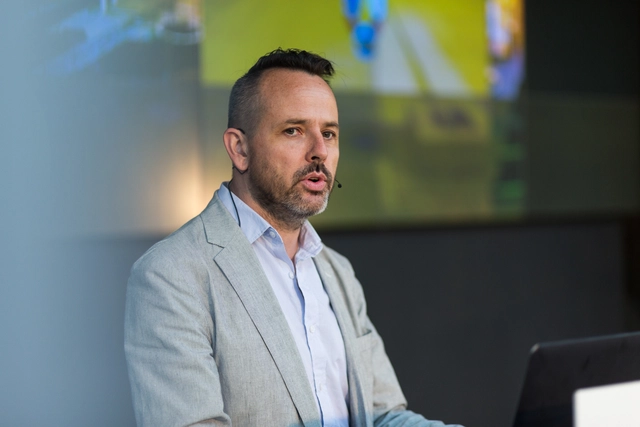
Benjamin Bratton, Professor of Visual Arts and Director of the Center for Design at the University of California, San Diego, is the new Programme Director at Moscow's Strelka Institute. The New Normal is based on the premise that "something has shifted. [...] We are making new worlds faster than we can keep track of them, and the pace is unlikely to slow."

Have our technologies have advanced beyond our ability to conceptualize their implications? "One impulse," the course advocates, "is to pull the emergency brake and to try put all the genies back in the bottle." According to Bratton, this is hopeless. "Better instead to invest in emergence, in contingency: to map The New Normal for what it is, and to shape it toward what it should be."

Drive – Volume #49: Hello World!

Subscriber Access | 

The following essay by Carla Leitão and Ed Keller was first published by Volume Magazine in their 49th issue, Hello World! You can read the Editorial of this issue, Going Live, here.

What are the philosophical consequences of automation after the integration of pervasive AI into the architecture, landscapes and cognitive maps of our planet and its populations? We suggest that "natural models" of automation pre-exist our technology, with profound implications for human and planetary systems. We’re interested in specific examples and models outside of our cultural milieu that test the limits of bodies, that map habits and their disruption through noise, and reframe the relation between life and consciousness. The following examples index the performance of networks in tight cycles of feedback loops: machines teaching machines. To go to the root of the philosophical consequences of automation our path is through abstract and universalist models of ‘natural laws’, redeployed into specific local situations. We use the term ‘drive’ for its myriad implications connecting across the examples we have chosen.

Drive – Volume #49: Hello World! - Image 6 of 4

Going Live – Volume #49: Hello World!

Subscriber Access | 

The following essay by Nick Axel (Volume's Managing Editor) first published by the magazine in their 49th issue, Hello World!

With the rise of computational networks and power, cognitive models developed and debated over in the postwar decades have finally been able to be put to work. Back then, there was a philosophical debate raging alongside the burgeoning field of computer science theory on the nature of consciousness, in which machines of artificial intelligence served as a thought experiment to question humanity. Yet with the proliferation of data and the centralization of its archives, theoretical practice moved from conceptual experiments to empirical tests.

Going Live – Volume #49: Hello World! - Image 1 of 4
© Volume