1. ArchDaily
  2. Affonso Eduardo Reidy

Affonso Eduardo Reidy: The Latest Architecture and News

Subscriber Access

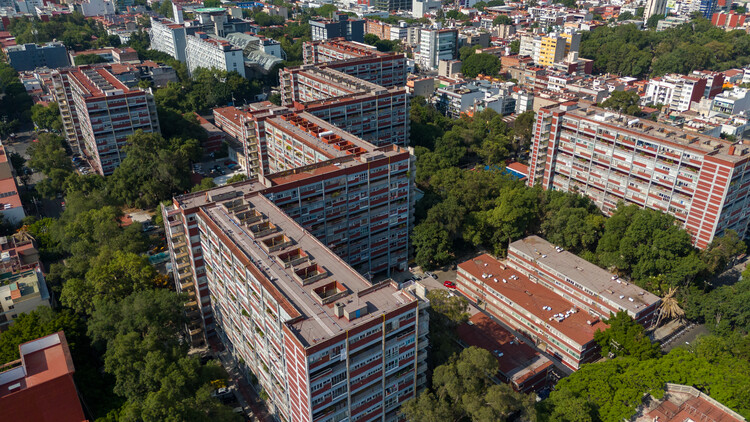
Modern and Mexican: Mario Pani’s CUPA Housing Complex in Mexico City

Audio available

In 1947, Mexico's General Directorate of Civil Pensions commissioned young architect Mario Pani to design 200 houses for government employees on a recently acquired plot of land in Colonia del Valle, then a distant neighborhood on the outskirts of Mexico City. Rather than following the original guidelines, Pani proposed a 13-story housing complex with extensive green areas, communal spaces, and more than a thousand apartments. Drawing on Le Corbusier's functionalist principles, the architect created a project that opened in 1949 and would become a landmark in Latin American modern architecture.

By the late 1940s, Mexico City was at a crossroads. Driven by rural migration, the city's population had nearly doubled in less than a decade. The overcrowded vecindades—communal tenement housing often housed in former colonial mansions—could no longer accommodate the growing population. It was amid this severe housing crisis that Miguel Alemán Valdés, Mexico's first civilian president of the post-revolutionary era, took office.
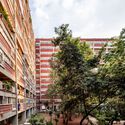
Modern and Mexican: Mario Pani’s CUPA Housing Complex in Mexico City - Image 1 of 4Modern and Mexican: Mario Pani’s CUPA Housing Complex in Mexico City - Image 2 of 4Modern and Mexican: Mario Pani’s CUPA Housing Complex in Mexico City - Image 3 of 4Modern and Mexican: Mario Pani’s CUPA Housing Complex in Mexico City - Image 4 of 4Modern and Mexican: Mario Pani’s CUPA Housing Complex in Mexico City - More Images+ 8

Subscriber Access

Architecture Classics: Modern Housing on the American Continent 1930-1960

Much of the production of modern architecture on the American continent was based on the model of European architects who, with their works, projected the fundamental premises and ideas for modern living. These pillars of architecture were transferred and consequently adapted to the American territory, introducing, at the same time, their own characteristics according to the territorial, socio-cultural and economic context. 

We understand that good architecture is that which serves as a model for solving problems inherent to the discipline of architecture in general. This is why certain references that we consider today as "classics" are examples of good architectural practices that have been appropriated by other architects, taking the pertinent and necessary elements to achieve a result in accordance with the particular context. 

Subscriber Access

Brazilian Projects Celebrating Democratic Spaces

In recent years, several movements in Brazil and around the world have contributed significantly to society by emphasizing the need to occupy public spaces in the cities to claim quality and freedom of use for the community. The Ocupe Estelita movement in Recife, Brazil, for example, confronted the growing real estate speculation in the region and challenged the aggressive commercial urban planning on the banks of the Capibaribe River. Based on cases like this one, professor, critic, and curator Guilherme Wisnik, in an interview with Fora, addressed the issue of public space as a place of conflict.

Brazilian Projects Celebrating Democratic Spaces - Image 1 of 4Brazilian Projects Celebrating Democratic Spaces - Image 2 of 4Brazilian Projects Celebrating Democratic Spaces - Image 3 of 4Brazilian Projects Celebrating Democratic Spaces - Image 4 of 4Brazilian Projects Celebrating Democratic Spaces - More Images+ 8

Subscriber Access

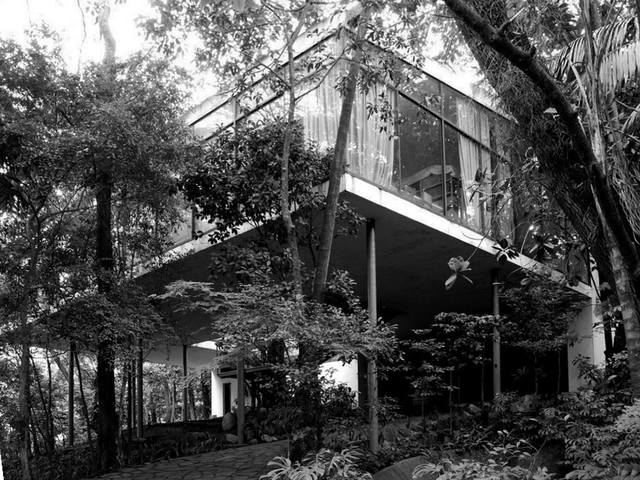
Iconic Columns in Modern Brazilian Architecture

Of Le Corbusier's five points of modern architecture (the ribbon window, free design of the façade and ground plan, a roof garden, and pilotis), pilotis are perhaps the most used element in Brazilian modern architecture.