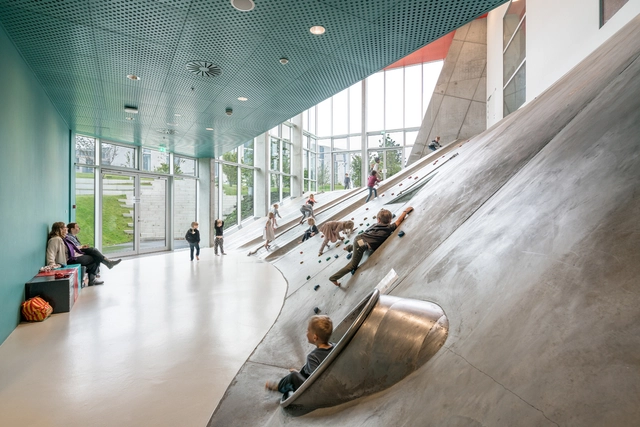
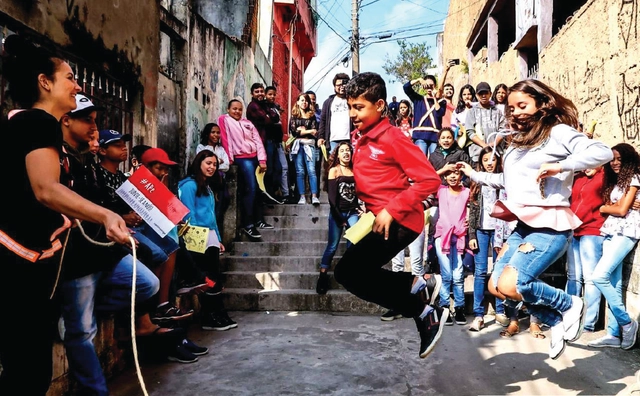
Mind the Step - Jardim Nakamura, São Paulo, Brazil. Image Courtesy of UN-Habitat
The Un-Habitat or the United Nations agency for human settlements and sustainable urban development, whose primary focus is to deal with the challenges of rapid urbanization, has been developing innovative approaches in the urban design field, centered on the active participation of the community. ArchDaily has teamed up with UN-Habitat to bring you weekly news, article, and interviews that highlight this work, with content straight from the source, developed by our editors.
Public space has always been a top priority in every city’s urban planning agenda and given today’s world context, these urban spaces have emerged as fundamental elements of cities and neighborhoods. Plazas, squares, and parks, undeniable necessities in the urban fabric, have become, today, more vital than ever.
The COVID-19 pandemic has reshaped how we work together. From telecommuting to virtual programming, architects and designers are rethinking traditional office structures to reimagine collaboration around the world. For architect Evelyn Lee, her work as the first Senior Experience Designer at Slack Technologies centers on building better workplace experiences. In a year defined by remote work, she's exploring what culture and community mean today.
During the next decade or so, our cities will expand at an inconceivable speed. According to the UN’s 2019 World Population Prospects, our planet by 2030 is expected to have 43 megacities —classified as those with more than 10 million inhabitants. Most megacities will be in developing countries. And by mid-century, almost 70 percent of the world’s population will be urbanised, with today’s rate at just over half. Moreover, 90 percent of the urban population growth is expected to happen in Africa and Asia.
The inertia of politics and governance in a time when major societal changes occur at an increasingly faster pace and the dissatisfaction with the decision process makes room for bottom-up actions, activism and bold endeavours. In the light of so many examples of social activism, do architects have the tools to make their own stand? Does architecture have the power to disrupt the status quo?
The sharing economy, an economic system that involves individuals renting out or sharing their personal property including their homes and cars, has been severely impacted as the wave of COVID-19 ebbs and flows across the world. Popular companies like Uber, Airbnb, bike shares, and a variety of coworking spaces that we are so accustomed to being essential parts of our lives, have been making adjustments and creating new strategies to ensure that their customers feel safe and reimagine how they might adapt to an uncertain road ahead.
Density has long been an essential consideration for architects and urban planners, yet its importance has only increased as the world’s urban population skyrockets and cities become denser and denser. For much of the history of urban planning, this term has been plagued with negative associations: overcrowding, poverty, lack of safety, and so-called ‘slums.’ The garden city movement, initiated by Ebenezer Howard in 1898, sought to remedy these ills by advocating for greenbelts and anti-density planning. Le Corbusier’s Radiant City is one of the most well-known urban plans building from these ideals. Yet in the 1960’s, sociologist Jane Jacobs famously overturned these long influential urban planning concepts: she pointed out that density of buildings was not identical to overcrowding of people; suggested that some highly dense urban areas, like her neighborhood in Greenwich Village, were safer and more attractive than nearby garden city projects; and highlighted how America’s conception of ‘slums’ were often rooted in anti-immigrant and anti-Black ideologies. Density is not inherently bad, she suggested, but it has to be done well. Today, we continue to grapple with the question of how to design for our increasingly dense cities – how do we keep them open, but simultaneously private? Free, but controlled when necessary? In particular, how do we keep them safe – both from crime and, in the age of COVID-19, disease?
https://www.archdaily.com/945415/the-evolution-of-shared-space-privacy-versus-openness-in-an-increasingly-dense-architectureLilly Cao
As the COVID-19 global pandemic has unfolded over the last several months, stories of people cooped up in crowded cities and concerned about their future have anecdotally popped up across the internet. When the virus first arrived, it was common for people to escape to their beach-side homes, or to return to their parent’s house for more space and a sprawling yard.
Denise Scott Brown once said: “Architecture can’t force people to connect; it can only plan the crossing points, remove barriers, and make the meeting places useful and attractive.” Although it cannot control the outcome, architecture holds the potential to set the stage for chance encounters and social interactions, thus nurturing community building and influencing the fabric of our social culture. The following explores how architecture can improve the social capital of its surroundings through design strategies and thoughtful programming, creating the fertile ground for social interaction among different groups of people.
Three years ago, in the wake of the release of his book Theories and History of the Modern City ("Teorías e Historia de la Ciudad Contemporánea", 2016, Editorial Gustavo Gili), we sat down with the author, Carlos García Vázquez, to discuss this complex and "uncertain creature' that is the modern city, focusing on the three categories that define cities today: Metropolis, Megalopolis, and Metapolis.
Our cities, vulnerable by nature and design, have generated the biggest challenge that humankind has to face. With the vast majority of the population expected to settle in urban agglomerations, rapid urbanization is going to raise the issue of adaptability with future social, environmental, technological and economic transformations.
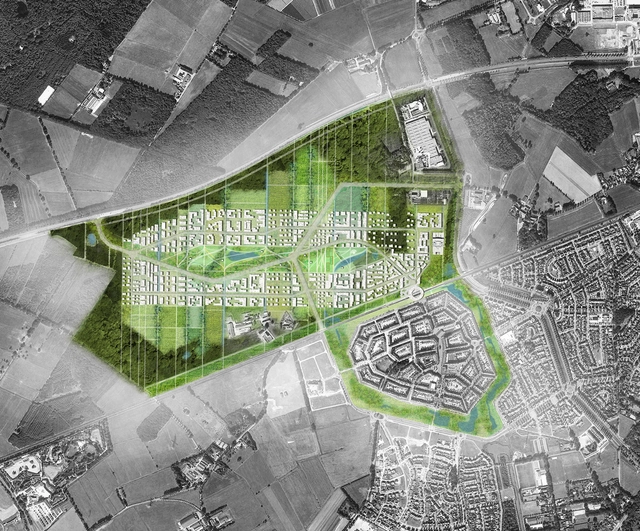
Brainport Smart District, Helmond, NL. . Image Courtesy of UNStudio
By 2025, Frost and Sullivan, a market research company, has predicted that there will be at least 26 fully-fledged major smart cities around the world. While some still think that as our cities get more intelligent, they will resemble sci-fi futuristic movies, the reality is that the quality of life in these cities will drastically improve. Cities are set to become more efficient with better services. Nevertheless, before reaching these ideals, let us go back on the process itself, and evaluate the challenges that we might face.
The concept of “decarbonization” has been in vogue recently in political speeches and global environmental events, but it has not yet gained enough attention in the field of architecture to profoundly change the way we design and construct the world of tomorrow. Buildings are currently responsible for 33% of global energy consumption and 39% of greenhouse gas emissions, indicating that architects must play a significant role if we are to stop or reverse climate change. With carbon acting as a universally agreed upon metric with which the greenhouse gas emissions of a building can be tracked [1], one of the most important ways through which this goal can be achieved is therefore the decarbonization of buildings.
https://www.archdaily.com/938866/urgent-issue-10-strategies-to-decarbonize-architectureLilly Cao
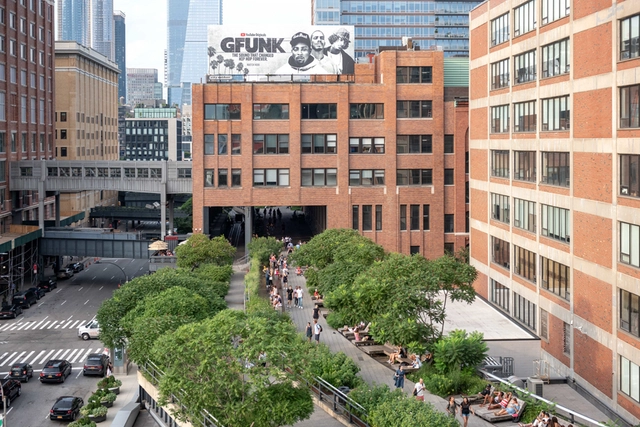
An aerial view of the High Line with Chelsea Market. The park plans to reopen, with certain restrictions, on July 16. Courtesy Timothy Schenck
Metropolis catches up with the High Line Network, a consortium of North American reuse projects that has been sharing notes and best practices through the pandemic.
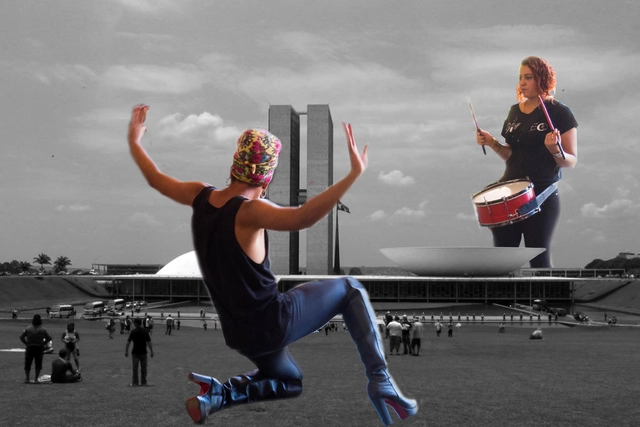
Collage made with photos of Matias Romero and Raquel Aviani/Secom UnB. (licensed under the Creative Commons Attribution-Share Alike 2.0 Generic license and Creative Commons Attribution 2.0 Generic license) via Wikimedia Commons
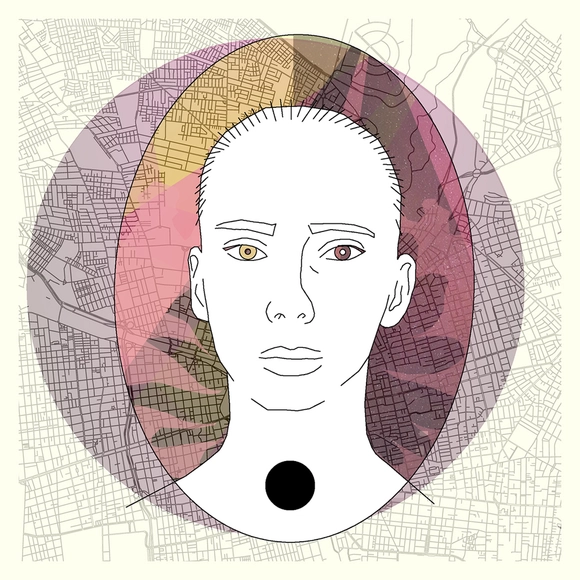
What would all the built environments be without its users? This question may make it easier to understand that not only do architecture and urbanism sustain themselves as physical spaces, but they also gain meaning mainly through the human and non-human movements and bonds, that - together with the architectural or spontaneous traces that make up the urban landscape - provoke the sensations that each individual feels in a unique way.
Feeling free and safe in the city. How many times have we felt fully free when walking through our neighbourhood, when returning home, when sitting in the park? Some urban spaces give us more autonomy than others. Some areas seem more comfortable and calm. But, to keep that calm, to what extent do we express ourselves and to what extent do we hold back? What safeguards do we take to feel as good as possible when inhabiting our environment?
https://www.archdaily.com/942508/cities-should-allow-people-to-shineMaría Gonzalez & José Tomás Franco
In general, architects like to talk about how much their designs influence communities, and it makes perfect sense for them to do so. In the end, physical spaces and different social factors influence how each individual feels when they inhabit the city or occupy a building. But do all projects respond to all users the same way? We set out to question the way in which architecture approaches the LGBTQIA+ community, through an open call on our social networks, collecting the testimony of our readers on how they inhabit these spaces and how it would be possible to represent the community in the architectural field.
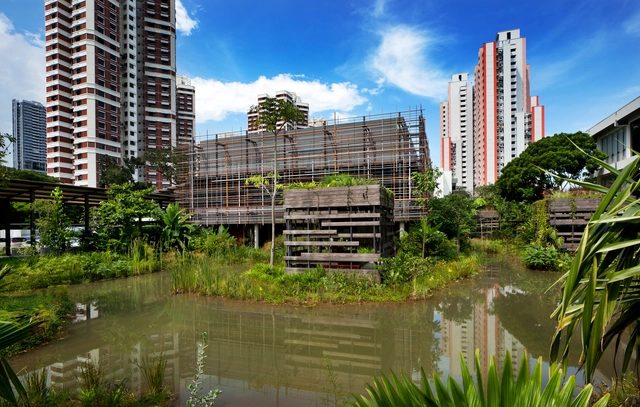
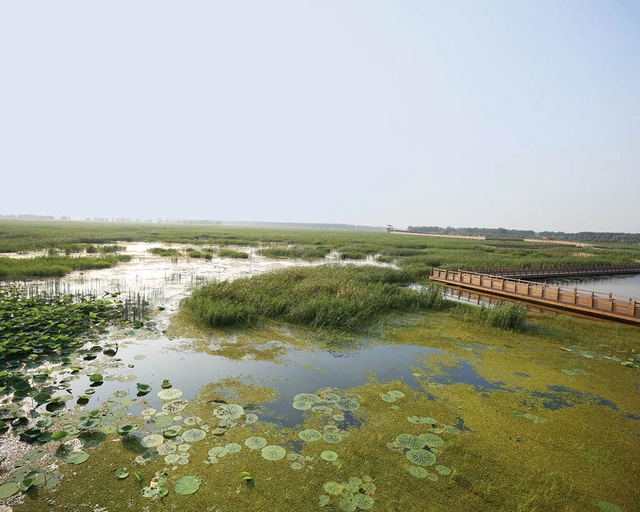
Design With Nature Now revisits Ian McHarg’s eponymous 1969 book and takes stock of current practices and projects of resilience in landscape design the world over, such as AECOM’s Weishan Lake National Wetland Park in Shandong, China. Courtesy AECOM
Moving away from its early exclusive focus on natural disasters, resilient architecture and design tackles the much tougher challenge of helping ecosystems regenerate.
_Daria_Scagliola.jpg?1596665845&format=webp&width=640&height=580)