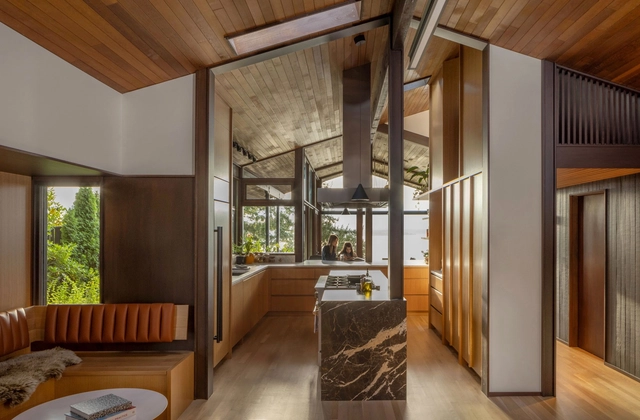
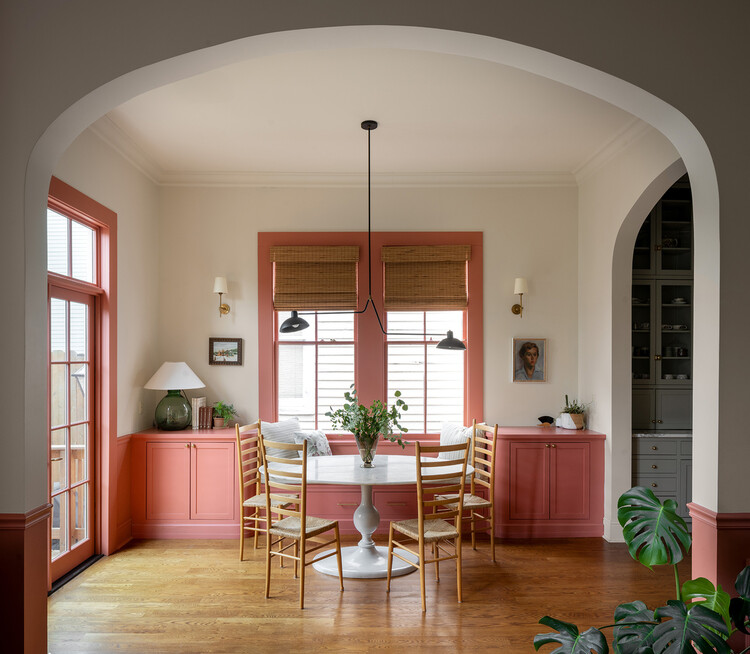
Breakfast nooks emerged in the early twentieth century in response to increasing domestic density and shifting ideas about everyday life. Rooted in the American Arts and Crafts movement and popularized through bungalow housing of the 1910s and 1920s, they evolved from the more formal Victorian breakfast room into compact, built-in spaces embedded within the kitchen. As houses grew smaller and more economical, architects and millwork companies used fixed benches and tables to occupy corners, alcoves, and bay windows that might otherwise be inefficient. These light-filled enclosures provided an affordable means of concentrating daily activities while preserving comfort and spatial clarity.
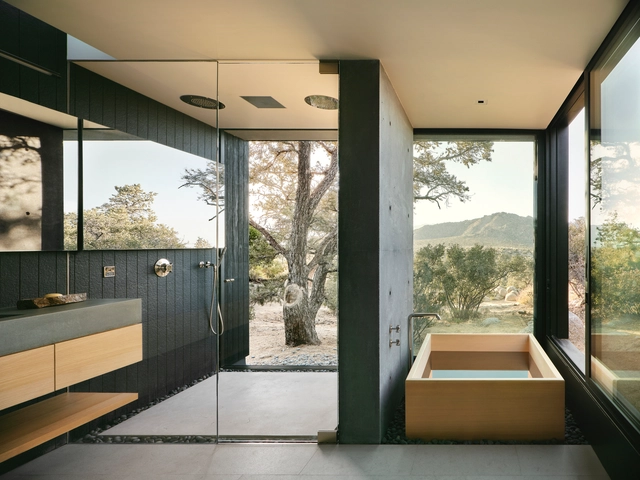
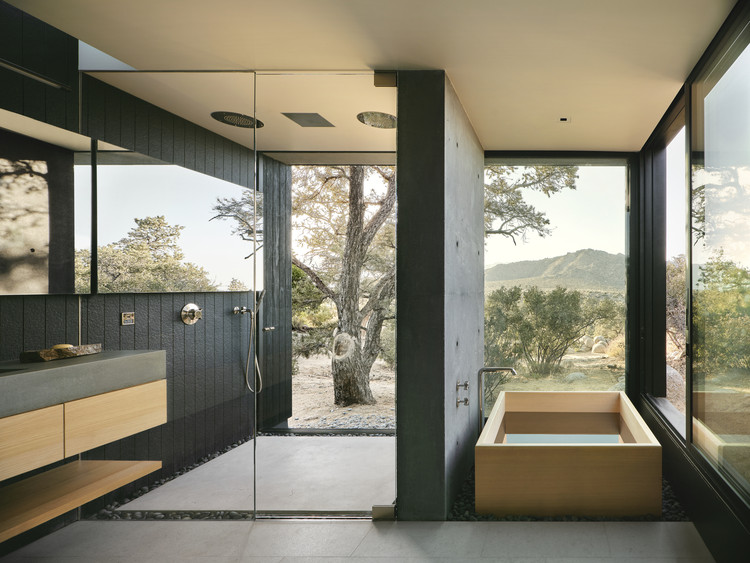
Despite being the smallest rooms of houses, bathrooms have always been one of the most challenging and critical to design, which often left them fairly simplified. The past few years, however, saw these spaces undergo significant change; what was once only limited to functionality, ease of maintenance, and privacy, is now being given a strong character with pops of color, classic fixtures, and patterned surfaces. Similarly for public bathrooms, where "functionality" and "ease of maintenance" are now complimented with aesthetics, technology, and high quality finishing. In this interior focus, we explore the three main bathroom typologies used in residential projects, and look at how architects have employed them through 12 examples.
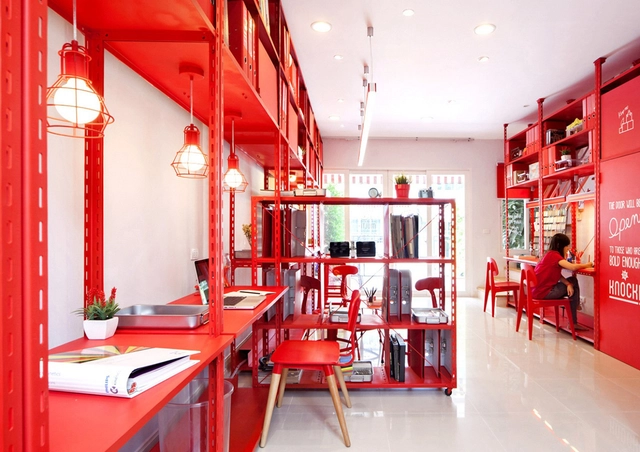
The functional distribution plays a fundamental role in the contemporary design of offices and places for work. The study of the architecture plan shows an interesting form of approach; not only allows for proper logistics and circulation but find efficient variations and innovations that will enable better workspaces that adapt to the current needs.
We have selected more than 50 plans of projects that will inspire you, recognizing the different ways in which architects have faced the challenge to design offices, in all different scale ranges.




_Rafael_Soldi_07_17062_00_N11_high.jpg?1573172847&format=webp&width=640&height=580)










_Rafael_Soldi_02_17062_00_high.jpg?1573172759&format=webp&width=230&height=230&crop=true)
_Rafael_Soldi_06_17062_00_N9_high.jpg?1573172831&format=webp&width=230&height=230&crop=true)
_Rafael_Soldi_09_17062_00_N13_high.jpg?1573172885&format=webp&width=230&height=230&crop=true)
_Rafael_Soldi_05_17062_00_N7_high.jpg?1573172813&format=webp&width=230&height=230&crop=true)
_Rafael_Soldi_07_17062_00_N11_high.jpg?1573172847)


_Rafael_Soldi_11_17038_00_high.jpg?1562345621&format=webp&width=230&height=230&crop=true)