Martina Rubino

BROWSE ALL FROM THIS PHOTOGRAPHER HERE

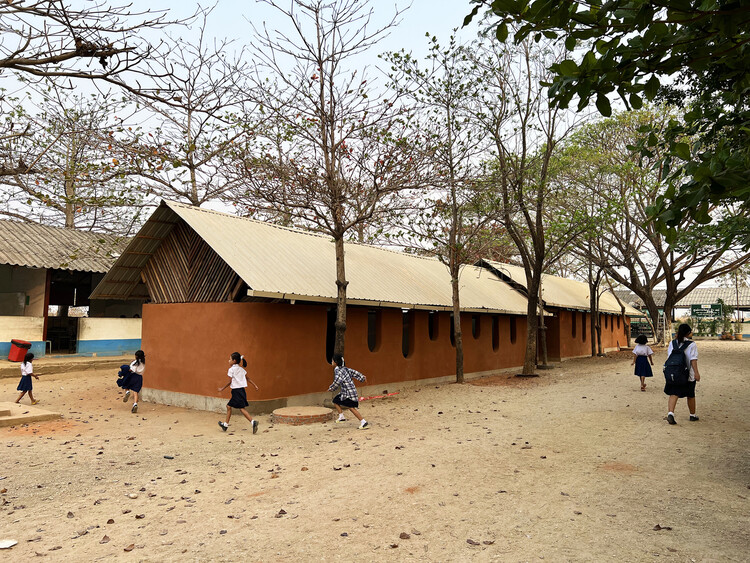
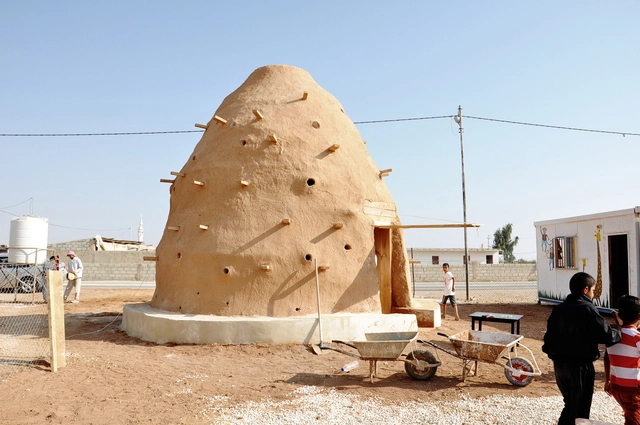
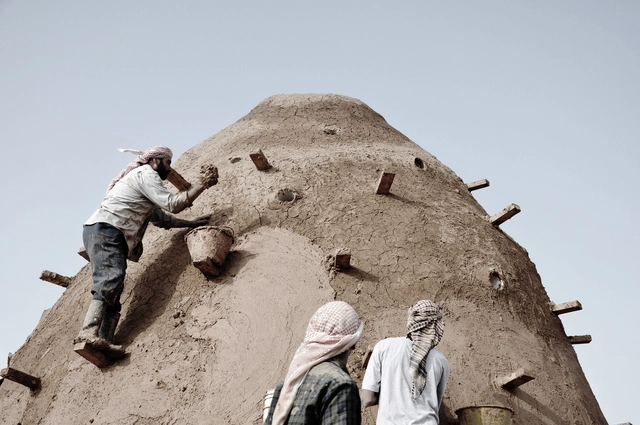
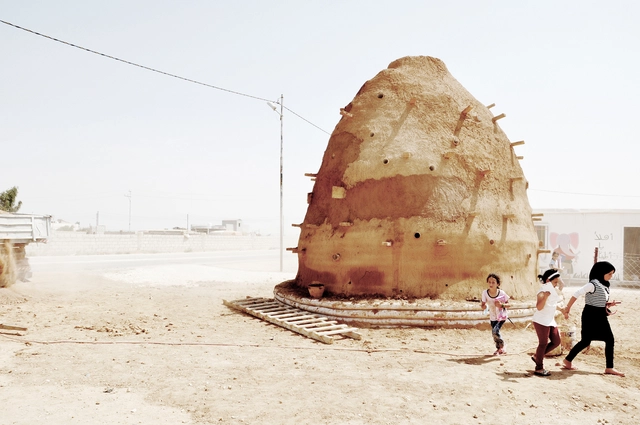
Schools at the Border: How Architecture Supports Learning in Conditions of Displacement

Audio available

For millions of displaced children and young people, education unfolds amid conditions of forced mobility, administrative uncertainty, and prolonged precarity. Schools situated in borderlands, refugee settlements, and sites of climate-induced displacement therefore operate as more than educational facilities. They become spatial infrastructures that negotiate the contradictory demands of emergency and continuity, offering environments where learning persists despite the instability of legal status, living conditions, and the very feeling of being at home.

According to UNHCR, approximately 45 million of the world's 117.8 million forcibly displaced people were children under the age of eighteen at the end of 2025. As displacement increasingly results from armed conflict, political persecution, environmental crises, and economic instability, humanitarian architecture faces a growing challenge: not simply how to construct more schools rapidly, but how to create educational environments capable of supporting continuity, safety, and belonging amid uncertain futures.

Schools at the Border: How Architecture Supports Learning in Conditions of Displacement - Image 1 of 4Schools at the Border: How Architecture Supports Learning in Conditions of Displacement - Image 2 of 4Schools at the Border: How Architecture Supports Learning in Conditions of Displacement - Image 3 of 4Schools at the Border: How Architecture Supports Learning in Conditions of Displacement - Image 4 of 4Schools at the Border: How Architecture Supports Learning in Conditions of Displacement - More Images+ 8

Vernacular Building and AI: Can Data Alone Bridge the Gap?

As artificial intelligence (AI) becomes increasingly embedded in society, it's essential to pause and reflect on the foundations that sustain it—and the dimensions to which it extends. At the heart of AI's learning are datasets, whose structure and content shape how these systems interpret and respond to the world. This reliance creates a deep interdependence—one that not only informs AI's capabilities but also defines its potential blind spots. In light of this, we must ask: What forms of understanding might this process exclude, especially those not easily captured in digital form?

Vernacular Building and AI: Can Data Alone Bridge the Gap? - More Images+ 15

Community Centers for Displaced Populations

Community Centers for Displaced Populations  - More Images+ 11

Through the past few months, the importance of community interaction and mental well-being has been felt by all. Yet, the need for a support system and constant reassurance has been a recurrent issue for much longer for forcibly displaced populations. Adding to the current health fears these communities, estimated at nearly 70.8 million ( 25.9 refugees only) around the world, struggle with traumas, mental health issues and have much difficulty in adapting to temporary or permanent foreign settings.

Architects Doing their Bit: 5 Architecture-Related Organisations for Emergency Response

Architecture can be a tool for social change, and the belief in this statement is what motivates the work of many architectural NGOs who strive to address the lack of adequate shelter, generate social and economic change and build resilience in communities. These NGOs operate in two major areas, disaster relief and community development, with many organisations pursuing both types of actions. This article rounds-up several architecture-related foundations that act in emergencies, covering their expertise, past involvement in humanitarian crises, as well as the means to join them in their efforts.

Winners of the 2018 Building of the Year Awards

With nearly 100,000 votes cast during the last two weeks, we are happy to present the winners of the 2018 ArchDaily Building of the Year Awards. This peer-based, crowdsourced architecture award showcases projects chosen by ArchDaily readers who filtered thousands of projects down to the 15 best works featured on ArchDaily in 2017.

100 Classrooms for Refugee Children / Emergency Architecture & Human Rights

100 Classrooms for Refugee Children / Emergency Architecture & Human Rights - More Images+ 11

Zaatari Village, Jordan