Jiakun Architects

BROWSE ALL FROM THIS PHOTOGRAPHER HERE

Why the 2025 Pritzker Prize Matters: Liu Jiakun and the Shift Toward Socially Responsible Architecture

Subscriber Access | 

For nearly the past two decades, cities around the world embraced "starchitecture"—futuristic, eye-catching buildings designed by globally renowned architects. In China, this trend was particularly pronounced as rapid urbanization fueled the construction of iconic megastructures like Zaha Hadid's Galaxy SOHO, OMA's CCTV Headquarters, and Herzog & de Meuron's Bird's Nest Stadium in Beijing. At the time of their construction, these were all celebrated as symbols of progress and global ambition. However, architecture worldwide has begun shifting toward a more context-driven, human-centered approach, with China emerging as one of the key contributors to this transformation. This year, Liu Jia Kun's 2025 Pritzker Prize further underscores that shift.

Why the 2025 Pritzker Prize Matters: Liu Jiakun and the Shift Toward Socially Responsible Architecture - More Images+ 4

Liu Jiakun and the Reinvention of Tradition in Chinese Architecture

Subscriber Access | 

The world watches China's development with a mix of admiration, curiosity, and apprehension. From massive infrastructure projects—such as hydroelectric plants and a modern high-speed rail network—to the emergence of entire cities built from scratch, the country showcases an ambitious growth strategy and an impressive capacity for execution. However, this rapid progress also brings significant challenges and stark contrasts. On one hand, modernity asserts itself in futuristic skyscrapers and cutting-edge technology; on the other, there remains a pressing need to preserve the country's rich cultural and historical heritage, reflected in ancient temples, imperial palaces, and historic cities.

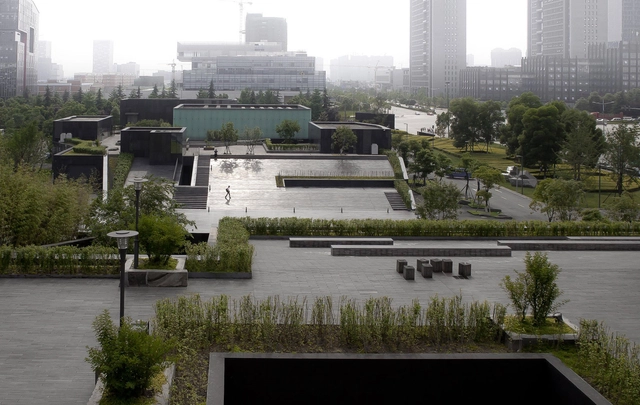
Rapid urban growth has also introduced issues such as overcrowding, environmental pollution, increasing social inequality, and the loss of agricultural land. Large-scale urbanization has led to the disappearance of traditional villages, environmental degradation, and the homogenization of architecture and lifestyles in many Chinese cities. It is within this context that Liu Jiakun, awarded the 2025 Pritzker Prize, stands out for his subtle yet profoundly transformative architectural approach. His work responds to these and other challenges of Chinese society while valuing traditional materials and techniques, as well as the creation of communal spaces.

Liu Jiakun: Get to Know the 2025 Pritzker Winner's Work

Subscriber Access | 

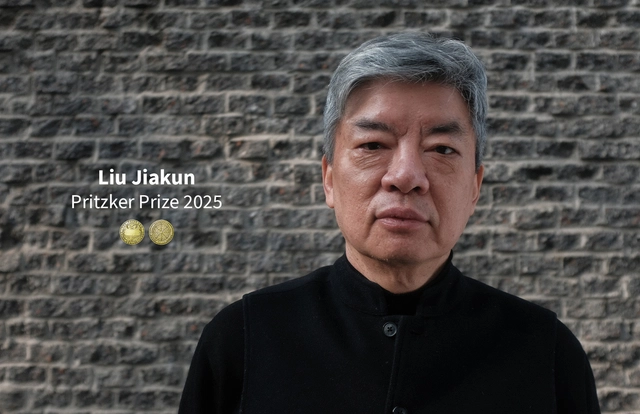
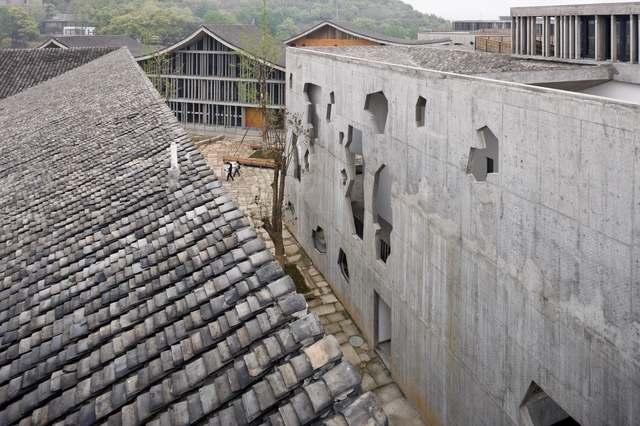
The 2025 Pritzker Prize has been awarded this year to Chinese Architect Liu Jiakun. Born in Chengdu in 1956, he grew up in the densifying city, before attending and graduating from the Chongqing Architecture and Engineering College (Chongqing University) in 1982 with a Bachelor of Engineering degree in Architecture, and becoming one of the first college graduates to be tasked with rebuilding the country during the Chinese transition period. However, it wasn't until many years later that the architect understood that "the built environment could be used as a medium for personal expression". It was then that his endeavors and career took off, with Liu Jiakun starting his practice in 1999, and participating in more collaborative works across China and Europe. Based on his experiences, his works are anchored in his understanding of reality and a respect towards China's multi-traditional history and internal diversity; all while achieving a seamless balance between architecture and nature, tradition and modernity.

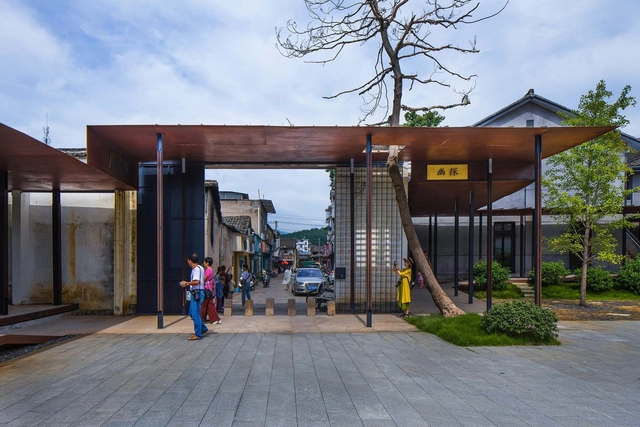
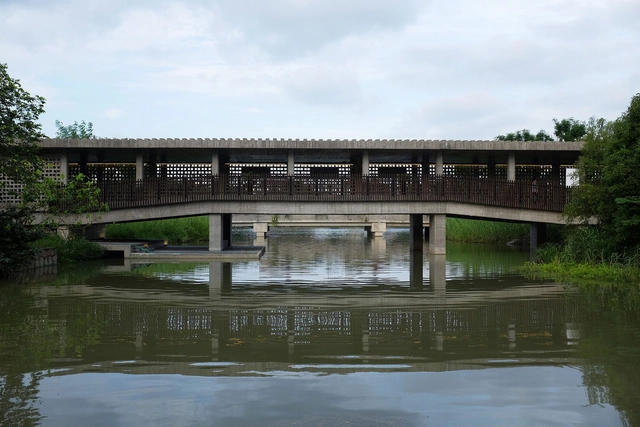
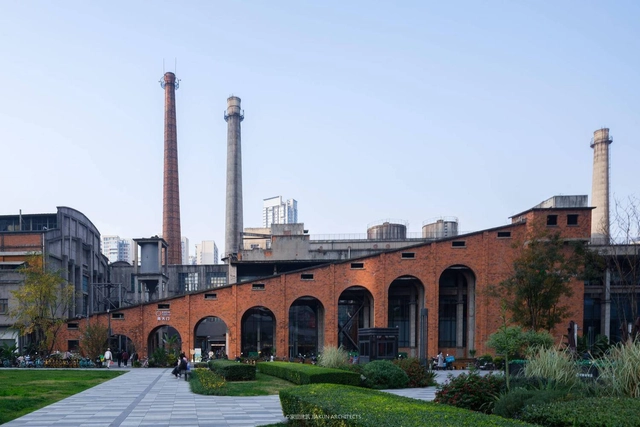
These concepts do not obstruct his consciousness of human needs and the importance of community spaces. Through his projects, Liu Jiakun proves that spaces can affect human behavior and become positively evocative. A public space such as those he's created can be conducive to a benevolent atmosphere that provides rest and collaboration. "such as my pursuit of narrative and poetry in design." The comprehensiveness of Liu Jiakun's works makes it easy not to be constrained by stylistic or aesthetic limitations or requirements. He just follows what the site, natural landscape, pre-existing urban frame, and citizen needs might require. The physical result is a mix of all of these with the predominant vernacular traditions.

Liu Jiakun: Get to Know the 2025 Pritzker Winner's Work - More Images+ 42

On the Work of Three Pioneering Chinese Architects: Wang Shu, Yung Ho Chang, and Liu Jiakun

I first went to China in 2002, a year after the International Olympic Committee awarded the 2008 Summer Games to Beijing. That initial trip was about exploring nature, cuisine, ancient temples, archeological sites, and, in general, experiencing lifestyles in China, mainly outside of its major cities. I was motivated by the pure curiosity of a Western tourist driven to an Eastern country in search of the old world, the exotic, hoping to catch a glimpse of a rich traditional culture on the cusp of its inevitable radical transformation. At the time, there was no modern, or rather contemporary, architecture in China to speak of. There were only the promising first hints of the development of a potentially new architectural language being undertaken by just a handful of independent architects almost entirely under the radar.

On the Work of Three Pioneering Chinese Architects: Wang Shu, Yung Ho Chang, and Liu Jiakun - More Images+ 19

The Future of Chinese Contemporary Architecture: How is China Creating a Civic Culture For a New Society?

A new kind of architecture distinguished by unique regional characteristics emerged in the mid-1990s when in China, architects started practicing independently from government-run design institutes. The leading Chinese architects of this time succeeded collectively in producing a unique architectural body of work when so many buildings built around the world were no longer rooted in their place and culture.

In China Dialogues, Vladimir Belogolovsky charts a panorama of Chinese architecture through the words of its main participants, lifting the veil on a prolific new generation of designers, each sharing a highly intellectualized and conceptual understanding of architecture. Following the course of 21 interviews accompanied by over 120 photographs and drawings of beautifully executed projects uprooted throughout the country since the early 2000s, China Dialogues opens up the thinking process of the country's top architects, providing an insight into their ideas, intentions, and visions in unusually revealing and candid ways.

The Future of Chinese Contemporary Architecture: How is China Creating a Civic Culture For a New Society? - More Images+ 7

Neighborhood·Songyang Three-Temple Cultural Communication Center / Jiakun Architects

Neighborhood·Songyang Three-Temple Cultural Communication Center / Jiakun Architects - More Images+ 22

“In The 1990s, We All Became Free”: In Conversation with Jiakun Liu of Jiakun Architects

Jiakun Liu was born in 1956 in Chengdu, China. Architecture was not his first choice to pursue at school, as he originally wanted to be an artist. He heard that architecture had something to do with drawing, so he applied to Chongqing Institute of Architecture and Engineering, not fully understanding what his role as an architect would be. After his graduation in 1982, Liu worked at the Chengdu Architectural Design Academy for two years, the experience he did not enjoy. So, he set out on a self-searching journey that lasted for over a decade, spending time in Tibet and Xinjiang in West China where he practiced meditation, painting, and writing, producing several works of fiction, while officially working at the Literature Academy as a writer. 

“In The 1990s, We All Became Free”: In Conversation with Jiakun Liu of Jiakun Architects  - More Images+ 67