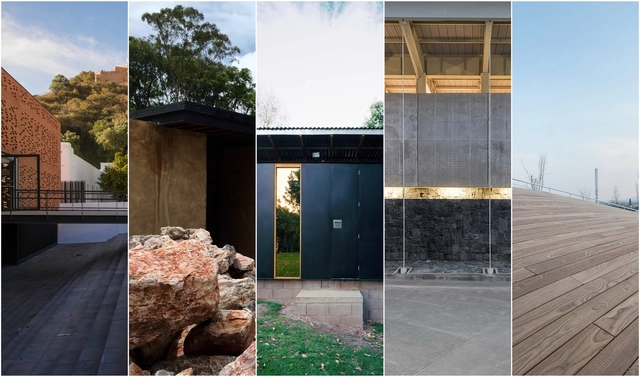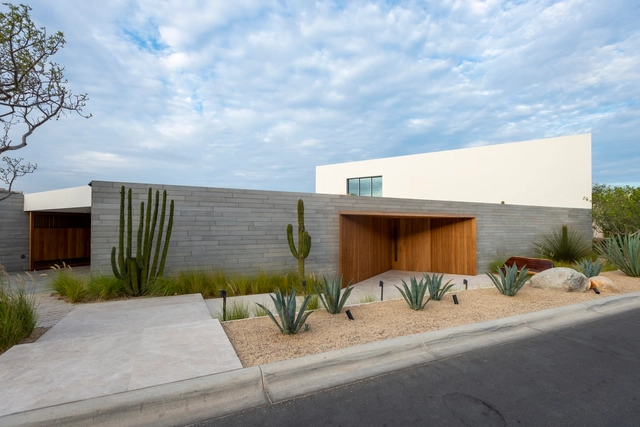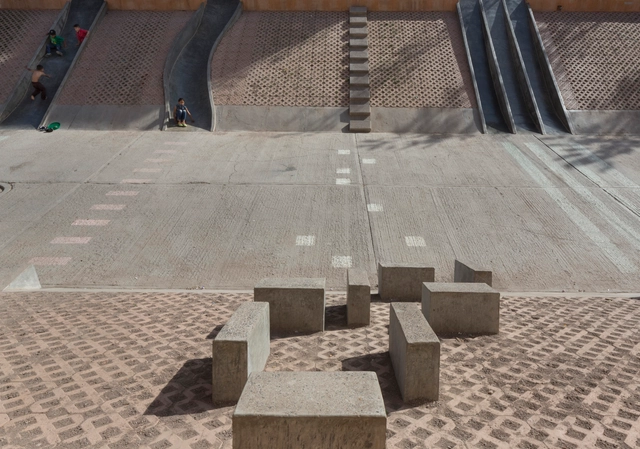
Tepoztlán is a region located in the state of Morelos, in the south-central part of the country, bordered by the states of Guerrero, Puebla, the State of Mexico, and Mexico City. Spanning an area of 242.646 square kilometers, it is one of the 111 Pueblos Mágicos (Magical Towns) designated to boost tourism by highlighting the unique attributes of each destination.
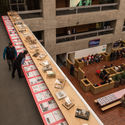
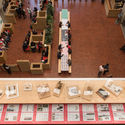
As part of the annual collaborative efforts of the Design Week team in Mexico City, the "Inédito" exhibition opened on October 9 at the Espacio CDMX Arquitectura y Diseño gallery. It marks the sixth consecutive edition of this open call, which aims to support, promote, and showcase utilitarian design projects across several categories: social impact, environmental impact, innovation, function, aesthetics, concept, user experience, materials, and processes. The exhibition is divided into three categories—professional, student, and digital—where, far from competing, participants gain exposure to opportunities in both national and international markets for outstanding design with commercial and production viability.
The National Social Distancing Campaign (Jornada de Sana Distancia) in Mexico began on March 23, 2020. However, a couple of weeks earlier, despite the federal government's recommendation to continue normal activities, people on social media were already choosing to replicate the European model of self-isolation. Some architecture firms immediately decided to close their physical spaces and transition to remote work, while others took a few more weeks. Still, this period of social and physical (spatial) distancing is experienced differently in every household. The months of this pandemic have exposed not only inequality regarding basic needs in dense urban areas, but also the fragility of our social order. Whether at a macro or micro scale, all these experiences are shaped and influenced by the built environment, making architecture both a judge and a party to the equation.
One of the most critical factors in architectural design is the site's specific climate. While this can present challenges in extreme conditions—requiring insulating materials to adapt to shifting environments—Mexico's privileged climate works in the architects' favor. It allows them to create microclimates and spaces that blur the boundary between indoors and outdoors.
The National Social Distancing Campaign (Jornada de Sana Distancia) in Mexico began on March 23, 2020. However, a couple of weeks earlier, even despite the Federal Government's recommendation to continue activities as normal, social media was already filled with people choosing to replicate the European model and self-isolate. Immediately, some architecture practices decided to close their physical offices and transition to a remote work model, while others took several weeks longer. Yet, this period of social and physical (spatial) distancing is experienced differently in every household. In the months since this pandemic unfolded, it has laid bare not only the inequality in basic needs within dense urban areas but also the fragility of the social order itself. Whether at a macro or micro scale, all these experiences occur within and are influenced by the built environment, making architecture both judge and jury in this equation.
In 2018, a flexible and ephemeral space was erected in Mexico City's Alameda Central, demonstrating the luminosity and plastic versatility of joining 2,500 water jugs to form a conical blue oasis. Today, this pavilion is located within the Huerto Urbano Roma Verde, where it has hosted various events and activities, shedding the transience and impermanence that originally defined its essence.
One of the most critical factors in architectural design is local climate. While extreme conditions can pose challenges—requiring insulating materials to adapt to changing weather—Mexico's favorable climates work to the designer's advantage, enabling the creation of microclimates and spaces that blur the transition between indoors and outdoors.
The call for entries for the Third Edition of the Oscar Niemeyer Award for Latin American Architecture, presented by the Network of Architecture Biennials of Latin America, has successfully concluded. A total of 101 works from 12 Latin American countries are participating, with Mexico represented by 30 high-quality and diverse projects—all clear examples of outstanding contemporary architectural production.
As part of an initiative by Infonavit to drive the recovery of three neighborhood parks in the city of Tuxtla Gutiérrez, Chiapas—“San Juan,” “Las Torres,” and “Canteras”—these housing developments lacked efficient infrastructure, resulting in a deteriorated urban image, high crime rates, and a complete lack of community ownership over public spaces. In response, T+E Arquitectos and Fracciona Arquitectura joined forces to transform these spaces, addressing the distinct requirements of each site.
Mexico's National Social Distancing Campaign began on March 23, 2020, but a couple of weeks earlier, even as the federal government recommended continuing normal activities, social media was already filled with people choosing to self-isolate and replicate the European model. Some architecture firms immediately decided to close their physical offices and transition to a remote work model, while others took several weeks longer. However, this period of social and physical (spatial) distancing is experienced differently in every household. Over the months that this pandemic has unfolded, it has exposed not only the inequality regarding basic needs in dense urban areas, but also the fragility of the established social order. Whether at a macro or micro scale, all of these experiences occur within and are influenced by the built environment, making architecture both judge and jury in this equation.
The state of Puebla is located in the central highlands of Mexico, bordering the states of Tlaxcala, Hidalgo, Veracruz, Oaxaca, Guerrero, Morelos, and the State of Mexico. Covering an area of 34,251 km², it is one of the country's most densely populated states. Its capital is Puebla de Zaragoza, and it is one of the leading landlocked states for tourism, featuring 9 "Pueblos Mágicos" (Magical Towns) and 3 UNESCO World Heritage Sites.
Given its diverse climate and geography, Mexico's wine production has steadily gained recognition in states such as Aguascalientes, Baja California, Baja California Sur, Chihuahua, Coahuila, Durango, Guanajuato, Nuevo León, Puebla, Querétaro, Sonora, and Zacatecas. In these regions, vineyards are increasingly in the spotlight, alongside wine festivals and curated experiences that offer visitors an immersive look into the various stages of production.
In early October, a new space opened in Mexico City under the name Design House at Público Coworking, showcasing a series of interventions that integrate disciplines such as design, architecture, and interior design. Over the past ten years, Design House has presented cutting-edge concepts from more than one hundred participating firms across various venues, collaborating with showrooms on the Design Route (Ruta del Diseño) that provide the pieces and accessories featured in the diverse installations.
The state of Querétaro is located in the north-central region of Mexico, bordered by the states of San Luis Potosí, Guanajuato, Hidalgo, Estado de México, and Michoacán. Covering an area of 11,684 km², it is one of the most expansive regions in the country. Its capital is Santiago de Querétaro, which is also the state's most populous city. Among its most popular Pueblos Mágicos (Magical Towns) are Bernal, Tequisquiapan, Jalpan de Serra, Cadereyta de Montes, San Joaquín, and Amealco de Bonfil. Additionally, the state boasts four UNESCO World Heritage sites and one entry on the Intangible Cultural Heritage list: the Historic Monuments Zone of Santiago de Querétaro, the Franciscan Missions of the Sierra Gorda, the Otomí Chapels, and the living traditions of the Otomí-Chichimeca culture, respectively.
In a year defined by physical distancing, social media has taken on an even greater role in how we connect and stay informed. Our Instagram accounts have broken reach records, bringing our audience the very best of our website's content: projects, articles, interviews, and news from the architectural world, inspiring new ideas and tools for a better future for our cities.
México Territorio Creativo presents the program for the thirteenth edition of Design Week México under the motto: design is everything. It will take place from October 6 to 31 of this year, featuring traditional programming alongside the digital initiatives adopted in the previous edition. Additionally, all events will adhere to international and national guidelines, particularly the Mexico City government's health and safety measures, to protect the health of participants, attendees, and everyone who makes the 2021 lineup possible.
Throughout November, Diez Company will present the third edition of Maison Diez Company to both Mexican and international audiences. Dedicated to lighting design, the space serves as a gathering point for designers, creatives, architects, interior designers, commercial partners, lighting experts, and international brand representatives to celebrate light. Following the success of its 2018 and 2019 editions, Maison Diez Company showcases its latest designs within a historic mansion in the Escandón neighborhood, open to the public from November 6 through May 20, 2022.