While the architecture and construction industry has been advancing in new fields for years, it remains one of the most lagging in terms of automation and efficiency. And indeed, while many of these innovations never progress past the experimental stage, we face a sobering reality: the sector is one of the largest producers of pollutants and waste worldwide. How can we reverse this trend?
A project of relevant scale is rarely a single Man’s work. From the village barn raising events done in the 18th and 19th century to the standard taskforce that a project developer engages nowadays, a build structure requires many hands on-board, bringing forth different inputs and expertise to shape and execute it.
In Her, a 2013 film directed by Spike Jonze, a lonely writer develops a love affair with the virtual assistant of an operating system. Brave New World, a book written in 1932 by the English author Aldous Huxley, fabricates a dystopian society whose cult of efficiency and rationality creates a humanity that ignores hardship and pain but also represses love and freedom. In Mary Shelley's 1818 book Frankenstein, considered the first science fiction novel, a life is artificially created, producing a monster with human characteristics: wills, wishes, and fears. Whether describing the fear of artificial intelligence, the uncertainty produced by industrialization, or the limits of science, science fiction works reveal less about the future and much more about the moment in which they were created; they speak of the fears and hopes of their own time.
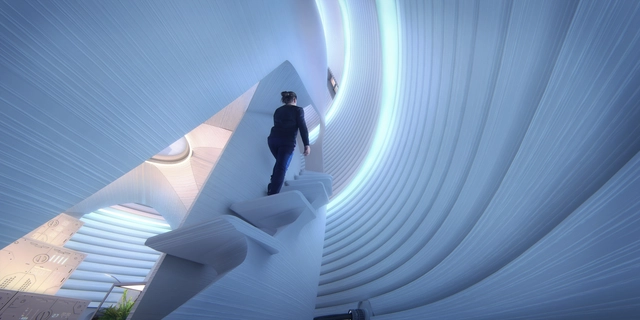
When we explore urban visions of the past anticipating the future, it is common to find exaggerated and even funny predictions. As for the promises of architecture and, consequently, of our cities, it is not an easy task to predict future developments clearly either. By looking at industry trends and using all of our imaginations, could we tell what cities will be like in tens or hundreds of years? Their materials, their appearance, their way of building and thinking? Will it be a more pristine and minimalist future or a more organic and complex future? How will new technologies and building materials affect the shape, aesthetics, and prosperity of the cities of tomorrow?
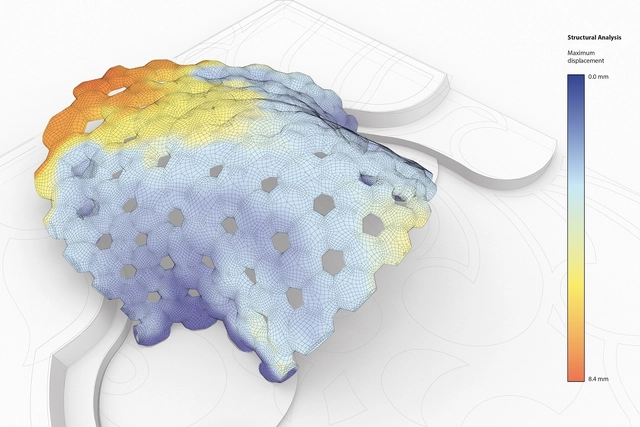
Structural analysis. Image Courtesy of Oliver Krieg
When we think of architectural visualization, sketches, drawings, and 3D renderings usually come to mind. This association is natural, as "visualization" is typically equated with imagining a project before it is built—whether to validate aesthetic and functional decisions or to communicate concepts to clients unfamiliar with technical drawings. However, beyond superficial elements like materials, layouts, textures, and colors, architects must also address highly technical, invisible factors that directly impact a building's performance.
Videos
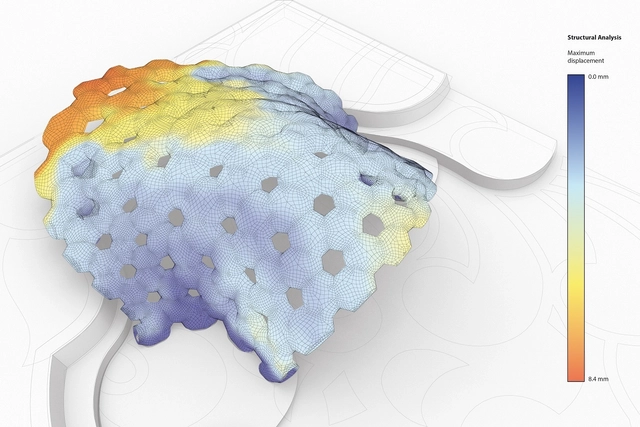
Análises estruturais. Image Cortesia de Oliver Krieg
When someone mentions architecture visualization, most immediately think of sketches, computational renderings, and drawings. This connection occurs because we almost always associate visualization with picturing a project that is not yet built, either for the validation of aesthetic and functional decisions or to represent the idea to a client, who is often unfamiliar with technical drawings. Yet in addition to considering superficial elements such as materials, plans, textures, and colors, when carrying out a project, the architect needs to be aware of technical issues that are invisible to the naked eye, which may directly influence the project.