After spending five-figure sums on their education, you might think that architectural students would, at the very least, continue in the architectural profession. However, as investigated in a new BBC Business article, many students of architecture “are using their newly-learned digital animation and design skills to break into the world of film.” With a growing demand for both architectural and all other kinds of animations, the number of film careers built from architectural foundations seems to be burgeoning. Architects-turned-filmmakers now work on a wide variety of projects, from special effects in Beyoncé videos to Oscar-winning films, to visualization films of future architectural projects.
Many have come to associate drones with the looming unmanned aircraft deployed in the defense industry, but as technology continues to improve drones have gotten smaller and progressively less expensive. Consumers can now purchase their very own drone for as little as $600 or less and the technology is already proving to be useful for a wide variety of purposes, including possible uses for architects in everything from site analysis to construction.
However, this technology could have much broader consequences on not only the airspace above our streets, but also in how we design for increasing civilian and commercial drone traffic. Just as other technologies such as cars and security surveillance have shaped our urban infrastructure, so too will an emerging network of infrastructure for pilotless technology. Particularly as drones become ever more precise and nimble, opportunities arise for their increased use in urban areas. If these devices can be programmed to learn from repeated maneuvers with the use of cameras and sensors, it is not unrealistic to say that they could soon learn how to navigate through increasingly complex vertical cities. But if drones become fixtures of our urban environment, what impact will they have on exterior spaces? And could they become as ubiquitous in our city’s skies as cars on our streets?
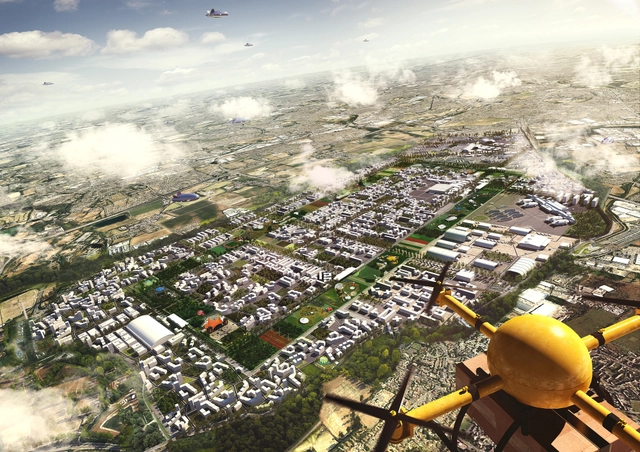
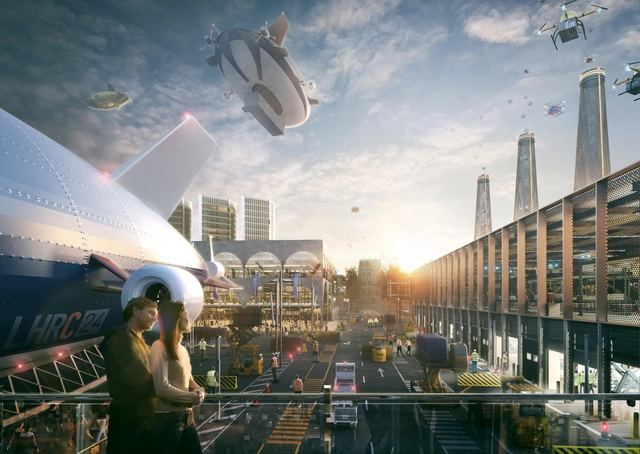
The Mayor of London Boris Johnson has unveiled three proposals to redevelop Heathrow Airport into 'Heathrow City,' a new town occupying the site that according to one study "could provide 90,000 jobs and 80,000 homes" in West London. Developed in parallel with Foster + Partners' proposal to create a new airport in the Thames Estuary, the three possible designs are part of a plan that Johnson believes will not only improve the capital's aviation capacity, but also the quality of living in the area around the existing Heathrow Airport.
The three proposals, by Rick Mather Architects, Hawkins\Brown and Maccreanor Lavington, all take very different approaches to the brief, which was to create a mixed use residential and commuter town, with a focus on education and technology industries. Find out more about the three different proposals after the break.