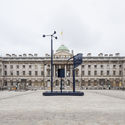
In this video from CNN Style, London designers Edward Barber and Jay Osgerby discuss Forecast, a wind-powered installation they created in collaboration with V&A Museum for the first London Design Biennale. With the intent to help city residents find their way “at a time of turbulence,” the installation responds to the Biennale's theme "Utopia by Design."
Barber and Osgerby's Installation Throws Caution to the Wind for The London Design Biennale




https://www.archdaily.com/795810/barber-and-osgerbys-installation-throws-caution-to-the-wind-for-the-london-design-biennaleNatalina Lopez
Can Anyone Win in Architecture Criticism? An Appeal for a "New Sincerity"
In the mid-1980s, after literature had long been held hostage by postmodernist irony and cynicism, a new wave of authors called for an end to negativity, promoting a "new sincerity" for fiction. Gaining momentum into the 1990s, the movement reached a pinnacle in 1993 when, in his essay E Unibus Pluram: Television and U.S. Fiction, pop-culture seer David Foster Wallace, a proponent of this "new sincerity," made the following call to action: “The next real literary ‘rebels’ in this country might well emerge as some weird bunch of anti-rebels, born oglers who dare somehow to back away from ironic watching, who have the childish gall actually to endorse and instantiate single-entendre principles... These anti-rebels would be outdated, of course, before they even started. Dead on the page. Too sincere. Clearly repressed. Backward, quaint, naive, anachronistic. Maybe that’ll be the point. Maybe that’s why they’ll be the next real rebels. Real rebels, as far as I can see, risk disapproval. The old postmodern insurgents risked the gasp and squeal: shock, disgust, outrage, censorship, accusations of socialism, anarchism, nihilism. Today’s risks are different. The new rebels might be artists willing to risk the yawn, the rolled eyes, the cool smile, the nudged ribs, the parody of gifted ironists, the ‘Oh how banal.'"
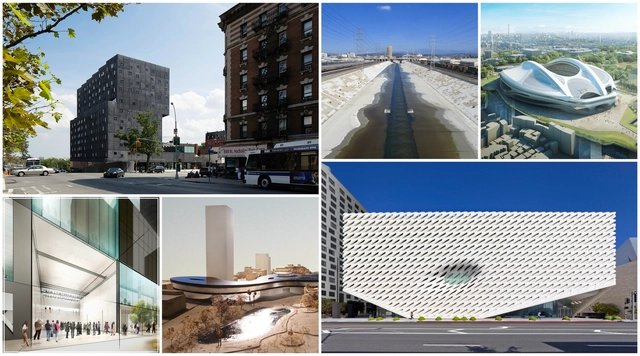
Architecture, ever in debt to the styles and ideas of other art forms, could learn a thing or two now from the resuscitation of American fiction at the turn of the millennium. It too is enduring an identity crisis, mired by pessimism and uncertainty - a reality made painfully clear this past January when a New York Times Op-Ed by Steven Bingler and Martin C. Pedersen, How to Rebuild Architecture, divided camps and made the design world fume. In the editorial, the authors spoke vehemently of an architectural profession that has become mired by egos and been disconnected from public needs. Things quickly got ugly, critics wrestled with critics and subsequently the public got involved. What no one seemed to take into account is that this type of hounding is at the core of the problem. In its current landscape the discipline has struggled with its past, been deferential to its present, and wrestled with the uncertainty of its future. In a moment when we have become addicted to despondency, can anyone win?
https://www.archdaily.com/776615/can-anyone-win-in-architecture-criticism-an-appeal-for-a-new-sincerityVladimir Gintoff
Adjaye Associates' Sugar Hill Development Offers a Different Model for Public Housing
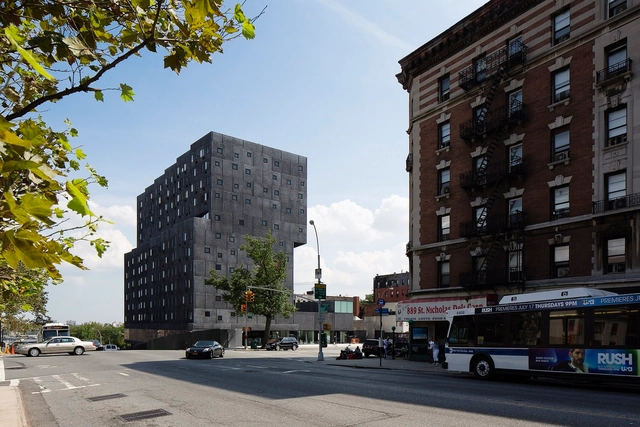
In discussion with Calvin Tomkins for a 2013 profile in The New Yorker, David Adjaye spoke intensely on the significance of his Sugar Hill Development. “Context,” said Adjaye, “is so important, not to mimic but to become part of the place. I wanted a building that acknowledges its surroundings.” The recently-completed project is the brainchild of Ellen Baxter, leader of Broadway Housing Communities (BHC), a non-profit that has made strides to create innovative housing schemes in Upper Manhattan’s Washington Heights neighborhood. In an era where mixed-used developments are routine, Sugar Hill adds new dimensions to the typology by uniting affordable apartments, an early childhood education center, offices for the BHC, and the Sugar Hill Children’s Museum of Art & Storytelling.
In conjunction with their full building review written by Rob Bevan, The Architectural Review has produced this video which introduces the broader public to the tenants, allowing us to better understand the building’s use, intentions, and the design philosophy.

https://www.archdaily.com/776018/adjaye-associates-sugar-hill-development-offers-a-different-model-for-public-housingVladimir Gintoff
The Barack Obama Presidential Center: Adjaye or Not Adjaye?
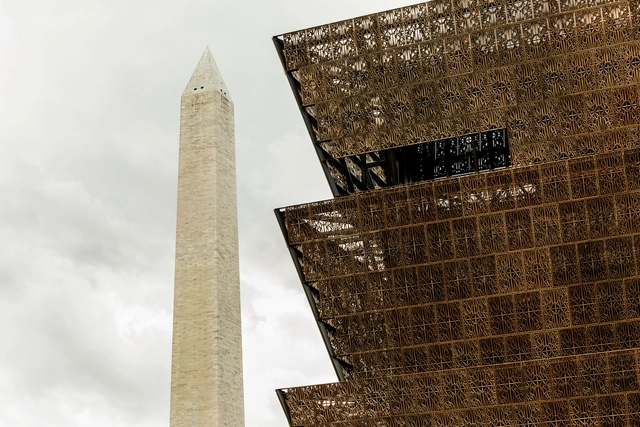
There has been much debate, speculation and excitement among architectural enthusiasts about who is on the shortlist to design the Barack Obama Presidential Center in Chicago. After spending an afternoon viewing “Making Place: The Architecture of David Adjaye,” now on at the Art Institute of Chicago, I’m more convinced than ever that Adjaye is the right person for the job.
https://www.archdaily.com/776047/the-barack-obama-presidential-center-adjaye-or-not-adjayeSekou Cooke

Sugar Hill Development / Adjaye Associates


-
Architects: Adjaye Associates
- Area: 172665 ft²
- Year: 2014
-
Manufacturers: American Hydrotech, EFCO, WASCO Skylights, thyssenkrupp
https://www.archdaily.com/774725/sugar-hill-development-adjaye-associatesIgor Fracalossi
When One Size Does Not Fit All: Rethinking the Open Office
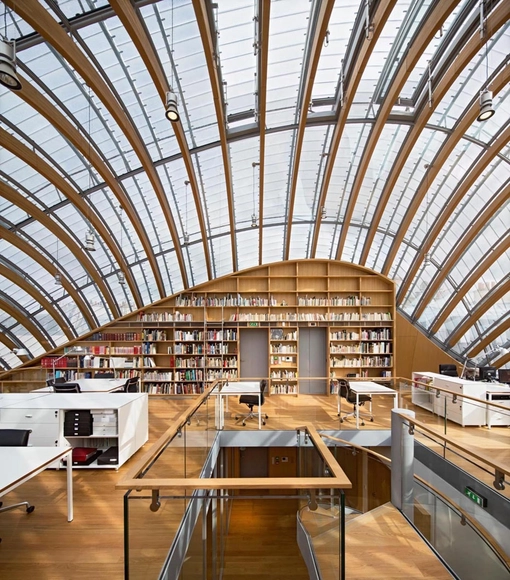
Workplace design has undergone a radical transformation in the last several decades, with approximately seventy percent of today’s modern offices now converted to open plans. However, despite growing concerns over decreases in worker productivity and employee satisfaction, the open office revolution shows no sign of slowing down. The open office model has proliferated without regard for natural differences in workplace culture, leading to disastrous results when employees are forced into an office that works against their own interests. If we are to make offices more effective, we must acknowledge that ultimately, design comes out of adapting individual needs for a specific purpose and at best, can create inviting spaces that reflect a company’s own ethos.
https://www.archdaily.com/595033/when-one-size-does-not-fit-all-rethinking-the-open-officeEvan Rawn
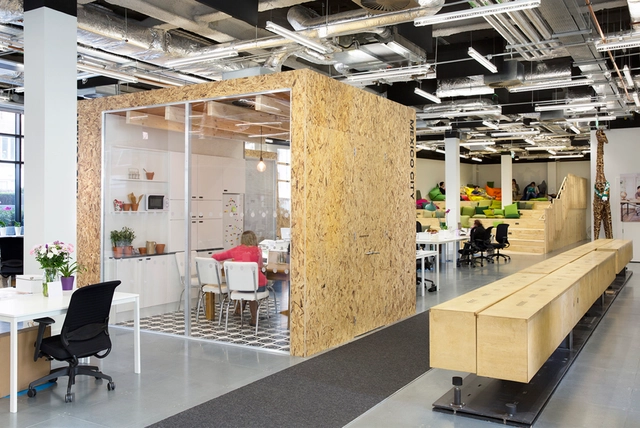
Airbnb’s European Operations Hub in Dublin / Heneghan Peng Architects


-
Architects: heneghan peng architects
- Area: 2000 m²
- Year: 2014
https://www.archdaily.com/491468/airbnb-s-european-operations-hub-in-dublin-heneghan-peng-architectsCristian Aguilar
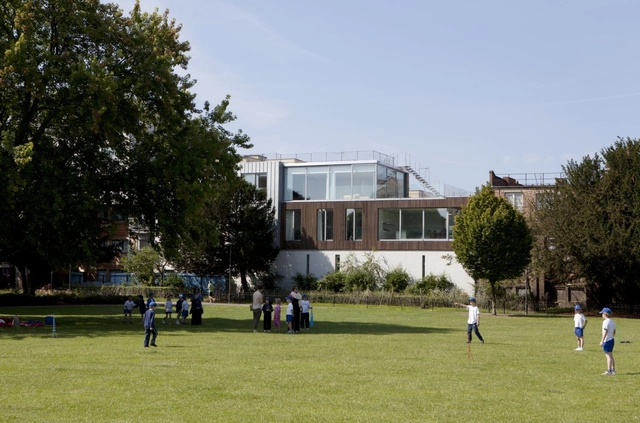
Cinematographer’s House and Studio / Inside Out Architecture


https://www.archdaily.com/407762/cinematographer-s-house-and-studio-inside-out-architectureJonathan Alarcón
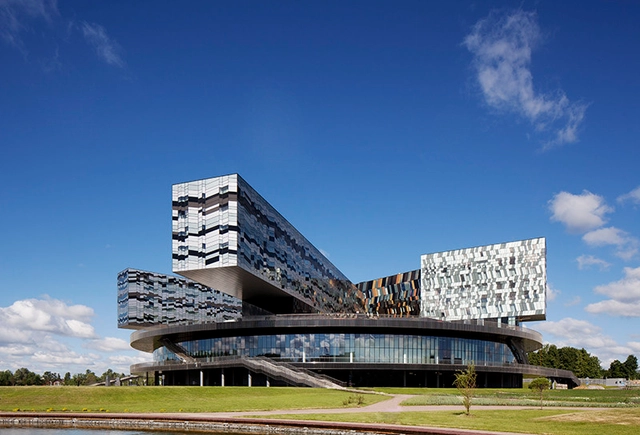
Moscow School of Management / Adjaye Associates & AB Studios


-
Architects: AB Studios, Adjaye Associates
- Area: 42891 m²
- Year: 2010
-
Manufacturers: Alucobond, AERMEC, Anwo, Kampmann
https://www.archdaily.com/214178/moscow-school-of-management-adjaye-associates-ab-studiosVictoria King
Rivington Place / Adjaye Associates
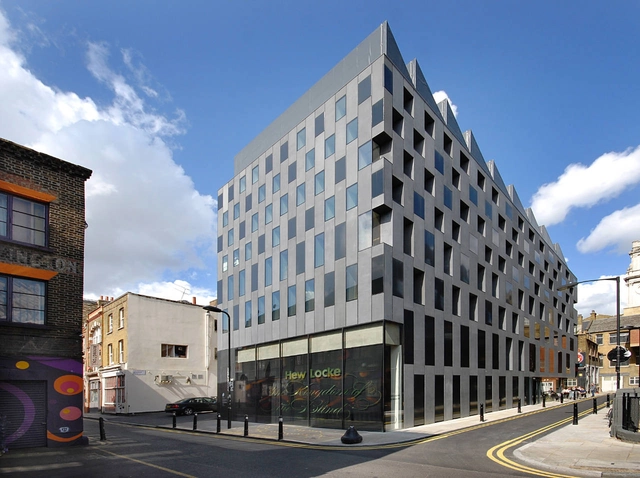


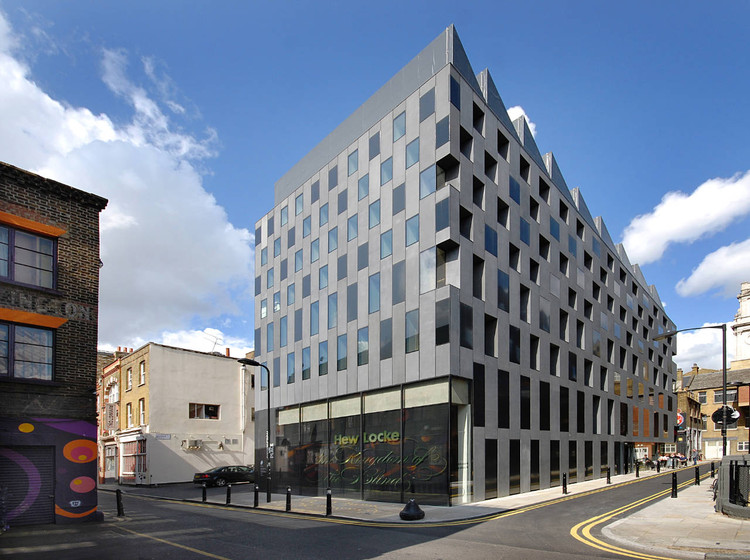
https://www.archdaily.com/214091/rivington-place-adjaye-associatesVictoria King
Sunken House / Adjaye Associates


https://www.archdaily.com/213736/sunken-house-adjaye-assocatesVictoria King