Dinorah Schulte

BROWSE ALL FROM THIS PHOTOGRAPHER HERE
↓

20 Practices Expanding Architecture’s Agency: Winners of the ArchDaily 2026 Next Practices Awards

Audio available

ArchDaily is proud to announce the winners of the 2026 Next Practices Awards, recognizing 20 emerging and forward-thinking practices expanding the possibilities of architecture today.

Now in its sixth edition, Next Practices continues to look beyond conventional definitions of the profession to identify the people, ideas, and methodologies driving the discipline. The 2026 edition is our strongest and most globally representative to date, bringing together different approaches, scales, and contexts that broaden our understanding of how and by whom architecture is being practiced.

From extreme climates to rural communities, informal cities, and territories affected by displacement and environmental vulnerability, this year's selection engages with a wide range of realities. Drawing from engineering, ecology, digital fabrication, material research, vernacular and Indigenous knowledge, advocacy, and critical research, these practices reflect what is "next": the capacity to respond to specific conditions and actively shape the world around them.
Subscriber Access

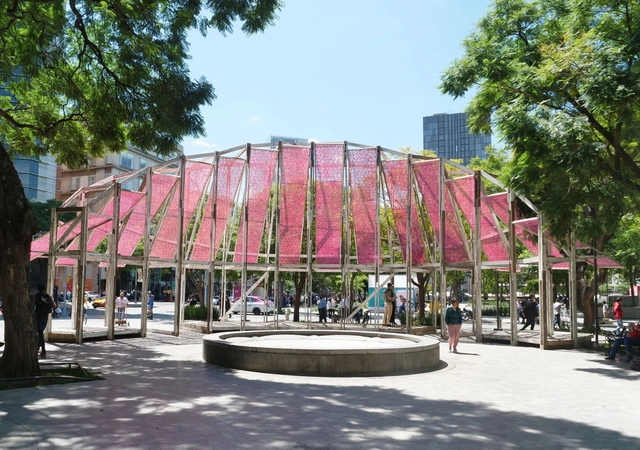
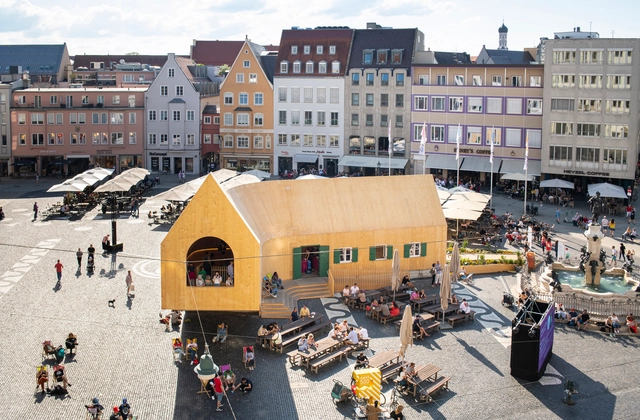
Pavilions in Urban Spaces: On the Experimentation, Recycling, and Reuse of Materials

How do pavilions emerge in architecture? What role do they play in urban spaces? Beyond the multiple interpretations that exist around the world, the pavilion, as an architectural principle and typology, tends toward extroversion, often associated with a centrifugal nature and visual openness toward the horizon, which is linked to its origins as a tent offering shelter from the elements. Pavilions are usually identified as isolated and independent structures that can promote lateral openings in the urban space, panoramic or introspective views, technological reflections, and material experiments that are recognizable from the outside or once inside.

Pavilions in Urban Spaces: On the Experimentation, Recycling, and Reuse of Materials - More Images+ 26

Subscriber Access

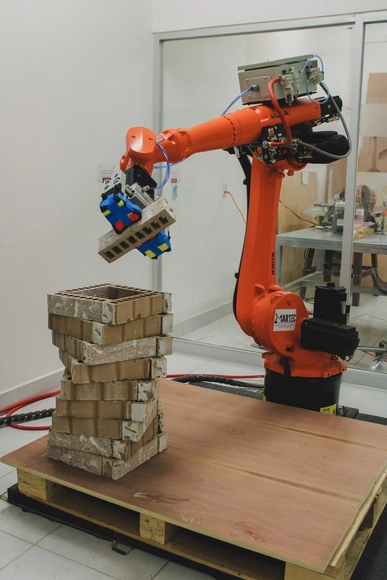
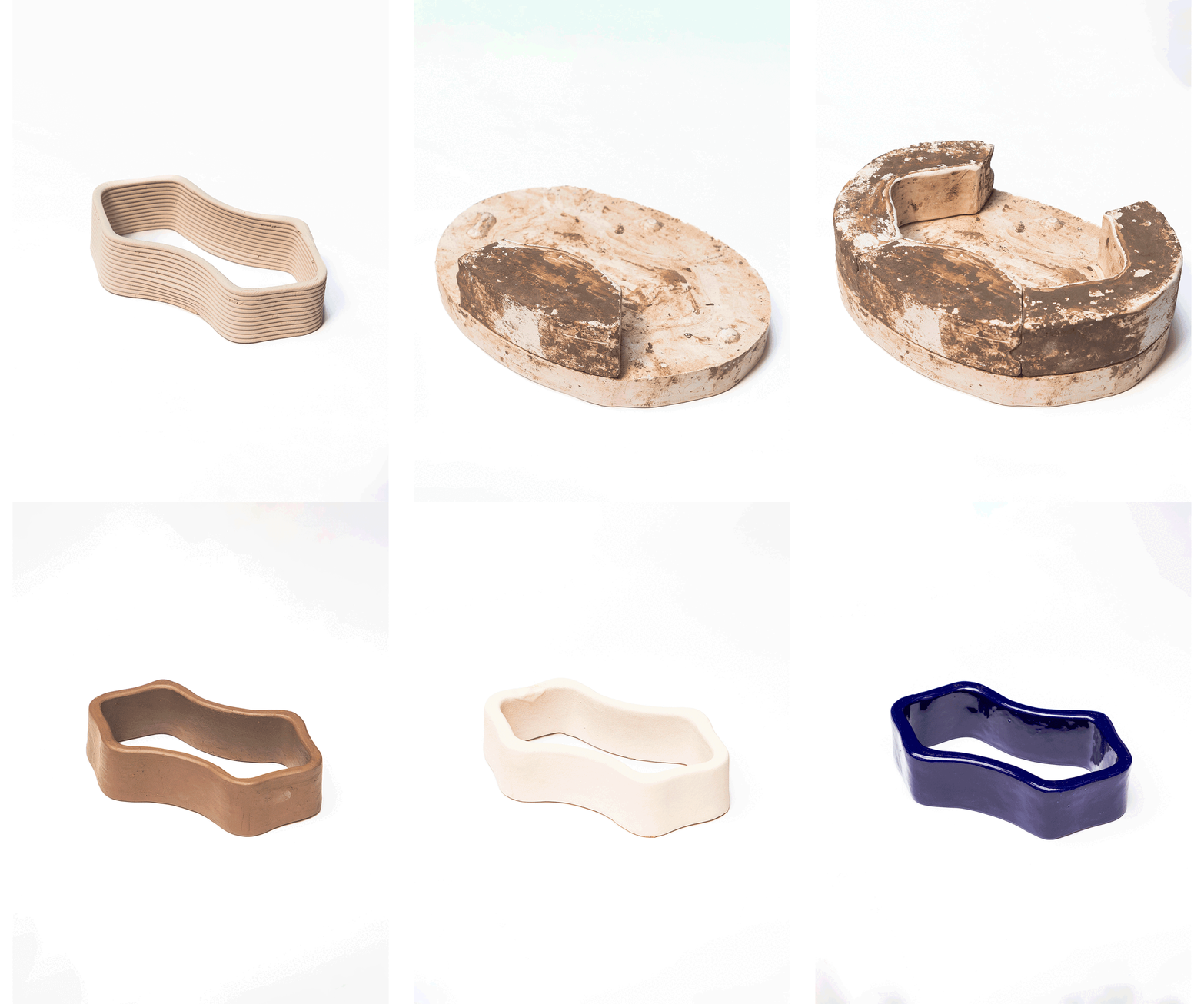
Roboceramic: Humans vs. Machines or Humans with Machines?

The relationship between man and machine has long been a complex and nuanced one, especially for modern artisans. While machines are often seen as tools that can enhance productivity, the comparison between human hands and mechanical efficiency can be misleading. Machines, with their ability to perform tasks with precision and without fatigue, can overshadow the unique qualities that define human craftsmanship.

Unlike machines, humans are inherently imperfect, and it is this very imperfection that fosters creativity and self-expression. When a person repeats a task with their hands, they do so with a rhythm, guided by an awareness and an understanding that transcends mere mechanical repetition. This rhythm is not just a physical pattern, but a reflection of the unity between the mind, hand, and eye—a connection that machines cannot replicate. The act of making, with all its subtle variations and imperfections, is what imbues human work with meaning and value.

Subscriber Access

At the Intersection of Innovation and Tradition: The Talavera Project

Architecture, understood as a cultural product, is strongly influenced by diverse stimuli that include historical, geographical, and cultural aspects, among others. Together, these elements form a heritage that may (or may not) endure through time. Although architecture tends to adapt to each culture, modeling its traditional techniques according to its context and shaping the surrounding environment, there is no guarantee that the traditional elements in it will endure or remain unchanged over time. This is largely due to the constant evolution of society and technology, which sometimes tends towards universality and the adoption of a common language, rather than one of their own.

Given this scenario, it is essential to explore an approach where innovation and technology do not replace tradition and artisanal production; instead, they arise as a means of exploration towards emerging routes. Adopting novel techniques and innovative materials that are adapted to specific local needs makes it possible to maintain an authentic expression that responds to the demands of the environment. This approach, which could be termed neo-craft, allows for the preservation of a distinct voice that reflects the authenticity of the local context. At the same time, it contributes to a universal perspective, merging the local with the global.

Sueños con Fiber/Timber, Earth/Concrete / Grupo Mota-Engil + MIT Leventhal Center of Advanced Urbanism

•
Mexico City, Mexico