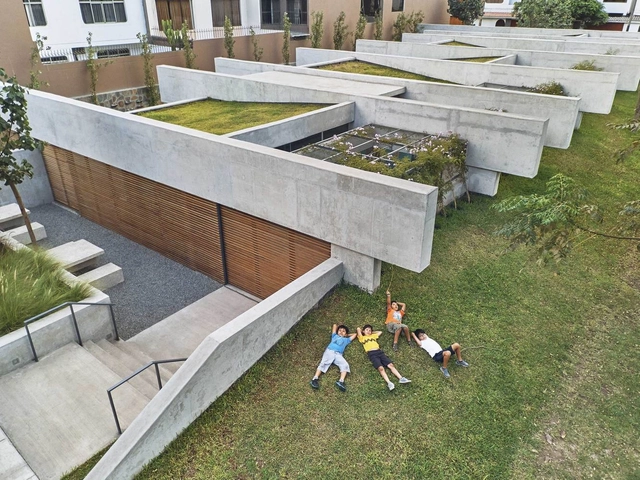
The architecture of cultural centers in Mexico has gained relevance in recent years. There has been a growing interest in providing spaces for recreation and education, transforming them into urban landmarks that attract visitors from all over the country year after year.
How many times have you been faced with the challenge of designing a cultural center? While this may seem like quite a feat, many architects have had to design a program that blends a community center with culture.
Among the projects published on our site, we have found numerous examples that highlight different responses, from flexible configurations to sites that prioritize central gathering areas for citizens and activities. See our series of 50 community centers and their plans and sections below.
Mexico's National Social Distancing Campaign began on March 23, 2020. However, a couple of weeks prior—even in the face of the federal government's recommendation to continue normal activities—social media users were already opting to mirror the European model and self-isolate. Architecture firms immediately began closing their physical spaces to transition to remote work, though for others, the shift took several weeks. Yet, this period of social and physical (spatial) distancing is experienced differently in every household. Over the months of this pandemic, we have witnessed not only the inequities in access to basic needs in dense urban areas, but also the fragility of the social order itself. Whether at a macro or micro scale, all of these experiences occur within and are shaped by the built environment, positioning architecture as both an active participant and a critical arbiter in this equation.
Located in southern Mexico, bordering the state of Tabasco and sharing a border with Guatemala, the state of Chiapas is one of the most significant regions for Mesoamerican cultures like the Olmec, Maya, and Chiapanec. Consequently, some of the area's most important tourist attractions are the archaeological zones of Yaxchilán, Palenque, Chinkultic, Toniná, and Bonampak, which are crucial for understanding the construction, structural, and social processes that shaped this territory.