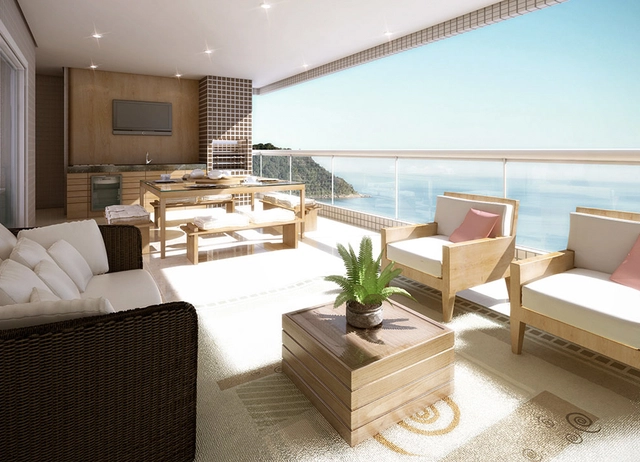
Most real estate brochures proudly showcase a specific feature: the gourmet balcony. Have you ever stopped to think that perhaps these spaces, typically equipped with a barbecue grill, say more about real estate speculation than about the actual barbecue culture in Brazil?
https://www.archdaily.com/1123640/gourmet-balcony-national-passion-or-real-estate-strategyArchDaily Team
The Covid-19 pandemic has brought unprecedented consequences for the global economy. In Brazil, it hit an economy that had barely recovered from the 2015–16 recession. However, responding to the crisis requires not only easing budget rules, but rethinking the very role of the state to address historical deficiencies that the pandemic has laid bare.
Guilherme Wisnik talks with Laura Carvalho, professor at the School of Economics and Administration of the University of São Paulo and holder of a PhD in economics from the New School for Social Research. She writes biweekly for the newspaper Nexo and is the author of "Valsa Brasileira: do boom ao caos econômico" (Todavia, 2018) and "Curto-Circuito: o vírus e a volta do Estado" (Todavia, 2020).
Luanda, Angola. Photo by Eugene Kaspersky, via Visualhunt. License CC BY-NC-SA
The COVID-19 pandemic has exacerbated various sanitary and infrastructural deficiencies in developing nations, particularly Angola, which already bears the burden of successive economic recessions.
The outskirts of major urban centers, with Luanda as a paradigmatic case, are critical territories for the spread of the disease. Home to nearly one-third of the country's population—80% of whom live in highly precarious urban conditions—a combination of factors creates an incredibly complex scenario. These challenges include a lack of basic sanitation, high built and population densities, overcrowded housing (averaging three people per room), inaccessibility for urban services (such as firefighters, waste collection, and police), a lack of public spaces and green areas, unsanitary indoor conditions, heavy reliance on the informal sector, and limited access to food security and healthcare services.
The topic of mobility is inescapable when discussing urban policy—even more so in an election year. Public transit, congestion pricing, subways, dedicated bus lanes, and even what to do with electric scooters dominate the debate. Few, however, pay attention to one of the most critical municipal policies for urban mobility: public parking.
Combining analytical diagnosis with actionable recommendations, the study “A Cidade Estacionada” focused its lens on curb management in the city of São Paulo. By analyzing the discrepancies between public and private parking prices, as well as comparing these rates with the evolution of public transit fares, “A Cidade Estacionada” brought to light the negative social and environmental externalities of public policies that favor private motorized transport.
https://www.archdaily.com/1123717/unparking-the-city-we-need-to-rethink-public-parkingJoão Melhado e Paulo Speroni
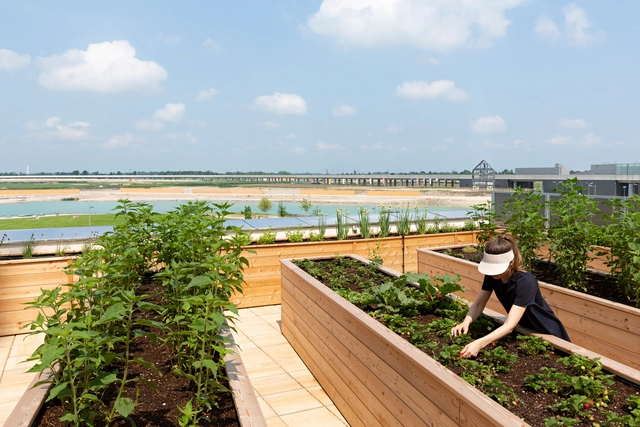
October 16 marks World Food Day. On this same day in 1945, the Food and Agriculture Organization of the United Nations (FAO) was established, and since 1981, the date has been observed to shed light on issues of food access and the promotion of healthy diets for all.
To draw an important parallel between architecture, urban planning, and food-related issues, we have curated a selection of articles demonstrating how architectural and urban design can promote greater food security.
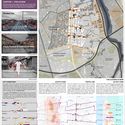
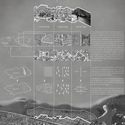
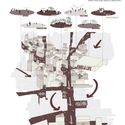
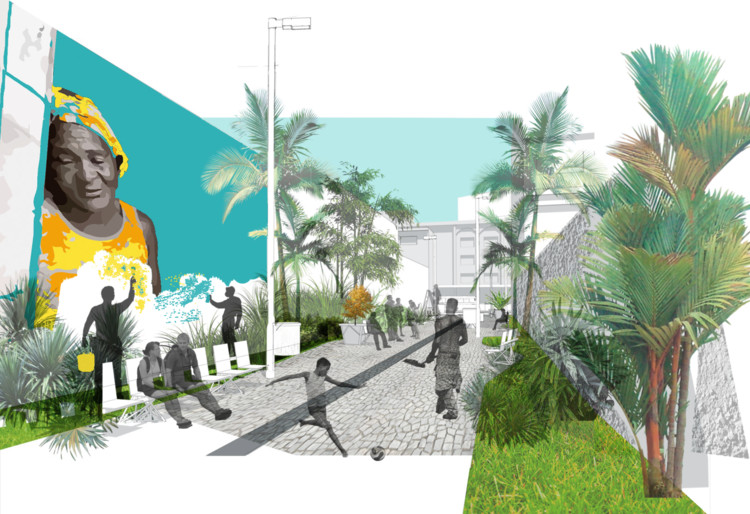
The jury of the Maré-City International Competition, organized by the 27th World Congress of Architects – UIA2021RIO, has selected the three winning projects and three honorable mentions. The choice was not easy: out of 180 entries from places as diverse as Germany, China, Egypt, Brazil, Russia, Poland, Turkey, Colombia, France, Portugal, Oman, and Ukraine, the jury shortlisted 28 finalists before deciding on the winners. Chinese entrants represent the majority of the awardees, securing first and second place, as well as the Roberto Burle Marx and Demetre Anastassakis honorable mentions. Third place went to a project by Brazilian students from São Paulo, while the Luiz Paulo Conde honorable mention was awarded to a project by students from Bogotá, Colombia.
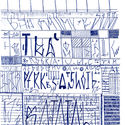
Have you ever thought about walking? This is the question that GUIAPÉ SP — a guide presented here through an essay — asks its readers. From the cover on, it proposes walking through the city of São Paulo, charting a route that strategically passes through places where arriving on foot is precisely the point, revealing overlooked details, people, and urban life. This guide was not made for sightseeing, but rather to take its readers on a journey. Within its pages, the route and the sidewalks are not merely paths leading to destinations; they are part of the journey itself.
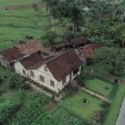
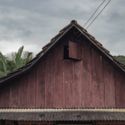
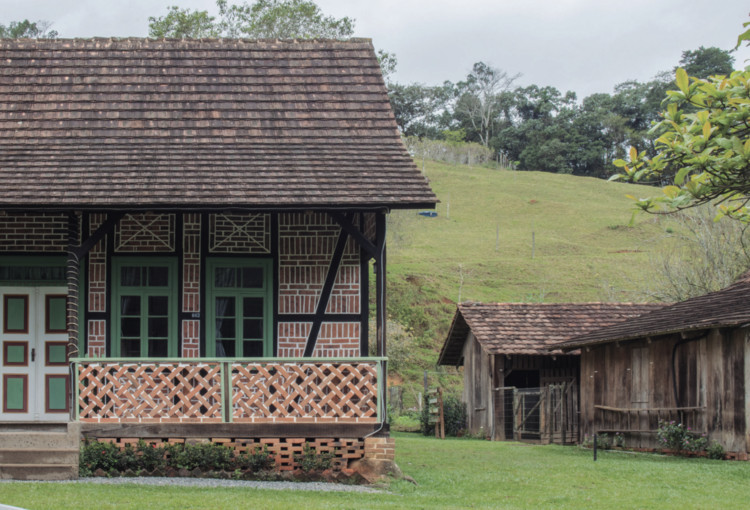
Erwin Rux House, Rio da Luz. Source: Espaço Arqueologia, 2019, taken from the book "Morar na Colônia: a arquitetura da imigração em Testo Alto e Rio da Luz"
A watercolor-illustrated tourist map, a mobile application available for Android and iOS, and two books gathering stories from the neighborhoods of Rio da Luz, in Jaraguá do Sul, and Testo Alto, in Pomerode—both in Santa Catarina—comprise the Projeto Lumiar. The initiative will launch these products online at 7:00 PM this Thursday, the 8th. The result of two years of research with local communities, the launch event is supported by the National Historic and Artistic Heritage Institute (Iphan).
Jacaré Beach, Cabedelo, Paraíba. Image: Cacio Murilo/MTur
Living, working, and experiencing cities with vibrant streets, downtowns, and parks, adequately sized sidewalks, efficient public transit, and low congestion levels are shared aspirations worldwide. Achieving these conditions is no easy task, and cities that offer them certainly did not do so through car-oriented planning.
With populations daily subjected to poor examples of how a city should function, certain paradigms, phenomena, and policies continue to hinder the planning and operation of “cities for people.”
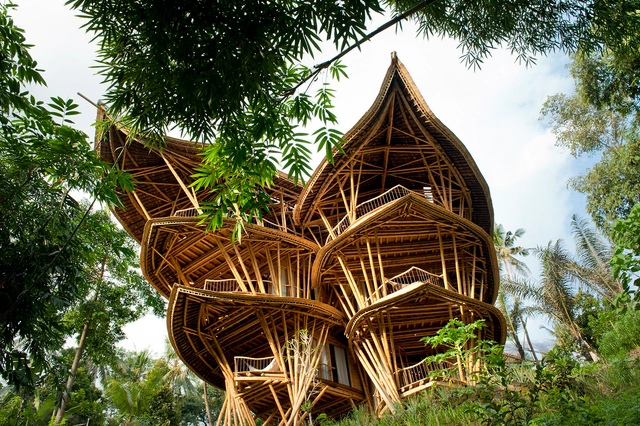
Although concrete is one of the most widely used building materials in the world, thanks to its durability, versatility, and weather resistance, we must not forget that the concrete industry is one of the largest CO2 emitters in the construction sector. Consequently, over the past few years, many architects have begun to experiment with new possibilities to optimize its performance, leveraging its technical advantages while seeking to address some of its environmental drawbacks. As a result, some designers have begun exploring the possibility of replacing traditional wooden formwork with more sustainable materials like bamboo—a plant that grows abundantly across most of the world and offers high-quality textured finishes with a low environmental impact.
The struggle for the right to the city is deeply tied to the right to decent, permanent, and accessible housing. This involves downtown building revitalization projects driven by broad social participation, particularly by women who are heads of households—initiatives that serve as scalable models across the city. Guilherme Wisnik speaks with Carmen Silva, a Black woman from Northeast Brazil and an activist for the right to the city. A leader of the Movimento Sem-Teto do Centro (MSTC), she served as a Municipal Housing Councilor for two terms, and during the same period, she coordinated the Participatory Council of the Sé region.
Cortesia de PC3 - Pensamento Crítico e Cidade Contemporânea
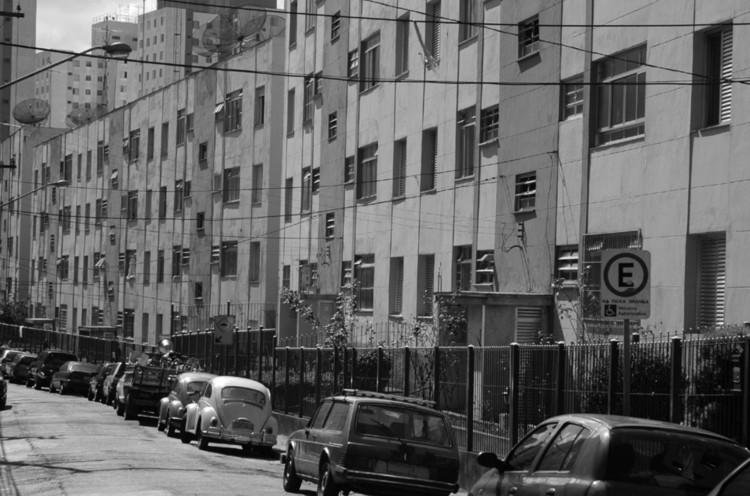
This development, conceived and initiated during the administration of João Goulart, can be considered an example of the transition between the former management of the IAPB [Bank Workers' Retirement and Pension Institute] and the new housing policy that began to be implemented in 1964.
To talk about architecture and social media is to immediately think of Instagram. Launched in 2010, the app was characterized from the very beginning by combining photo sharing with typical social network features. Its success was extraordinary; within hours of its launch, it was already the most downloaded free photography app. Within two months, the number of registered users surpassed the one-million mark.
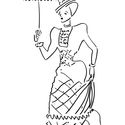
The representation of women in the buildings and sidewalks of São Paulo's streets. Source: Jornal Estado de São Paulo, July 6, 1958. Reinterpretation by Beatriz Hubner
The study of architecture and its relationship to daily life and gender has prompted researchers to seek new sources and expand the analysis of their ideas and achievements. This essay explores the female presence in urban spaces through fragments of daily life gathered from columns, news reports, and advertisements published in the newspaper *O Estado de São Paulo*.
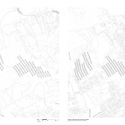
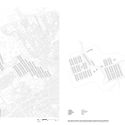
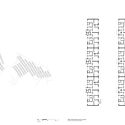
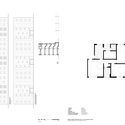
Five years after the Empena Viva project, Nitsche Arquitetos returns to artistically occupy the surroundings of the Minhocão. Through the Eclipse intervention, the team aims to illustrate the socioeconomic and temporal processes driven by São Paulo's urban dynamics using a simple gesture.
Maria Inês Sugai is the 2020 Architect and Urban Planner of the Year. The award is presented annually by the National Federation of Architects and Urban Planners (FNA) to professionals who stand out for their work dedicated to the development of the profession and of Brazilian cities. Holding a bachelor's, master's, and doctorate degree from FAU-USP, with specializations in Urban and Regional Development and the Use and Conservation of Natural Resources from UFSC, the professor's nomination was supported by the Union of Architects and Urban Planners of Santa Catarina (SASC). Maria Inês Sugai is currently a professor in undergraduate and graduate programs at UFSC and the author of articles and books, including “Espaço e Desigualdade” (Space and Inequality). She also served as a member of the Santa Catarina State Council of Cities.
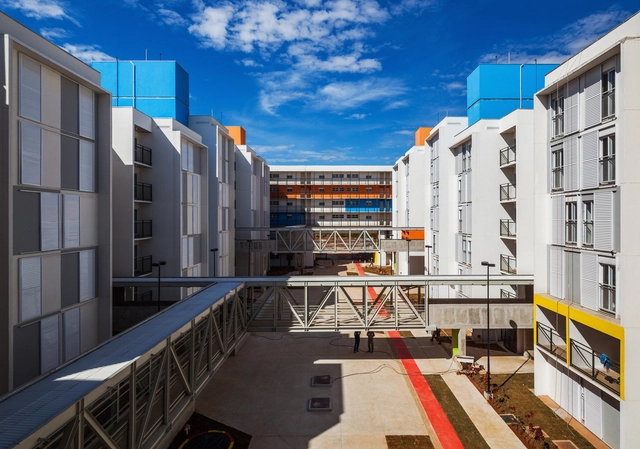
Criticism of the most common models of social housing (HIS) in Brazil is quite frequent. Indeed, these critiques are generally well-founded, given the architectural and urbanistic deficiencies of most completed developments—particularly those built in areas far from urban centers, which deny residents their right to the city.
There are, however, successful examples: projects built on the premises of access to urban infrastructure, connectivity with the immediate surroundings, construction efficiency, environmental comfort, and healthy living conditions inside the housing units. Below, we have compiled six examples of social housing—designed by Biselli Katchborian Arquitetos, Jirau Arquitetura, MMBB Arquitetos, H+F Arquitetos, Boldarini Arquitetura e Urbanismo, and Vigliecca & Associados—that offer compelling solutions to such a complex and delicate program.
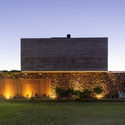
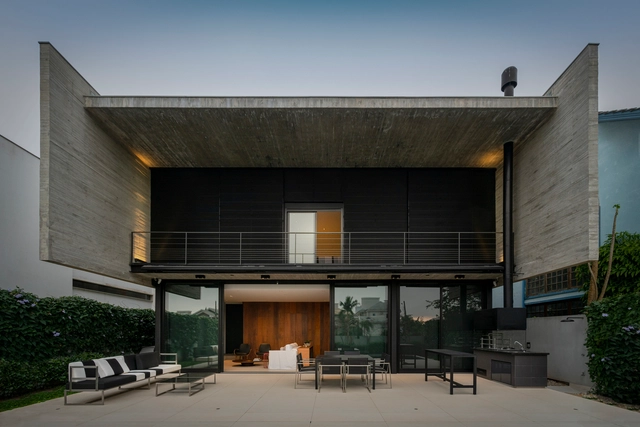
Blind walls are known as the side walls of a building, typically designed to run along neighboring constructions. Even in buildings with more generous side setbacks that allow for door and window openings, these walls can be kept as large, continuous surfaces, creating a blank facade.
In this context, exposed concrete walls—which leverage the material's texture without requiring additional finishes—can be used as aesthetic elements in the building's formal composition. As part of the Brazilian Houses series, we present 10 residences featuring concrete blind walls below:
Children playing in the flooding of the Pinheiros River – near the Ceagesp area (Companhia de Entrepostos e Armazéns Gerais de São Paulo) – west zone of the city. Photo: Eduardo Anizelli for Folhapress. Modified by the author
As one of the largest and most populous cities in the world, São Paulo has accumulated over the years a complex web of relationships between its territory and its inhabitants. By fostering and fueling various interests, the city quickly became a major hub, gaining prominence on the national stage. However, the metropolis increasingly reveals a widening gap between its social classes, compounded by the recurring chaos of traffic gridlock and seasonal flooding—the results of poor urban planning that serves the interests of a select few at the expense of the city's overall health.
Sesc São Carlos, in upstate São Paulo, has launched a short video series on how permaculture works in practice. Produced by Associação Veracidade, the entire series will be available online for free.
Over six episodes, various social technologies will be presented, such as composting toilets, composting, solar ovens, and rainwater harvesting, among others. Viewers can explore the various ecological possibilities that can be integrated into a sustainable home—even in urban spaces.
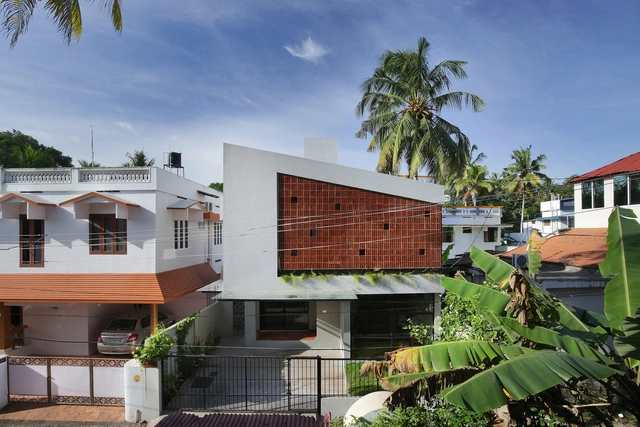
The orientation and sizing of voids are critical variables when proposing perforated screens on building facades. Analyzing local conditions is fundamental to the performance of this type of solution, which is particularly welcome in countries with high temperatures, such as India. Although its climatic diversity makes generalization difficult, summer temperatures can exceed 40°C across most of the country, demanding specific architectural strategies to mitigate heat and humidity inside buildings.
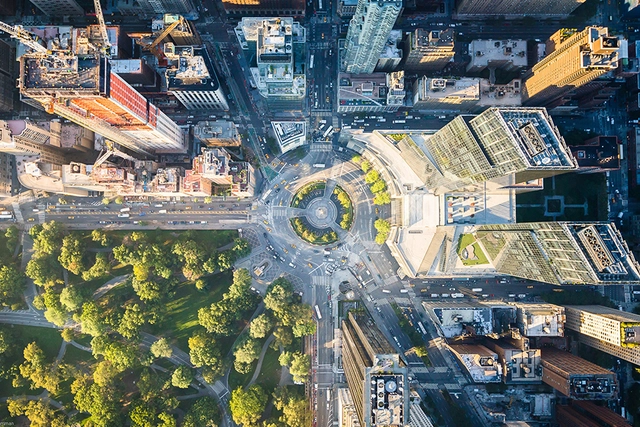
Paul Romer, a Nobel laureate in economics, believes that a key factor in the success of urban agglomerations is a clear definition of public and private space before the construction of a neighborhood or city begins.
The author illustrates the success of this strategy with a classic case: the New York street grid. Long before Manhattan Island was physically developed with streets or buildings, the Commissioners' Plan was established in 1807, outlining the gridiron of public and private spaces that would define the city's future.
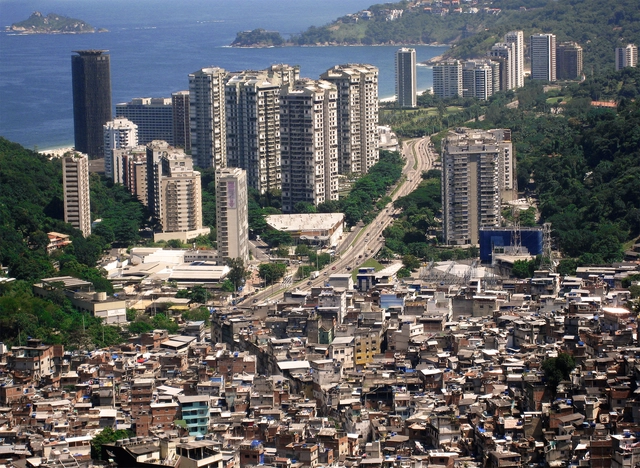
Rocinha Favela, Rio de Janeiro. Photo by: AHLN, via VisualHunt.com / CC BY
This coming Saturday, October 31, marks World Cities Day, an observance established by the United Nations in 2015 as part of the annual “Urban October” initiative. This celebration aims to foster international interest in global urbanization, enhance cooperation among countries to address urbanization challenges, and contribute to sustainable urban development worldwide.
Yet, while the word “city” generically denotes an “agglomeration of people within a defined geographical area,” in practice we know that each of these settlements is shaped by highly unique developmental and cultural factors. With this in mind, we are using this global celebration of cities to focus on our own reality, highlighting the challenges currently faced by Latin American cities.
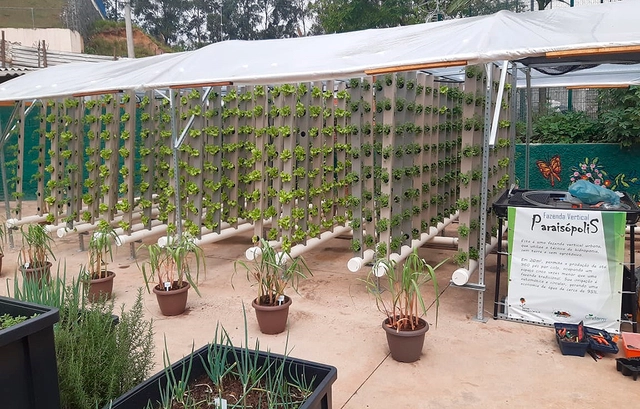
October 16 marked World Food Day. On this date in 2020, the Stop Hunger Institute launched a project that includes a community garden and training and educational initiatives for the Paraisópolis community, a favela in São Paulo's South Zone.
Developed in partnership with the Instituto Escola do Povo, the project establishes a new space of approximately 900 square meters for growing vegetables. The goal is to educate, train, and distribute the harvest to registered community residents, ensuring access to healthier food.




















.jpg?1603305439&format=webp&width=640&height=580)

.jpg?1603305439)
.jpg?1603311348&format=webp&width=640&height=580)
.jpg?1603311867 "© João Nitsche")
.jpg?1603312607 "© João Nitsche")
.jpg?1603311666 "© Pedro Mascaro")
.jpg?1603312244 "© João Nitsche")
.jpg?1603311348)



.jpg?1603381280 "Sobrados Novo Jardim / Jirau Arquitetura. Photo © Antonio Preggo")


.jpg?1603380819 "Morro do Elefante House / 24 7 Arquitetura. Image: © Pedro Kok")
.jpg?1603380788 "Ilhas House / Arquitetura Nacional. Image: © Cristiano Bauce")