In 2018, Chilean researchers Teodoro Dannemann, Boris Sotomayor-Gómez, and Horacio Samaniego published the results of a study in Royal Society Open Science that, by anonymously tracking the "footprint" of 350,000 mobile phones during working hours, visualized urban segregation in Santiago.
We revisit an old interview conducted by Teleproyecto with Tucumán-born architect and educator Víctor Saúl Pelli, who has based his career on participation, not only in the field of social housing design but also in his teaching. In both cases, the architect encouraged those involved—users and students—to become an essential part of the search for solutions to a given problem, from conception to consensus-building.
At a time when architects are forced to open up to multidisciplinarity, and to work in close collaboration with all the stakeholders required to realize an architectural work, his thinking remains more relevant than ever. This is especially true when considering the growing trend toward designing open and shared systems, based on co-creation and supported by the efficiency of new technologies.
As part of the 2019 Chicago Architecture Biennial, the Graham Foundation hosted Tatiana Bilbao's exhibition, "Unraveling Modern Living," featuring an immersive installation that transforms a former domestic space to explore new forms of collectivity. Through this intervention, Bilbao reconfigures the existing architecture to create a garden, a space for knowledge, a space for dialogue, and a space for gathering, in collaboration with the Sweet Water Foundation, Colectivo 1050°, MAS Context, and Lurie Garden, among others.
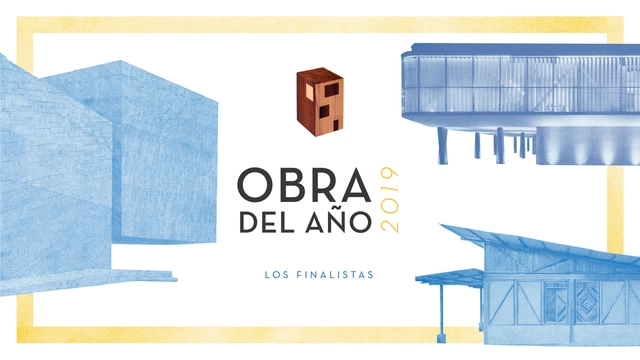
More than 10,000 readers nominated their favorite projects from nearly 1,000 built works in Latin America and Spain: the day has come to meet the finalists of ODA19.
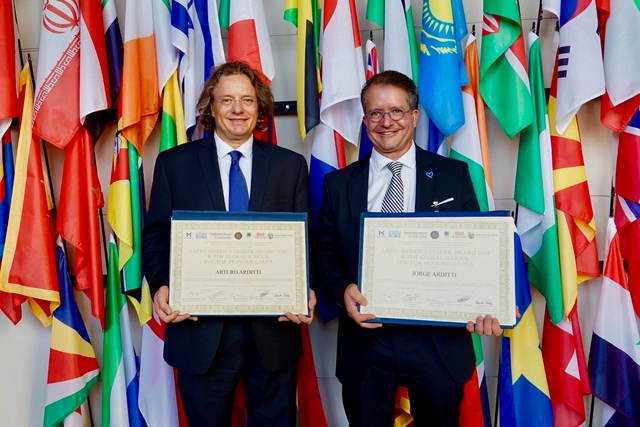
On Wednesday, December 4, Mexican architects Arturo and Jorge Arditti received the Honorary Doctorate Latin America Leaders Awards 2019 at the United Nations headquarters in Vienna. The distinction was awarded by The Global School for Social Leaders in collaboration with 1MillionStartups, The Ban Ki-moon Centre for Global Citizens, the Humanist World Foundation, and the Analysis and Opinion Research Group (GIAO).
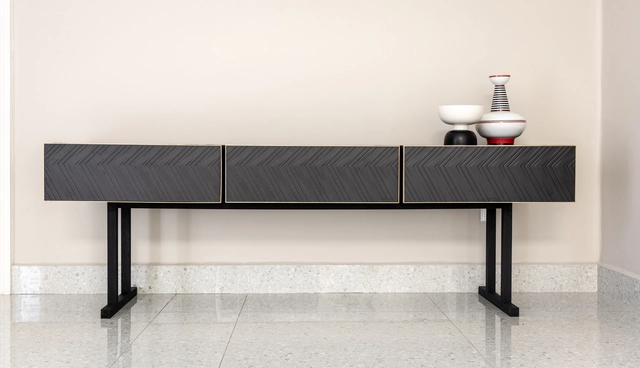
On August 8, as part of Expo Arte-Objeto—an exhibition commemorating the 60th anniversary of Llano de la Torre— Firenze invited architect Ricardo Casas to reinterpret the use of porcelain tiles with playful, exclusive designs.
Inspired by the successful Tejiendo la Calle initiative—winner of the Design and Citizen Participation Award at the 2016 Ibero-American Design Biennial—Supertrama is a public art program in the autonomous community of Extremadura, Spain, focused on rural areas. In municipalities with fewer than 5,000 inhabitants, residents collaborate with architects, artists, and other creative professionals interested in public art to transform their local public spaces.
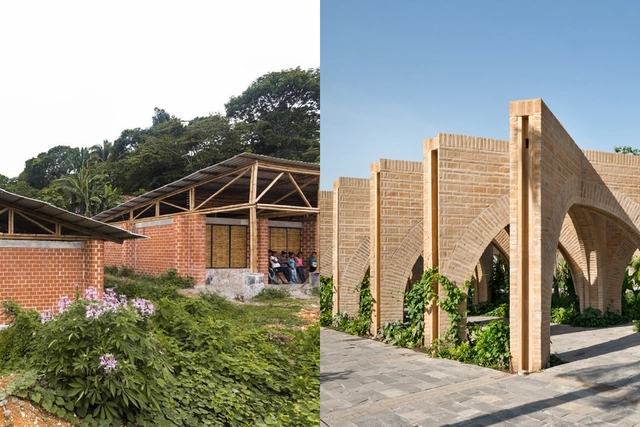
The AR Emerging Architecture Awards have revealed their shortlist, which includes two Mexico-based practices: Estudio MMX and Comunal Taller de Arquitectura. Alongside 14 other offices, they will have the opportunity to present their projects to the judges: Anna Heringer of Anna Heringer Architecture, winner of the 2006 and 2008 AR Emerging Architecture awards; London-based Irish architect Níall McLaughlin of Níall McLaughlin Architects, who was a finalist in 2002; and Sou Fujimoto, founding director of Sou Fujimoto Architects, a previous winner in 2006 for a children's treatment center in Hokkaido, Japan.
CityMakers is working with ArchDaily to publish a series of articles, conversations, and interviews with the different actors in the co-production of cities behind the Barcelona CityMakers Lab 2019, an event taking place from October 14 to 20.
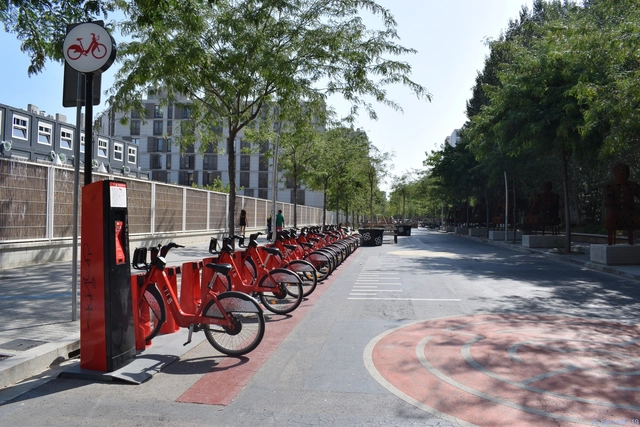
On this occasion, we feature Salvador Rueda, director of the Urban Ecology Agency of Barcelona, who will give a Masterclass at the Barcelona CityMakers Lab 2019, addressing the challenges of implementing Barcelona's Sustainable Urban Mobility Plan based on "Superblocks".
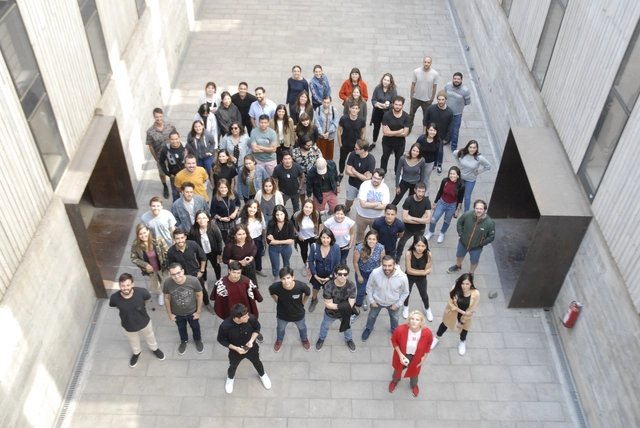
More than 500 people attended the opening of the 21st Chilean Biennial of Architecture and Urbanism in Santiago. This year, the curatorial team presented the event as a "Free Architecture Fair" focused on the "everyday and ordinary," spanning the entire country with more than 250 public activities in Iquique, La Serena, Santiago, and Puerto Montt.
https://www.archdaily.com/1119536/lecture-by-andres-jaque-opens-the-xxi-chile-architecture-biennialArchDaily Team
via Laboratory of Architecture, Technology and Processes LAT
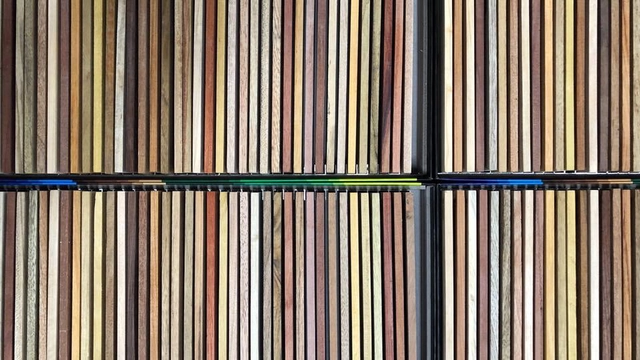
Developed by the Architecture, Technology, and Processes Laboratory (LAT) of the University of Azuay's School of Architecture, the "Structural Wood Catalog of Ecuador" identifies, classifies, and establishes criteria for the most commonly used structural woods in the country.
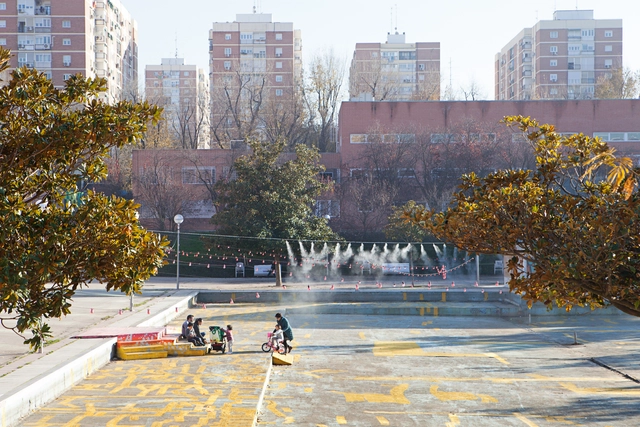
How can we reactivate the Plaza de la Vaguada within an environment where we can connect in a different way? How can we emphasize the nature of coexistence to generate new fields of complicity and empathy between residents and their surrounding environment? ‘Acciones ExtraOrdinarias’ is a public art project developed in the Parque de La Vaguada since June 2018, within the framework of the ‘Imagina Madrid’ program. In it, the artistic team—composed of Estelle Julian, Paula Valero, and C+Arquitectos, with the collaboration of Leonor Martín—aims to fill the plaza with actions ranging from performance to spatial intervention, articulating new bonds between the district's diverse communities and restoring conviviality, desire, and joy to this previously abandoned space.
To activate disused public spaces, BASE Studio has developed a system that explores the properties of structural materials like bamboo and colihue, generating a structure that allows for the production of complex double-curvature geometries. Based on this exploration, architecture students created 'ÍCARO,' a work installed in a "pocket plaza" in the Ñuñoa commune of Santiago, Chile.
Dear readers, with your invaluable companionship, 2019 has flown by here at ArchDaily. Throughout the year, we have continued our daily mission of sharing and celebrating global architecture; along the way, we have grown, earned the recognition of architects, and enjoyed the unwavering support of our readers. Having received heartwarming holiday wishes from hundreds of design practices around the globe, we are excited to share their creative holiday cards with you here!
https://www.archdaily.com/1068599/happy-holidays-holiday-cards-from-architects-around-the-world韩爽 - HAN Shuang
Perhaps the term ‘Fiction Architecture’ means little without a context to frame it. Providing that context is one of the challenges that the team at ENORME Studio has set for itself. Their approach to architecture—probing its very limits—is rooted in a radical, disruptive attitude. Their goal? Simple: to create ‘architecture without architecture.’ In other words, to strip away the fashions and trends that clothe contemporary architecture and reveal it, without shame, for what it really is: a grand lie.
Visual artist Leonardo Portus has designed a sensory art installation inspired by the iconic COPELEC Building in Chillán. In 'Soplos de Luz' [Breaths of Light], the modern architecture of this historic monument takes on a new quality, where curved and organic forms break the orthogonal paradigm of architecture through movement generated by light projections on models.
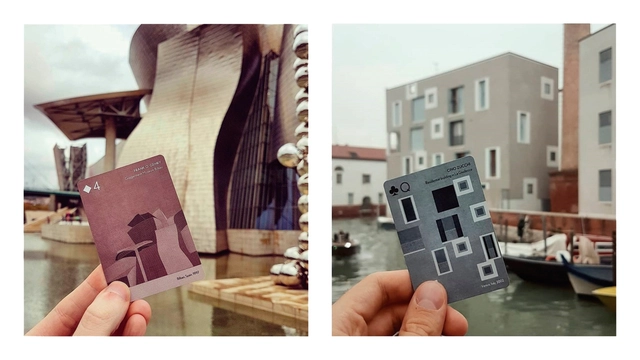
The Spanish architecture and design studio Arquitectura a Contrapelo is back in the news with the second edition of SCALA, a deck of playing cards featuring architectural motifs. This time, in addition to providing updates and improvements to the previous platform, the series includes international emerging architects such as Nicolás Campodonico, Bjarke Ingels, O'Donnell+Tuomey, and Johnston Marklee. The works depicted on the cards reflect iconic buildings of varying scales through a meticulous design process.
We’re hiring at ArchDaily! Every day, thousands of architects from around the world submit their latest projects and content related to architecture, urbanism, and construction.
The uninhabited Church of the Monasterio del Carmen Bajo de San Rafael, a designated National Monument, will open its doors to the community on January 23 and 24 to host "Sonpendular," an audiovisual concert that integrates immersive mapping, lighting, and live music.
The project is an aesthetic investigation into time and space, inviting the viewer into an immersive sound-and-light ritual rich in geometric patterns and real-time generative audio. The work explores transformation and impermanence, creating a constantly shifting portal where past, present, and future engage in a singular dialogue.
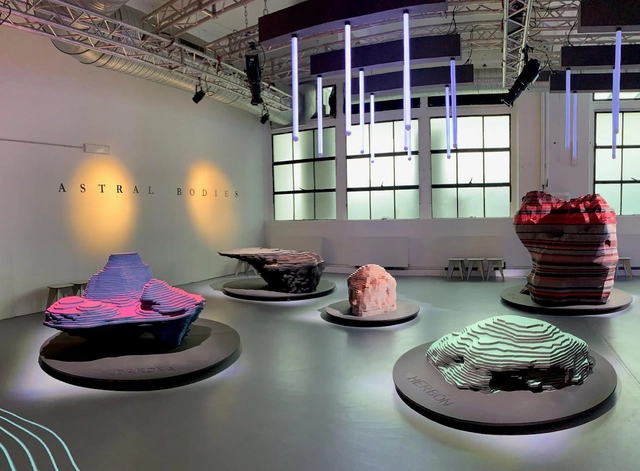
FINSA, a pioneer in the manufacturing of particleboard and MDF on the Iberian Peninsula, has chosen to collaborate with two leading Spanish studios in their respective fields, ENORME Studio and Vitamin-arte, to create a new installation recently exhibited at Milan Design Week 2019. Both studios are precursors in elevating the ephemeral—a reflection of the new trends emerging in these times of social and identity-related uncertainty. They are dedicated to developing innovative strategies that manifest as unique, interactive spatial experiences.
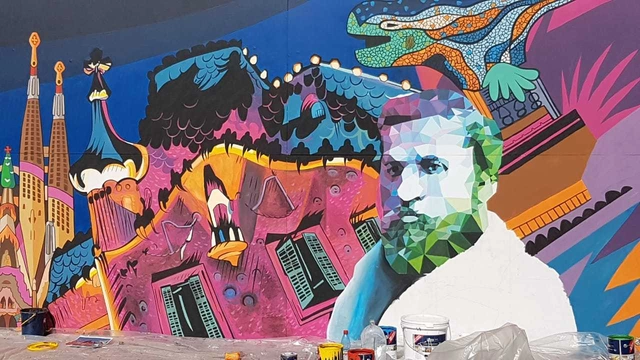
'Gaudí en Valparaíso', a project positioning the port city as a cultural hub with a focus on architecture and design, has launched a temporary exhibition featuring iconic works by Antoni Gaudí. With an artistic intervention, the Catalan muralist 'Uriginal' kicked off the official launch of this major international exhibition, which is open to the public from March 12 to May 10 at the Parque Cultural de Valparaíso.
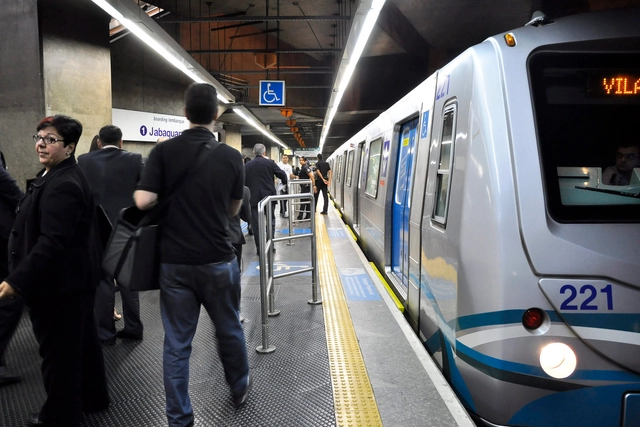
“How much does a subway line cost?” is a question frequently asked when discussing high-capacity rapid transit solutions for Brazilian cities. However, the cost of implementing rail projects varies enormously across different global geographies.
For example, a rail line in New York costs about twenty times more per kilometer than one in Seoul, reaching a budget of $6.4 billion for a segment of just 2.6 kilometers in the second phase of the Second Avenue Subway in northern Manhattan. Geographical factors, or even the high built density of the American metropolis, are insufficient to explain such a massive disparity in construction costs.

_8575.jpg?1568928556&format=webp&width=640&height=580)
_8568.jpg?1568928579)
_8548.jpg?1568928532)
_8569.jpg?1568928567)
_8576.jpg?1568928544)
_8575.jpg?1568928556)
.jpg?1566510800&format=webp&width=640&height=580)


.jpg?1560291948)