Economic crises, health emergencies, and natural disasters, followed by social conflicts, political disagreements, and the search for new places to live, have historically driven the displacement of hundreds of thousands of people. The result: changes in residence, habitat, and culture.
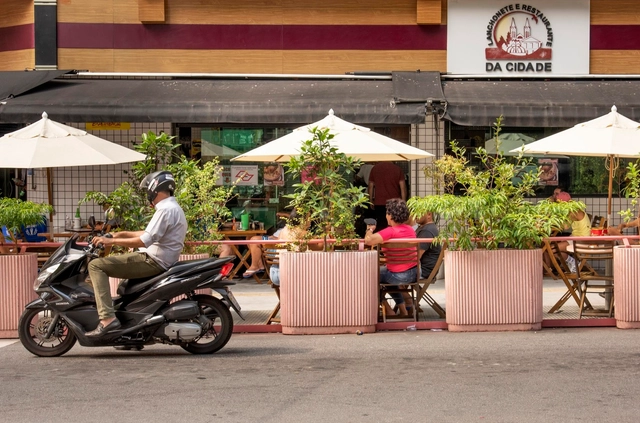
Who would have thought that residents of São Paulo, one of the busiest cities in the world, would miss the hustle and bustle of the streets? Through a simple and elegant intervention, Brazilian architects Gustavo Cedroni and Martin Corullon of Metro explain how they supported one of the areas hardest hit by the pandemic, using small architectural gestures to bring life back to the street.
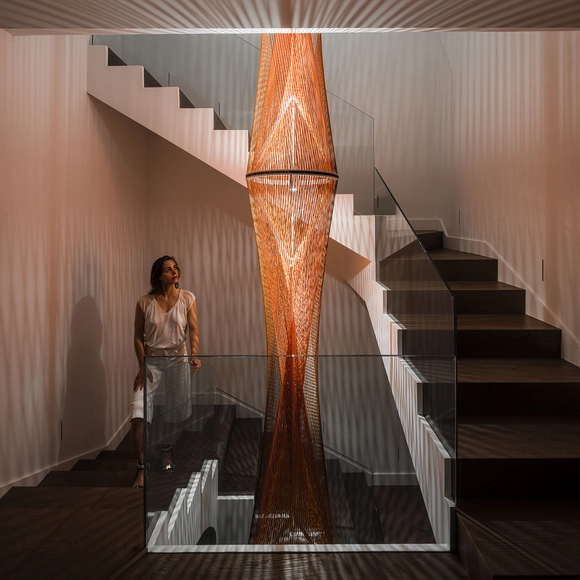
Inés Esnal has designed a sculpture specifically conceived for the stairwell of a single-family home. Her architectural training has heavily influenced her understanding of art in relation to space, from both phenomenological and geometric perspectives. By combining artistic approaches with scientific strategies in her creative process, she aims to create a work of art that is geometric yet atmospheric, logical yet experiential.
Titled Flame, this sculpture is made of polypropylene ropes on a steel frame, measuring 75 x 502 cm and spanning the three levels of a residence in La Moraleja, Madrid.
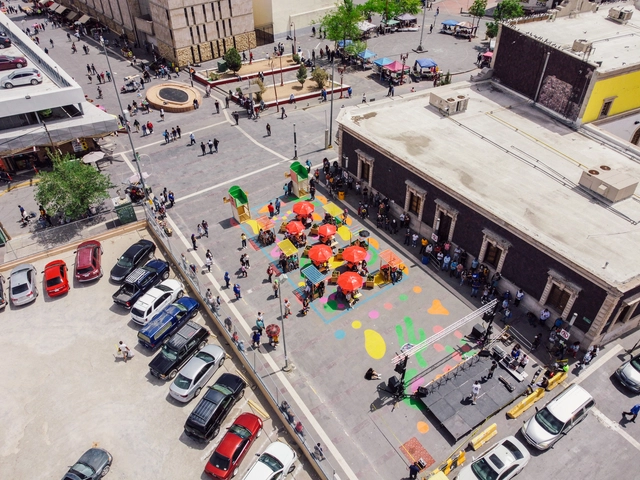
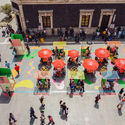
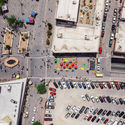
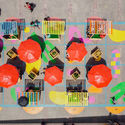
Ciudad Juárez is an industrial Mexican city located on the northern border with the United States, specifically adjacent to El Paso, Texas. Over the years, Juárez's economy has been dominated by the ‘maquiladora’ (assembly plant) industry, and the city was once considered one of the most violent in the world due to a wave of crime between 2008 and 2012. Its territory blends multiculturalism, migration, and resilience, creating a hybrid phenomenon that over decades has shaped the mold of “border culture.”
https://www.archdaily.com/1127749/nomada-laboratorio-urbano-public-space-and-the-new-normal-on-the-us-mexico-borderArchDaily Team
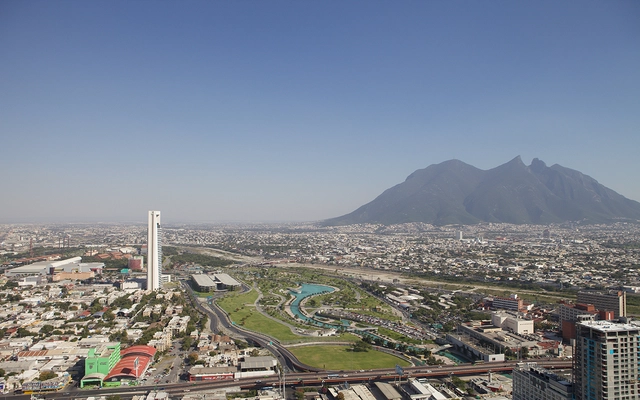
As part of an initiative to document the history of Monterrey, Nuevo León, Mexico, REGIOPOLIS emerged as a documentary video series narrated from the perspective of the city's creators, aiming to leave an architectural record of the Monterrey metropolis. Each episode showcases some of the most significant works that laid the foundation for its urban fabric, exploring the historic and emblematic architecture built to this day.
From September 24 to 26, 2021, the seventh edition of Open House Madrid will take place. This international architecture festival offers free access to Madrid's architecture, featuring tours of more than 100 landmark buildings and spaces across the capital that are typically closed to the public. Under the theme "I don't even know where I live," the event aims to promote architectural culture, rediscover the city through its built environment, and provide an experience that helps people connect with and appreciate their surroundings.
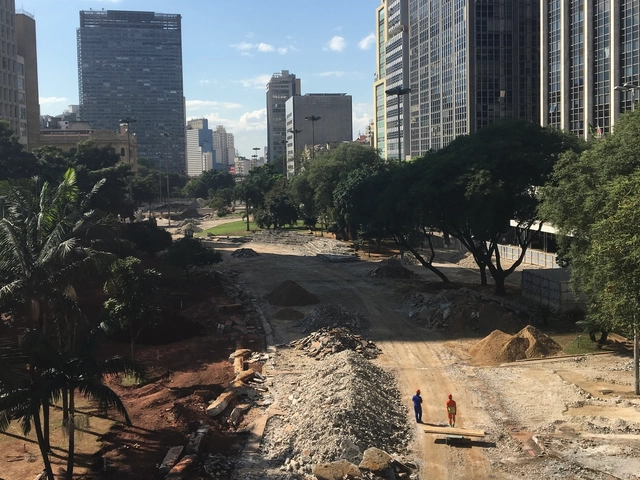
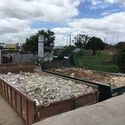
Start of the revitalization works in Anhangabaú Valley. Men coexist with mountains of rubble generated by the demolition of the pre-existing pavement. June 2020. Prepared by Guilherme Trevizani Ribeiro. Image courtesy of Guilherme Trevizani Ribeiro
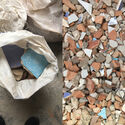
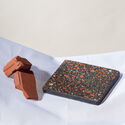
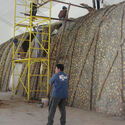
How can waste become a resource? Or rather, when did waste stop being a resource? Why does contemporary architecture still build as if our buildings were great titans that will survive different eras and adversities? These are all questions that cross the mind of a recent architecture graduate. One of the current challenges of architectural production in a metropolis like São Paulo is understanding that, after demolition, the building does not disappear. What does our National Solid Waste Policy indicate?
Although latent, this issue is still rarely debated within academia, a space that should be constantly proposing alternatives to our way of life. And even when it is debated, where is the benefit to the public? How can we disseminate these lessons? Education is still the key to getting our future back on track.
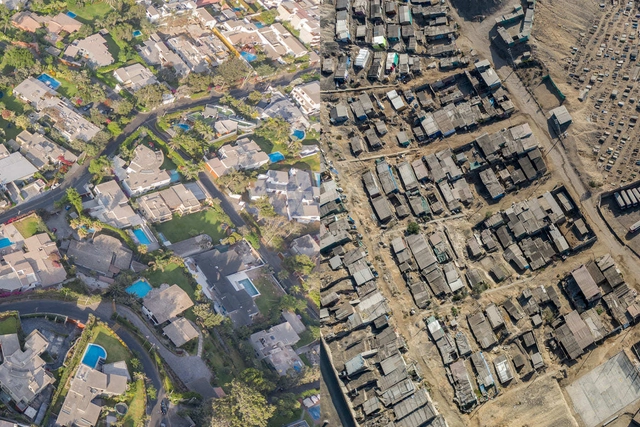
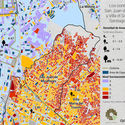
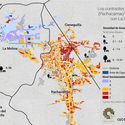
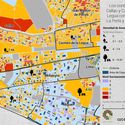
Just over a year after the start of the pandemic in Peru, a multidisciplinary team from OjoPúblico and Espacio y Análisis has conducted an extensive investigation based on various geographical and socioeconomic databases. The study reveals wide gaps in access to public spaces and green areas across 44 districts in Lima and Callao (Peru). In several cities around the world, the pandemic has demonstrated how unequally public space is distributed, especially in low-income neighborhoods and vulnerable areas that lack shared spaces like green areas, parks, or playgrounds. Through this mapping report, the team shows how more than half of the districts in Lima and Callao have less than 3 square meters of recreational space per inhabitant. It also highlights stark urban contrasts along district boundaries separating different socioeconomic levels and underscores the urgent tasks facing local authorities to increase and improve the quality of recreational areas.
Videos
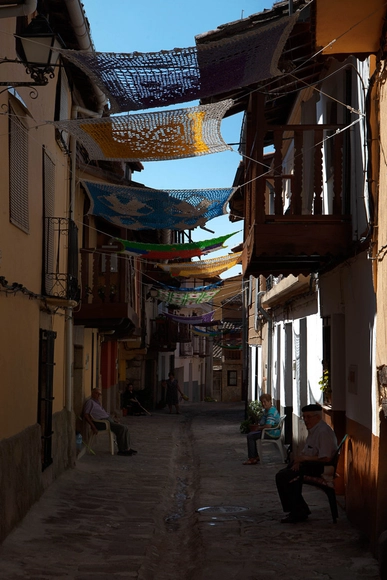
Tejiendo la calle de Marina Fernández Ramos. Image Cortesía de RUA Ediciones
"You should know that Mr. Matías took down one of the sunshades from where you installed it and put it on his balcony, because he wants the shade right at his doorstep," says Pepe, a resident of Valverde de la Vera, a small rural municipality in Extremadura, featured in the book "Tejiendo la Calle." This new publication gathers nearly ten years of testimonies from weavers and residents who brought to life the project of the same name, initiated by Marina Fernández Ramos in 2013.
Videos
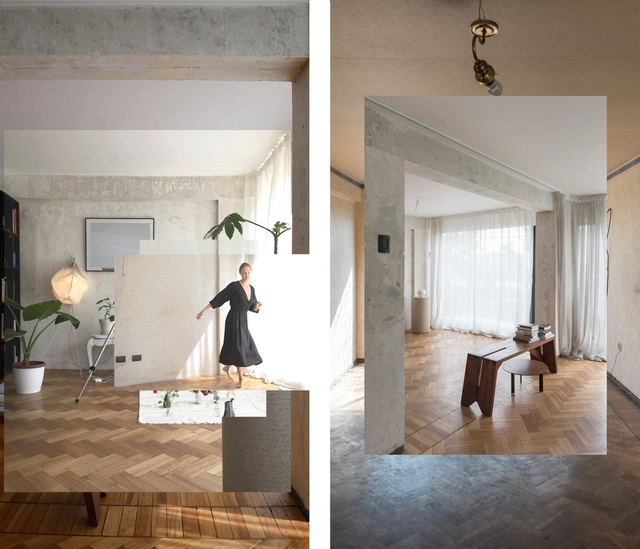
collage based on frames from the DA House audiovisual project. Image
Questioning both the methodologies involved in the production of architecture and its consumption in traditional representation allows us to engage in a series of interdisciplinary dialogues that, rather than limiting the possibilities of the discipline itself, can expand it in response to the complex contexts that define today's landscape. Rodrigo Valenzuela Jerez, architect and founder of EstudioRO - (E)Studio Futur@ and current director of the School of Architecture at the Universidad de las Américas (UDLA), Chile, shares in the following interview some of the design concepts that guide his “expanded” practice, in which form is a secondary outcome of the strategies and operations that enable users to appropriate their own spaces.
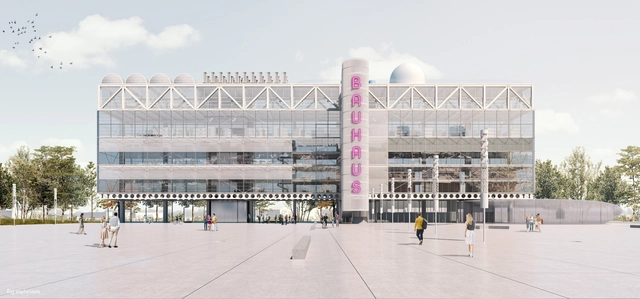
The Bauhaus Campus 2021 Student Architecture Competition, organized by Arkitekturo, brought together future professionals from around the world to reimagine what the Bauhaus could become in the 21st century.
Founded in 2009 by Ian Douglas-Jones, Atelier I-N-D-J’s practice is rooted in a strong architectural foundation. Combined with experimentation, technology, and an unrestricted, interdisciplinary approach, this allows the studio to pursue a diverse range of creative endeavors.
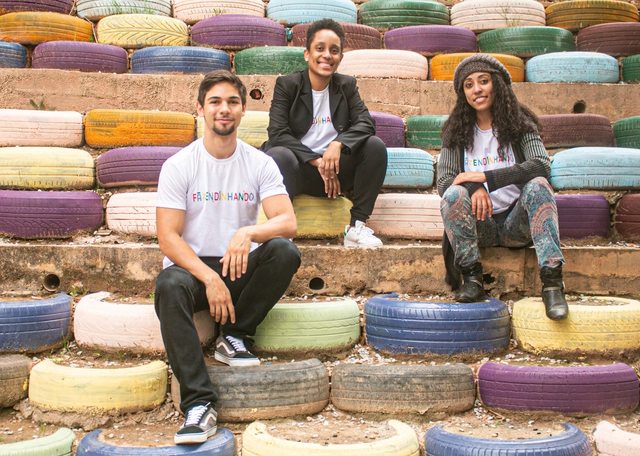
Arquicast invited a team for a conversation that embodies a new vision of architecture and its power to mobilize, conceive, and execute transformative projects. They are part of a generation of professionals who will undoubtedly shift the focus of our craft, serving as role models for many young Brazilians who dream of studying architecture and urban planning—or other disciplines that can foster new practices in the places they call home and hold dear.
We are talking about Ester Carro, from the NGO Fazendinhando, established in Jardim Colombo in Paraisópolis, São Paulo. Also joining the conversation are the NGO's financial director, Erik Luan, and Kamilla Bianca, who manages the project's marketing.
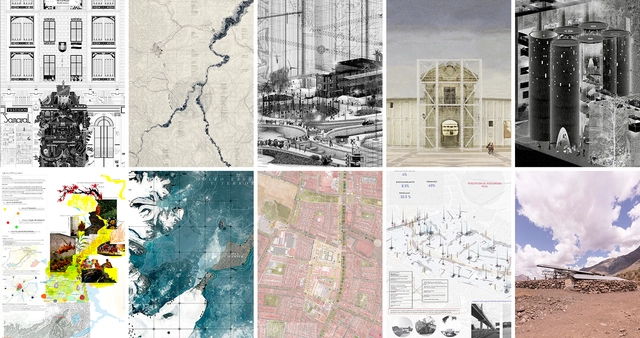
The 10 Best Student Projects in Latin America and Spain
To showcase the valuable academic production of Latin American and Spanish universities, we launched an open call this year, inviting architecture students to submit their thesis projects completed in 2020.
Following a thorough review of 305 submissions, our editorial team selected and highlighted 10 projects that demonstrate rigorous critical thinking in response to their chosen issues. The selection process not only valued projects that delivered the best possible architecture through efficient design suited to their context, program, and users, but also those demonstrating significant attention to human scale, experimentation, and novel ways of approaching architecture in cities. Additionally, we recognize 10 honorable mentions whose immense dedication and academic quality made them impossible to overlook.
Casa-PABLO ÁNGEL. Image Cortesía de Elaboración propia Casa Urbana de Montaña 1950-1970
The following article is a contribution from architecture students at the Universidad Nacional de Colombia, Manizales campus. Juliana García Valencia, Alejandro Jaramillo Alzate, and Manuel Felipe Rincón Medina share their experience developing 'Casa Urbana de Montaña 1950 - 1970', the two-volume project that won first place in the research, theory, and criticism category of the IV Colombian Biennial of Architecture Students.
https://www.archdaily.com/1127843/urban-mountain-house-1950-1970-the-experience-of-students-documenting-modern-architecture-in-manizalesJuliana García Valencia, Alejandro Jaramillo Alzate y Manuel Felipe Rincón Medina
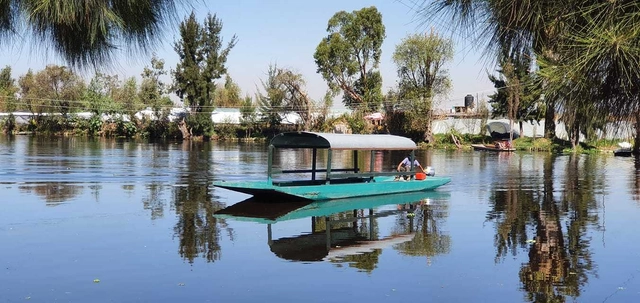
REDES is an organization whose work focuses on the Xochimilco and Milpa Alta areas of Mexico City. They seek to address environmental challenges to improve quality of life and support conservation in the region. We spoke with Elsa Valiente—Executive Director and Founder of REDES Restauración Ecológica y Desarrollo AC—about efforts to revive chinampa production in Mexico City and conserve water in Xochimilco.
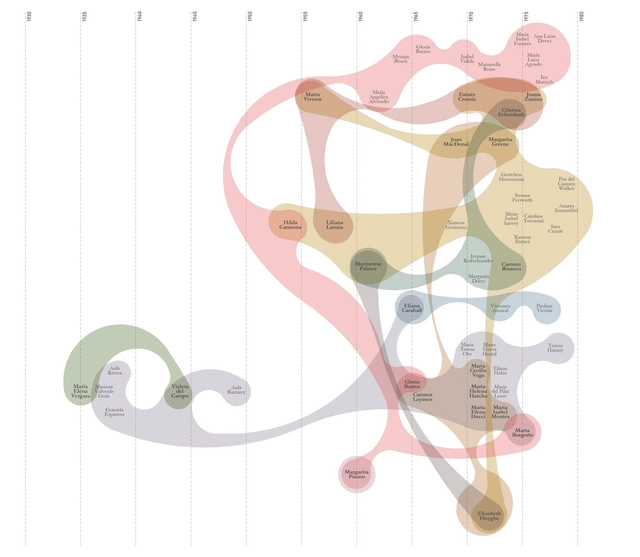
Mapa de relaciones. Pieza gráfica preliminar. Elaborada por el equipo de "Entre líneas". Image Cortesía de Entre Líneas
Refocusing attention on the work of women architects in shaping Chile's modern legacy is the primary objective of the open-access research project titled Entre Líneas. Structured as a visual narrative built around five pillars, the project can be explored directly on its digital platform. Through archival research, document collection, and the creation of analytical graphics, the initiative aims to rewrite the history of 20th-century Chilean architecture from a gender perspective.
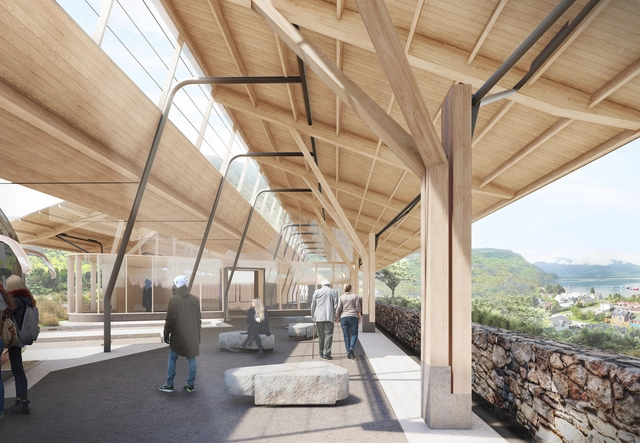
The winning projects of the Public Competition for the Design of Bus Stations (Rodoviarios Terminals) in the towns of La Junta and Puerto Cisnes, in the Aysén Region, Chile, have been announced. Developed by the Regional Public Transport Division of the Ministry of Transportation and Telecommunications in conjunction with various Chilean municipalities—specifically, the Ilustre Municipalidad de Cisnes—the initiative sought to organize activities associated with rural and intercity bus operations in these towns.
ArchDaily In-Depth is a series of interviews with designers who have engaged in long-term practice in specific architectural typologies. Featured firms must be established for over ten years or possess a robust portfolio of completed and ongoing projects in a specialized field, along with a mature body of theoretical research. Challenge Design is an innovative architectural firm deeply rooted in the field of real estate design, with a diverse portfolio of completed projects spanning commercial complexes, high-end residential, cultural tourism resorts, luxury hotels, and cultural/artistic developments. Grounded in the "origin of design," Challenge Design prioritizes continuous research and development alongside unique innovation. The firm has won numerous international awards, including the Wood WORKS! Wood Design Award in Canada. Conducting research into timber construction within the high-turnover real estate sector, and establishing its own timber design and construction research arm, Junzhi Technology, positions Challenge Design as an unconventional firm. As such, they are the featured subject of this edition of ArchDaily In-Depth.
https://www.archdaily.com/1127840/design-logic-beyond-real-estate-labels-challenge-designs-research-and-tectonics-archdaily-in-depth韩爽 - HAN Shuang
Archivo de Ideas Recibidas is an interdisciplinary research and dissemination project that aims to document and connect the ideas of those contributing to the contemporary creative ecosystem through art, design, and architecture. It is built upon conversations between the team and various creators, exploring topics related to memory, academia, cultural context, key influences, and working methodologies. On this occasion, they share with us an interview with Cristina Dreifuss on architectural Criticism, Theory, and History.
Known worldwide for pushing the limits of formal experimentation with reinforced concrete, Oscar Niemeyer relied in many of his works on the indispensable collaboration of a civil engineer as inventive and daring as the architect himself: Recife-born Joaquim Moreira Cardozo, who graduated in civil engineering in 1930 from the School of Engineering of Pernambuco, today part of the Federal University of Pernambuco (UFPE).
Responsible for the design of the Alberto Torres Rural School in 1936 – a project that already showed synergy with modern architecture at the time – Cardozo met Niemeyer while working at the National Historical and Artistic Heritage Service (SPHAN) in Rio de Janeiro. During this time, he developed the structural design for the Pampulha Ensemble in Belo Horizonte, inaugurated in 1943. This was the initial collaboration of a partnership that would last 30 years and find its most prolific period in the construction of Brasília.
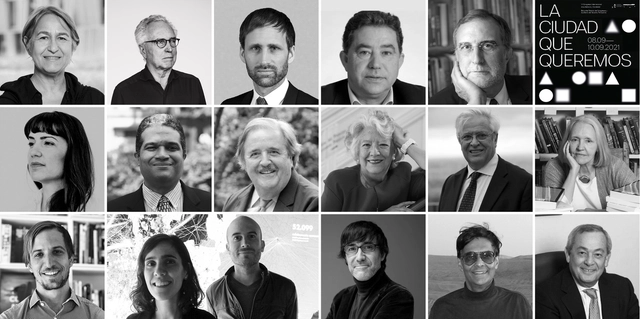
Anne Lacaton, Pablo Martínez y Mar Santamaria, Mohan Munasinghe, Francesc Muñoz, Feniosky Peña-Mora, entre otros ponentes del congreso.. Image Cortesía de Congreso Internacional de Arquitectura: La Ciudad que Queremos
From September 8 to 10, the sixth edition of the International Architecture Congress, titled "The City We Want," will take place. For the first time, the event can be followed live via the Architecture and Society Foundation's YouTube channel.
Disponible. Autor Pol Viladoms Claverol. Image Cortesía de BEAU 2021
The Spanish Biennial of Architecture and Urbanism BEAU 2021 has announced the finalists for its 'Research Exhibition', 'Thesis Projects Exhibition', and 'Photography Exhibition' categories. The winners will be announced on July 2, coinciding with the opening of the event at the Patio Herreriano in Valladolid.
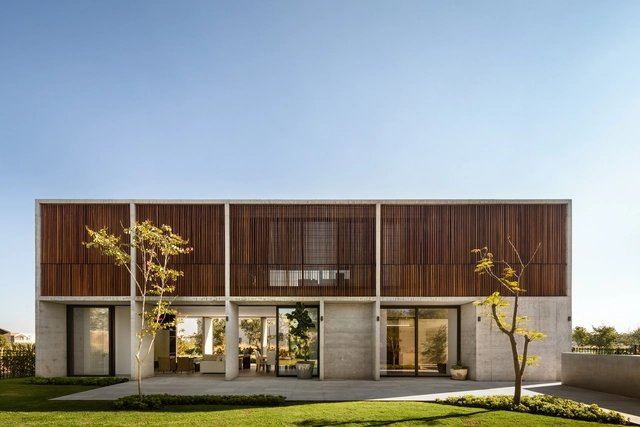
Querétaro is a state located in the north-central region of Mexico, bordering the states of Guanajuato, San Luis Potosí, Hidalgo, the State of Mexico, and Michoacán. Covering an area of 11,684 km², it is the fifth-smallest state in the country. Its capital and largest city is Santiago de Querétaro; other notable localities include Tequisquiapan, Cadereyta, Jalpan de Serra, San Joaquín, and Bernal.















.jpg?1613658867 "Rivera House / Taller de Arquitectura Miguel Montor. Image")