Svetlana Kana Radević’s architecture is a radical act of mediation. Rising to prominence in post-war Yugoslavia, her buildings speak on all scales, engaging geo-political and social complexities. Drawing from knowledge of materiality and vernacular traditions within her native Montenegro (formerly Yugoslavia), her work filters modernism’s globalized forces through an intimate, place-based lens. Radević’s civic spaces re-centered provincial knowledge and facilitated a socially-progressive public sphere within the Yugoslav socialist state.
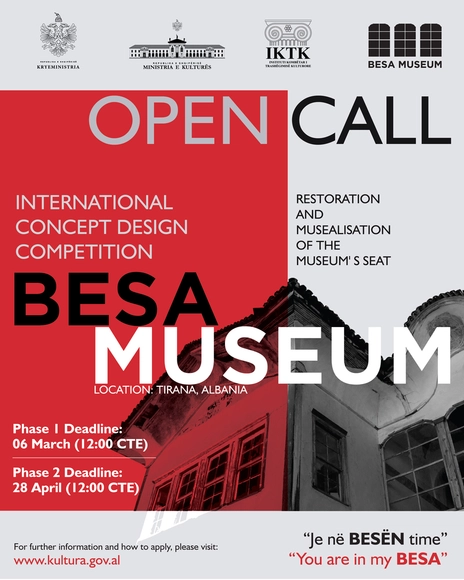
Competition poster, credits Ministry of Culture of Albania
THE MINISTRY OF CULTURE IS ANNOUNCING AN OPEN DESIGN COMPETITION FOR ARCHITECTURE DESIGN PROPOSALS, THROUGH WHICH IT IS SEARCHING FOR THE BEST DESIGN SOLUTION FOR THE ESTABLISHMENT OF A CONTEMPORARY MUSEUM IN THE CITY OF TIRANA, “BESA MUSEUM”
Building on the success of the previous two virtual Spring Conferences, the themes of AIAISC'23 will be Detail & Storytelling. Presenters will focus on describing a project through the evolution of key Details, or Storytelling as part of the design process.
ECA has a strong connection with the Venice Biennale of Architecture. This year's theme will be the "Laboratory of the Future" with a focus on Africa, decarbonisation , climate justice and architecture's ability to negotiate between and across boundaries in a world that is beginning the feel the effects of climate change.
Since Japan and the West began exchanging ideas in the mid-19th century, Japanese design sensibilities—from elaborate kimono garments and meticulously raked gardens to lavish compositions of ukiyo-e woodblock prints—have had wide appeal across Europe and the United States. Often ornate yet minimalistic, Japanese design embodies numerous visual approaches underpinning the notion of “just right” or “just enough,” known as hodo-hodo. While no single element characterizes the entirety of Japanese design culture, many scholars attribute the spectrum of Japanese design to cultural, social and spiritual practices deeply grounded in Japan’s history that continue to be observed in Japanese design practices today. Featuring a discussion with Taku Satoh, one of Japan’s most critically acclaimed contemporary designers, alongside two internationally recognized authorities on Japanese design sensibilities, Linda Hoaglund (bilingual filmmaker and cultural producer) and Sarah Teasley (Professor of Design, RMIT University), this live webinar will explore the underlying aesthetic and cultural roots essential for understanding the essence of Japanese design.
The call for applications for the IOC-UNESCO online Ocean Literacy Training hosted in Ocean Teacher Global Academy dedicated to Architects, Designers and Urban Planners is now open!
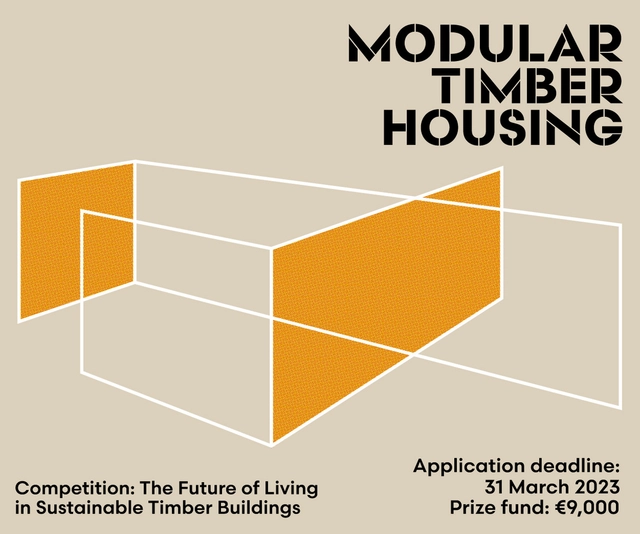
How can modular timber construction be used to respond to the contemporary housing crisis? How to achieve the greatest architectural variety with the fewest building elements possible? Can we redefine the construction industry as the production of standard elements and create a new, more efficient construction system that is both durable and sustainable?
The Institute for Advanced Architecture of Catalonia (IAAC) wants to support a new generation of young talents and help them propose a new sustainable architecture, urbanism and rethink the future of the construction industry to face the challenges of our century. For this reason, IAAC and its industry collaborators offer scholarships to study in IAAC’s On Campus Educational Programmes listed below.
Artist rendering of view of open space that will become the new park
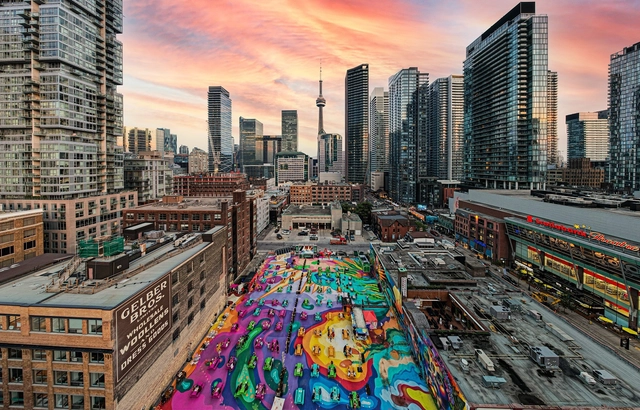
A new 2,600m2 park is coming to 229 Richmond St. W in downtown Toronto, Canada. The site is currently leased to a restaurant and used as an outdoor patio. It has been purchased by the City of Toronto for future park use.
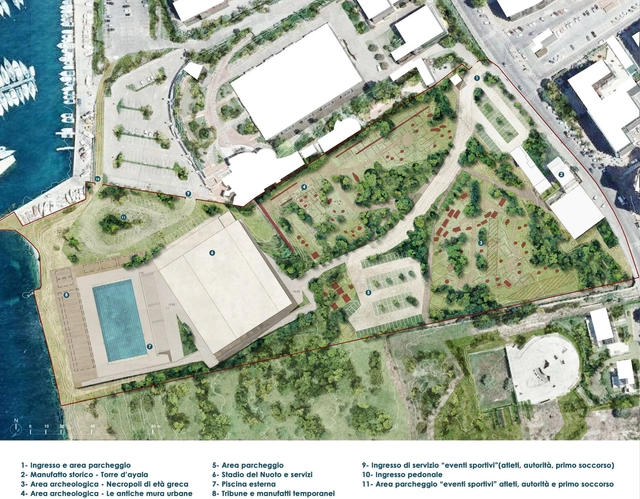
The Organizing Committee of the 20th edition of the Mediterranean Games - Taranto 2026 ‐ has promoted a two‐stage tendering for the realization, from scratch of the Swimming Stadium in Taranto and the recovery of the external area. The general objective of this International Design Contest is to start the construction of the Swimming Stadium for the XX Mediterranean Games 2026 in Taranto, in other words to allow competitive swimming activities on an international level connected with the creation of an architecture that enhances the landscape context and the historical pre‐existences. Taranto 2026 is an opportunity to change the image of the city and of the entire Ionian Arch, to give different life prospects to the citizens and to make the city more welcoming, for its inhabitants and consequently also for the massive incoming tourist flows. During the event, 32 sports will involve 25 facilities for the competitions and 15 for the training. A big part of the event will take place in the existing structures, in the perspective of a regional sports assets recovery. Only a few structures will be built from scratch and, through an integrated design with the local heritage, they can become iconic architectures for the city, representative of a process of transformation and renewal: a Swimming Stadium, a Federal Nautical Center and a multidisciplinary Sports Center. Sporting infrastructures play a strategic role in the urban and functional organization of the cities. These are architectures that also have a function as social aggregators with identity values and enhancement of the sense civic duty. A city with many sports facilities has repercussions on the promotion of health and sociality. These belong to the category of essential urban "services". The Area for the Swimming Stadium straddles an important jump in altitude, and this configuration of the soil, will allow the construction of a bridge‐building between the level of the road and the sea level. The project makes accessible, tangibly and through the creation of a series of optical cones, a coastal area not currently in use. Except for important urban tracts, such as the seafront “Vittorio Emanuele III”, the multiple and different sea fronts of the city of Taranto are often underused, or occluded by other latent resources, such as the buildings and properties of the Navy. The sea is recognized as a great opportunity for the redevelopment of the city: the sea as an extraordinary and diversified "endowment of public blue". The Swimming Stadium is seen as one of those projects capable to recover an important stretch of coast, now abandoned, and return it to civic uses. The overall size of the area necessary for the construction of the new Stadio del Nuoto is about 5,000 square meters for the indoor pool, about 4000 square meters for the outdoor pool; for a total of approximately 9,000 square meters, which can be spread over several levels by exploiting the changes in altitude and the irregularity of the ground. The swimming sports facility must therefore be equipped with two swimming pools, one indoor and one outdoor, which must comply with the minimum standards for the "Olympic Games" and the conduct of the Swimming and Water Polo disciplines, giving a more complete offer both for free time but above all for sport at a competitive level. The designers will have to evaluate and adopt solutions that contemplate building envelopes capable of creating positive effects on environmental parameters (reduction of the heat island, better management of rainwater, absorption of air pollutants) and that reduce the consumption that weighs on the management of the sports facility (winter heating of the pool room, air changes, water management in the pool). The containment of energy consumption will be essential for an economically and ecologically sustainable management. The main goal will be the realization of a greater environmental comfort of users, having the maximization of energy containment and lower operating costs in relation to consumption and maintenance.
The University of Banja Luka announces the International general public competition for the development of an architectural concept design of the summer stage, the memorial to the fallen students and employees of the University of Banja Luka in the defensive and patriotic war and the accompanying landscaping.
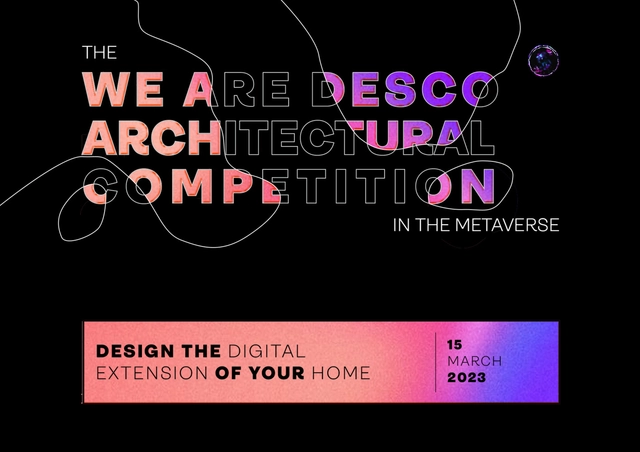
This Design Competition is an opportunity for architects to showcase their creativity and explore the potential of the metaverse. This competition challenges architects to create a unique digital space – a ‘Digital home’ in the metaverse – that expresses their individual style and reflects their skills and talents.
As the field of landscape architecture evolves to combat the issues of our time—climate change and just futures—how we practice matters. Through design research, experimental methods of design process and ideation, and provocative questioning, TEN x TEN challenges the normative environment of professional practice through process-oriented ways of working, engaging, and seeing landscape. Our agency as landscape architects to address the issues of our time is grounded in part by our ability to challenge the critical foundation of the design process itself and to practice modes of discovery as a generative act.
Title: “Contemporary DNA” Date: 10:00 AM March 2 to 6:00 PM April 22, 2023 Venue: Friedman Benda New York Address: 515 W 26th St 1st Floor Subway: C or E train to 23rd Street Event Website: www.friedmanbenda.com