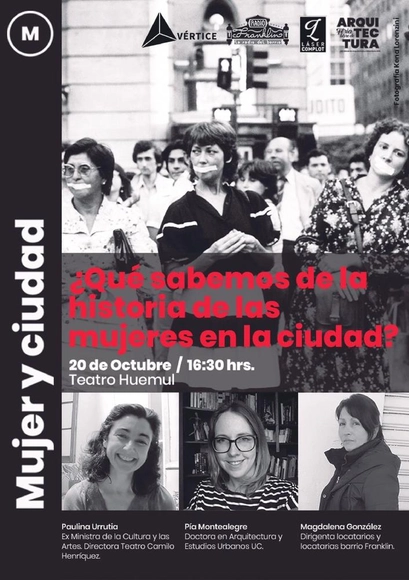
As part of the XXI Bienal de Arquitectura y Urbanismo de Chile, Fundación Vértice invites you to discuss how the city recognizes—or fails to recognize—women in history, particularly the history of women in Chile. Do we know where we voted for the first time? Where did we gather? How did the territory influence the advancement of our rights?
To highlight the themes of Urban October, the United Nations Human Settlements Programme (UN-Habitat) office in Brazil created the Urban Circuit in 2018—a call for events organized by various stakeholders on topics related to Urban October. The second edition of the Urban Circuit in 2019 will feature the general theme "Innovative and Inclusive Cities" and the guiding question: "How can innovation improve urban services and policies in an inclusive and sustainable way?"
This Forum aims to bring together, over four days in Belo Horizonte, various stakeholders involved in housing issues—architects, planners, public officials, members of municipal housing councils, grassroots movements, government representatives, organizations, and other professionals working in the field, as well as researchers and students. In doing so, it aims to provide a space for multidisciplinary discussion, addressing both theoretical and practical issues related to urban living.
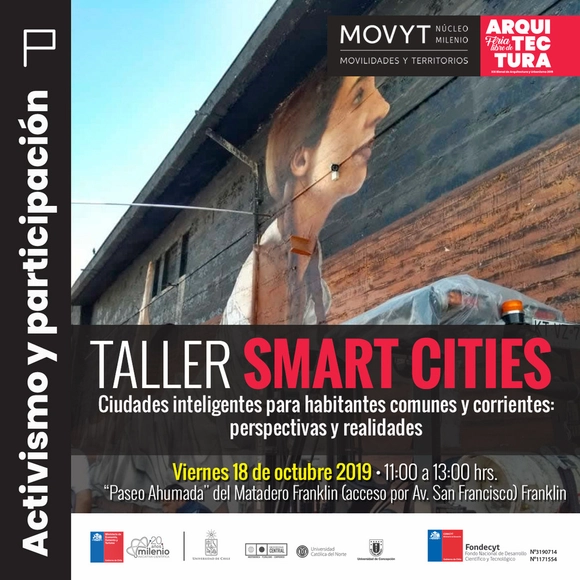
The concept of Smart Cities has become a recurring theme in visions of the city of the future. But what about the average citizen? If we ask acquaintances or passersby, very few have heard of the topic.
Can the workspace influence people's creativity? What are the strategies for creating a culture of innovation within a company? Will machines replace humans in the office design process? These and other topics will be discussed at WORKTECH 2019 Santiago, the international conference on the future of work, brought to Chile by Contract Workplaces, a regional company dedicated to the design and construction of high-performance workspaces.
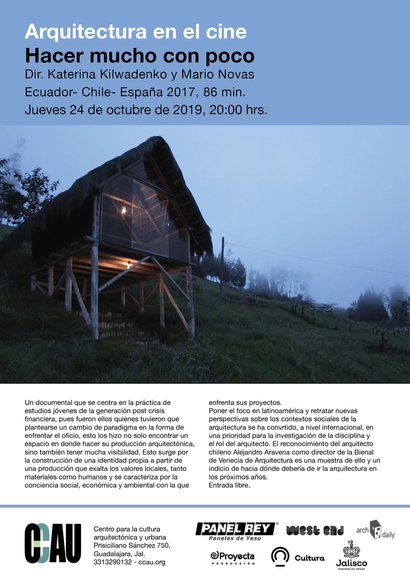
This documentary focuses on the practices of young studios from the post-financial crisis generation. These architects were forced to rethink their approach to the profession, leading them to not only carve out a space for their architectural work but also to gain significant visibility. This shift stems from the construction of a distinct identity based on production that highlights local values—both material and human—and is defined by the social, economic, and environmental consciousness they bring to their projects.
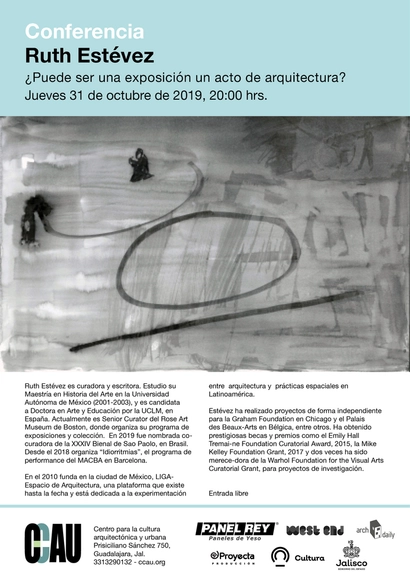
Thursday, October 31, 2019 Ruth Estévez is a curator and writer. She earned her Master’s degree in Art History from the National Autonomous University of Mexico (2001–2003) and is a PhD candidate in Art and Education at UCLM in Spain. She is currently a Senior Curator at the Rose Art Museum in Boston, where she oversees its exhibition and collection program. In 2019, she was appointed co-curator of the 34th São Paulo Biennial in Brazil. Since 2018, she has organized “Idiorritmias,” the performance program at MACBA in Barcelona.
The Architecture and Urbanism Week (SAU) at UNIFAP is an annual event organized as a university extension initiative. It is primarily student-led, with at least one tenured faculty member serving as the director and primary liaison. This year’s edition, VIII SAU: Create Yourself, City!, aims to present and discuss the Creative Cities Network program by the United Nations Educational, Scientific and Cultural Organization (UNESCO). The program seeks to foster international cooperation among cities that invest in culture and creativity as drivers of sustainable development. The theme will be explored through three tracks focused on the city of Macapá, Amapá: Creative processes in the city; Perception and memory of the city; and Sustainability and self-management practices. For this edition, SAU is accepting submissions of academic work in three distinct categories: scientific articles, graphic works (physical models, photography, video, and sketchbooks), and posters. These will subsequently be published in the event proceedings. Over the course of the four-day event, the organizers aim to bring together students, faculty, researchers, and professionals to discuss the theme through lectures, roundtable discussions, workshops, and networking opportunities.
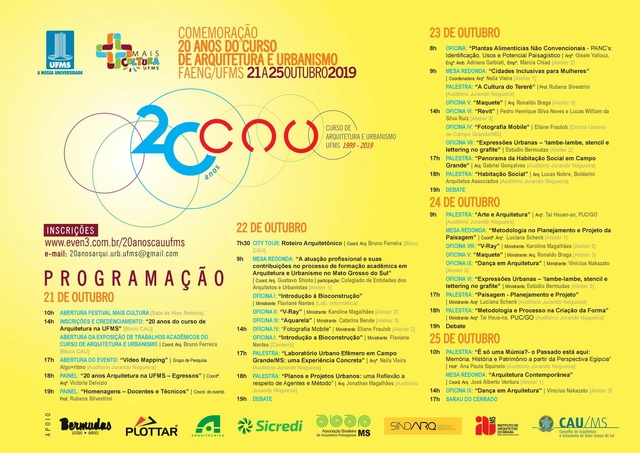
Twenty years ago, a demand from the society of Mato Grosso do Sul was met. A group of professors from the Civil Engineering program formed the inaugural faculty of the newly established Architecture and Urbanism program at UFMS. Over the years, many have contributed to this program, including faculty, staff, and students. Now, in 2019, we are launching a year of celebrations to reflect, discuss, and continue building an even better program. Our first event will take place from October 21 to 25, featuring an opening session with individuals who have shaped our history, followed by a series of workshops, lectures, and activities that mark the start of these two decades of commemoration.
"What is Ornament?" is a major question explored in this edition of the Lisbon Architecture Triennale, which aims to reframe the discussion on ornament, focusing particularly on its current appropriation and interpretation. In seeking potential answers, the exhibition, curated by Ambra Fabi and Giovanni Piovene, reveals the complexity of a multifaceted narrative that analyzes the very essence of ornament.
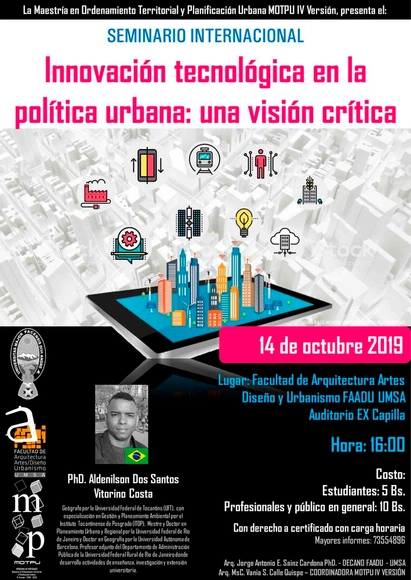
The Master’s Program in Territorial Management and Urban Planning (MOTPU IV) at the Faculty of Architecture, Arts, Design, and Urbanism of the Universidad Mayor de San Andrés in La Paz, Bolivia, presents the international seminar: "Technological Innovation in Urban Policy: A Critical Perspective."
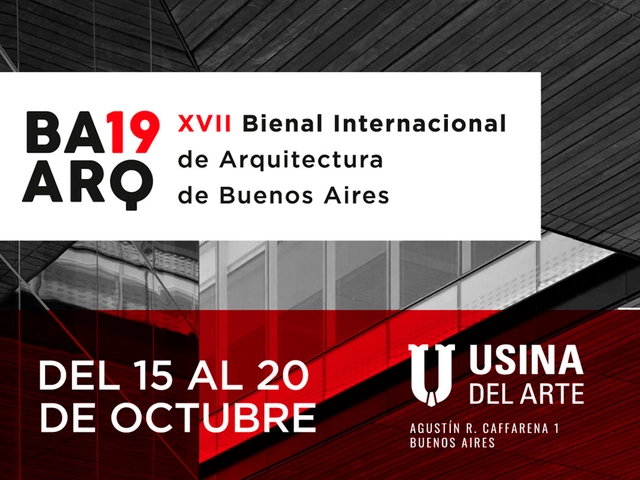
Cortesía de Bienal Internacional de Arquitectura de Buenos Aires
The Buenos Aires International Architecture Biennial, one of Latin America's most significant architectural events, will take place from October 15 to 20, 2019, at the Usina del Arte, located in the historic La Boca neighborhood. Held in the city since 1984, the Biennial is a participatory event of interest to the entire community, showcasing and exploring the most prominent themes in architecture and urbanism. Recognized as one of the world's premier biennials—alongside those in Venice and São Paulo—this year's edition will feature prominent international figures, bringing together architects from Argentina as well as Brazil, Chile, Colombia, Denmark, Ecuador, Spain, the United States, Finland, England, Italy, Mexico, Portugal, Norway, Peru, Sweden, Switzerland, and Uruguay.
Can the workspace influence human creativity? What are the strategies for fostering a culture of innovation within a company? Will machines replace humans in the office design process? These and other topics will be discussed at WORKTECH 2019 Buenos Aires, the international conference on the future of work, brought to Argentina by Contract Workplaces, a regional firm specializing in the design and construction of high-performance workspaces.
The role of the playground in schools is a question that invites reflection from both the fields of education and architecture. Historically, playgrounds have been viewed as spaces for recreation, rest, and breaks in the learning process, in contrast to classrooms, which are defined as the primary setting for pedagogical activity. This secondary status is being challenged by contemporary pedagogies, which recognize that learning processes occur everywhere. Consequently, it is essential to reflect on the architectural brief for school spaces, particularly regarding the playground as a significant site for education.
Espaço Interior is part of a research project concerning the construction of architectural imagination. It is also the title of one of the five main exhibitions at this year's Lisbon Architecture Triennale, curated by Mariabruna Fabrizi and Fosco Lucarelli. The exhibition aims to investigate the space between interior and exterior realities, seeking out those moments where these two realms interact most vividly.
Faculty of Architecture, Universidad del Atlántico
The "Three Decades of Research in Architecture, City, and Territory" seminar, honoring architects Silvia Arango and Carlos Bell Lemus, stands as the most significant event on the subject ever held in Colombia. It has successfully brought together renowned architects such as Silvia Arango, Alberto Saldarriaga, and Germán Mejía, along with 15 other distinguished professionals who contribute to both the academic and professional fields.
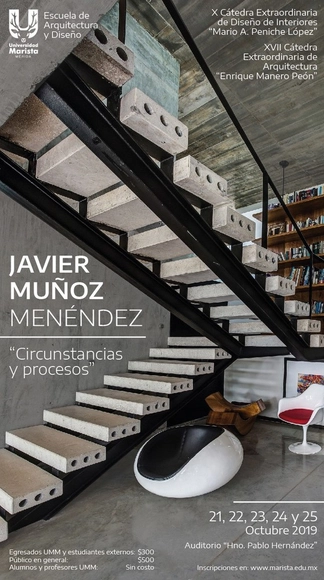
17th "Enrique Manero Peón" Extraordinary Chair of Architecture and 10th "Mario A. Peniche López" Extraordinary Chair of Interior Design: An annual lecture series organized by the Universidad Marista de Mérida A.C., which invites a renowned expert in design, architecture, and interior design to share their experiences and knowledge with the academic community and the general public.
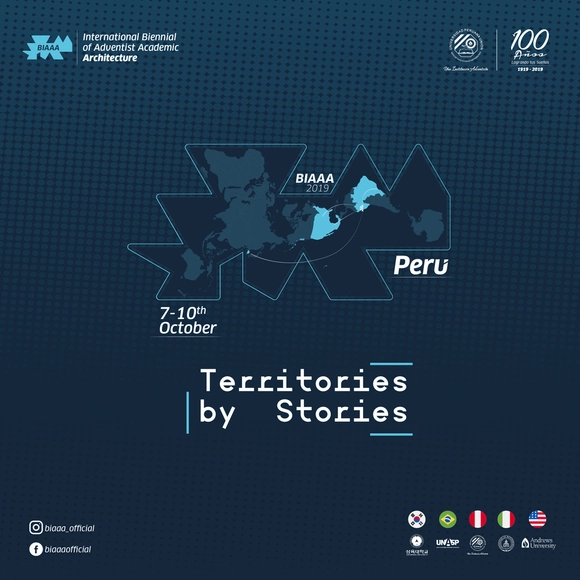
The International Biennial of Adventist Academic Architecture (BIAAA) is a non-profit event held every two years in a different country belonging to the Adventist Architecture Schools Network. The BIAAA began in 2017 as a joint effort between the schools of architecture at Montemorelos University (Mexico), Peruvian Union University (Peru), the Adventist University Center of São Paulo (Brazil), Andrews University (United States), and Sahmyook University (South Korea). The main purpose of the BIAAA is to bring together designers, professors, and students to engage with and reinterpret the design process, considering service to society as an essential principle. Consequently, the importance of the BIAAA lies in its role as a space to discuss the challenges and opportunities of social architecture and its impact on the community.