1. ArchDaily
  2. Mini

Mini

The Multi-Skilled Designer: A Cognitive Foundation for Inclusive Architectural Thinking (Routledge Research in Architecture)

The Multi-Skilled Designer presents and analyzes different approaches to contemporary architectural design and interprets them through the theory of multiple intelligences. The book establishes a systematic framework that uses the lens of cognitive psychology and developments in psychometric and brain research to analyze the unique cognitive thought processes of architectural designers and compiles design projects that could serve as a pedagogical companion for the reader. The book is aimed at design practitioners and students interested in examining their own thinking styles as well as those involved in design cognition research.
I Can See Clearly Now: SwissFineline

 | Sponsored Content

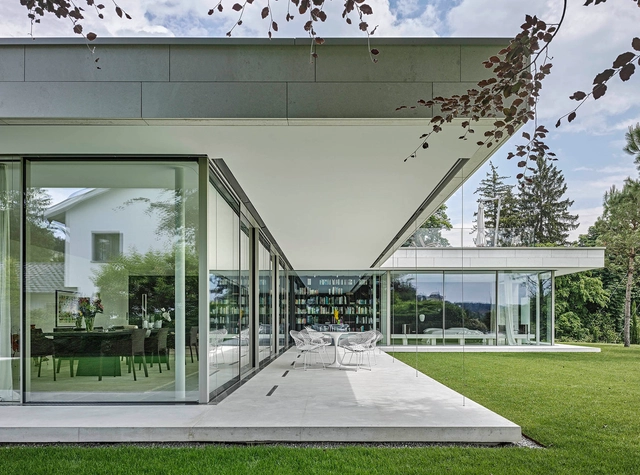
The Swiss family company SWISSFINELINE specialises in the manufacture of large glass surfaces for windows, doors and railings that allow a view of everything but the structural elements.

Call for Entries: Announcement for Songshan Lake Science and Technology Convention Center International Competition for Urban Design and Architecture Design

This project is defined as The Songshan Lake Science and Technology Convention Center. It aims to set up an exclusive platform for Scientists, technologists and financial figures in order to optimize the Conference service in Songshan Lake Park. Meeting activities are different, such as high-level sci-tech conferences, forums, academic symposia, product launch and the like. Meanwhile, through crossover interactions among scientists, technologists, financial figures and artists, it is intended to drive development of  Science and Technology innovation industry by Fintech industry. It will provide a unique Sci. & Tech. communication venue with special aesthetics and artistic quality.

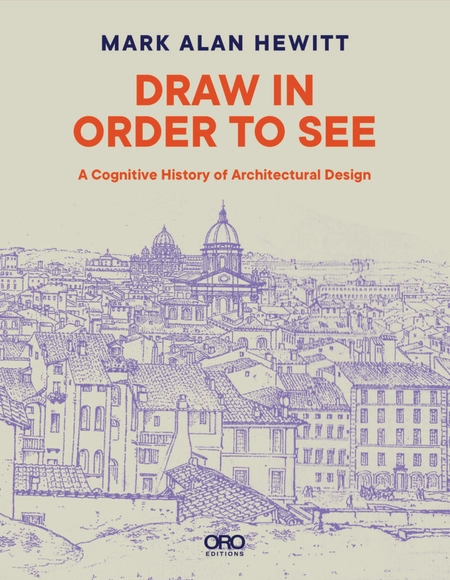
Draw in Order to See: A Cognitive History of Architectural Design

Draw In Order to See is the first book to survey the history of architectural design using the latest research in neuroscience and embodied cognition.

At present, among the dozens of books on architectural drawing, design theory, methodologies, model making, CAAD, and planning, there is no book that specifically looks at the history of representation as a reflection of cognitive habits among individuals and groups of architects. As a historian and a practicing architect, Mark Hewitt has a unique point of view, that has enabled him to study the design practices of many architects during various eras, beginning in the Renaissance

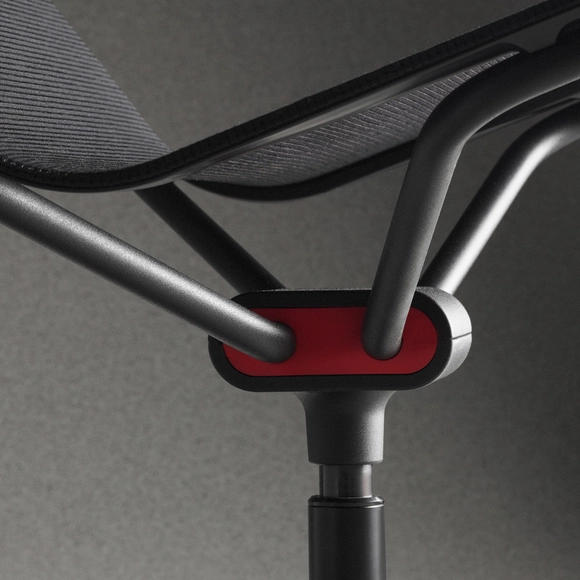
Support Group: Wagner's D1 Swivel Chairs

 | Sponsored Content

The D1 swivel chair family designed by Stefan Diez for Wagner keeps users moving with its innovative joint mechanism, while fundamentally changing our conception of how office chairs look.

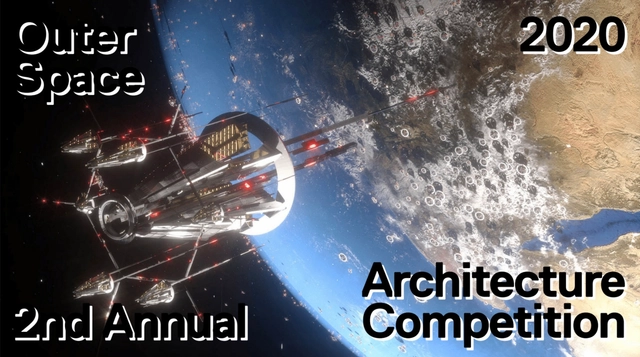
Open Call: Outer Space 2020 by Blank Space

We are on the cusp of the second great age of space exploration.

Outer space has always captured the imaginations of the public. New advances in technology (including comet landings, the Orion Spacecraft, and large scale social experiments leading to exploration of Mars) mean that outer space is no longer a place only astronauts will get to experience – but something you and I can experience within our lifetimes

For a long time, the fantastical visions of space exploration have been rooted in the scifi proposals of the 50s, 60s and 70s. Ring worlds, death stars and space colonies conjure vibrant, psychedelic

Goodbye Lenin

Jonk travels the world looking for abandoned places.
Today, he has visited more than one thousand and five hundreds of them in almost fifty countries on four continents.
To be touched by a place, he needs to see that only time passing had an impact on it, without any human intervention: cracked walls, peeling paints, rusted iron and nature taking over.
The ideal is to feel that he is in what he calls time capsules, get the impression that time has stopped for years, for decades.
With time, his interest has focused on those places on which only time had an impact.
Among them are

Copenhagen Architecture Festival x 2020

The festival attracts between 50-100.000 audiences every year to a public program of guided tours, film screenings, debates, seminars, workshops and exhibitions focusing on architecture and urbanism.

It was initially going to run in the cities of Copenhagen, Aarhus and Odense from 23rd of April – 3rd of May under the title ‘The Welfare City in Transition’. The dates and formats changed for obvious reasons, but the theme of the festival is more relevant than ever.

1st – 11th of October will be the new dates to run parts of its intended program together with its collaborators as the country is

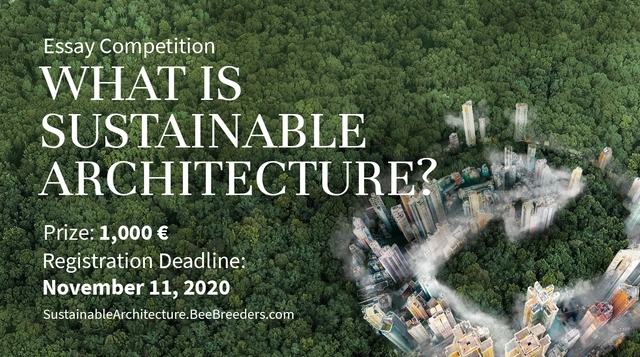
What is Sustainable Architecture?

There are many ways of designing environmentally-responsible and resource-efficient structures and cities, with amazing innovations and advances introduced every day. These include everything from smart homes and photovoltaic glass to centrally organized power networks, modular building, and even self-healing bio-concrete.

Architects, startups, investors, entrepreneurs, tech companies, and designers are all pioneering holistic new approaches to sustainable architecture, in which new buildings are constructed and maintained throughout their life cycles with as little negative impact on the environment as possible.

Do you have something to say about sustainable architecture?

Bee Breeders, in partnership with ARCHHIVE BOOKS, is calling for essay submissions for

San Francisco Design Week 2020

San Francisco Design Week 2020:
The First Regional Virtual Design Festival

Virtual Edition: June 15th - 25th, 2020

The 14th Annual SAN FRANCISCO DESIGN WEEK (SFDW), which attracts annually 60,000 visitors from around the world, is returning this year as the first regional virtual design festival. The all-online program kicks off June 15-25, celebrating with the provocative theme “Intentional Distortions” which is now more relevant than ever.

Highlights include talks, webinars, web-conferences, and virtual tours with leading designers in multi-disciplines, from user experience, interactive design,VR Experiences and Virtual Art to branding, architecture, interior design, and fashion.

New this year is the first annual Product Showcase,

Pavilion Of Humanity: First Contact

The Earth is in a chaotic and confusing state right now, with the future of our society not entirely clear. But in a world of COVID-19 and climate change, now is the time to reflect on the positive aspects of humanity and its many great achievements.

The Pavilion Of Humanity: First Contact architecture ideas competition tasks participants with designing a structure encapsulating the best and brightest of our species in a way that, should we ever be visited by other life forms, would allow them to learn about our achievements in a single space.

In the same way the Pioneer Plaques,

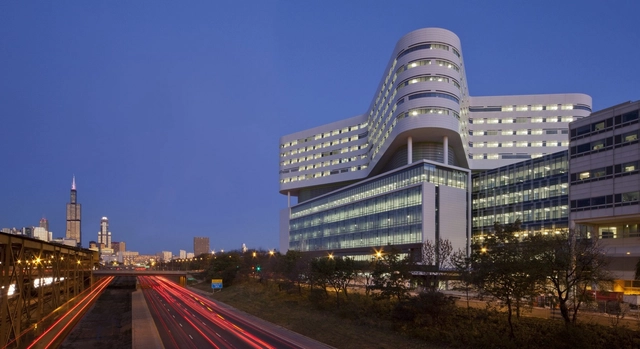
CAC Live: The Future of the Hospital

Part of the CAC’s “What’s Next” series • Rush University Medical Center is uniquely suited to contain infectious diseases and respond to surges that occur during public health crises. What lessons does it offer for architects of future hospitals?

Join us for a panel discussion moderated by CAC President and CEO Lynn Osmond with people who were close to the Rush project: retired Rush University Medical Center CEO Dr. Larry Goodman and Perkins and Will Principal Ralph Johnson. We’ll examine how designers can construct a united response to a common crisis that includes under-resourced hospitals and temporary facilities, and the ways

CAC Live: Virtual Workshop on Returning to the Office

Part of the CAC’s “What’s Next” series. Going beyond the typical lecture or panel, this workshop lays out clear-cut steps for preparing your office for a returning workforce under social distancing guidelines.

What simple, design-minded adaptations make for a healthier office? This program is geared to employers, building managers and others charged with reopening an office space. Get the tools to do so safely and confidently from Todd Heiser, Co-Managing Director of Gensler’s Chicago office, hosted by CAC President and CEO Lynn Osmond.

Open Call: FutureNOW

FutureNow is a competition created with the future in mind, future that is already here! The current situation related to forced social isolation has changed our professional life, we are convinced that it will also change the way of thinking about designing functional spaces. Show us what you think the space we experience every day, perfectly reflecting the mobility between work and private life, should look like.

The main inspiration for creating projects should be spaces that combine the functionality of the workplace and everyday life. Every industry, specialist or family needs a personalized place in order to function properly.

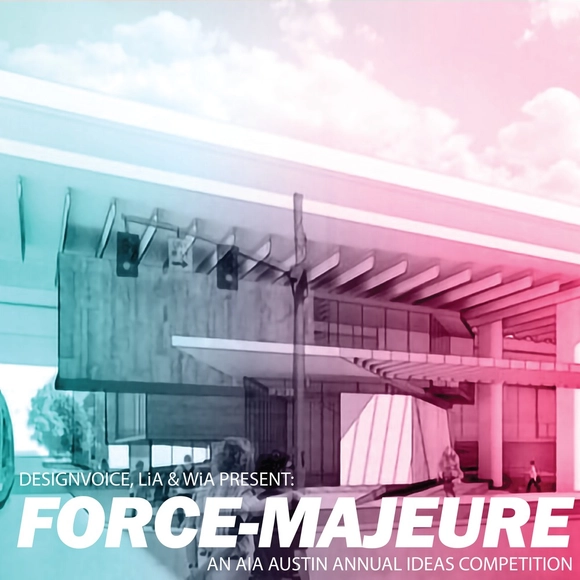
Force-Majeure Call for Entries

AIA Austin in partnership with Design Voice, Women in Architecture-Austin, Emerging Professionals and Latinos in Architecture propose Force-Majeure, a design competition that addresses contemporary issues that are impacting our lives during this pandemic.

Either act of god or being of superior force, our society deals with Force-Majeure scenarios on many different scales. Turning this scenarios, that are often unexpected or overwhelming, into opportunities to engage the community is what the Force-Majeure Ideas Competition represents. It poses the simple question of how we can as professionals help in times of immense need and attention.

This competition is meant to serve as a tool

Future ShanShui City: International Urban Design Competition

 | Sponsored Content

Future Shanshui City · Dwellings in Lishui Mountains International Urban Design Competition aims to methodically construct a Shanshui city spatial framework in order to set a model image for this city typology, to create a new ShanShui city lifestyle, and to explore contemporary, sustainable urban planning strategies.

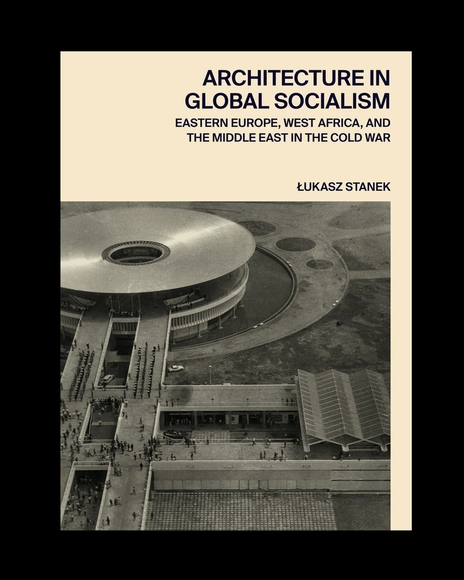
Architecture in Global Socialism: Eastern Europe, West Africa, and the Middle East in the Cold War

In the course of the Cold War, architects, planners, and construction companies from socialist Eastern Europe engaged in a vibrant collaboration with those in West Africa and the Middle East in order to bring modernization to the developing world. Architecture in Global Socialism shows how their collaboration reshaped five cities in the Global South: Accra, Lagos, Baghdad, Abu Dhabi, and Kuwait City.

Łukasz Stanek describes how local authorities and professionals in these cities drew on Soviet prefabrication systems, Hungarian and Polish planning methods, Yugoslav and Bulgarian construction materials, Romanian and East German standard designs, and manual laborers from across Eastern Europe.

Back to Work: Rethink, Reevaluate, Retrofit for Safer Workplaces

The Blank Slate develops a handbook, ‘Back to Work : Rethink Re-evaluate Retrofit for Safer Workplaces’ of post-lockdown guidelines and design interventions for workplaces to adapt to the ‘new normal’

This book presents design strategies to workplaces as the world enters a dimension of coexistence with COVID-19 where living and working while social distancing have now become the ‘New Normal’. The publication also contains a comprehensive set of safety practices that streamline the course of ‘social distancing’ within a workplace.

The biggest challenge workplaces are going to face is how they can adapt their open office layouts for physical distancing

You've started following your first account!

Did you know?

You'll now receive updates based on what you follow! Personalize your stream and start following your favorite authors, offices and users.