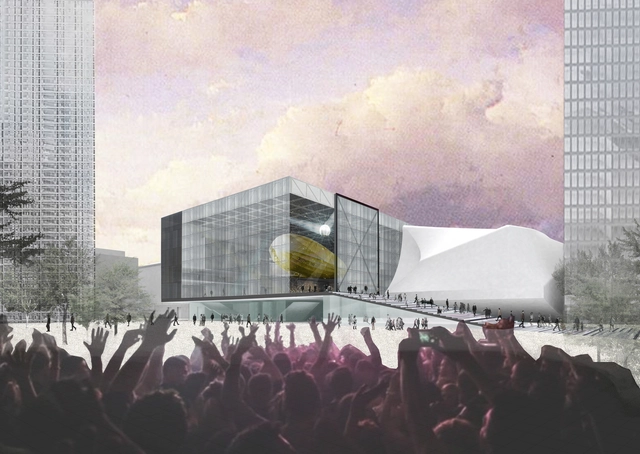
In an article for theFinancial Times, Edwin Heathcote responds to the recent news that OMA, based in Rotterdam, have won the competition to design the British city of Manchester's new "ultra-flexible" arts venue. The Factory, so-named because of city's rich musical heritage, will be one of the largest cultural projects of its kind. Having gained and maintained financial support from Westminster, the building—which must be able to transform from a 2,200-seat theatre into an open 5,000-capacity space—is a flagship project for the British government.
Design Challenge: This design competition is an exploration into the relationship between a physical architectural design, the virtual world, and a tangible site. Investigate the influence of the virtual world blending with physical architecture. A virtual world, built on the framework of the internet, computers, and mobile technology, exchanges information globally. This creates new ways of interacting with the built world. As the virtual and physical worlds become increasingly interconnected, how does this relationship influence physical architecture and its context?
ART & SPACE Gallery is delighted to present new works by the famous British architect and artist WILLIAM ALSOP for the second time in Munich. You are also cordially invited to attend the lecture by Prof. William Alsop "making life better", organized with the support of the Chair of Building Technology and Climate Responsive Design, Prof. Dipl.-Ing. Thomas Auer, Technical University of Munich (TUM). The lecture takes place on November 26, 16:45-18:15, room No. 0602, Theresianum, TUM
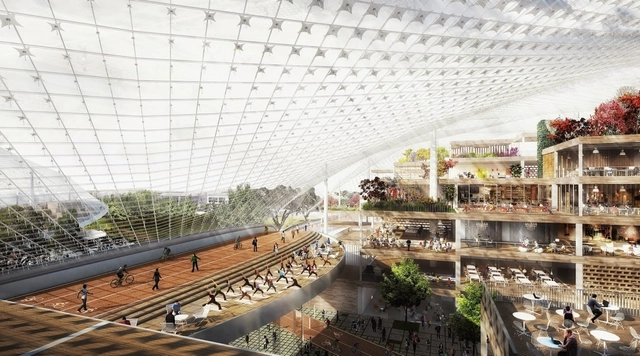
This past February, BIG and Heatherwick Studiounveiled their designs for Google’s new Mountain View Headquarters in California. The project, which will be built by robots, faced sizeable critique, as well as site complications—that have since been resolved—over the past year. Now, as a part of Esquire’s 2015 Breakouts, Bjarke Ingels—founder of BIG—is speaking out about how the firm won the Google bid, and why the headquarters could create a new mold for Silicon Valley urbanism. Ingels goes on to discuss other major BIG projects, like 2 World Trade Center, and an upcoming NFL stadium. Read the full Esquire interview, here.
Is ornament seeing a resurgence in architectural design? Writing for The Financial Times, Edwin Heathcote examines the rising phenomenon of decoration as a growing element of contemporary architectural design. Describing FAT and Grayson Perry's recently completed 'kitsch' abode 'A House for Essex' Heathcote justifies the assimilation of decoration into the central design philosophy, thus creating an entirely new aesthetic category. "The building sits somewhere between outsider art, high culture and the most sophisticated postmodernism," Heathcote explains, adding that its decoration "is not just applied as a layer but subsumed into the architecture."
The Royal Institute of British Architects (RIBA)'s Future Trends Survey for October 2015 showed a level of caution among UK architects, reflecting a period of slowing growth in the industry. The Future Trends workload index dropped to +18 from last month's mark of +21, showing a decrease in the number of practices that expect their workload to increase in the coming months. All regions of the UK still reported a positive balance though, with the most optimism coming from Northern Ireland with a balance figure of +25, while the most uncertain figures came from the Midlands and East Anglia, where a balance figure of +12 was reported.
Presented by StorefrontMB and The Forks, Cool Gardens is an exhibit of contemporary garden and art installations that offers a shift of sensation for the summer—cooling—as a general theme for public projects in Winnipeg and Brandon. The 2016 Competition seeks creative proposals from designers, architects, landscape architects, and / or artists who are interested in challenging and celebrating the interface between urbanism, landscape, and design. Engage the urban design culture of Winnipeg or Brandon! Register today!
Writing for Guardian Cities Alejandro Aravena, director of the 2016 Venice Architecture Biennale, discusses what he perceives as the social reality of contemporary architects, the power of design in mobilising people to act, and "how architecture can introduce a broader notion of gain" in the face of ever greedier and evermore powerful development companies the world over.
Any attempt to go beyond business as usual encounters huge resistance in the inertia of reality. Any effort to tackle relevant issues has to overcome the increasing complexity of the world. [...] It's time to rethink the entire role and language of architecture.
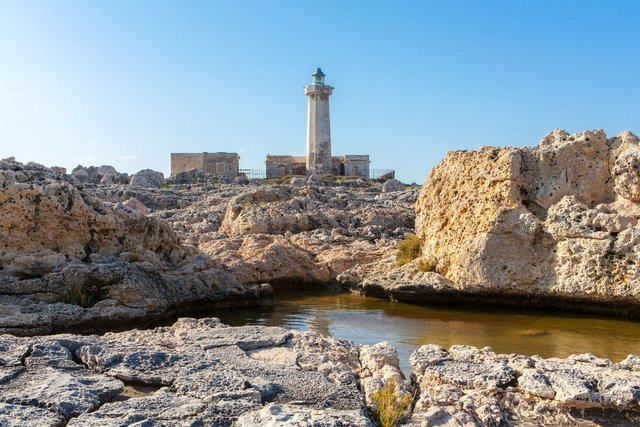
Young Architects Competitions (YAC) has launched their latest competition, asking international designers to imagine a new future for an abandoned Italian lighthouse by transforming it into a tourism facility. There is 15.000€ cash prizes for the winning proposals, and awarded proposals will be published on architectural magazines /websites / will be internationally exhibited.
https://www.archdaily.com/777661/open-call-transform-abandoned-lighthouses-into-tourist-accommodationsSponsored Post
Jakarta Architecture Triennale (JAT) is a tri-annual architecture festival since 2009, organized by Indonesian Institute of Architect Jakarta Chapter (Ikatan Arsitek Indonesia Jakarta).
This International event consists of exhibition, talk show, workshop, movie screening and other architectural activities. By the spirit of Locality, Playful and Innovation, this year’s festival focuses on digging the potency of wisdom, culture, design, the richness of local material and technology in Indonesia, which potentially to be developed and even became the influence of future architecture development in Asia.
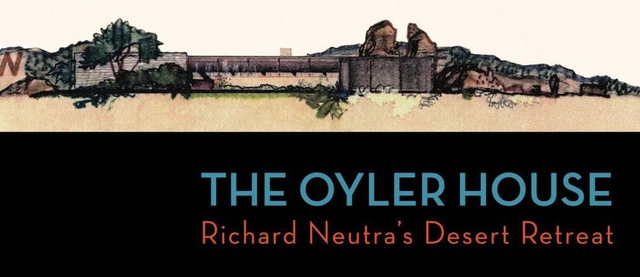
Join us for another portrayal of one of America’s greatest architects: Richard Neutra. The Oyler House: Richard Neutra’s Desert Retreat explores how Neutra, considered the “father of California Modern architecture,” came to befriend this modest small-town family and how he was inspired by the site’s stunning desert setting, which Neutra compared with the grandness of the mystical Gobi Desert.
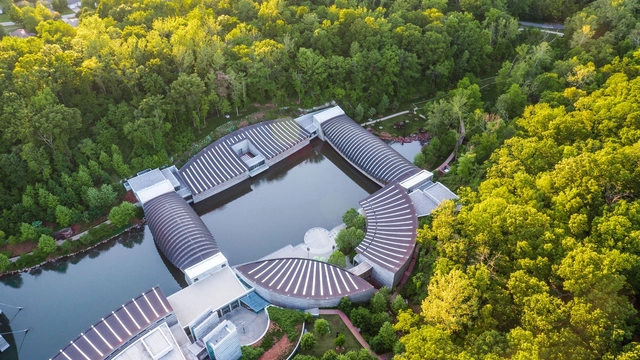
Aerial view of Crystal Bridges; photography by Adair Creative. Courtesy of Crystal Bridges Museum of American Art, Bentonville, Arkansas.
Crystal Bridges Museum of American Art invites applications for the 2016-2017 Tyson Scholars of American Art Program. The residential program supports full-time scholarship in the history of American art, visual and material culture from the colonial period to the present. To support their research, Tyson Scholars have access to the art and library collections of Crystal Bridges as well as the library at the University of Arkansas in nearby Fayetteville. Housing is provided at the Crystal Bridges Farmhouse, within easy walking distance from the Museum via wooded trails and approximately 1.5 miles from downtown Bentonville. It features comfortable indoor and outdoor common spaces including an expansive yard, patio and swimming pool; scholars have private bed and bath rooms.
Millau Viaduct, France / Foster + Partners. Image via Foster + Partners
If Lord Foster—perhaps one of the greatest architects of our time—feels as though he has "no power as an architect, none whatsoever," people tend to take notice. His support, thoughts and opinions, he tells The Observer'sRowan Moore, are his most influential tools: "advocacy, he says, is the only power an architect ever has." Their conversation, held ahead of the Urban Age Global Debates which are currently taking place in London, also touches upon the importance of infrastructure, the social role of the architect, and the growing—if not undervalued—urgency to readdress sustainability within the profession.
The Superscape 2016 title Future Urban Living – Functional Reduction with Maximum Space Gain opens a field for visionary design suggestions and space concepts which focus on building the urban residential space of the future. Innovative solutions are sought, combining high-quality residences with great space efficiency and the greatest functional flexibility possible. In this context, the changing needs and requirements of urban dwellers for their residences during the next 50 years shall be taken into consideration. The goal is to formulate forward-thinking concepts, to question familiar residential patterns and to risk experiments in design, but also to consider their feasibility, and to check the possibility of realising them within existing building substance and existing urban structures. Furthermore, the subject is highly relevant with regard to increasing mobility and urban traffic flow within the context of urban planning.
Contemporary education is changing rapidly and is evolving in response to the changing demands of society and technology development. The classical model where a professor stands at a lecturing desk and students sit in the auditorium has lost its relevance. New educational technologies are calling for a new approach to classroom setup and modern architecture has to come up with an adequate response.
Confindustria Ceramica (the Italian Association of Ceramics) and the Italian Trade Commission are proud to announce the 2016 Ceramics of Italy Tile Competition Call for Entries. Now in its 23rd year, the contest is open to North American architects and designers who use Italian ceramic tiles in their institutional, residential and commercial/hospitality spaces. From corporate headquarters with ventilated porcelain facades and hospitals utilizing antibacterial ceramic floors to summer homes using decorative ceramics, Ceramics of Italy is looking for all types of inspiring projects featuring Italian ceramics.
Prizes: Winners in each category will receive a cash prize of $4,000 and a
Videos
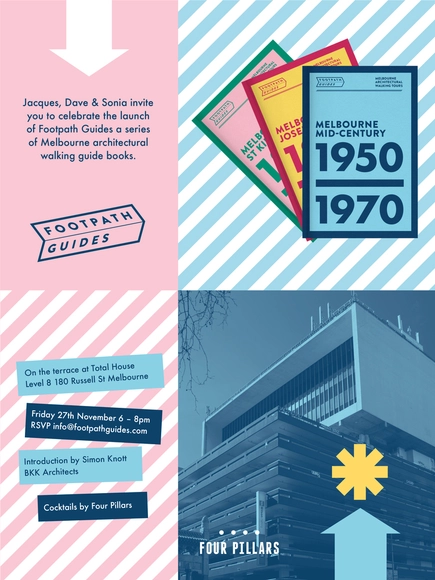
Footpath Guides Launch Invitation design by Sonia Post
Curiously enough, there has never been an accessible guide to the exceptional architecture of the world’s most liveable city. And certainly not a guide you can take with you as you wander Melbourne’s streets and pathways. The Footpath Guides explore the buildings that make a city like Melbourne what it is today: an eclectic mixture of eras, style and design that creates its essential character and living environment.
Footpath Guides feature clear maps, concise descriptions and accurate illustrations, showcasing notable examples from each architectural era, spanning the 1850s to the 1970s. The Guides are playful, timeless and informative. Meticulously designed in





_Dave_King_-_Channel_4_Television_(2).jpg?1448352614&format=webp&width=640&height=580)