1. ArchDaily
  2. Resilient Architecture

Resilient Architecture: The Latest Architecture and News

Vice President Harris Makes the Case for Nature-based Solutions

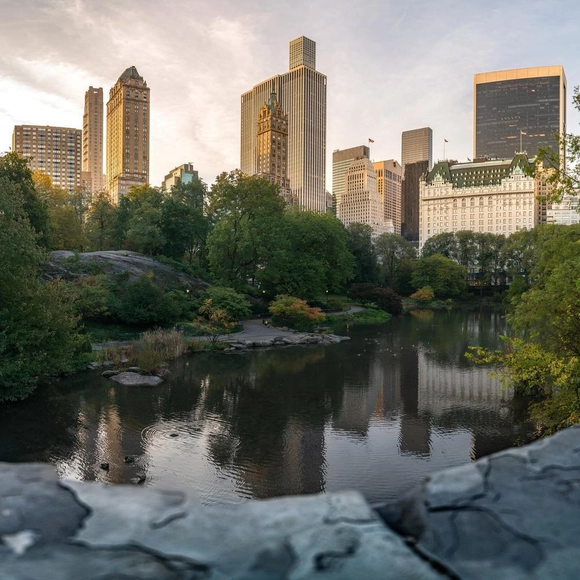
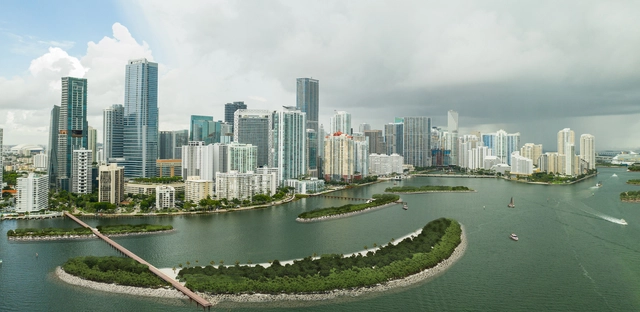
This Earth Day, U.S. Vice President Kamala Harris highlighted the many benefits of nature-based solutions and recognized the important role of landscape architects in this work. At the University of Miami, she also announced $562 million in funding for coastal resilience projects, supporting 149 projects in 30 states, through the Climate-Ready Coasts Initiative of the National Oceanic and Atmospheric Administration (NOAA). Vice President Harris’ remarks build on the Biden-Harris administration’s support for planning and designing with ecological systems in an equitable way.

Vice President Harris Makes the Case for Nature-based Solutions - Image 1 of 4Vice President Harris Makes the Case for Nature-based Solutions - Image 2 of 4Vice President Harris Makes the Case for Nature-based Solutions - Image 3 of 4Vice President Harris Makes the Case for Nature-based Solutions - Image 4 of 4Vice President Harris Makes the Case for Nature-based Solutions - More Images+ 1

New Orleans’ Equity-Driven Reforestation Plan

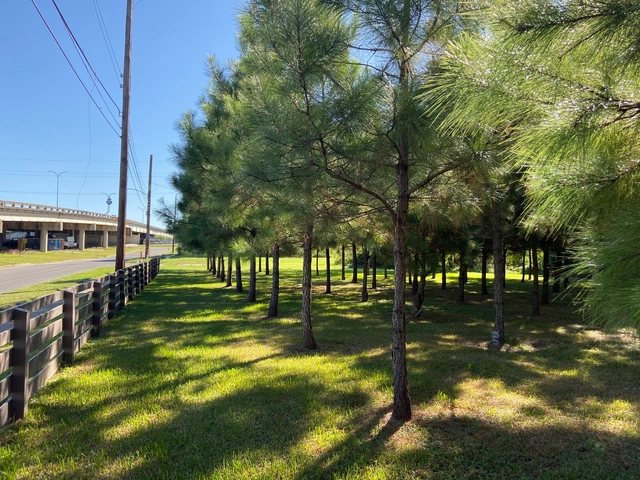
New Orleans experiences the worst urban heat island effect in the country, with temperatures nearly 9 F° higher than nearby natural areas. The city also lost more than 200,000 trees from Hurricane Katrina, dropping its overall tree canopy to just 18.5 percent.

The non-profit organization Sustaining Our Urban Landscape (SOUL) partnered with landscape architects at Spackman Mossop Michaels (SMM) to create a highly accessible, equity-focused reforestation plan for the city that provides a roadmap for achieving a tree canopy of 24 percent by 2040. But more importantly, the plan also seeks to equalize the canopy, so at least 10 percent of all 72 neighborhoods are covered in trees. Currently, more than half of neighborhoods are under the 10 percent goal.

New Orleans’ Equity-Driven Reforestation Plan - Image 1 of 4New Orleans’ Equity-Driven Reforestation Plan - Image 2 of 4New Orleans’ Equity-Driven Reforestation Plan - Image 3 of 4New Orleans’ Equity-Driven Reforestation Plan - Image 4 of 4New Orleans’ Equity-Driven Reforestation Plan - More Images+ 3

What COP27 Meant for Architecture and the Construction Industry

The 2022 United Nations Conference of the Parties, more commonly referred to as COP27, was held between November 6 and November 18, 2022, in Sharm El Sheikh, Egypt. The conference included more than 90 heads of state and an estimated 35,000 representatives, or delegates, from 190 countries. Aimed at encouraging and guiding countries to take effective action against climate change, the next edition of these conferences, COP28, is already scheduled from 30 November to 12 December 2023, in the United Arab Emirates. The CEO of the Abu Dhabi National Oil Co, an oil company chief who also oversees renewable energy efforts in the Emirates, was appointed to preside over the negotiations and talks, which led to a wave of criticism from environmental activists.

What COP27 Meant for Architecture and the Construction Industry - Image 1 of 4What COP27 Meant for Architecture and the Construction Industry - Image 2 of 4What COP27 Meant for Architecture and the Construction Industry - Image 3 of 4What COP27 Meant for Architecture and the Construction Industry - Image 4 of 4What COP27 Meant for Architecture and the Construction Industry - More Images+ 1

Can Architecture and Urban Planning Fight Back Against Climate Change?

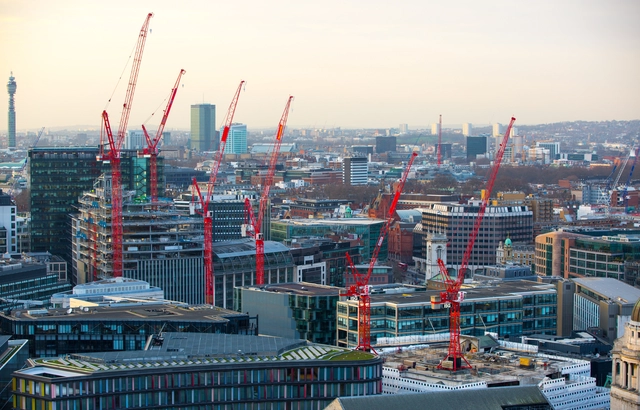
Climate change has been one of the most pressing topics of this year, and for a good reason. Its effects are visible not only in natural habitats but also in urban environments. The construction industry has an important role to play in this dynamic. Throughout the year, events such as COP27 emphasized the importance of striving to achieve net carbon zero and the challenges faced by developing countries affected by increasingly devastating natural disasters. Possible directions for development include actions at varying stages and scales, from optimizing green spaces for urban heat control to employing local and innovative building materials to minimize the carbon footprint or passing laws that help create more sustainable urban and natural environments.

This article represents a roundup of articles published on ArchDaily during the course of 2022 with themes related to climate change and architecture’s potential to make a difference. It breaks down the topic into four main questions: What Are Cities Doing to Mitigate Urban Heat? How to Tackle Rising Sea Levels? What Was COP27 and Why Does It Matter? Can Building Materials Play a Role in Achieving These Goals? The last section presents an overview of new legislation approved during 2022 as a way of understanding how state and local governments are imposing this need for change.

Can Architecture and Urban Planning Fight Back Against Climate Change? - Image 1 of 4Can Architecture and Urban Planning Fight Back Against Climate Change? - Image 2 of 4Can Architecture and Urban Planning Fight Back Against Climate Change? - Image 3 of 4Can Architecture and Urban Planning Fight Back Against Climate Change? - Image 4 of 4Can Architecture and Urban Planning Fight Back Against Climate Change? - More Images+ 25

Nature-based Protection Against Storm Surges

“Superstorm Sandy in 2012 was a wake-up call for NYC and made the city realize it needed to better prepare for climate change,” said Adrian Smith, FASLA, vice president at ASLA and team leader of Staten Island capital projects with NYC Parks. Due to storm surges from Sandy, “several people in Staten Island perished, and millions in property damage were sustained.”

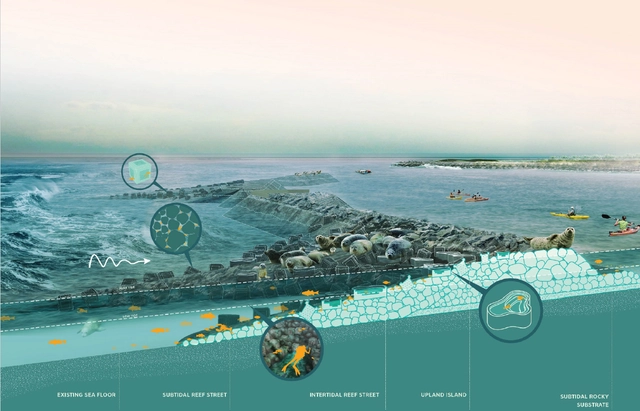
On the 10th anniversary of Sandy, Smith, along with Pippa Brashear, ASLA, principal at SCAPE, and Donna Walcavage, FASLA, principal at Stantec, explained how designing with nature can lead to more resilient shoreline communities. During Climate Week NYC, they walked an online crowd of hundreds through two interconnected projects on the southwestern end of the island: Living Breakwaters and its companion on land — the Tottenville Shoreline Protection Project.

Nature-based Protection Against Storm Surges - Image 1 of 4Nature-based Protection Against Storm Surges - Image 2 of 4Nature-based Protection Against Storm Surges - Image 3 of 4Nature-based Protection Against Storm Surges - Image 4 of 4Nature-based Protection Against Storm Surges - More Images+ 10

Redesigning the Road to Net Zero: How CO Adaptive Architecture is Breaking New Ground

The climate crisis has reshaped contemporary architecture. Sustainability has become a central guiding force in design, and in turn, architects are rethinking how to build today. For CO Adaptive Architecture, addressing the climate crisis begins with a process oriented practice. Together, Ruth Mandl and Bobby Johnston have created a firm that embodies how a values-based approach can tackle the most pressing issues of our time. The result is elegant and impactful architecture brought to life with poise and finesse.

Redesigning the Road to Net Zero: How CO Adaptive Architecture is Breaking New Ground - Arch Daily InterviewsRedesigning the Road to Net Zero: How CO Adaptive Architecture is Breaking New Ground - Arch Daily InterviewsRedesigning the Road to Net Zero: How CO Adaptive Architecture is Breaking New Ground - Arch Daily InterviewsRedesigning the Road to Net Zero: How CO Adaptive Architecture is Breaking New Ground - Arch Daily InterviewsRedesigning the Road to Net Zero: How CO Adaptive Architecture is Breaking New Ground - More Images+ 4

Lina Ghotmeh on Stone Garden: ''It Has to Resist any Earthquake, and That’s Why it also Resisted the Explosion in the Port''

‘’We’re in a seismic area. Beirut has been buried seven times, so it has to resist any earthquake, and that’s why it also resisted the explosion in the port,’’ expresses Lina Ghotmeh in conversation with Louisiana Channel, in regards to the Stone Garden. A building constructed with resilience in mind, in a city that has been buried within rubble and rebuilt multiple times.

Lina Ghotmeh was interviewed by Marc-Christoph Wagner at her studio in Paris in November 2021. Renowned for her Humanist approach to Architecture, the Stone Garden offers a very personal relationship as the first building to be constructed in Ghotmeh’s hometown of Beirut. Positioned on the edge of the city center, it is very much a form of vernacular architecture echoing the lives of the people who reside here.

Lina Ghotmeh on Stone Garden: ''It Has to Resist any Earthquake, and That’s Why it also Resisted the Explosion in the Port'' - Image 1 of 4Lina Ghotmeh on Stone Garden: ''It Has to Resist any Earthquake, and That’s Why it also Resisted the Explosion in the Port'' - Image 2 of 4Lina Ghotmeh on Stone Garden: ''It Has to Resist any Earthquake, and That’s Why it also Resisted the Explosion in the Port'' - Image 3 of 4Lina Ghotmeh on Stone Garden: ''It Has to Resist any Earthquake, and That’s Why it also Resisted the Explosion in the Port'' - Image 4 of 4Lina Ghotmeh on Stone Garden: ''It Has to Resist any Earthquake, and That’s Why it also Resisted the Explosion in the Port'' - More Images+ 1

Amsterdam's Floating Neighbourhood Schoonschip Offers a New Perspective on Circularity and Resiliency

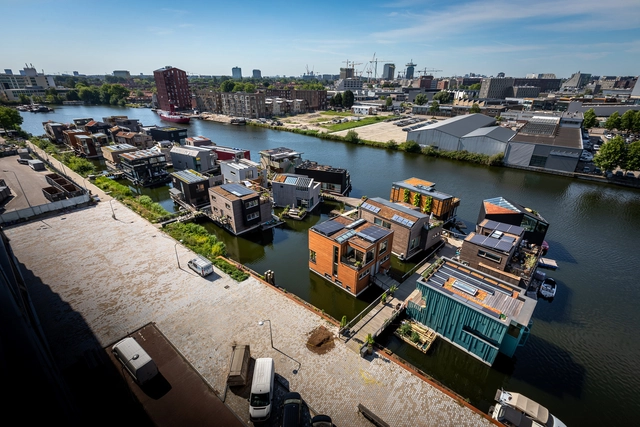
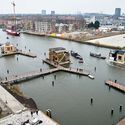
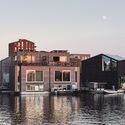
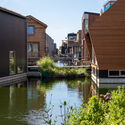
Schoonschip is Amsterdam’s innovative circular neighbourhood, a community-driven project set to become a prototype for floating urban developments. With a masterplan designed by Dutch architecture practice Space&Matter, the project comprises 46 dwellings across 30 water plots connected by a jetty and features decentralised and sustainable energy, water and waste systems. With the last of its buildings completed this year, the development showcases a valid adaptation strategy in the face of climate change and rising sea levels.

Amsterdam's Floating Neighbourhood Schoonschip Offers a New Perspective on Circularity and Resiliency - Image 1 of 4Amsterdam's Floating Neighbourhood Schoonschip Offers a New Perspective on Circularity and Resiliency - Image 2 of 4Amsterdam's Floating Neighbourhood Schoonschip Offers a New Perspective on Circularity and Resiliency - Image 3 of 4Amsterdam's Floating Neighbourhood Schoonschip Offers a New Perspective on Circularity and Resiliency - Image 4 of 4Amsterdam's Floating Neighbourhood Schoonschip Offers a New Perspective on Circularity and Resiliency - More Images+ 16

Finalists Announced for FAR ROC Competition for Resilient Rockaways

 Finalists Announced for FAR ROC Competition for Resilient Rockaways - Urbanism
© McGregor Coxall

The FAR ROC Competition, released shortly after Hurricane Sandy hit the eastern seaboard, called for a thoughtfully considered proposal for an 80-acre, 11-mile long peninsula that juts out into the Atlantic Ocean in the Rockaways (Queens, NY). The RFP expressed the need to explore a comprehensive solution to developing Averne East, a FEMA designated Hazard Area Zone that experienced extensive storm surge damage and continues to be a vulnerable site for future natural disasters. While the competition focused on this particular site, the full intention is to develop strategies that could be appropriated to low-lying and vulnerable regions all over the world.

The first phase of the competition was completed earlier this month: four finalists and six honorable mentions were announced. The four finalists - Ennead Architects of NYC, USA; Lateral Office of Toronto, Canada; Seeding Office of London, UK; and White Arkitekter of Stockholm, Sweden - will continue on to Phase Two with a $30,000 stipend, due in early October.

Join us after the break for more details on the finalists and honorable mentions.