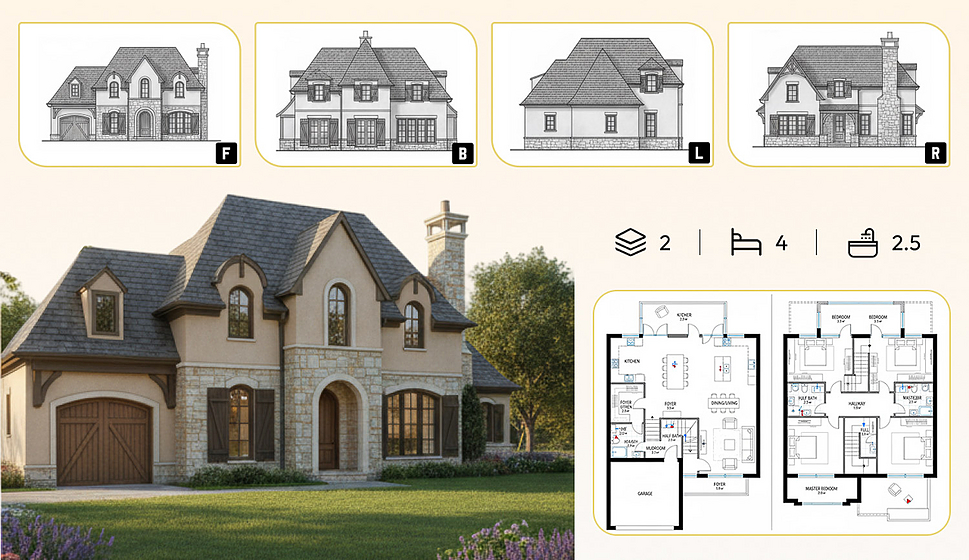
This guide covers a workflow that moves from project parameters to generated floor plans, 3D perspective views, exterior design exploration, and site context visualization, using AI tools in place of preliminary CAD and rendering work.
This guide covers a workflow that moves from project parameters to generated floor plans, 3D perspective views, exterior design exploration, and site context visualization, using AI tools in place of preliminary CAD and rendering work.
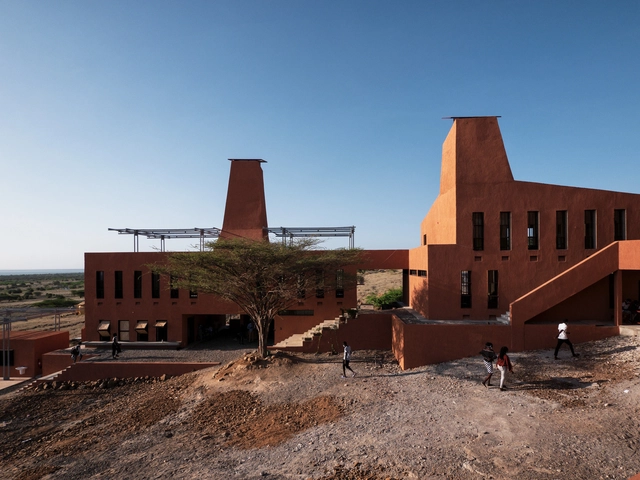
African architect Diébédo Francis Kéré, known worldwide for work guided by a social vision of architecture and design practice as a tool for inclusion and transformation, was this year's Pritzker Prize laureate. To discuss the award, the jury's selection, and its implications for architectural culture as a whole, Arquicast invited Caio Dias and Bruno Sarmento.
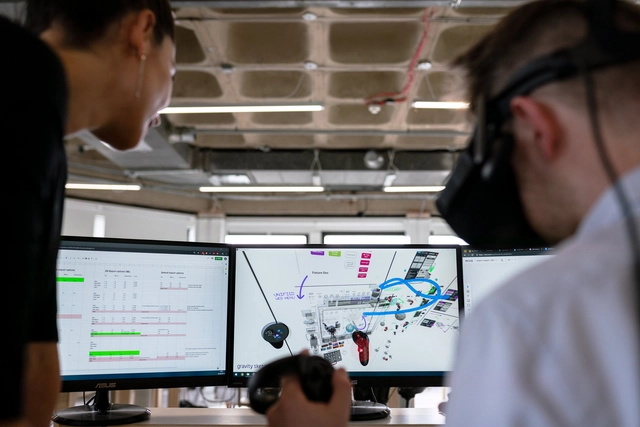
Two thousand five hundred reais is the average price of a good virtual reality headset. If you opt for the full experience, shell out another four thousand reais to add sensors and controllers. These models must be connected to a high-performance computer to process information and transform spaces into 3D models, costing at least five thousand reais. In addition to the headset, sensors, and computer, software is also required, with annual licenses that likewise run into the thousands. In short, keeping up with technology nowadays is quite a costly endeavor.
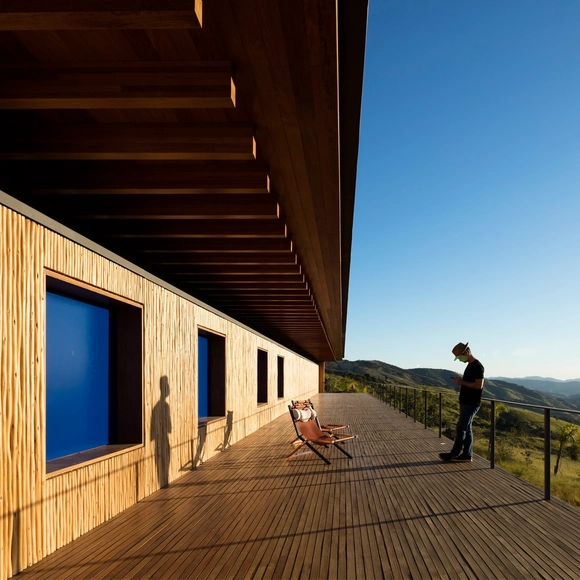
There is no shortage of filmmakers trained in architecture, nor of architects passionate about cinema. On the Betoneira Podcast, architect and filmmaker Marcio Kogan joined hosts Marcelo Barbosa and André Scarpa, both architects and cinephiles, to discuss the films that have shaped their lives and influenced their architecture.

The world's population is aging, and one of the major questions raised by this demographic shift—with more older adults than young children—is whether municipalities are equipped for these citizens to use urban spaces safely and accessibly, and to feel included in the social and civic life of their communities.
A United Nations (UN) report estimates that the number of individuals aged 65 or older is expected to double by 2050, growing from 727 million in 2020 to approximately 1.5 billion—representing 16% of the global population.
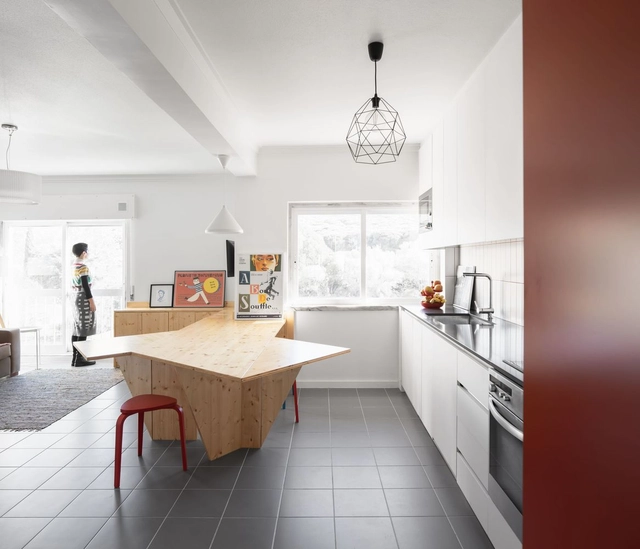
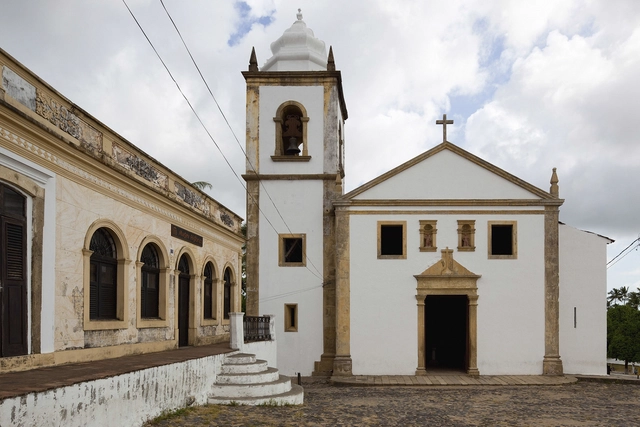
Dating back to 1535, the Church of Saints Cosmas and Damian in Igarassu, Pernambuco, is considered the oldest surviving church in Brazil. This iconic landmark has recently undergone an extensive restoration that preserves its historic features while introducing upgrades to facilitate its contemporary use. The intervention also included the adjacent two-story Parish House.
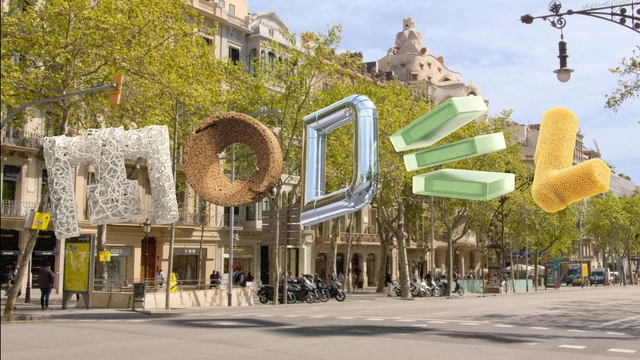
From May 5 to 15, the first edition of Model. Barcelona Architectural Festival will take place. Co-organized by the Barcelona City Council and the Architects' Association of Catalonia (COAC), the event will serve as an open, plural, and multidisciplinary space for reflection, addressing key debates in architecture and urbanism to confront the social, political, and climate challenges of the 21st century.


Lacking a clear definition, the term smart cities has become increasingly common with each passing year. Many theorists point out that this conceptual ambiguity is linked to its rapid adoption and expansion by large corporations and institutions, thus turning it into a buzzword. Despite the “innovative” rhetoric, the model chosen to implement a smart city can lead to segregation and privilege specific groups if it is not designed around local specificities and does not involve local leadership (MENDES, 2020). This essay adopts the understanding that innovation and intelligence are not necessarily tied to digital technologies or high-cost resources. Rather, they stem from a fresh perspective on urban problems and the development of non-traditional solutions in decision-making and execution.

One of the most highly acclaimed television productions of recent years, “Severance” (released as “Ruptura” in Brazil), the Apple TV+ sci-fi series released in 2022, establishes an intriguing premise: employees of the mysterious Lumon Industries volunteer to undergo a procedure that surgically separates their personal and professional memories, ensuring that their work and private lives never overlap. The procedure thus creates an intermittent alter ego, mutually unaware of the other self and hyper-focused on its respective domain. The deft direction of Ben Stiller and Aoife McArdle, coupled with stellar performances from the cast, does justice to Dan Erickson's brilliant plot. Here, however, we focus on how the show's primary setting—the corporate headquarters in the fictional town of Kier—heightens the distress of the small team of employees through the architecture that houses and alienates them during the workday.

Gentrification is the process by which real estate becomes more desirable and, consequently, more expensive. Rising prices displace long-time residents, replacing them with higher-income newcomers. This should not be confused with the forced removal of citizens through eminent domain or forced evictions. Evicting residents by official decree is a different issue altogether.

"Agostinho de Freitas was an extraordinary artist," says Agnaldo Farias, art critic, professor, and curator of the exhibition “Agostinho Batista de Freitas – Mestre das Ruas,” on view from May 12 to June 11 at Galeria Estação in São Paulo. The exhibition features a selection of about 20 of the artist's canvases from the collection of gallerist Vilma Eid.
On May 5, the first edition of the Model. Barcelona Architectures Festival officially opened. Jointly organized by the Barcelona City Council and the Association of Architects of Catalonia (COAC), the event is led by artistic directors Eva Franch i Gilabert and Beth Galí, along with cultural researcher José Luis de Vicente. It brings us closer to experimental architecture, helping us rethink how we want to live together through new urban models and new imaginaries.
Through five temporary architecture installations located along a circuit in Ciutat Vella—starting at Plaza de Catalunya, the Sant Antoni slab, Plaza de Idrissa Diallo, Paseo de Lluís Companys, and Plaza Reial—the festival explores its five major themes under the central concept of "Regrow": Between-Classes, Between-Cultures, Between-Species, Between-Generations, and Between-Materials.
In this context, we present the installation "Reversing the Pyramid" by OJO estudio.

Color, Space, and Style is an essential guide for interior designers, students, and anyone undertaking an interior design project. In the world of interior design, information is often scattered across countless inspirational publications that lack a foundation in design principles, or within a few informative design manuals that lack theoretical grounding. Color, Space, and Style gathers the essential information and ideas for planning and executing interior projects of all scales, distilling them into a format that is as easy to use as it is to carry. The topics covered include project planning and management, graphic representation and presentation techniques, space design and sequencing, color characteristics, materials, textures, patterns and motifs, natural and artificial light, building systems, accessibility codes, and sustainability. To demonstrate how these topics can be creatively interpreted in practice, the book features numerous interviews with interior designers.

Urban planning is of interest to everyone, but it is no subject for novices. With this in mind, Arquicast invited professionals who contribute directly to the field through extensive research and practical experience for a conversation. Joining the podcast are Roberto Ghidini, an engineer, urban observer, founder of Sociedad Peatonal, and PhD in Urbanism from UPM (Polytechnic University of Madrid); and João Flávio Folly, an architect with a Master’s in Urbanism from UFF and currently a PhD candidate in Mobility and Urbanism at PROURB/UFRJ.

Architects and designers, as well as psychologists and sociologists, recognize that aesthetics and its underlying philosophy have the power to change how we perceive the world around us. Consequently, a deeper understanding of what is beautiful has the power to reshape how people respond to their environment.
Exploring the different meanings of aesthetics in architecture—from "form follows function" to the aesthetics of the metaverse—can help us understand the potential of our physical and virtual environments on the path toward a better world.
Much has already been written on the subject, but we now want to open the debate to you, our readers. Share your thoughts on what makes a building or a city beautiful.
Leave your comments in the form below. These will be selected and published in an upcoming article.