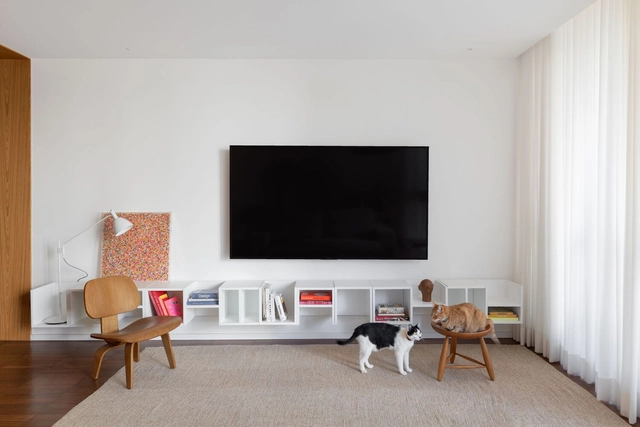





-
Architects: Studio Varanda
- Area: 136 m²
- Year: 2021
-
Manufacturers: Carminati tapetes, Felipe Zorzeto Design, Ladrilharia, Lumini, Marcenaria Baraúna, +1

Álvaro Siza, the first Portuguese Pritzker laureate, is undeniably a figure of major importance in the history of contemporary architecture, with projects that have shaped the urban landscape of numerous cities around the world. While his name and work are widely recognized, Siza remains a deeply private and introspective figure who prefers to keep his personal life out of the spotlight.
Directed by producer and director Augusto Custódio, the documentary Siza offers an intimate, personal look at the renowned Portuguese architect. The film covers his childhood, his relationship with his wife, his passion for sculpture, and his appreciation for classical music, exploring both his influences and his professional journey.

Solar energy is one of the fastest-growing energy sources in the world. Going beyond rooftop installations or large power plants, various innovations are emerging to harness the power of sunlight. One such recent initiative is being developed by startup Sun-Ways, which will install removable solar panels along railway tracks in Switzerland.
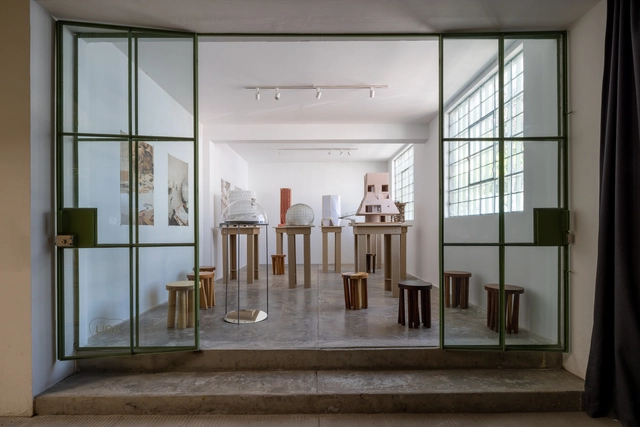
Trained in the United States (Princeton and Cornell), young Mexican architect Isidoro Michan-Guindi established his studio in Mexico City just four years ago, in 2019. While Michan-Guindi is relatively unknown within the Mexican architectural scene, his studio is a complex laboratory home to a multitude of projects materialized through cardboard prototypes, pigmented concrete models, electro-robotic pieces, and aluminum molds; these all transform into intelligent architectural proposals ranging from everyday objects, such as doorknobs, to residential towers.
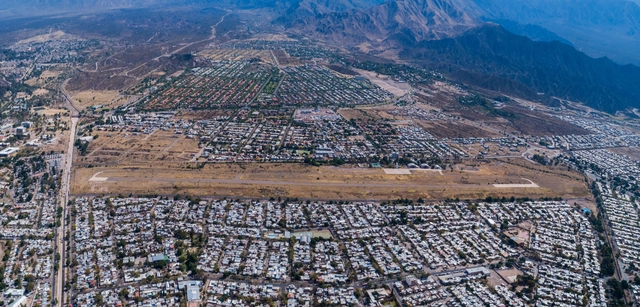
“The world is full of obsolete, abandoned airports. Vast, vacant, centrally located sites in need of adaptive reuse. Several cities have successfully taken this on—San Francisco, Berlin, Caracas. The big question is: what will Mendoza do with its own prime opportunity?”. These words by architect and urbanist Felipe Vera introduce one of the most significant urban transformations in the City of Mendoza's recent history. On March 22, the former airfield officially hosted the presentation of a new adaptive reuse project. Led by the IDB and the local government, the initiative aims to reclaim the vacant 72-hectare site to explore and develop three core visions: a more open, inclusive, and carbon-neutral city.

Today is the day to meet the finalists of ODA2023, the award celebrating the best architecture in the Spanish-speaking world. Our expert jury—you, the readers—has selected 15 of your favorite projects from nearly 1,000 architectural works built across Latin America and Spain.
Now in its fifteenth year, this award has become a true tradition. It is an open invitation to all our readers to recognize the projects published in 2022 that inspired them and that represent the identity of their local contexts in a globalized planet—shaping how architecture is made in Latin America and Spain within an increasingly heterogeneous and multicultural world.

In the past, people mapped out their careers in a highly linear fashion. You planned to study architecture, went to university, secured a job at a prominent firm, and, over several years, worked your way up to partner.
Yet things do not always go as planned. Perhaps you graduated with an architecture degree but could not secure the salary you envisioned. Or perhaps you join a major firm only to be laid off after a year or two due to declining profits and rising overhead. You might even become an architect, only to realize a few years later that it is not your passion. What then? This is where non-linear careers come into play.

In 2021, Spanish architect Fernando Menis won the public competition to build the two Essential Services Buildings (ESE) of the Canary Islands, to be located on each of the archipelago's largest islands, Santa Cruz de Tenerife and Gran Canaria. By implementing a project focused not only on operational safety but also on hyperconnectivity, functional flexibility, worker well-being, and environmental regeneration, the Government of the Canary Islands aims to enhance public safety, risk prevention, and emergency management to address potential natural hazards, climate change, and other threats such as pandemics, cyberattacks, or terrorism.
Menis's proposal, which features two identical yet autonomous buildings, is expected to achieve greater economic sustainability through lower long-term maintenance and operating costs. Energy-efficient and adaptable to external factors, the Essential Services Buildings (ESE) will provide citizen services year-round.
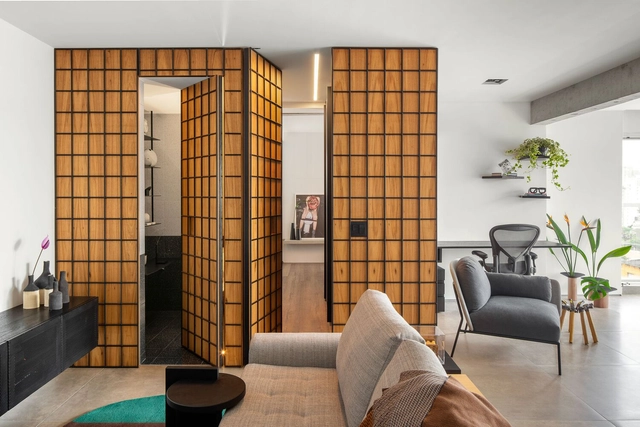

We are pleased to present the finalist projects for the 2023 Obra do Ano Award. After two weeks of nominations, our readers have chosen their favorite projects from hundreds of works built across Portuguese-speaking countries. Our jury of experts, made up of our very own readers, has once again done an outstanding job of selecting these 15 finalists.
From today until April 3 at 11:59 PM (Brasília time, GMT-3), you can vote once a day for the projects you consider to be the best examples of contemporary Portuguese-speaking architecture. The winners will be announced on April 4.
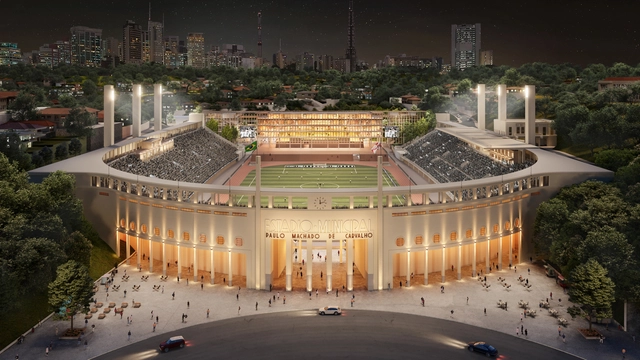
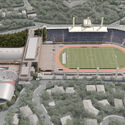
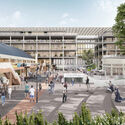
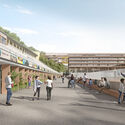
The renovation project for the Pacaembu Complex was named among the winners of the AR Future Projects awards, organized by the British magazine The Architectural Review. The announcement was made on March 14, and the official awards ceremony will take place in London in early June. Featured in the “New and Old” category, the project was among the three “highly commended” entries among this year’s winners.

A week ago, we announced the 15 finalist projects for the 2023 Building of the Year Award—a recognition of the best architecture in Spanish. Our expert jury—that is, you, our readers—selected an initial shortlist of 15 projects from nearly 1,000 works of architecture built across Latin America and Spain, before proceeding to a final vote that resulted in 3 projects representing the very best of the architecture that inspires us, defines us, and leaves its mark.
Today, the winners of the 2023 ODA are finally revealed!


“A city built for speed is a city built for success.” This phrase, attributed to Le Corbusier, one of the most influential urbanists of the 20th century, condenses one of the most significant social developments of that era.
Mobility is a central aspect of shaping the social fabric. According to Eduardo Bericat, Professor of Sociology at the University of Seville, every form of society implies a system of mobility. Consequently, transformations within this system entail anthropological changes of immense significance.

Writing about the participation of women as architects or in the construction industry is complex. Today, we are well aware of award-winning, highly recognized contemporary women architects; yet, looking to the past reveals a dark and solitary landscape.