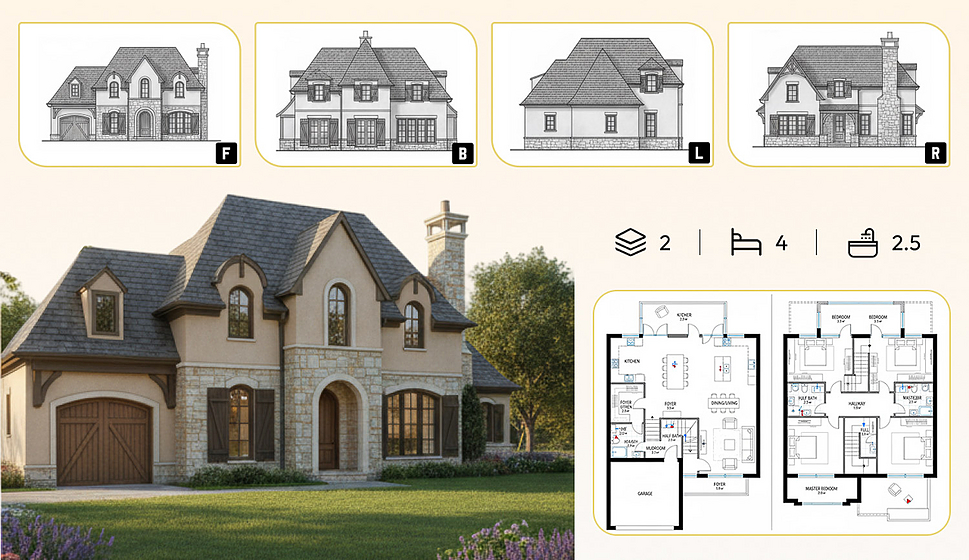
This guide covers a workflow that moves from project parameters to generated floor plans, 3D perspective views, exterior design exploration, and site context visualization, using AI tools in place of preliminary CAD and rendering work.
This guide covers a workflow that moves from project parameters to generated floor plans, 3D perspective views, exterior design exploration, and site context visualization, using AI tools in place of preliminary CAD and rendering work.
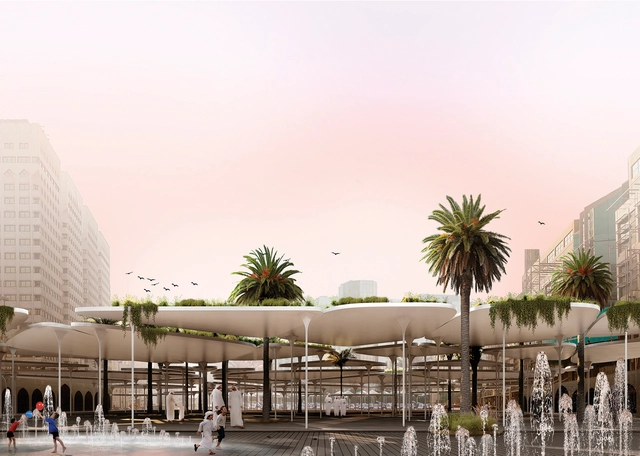
Brazilian architecture firm Estúdio Leonardo Zanatta has received an honorable mention in the international competition "Cool Abu Dhabi," which challenged participants to design creative solutions to tackle climate change and mitigate the urban heat island effect in Abu Dhabi. Titled Abu Dhabi Skins - (Bio)Reactive Urbanscape, the proposal is the only selection from the Americas.

The winners of the "Sustainable Urban Housing" National Ideas and Master Plan Competition have been announced. Promoted by the Municipality of Mendoza (Argentina) and organized by the provincial Association of Architects (CAMZA), the call invited professionals from across the country to reflect on **ways of inhabiting the contemporary city** through the development of ideas for a Master Plan and a preliminary architectural design for housing units. The sites considered in the competition—an urban sector of more than 13,000 square meters—are remnants of railroad lands that, over time, have transformed into urban voids, remaining as vacant areas within the consolidated fabric of the city.
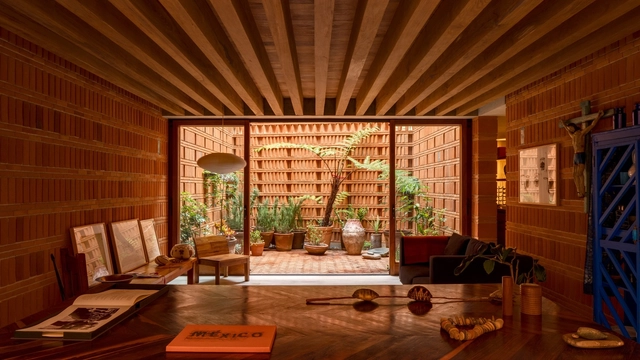
For nearly two decades, Wienerberger AG has hosted the biennial international Brick Award, providing a stage for outstanding brick architecture and its designers. Architects from around the world showcase their innovative concepts using ceramic materials: 644 projects from 55 countries were submitted for this year's award. The winners of the Brick Award 20 impressed the jury with bold, creative architectural concepts for sustainable, forward-looking spaces.
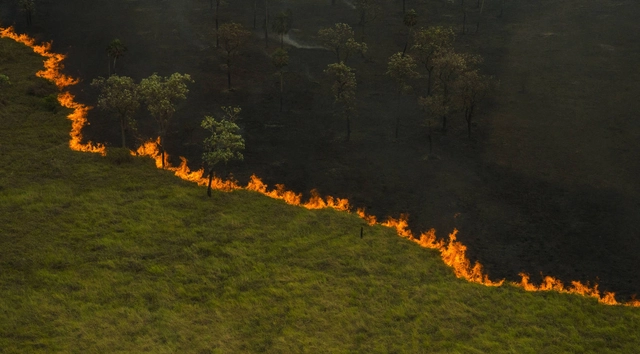
Podcasts are a relatively recent medium in Brazil, but they are on the rise and growing rapidly in popularity. A survey by the Deezer platform showed that podcast consumption in Brazil grew by 67% in 2019. Far from a passing fad, this format is being used for entertainment, information, and even as a pedagogical resource for educators.
Among the wide variety of topics available, many shows have fostered debates about the environment, especially regarding the Amazon—considered one of humanity's most valuable natural heritages and the largest natural reserve on the planet.
.jpg?1600432189 "© Shutterstock")


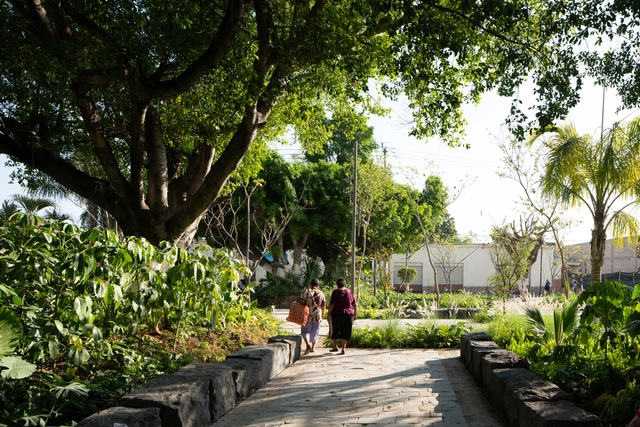
Mexico's National Social Distancing Campaign began on March 23, 2020, but a couple of weeks earlier, even as the federal government recommended continuing normal activities, social media was already filled with people choosing to self-isolate and replicate the European model. Some architecture firms immediately decided to close their physical offices and transition to a remote work model, while others took several weeks longer. However, this period of social and physical (spatial) distancing is experienced differently in every household. Over the months that this pandemic has unfolded, it has exposed not only the inequality regarding basic needs in dense urban areas, but also the fragility of the established social order. Whether at a macro or micro scale, all of these experiences occur within and are influenced by the built environment, making architecture both judge and jury in this equation.

As part of the annual CEMEX Awards, the recipient of the Arq. Marcelo Zambrano Scholarship has been announced, reaffirming the commitment to the development of architecture in Mexico. CEMEX awards the Arq. Marcelo Zambrano Scholarship in honor of the exemplary professional dedication and leadership of Architect Marcelo Zambrano, aiming to support young Mexicans in pursuing postgraduate studies at prestigious international universities.
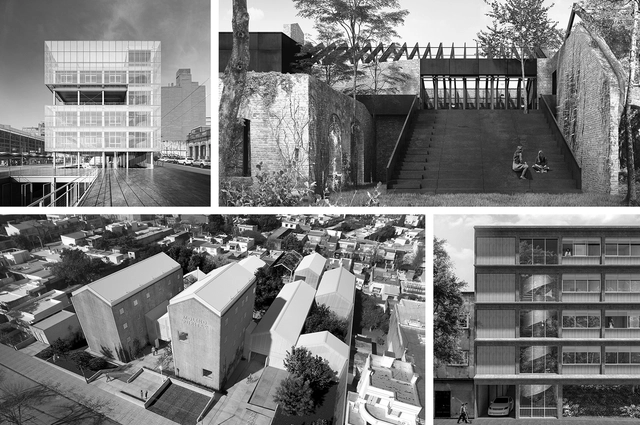
To showcase Uruguay's valuable academic output, we launched an open call inviting readers in the country to submit their final thesis projects.
Out of a total of 65 submissions, the editorial team—comprising Fabian Dejtiar (Managing Editor of ArchDaily en Español); Mónica Arellano (Editor, ArchDaily México); Santiago Baraya (Editor, ArchDaily Colombia); and Belén Maiztegui (Editor, ArchDaily Argentina)—selected six. The highlighted projects are those that addressed specific challenges, their chosen form, and their representation through critical, austere, and efficient thinking. We valued proposals that not only delivered the best possible architecture through a simple design suited to its context, program, and users, but also paid close attention to human scale, mediation, and new ways of approaching architecture in cities.
Explore the selected projects below.
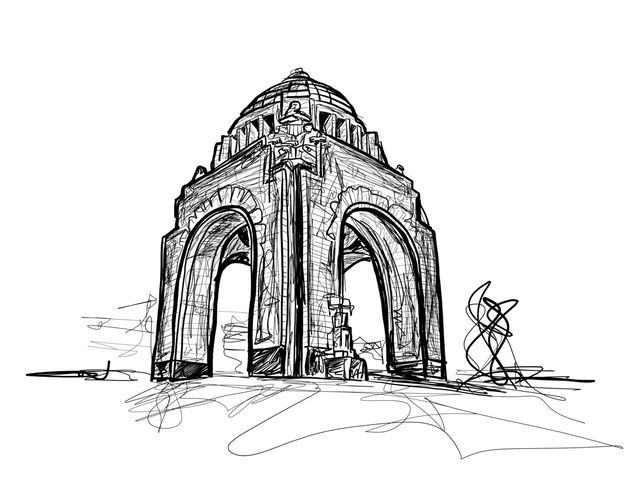
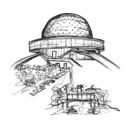
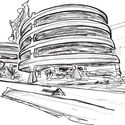
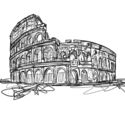
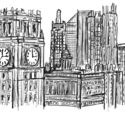
"Traveling Without Leaving Home" is a project by artist and designer Jorge Cejudo, also known as “Cejas.” Over the course of seven months, he shared a pandemic-born series of over 200 drawings on his Instagram account @soyelcejas, reconnecting with his followers after the emergency lockdown by inviting them to join him in imagining journeys through various cities around the world.
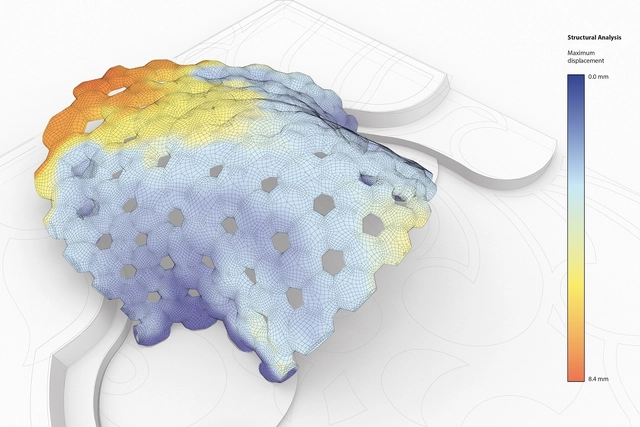
When we think of architectural visualization, sketches, drawings, and 3D renderings usually come to mind. This association is natural, as "visualization" is typically equated with imagining a project before it is built—whether to validate aesthetic and functional decisions or to communicate concepts to clients unfamiliar with technical drawings. However, beyond superficial elements like materials, layouts, textures, and colors, architects must also address highly technical, invisible factors that directly impact a building's performance.

We may still have a long way to go when it comes to addressing the diversity of flora and fauna in urban habitats, yet it is incredible how fast, easy—and even fun—the architecture that makes this possible can be.
In practice, how are we promoting spaces for animals and plants in our cities?
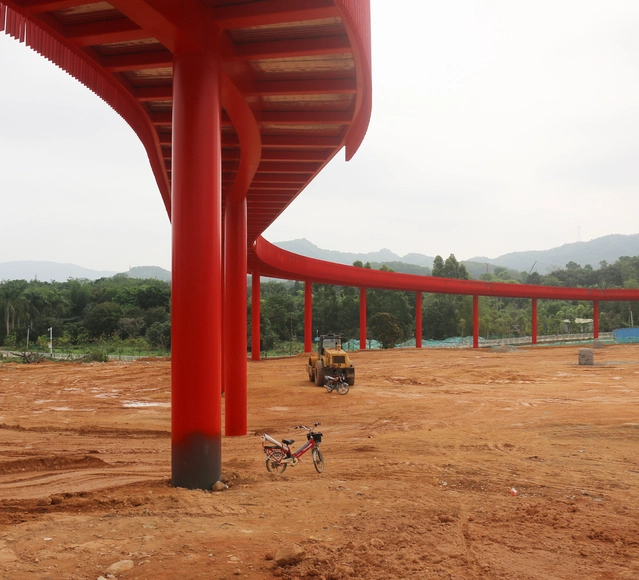
Following the conversation ArchDaily hosted on Instagram Live during the quarantine with Pablo Forero, one of the founders of Taller Architects (formerly Taller 301), we present this interview, in which he discusses the principles and approaches of this young practice based in Bogotá and Amsterdam.

The following article proposes rethinking architecture in social housing in Colombia. Natalia Carrero Rojas and Pablo González delve into the subject as educators and through their practice 57Uno, where they constantly balance high-quality housing with real estate viability.
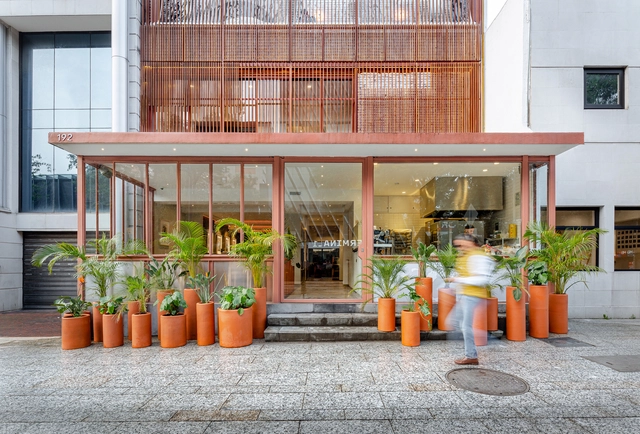
Isaac Michan Daniel of Michan Architecture, as well as Luis Beltrán del Río García and Andrew Sosa Martínez of the Mexican firm VRTICAL, have been recognized with the 2020 Architectural League Prize. Established in 1981 to recognize exemplary and provocative work by young practitioners, the Architectural League Prize is an annual competition organized by The Architectural League and its Young Architects + Designers Committee. This year's jury was comprised of the Young Architects + Designers Committee—Kutan Ayata, Mira Henry, and Kevin Hirth—alongside Lucia Allais, Paul Lewis, Anna Puigjaner, and Nanako Umemoto.
Poured Architecture / Arquitectura Vertida is an experiential art installation presenting artist Sergio Prego's perspective on the late Spanish architect Miguel Fisac.
Supported by a Graham Foundation grant, the artist explores the possibility and synchronicity of materials and processes across architecture and visual art in a new series of sculptures and drawings inspired by Miguel Fisac's innovative architectural and construction techniques.
Experience it all through the short film by Spirit of Space.

The Porto Alegre-based firm 0E1 Arquitetos has launched an e-book to help professionals design their new home workspaces. The Home Office Guide is a digital publication featuring tips to improve remote work environments, created to raise funds for local charities.
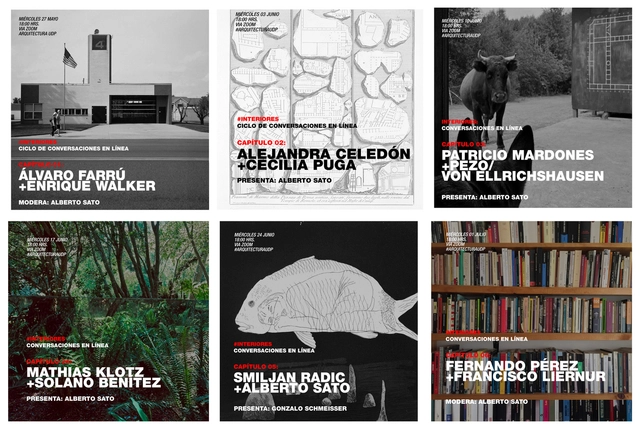
“Interiores: Conversaciones en línea” is the title of the series of virtual encounters organized by the Faculty of Architecture, Art, and Design at Universidad Diego Portales (UDP). In this first season, Professor Alberto Sato hosts meetings between renowned architects, including Álvaro Farrú and Enrique Walker, Alejandra Celedón with Cecilia Puga; Mardones with Pezo von Ellrichshausen; Solano Benítez with Mathias Klotz; Smiljan Radic with Alberto Sato; and Fernando Perez with Francisco Liernur.
You can watch these conversations below.
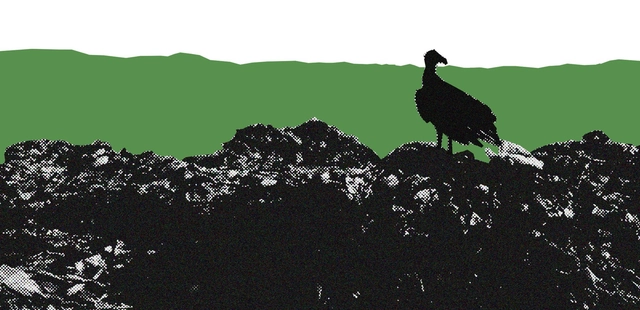
On World Environment Day, we ask you: Do you know where your household "trash" goes? How do cities deal with the tons of materials discarded daily? Should everything you throw "away" be wasted by being sent to landfills?
The coronavirus crisis has shown us that certain attitudes, policies, and practices must be abandoned if we want a different future—both socially and environmentally. However, this responsibility is not solely individual. To discuss the future of waste in cities, we must shed light on the thread of recent history: the formulation of the National Solid Waste Policy (PNRS), approved in 2010, and the challenges of its implementation.

This article is part of a collaboration with the website coolhuntermx, and was originally published under the title "La Bauhaus Tapatía."
"A sort of Bauhaus" is how Mathias Goeritz, in short, tried to convince Italian architect and theorist Alberto Sartoris to come to Mexico. In 1950, through letters, he invited him to teach at the very project that had drawn Goeritz in and excited him so much: the first School of Architecture of Guadalajara, founded in 1948 by Ignacio Díaz Morales.
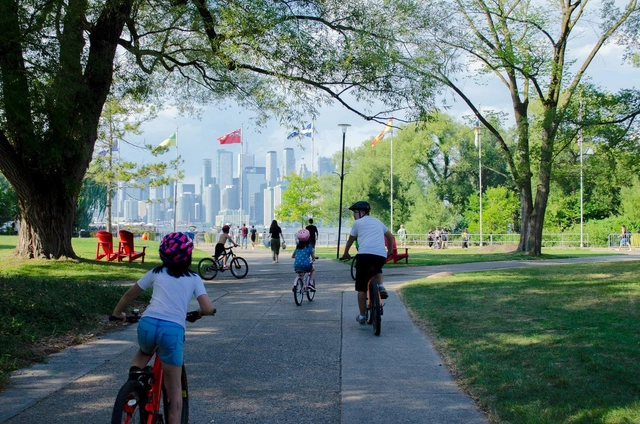
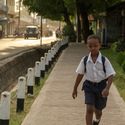
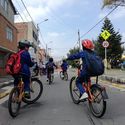
Children are often overlooked or entirely deprioritized in urban planning. Globally, it is estimated that up to 500 children die every day in traffic accidents. Thousands of others are injured in collisions or develop psychological trauma that can last for years. Whether on the streets or in public spaces, feelings of insecurity or discomfort discourage children from physical activity outdoors—at a time when 80% of children between the ages of 11 and 17 are not physically active, and another 38 million under the age of five are overweight or obese.
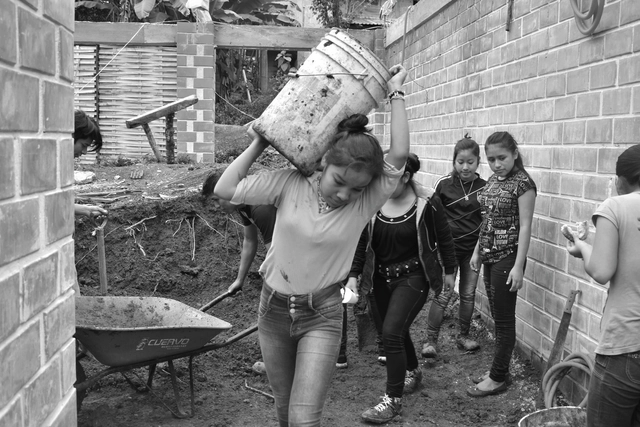
In light of recent statements by the Federal Government and the new programs announced by institutions involved in housing production in Mexico, we believe it is essential to open a dialogue and exchange ideas to better understand the concepts of self-construction, self-production, and the “Social Production and Management of Habitat” [SPMH], as well as the role of architecture in these social processes.
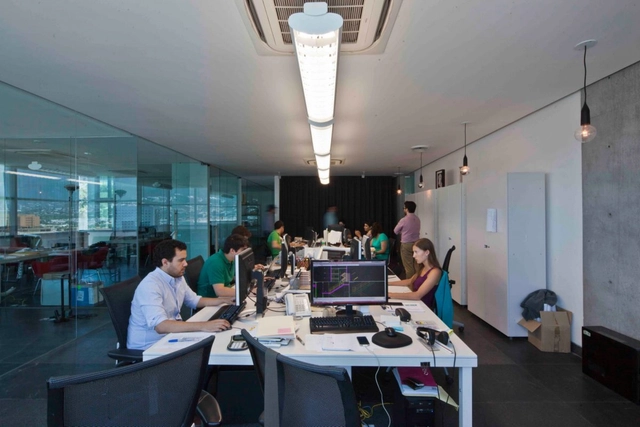
Mexico's National Social Distancing Campaign began on March 23, 2020. However, a couple of weeks prior—even in the face of the federal government's recommendation to continue normal activities—social media users were already opting to mirror the European model and self-isolate. Architecture firms immediately began closing their physical spaces to transition to remote work, though for others, the shift took several weeks. Yet, this period of social and physical (spatial) distancing is experienced differently in every household. Over the months of this pandemic, we have witnessed not only the inequities in access to basic needs in dense urban areas, but also the fragility of the social order itself. Whether at a macro or micro scale, all of these experiences occur within and are shaped by the built environment, positioning architecture as both an active participant and a critical arbiter in this equation.
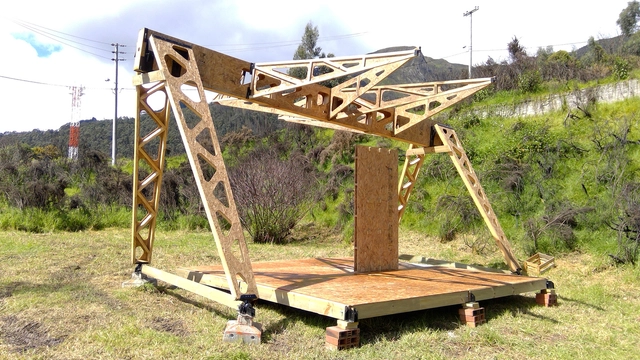
The Superintendency of Industry and Commerce has granted a utility patent for the invention "Multifunctional Self-Supporting Modular Roof System" to professors Camilo Ayala García and Christiaan Job Nieman Janssen, from the design department, and Diego Alejandro Velándia Rayo, from the architecture department, at the Faculty of Architecture and Design of the Universidad de los Andes.
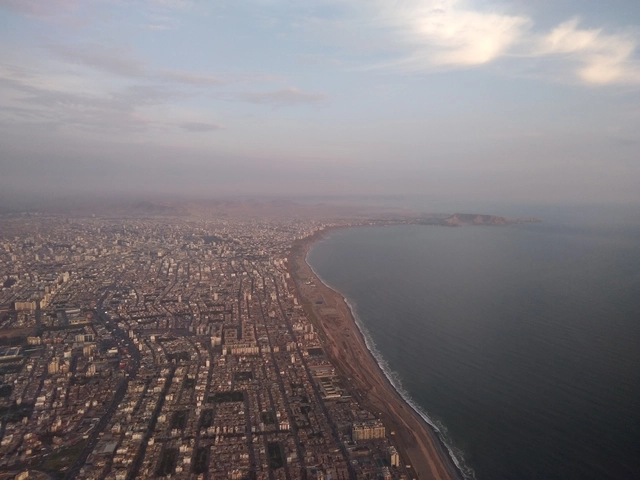
After the state of emergency, nothing will return to the way it was. At that point, public and private spaces will routinely be occupied in ways that prevent transmission of a still-active virus. However, just as this situation has forced us to recognize our deficient healthcare system, it has also revealed how inadequate the spaces we inhabit often are.

When reality demands complex and unprecedented answers from us, one of the most interesting methods to find them is biomimicry, which consists of asking nature questions in search of inspiration. In this light, it is worth asking: how does nature deal with emergency situations where an organism's behavior must be quickly modified?
.jpg?1603823358 "Cortesia de Leonardo Zanatta")
.jpg?1603823343 "Cortesia de Leonardo Zanatta")