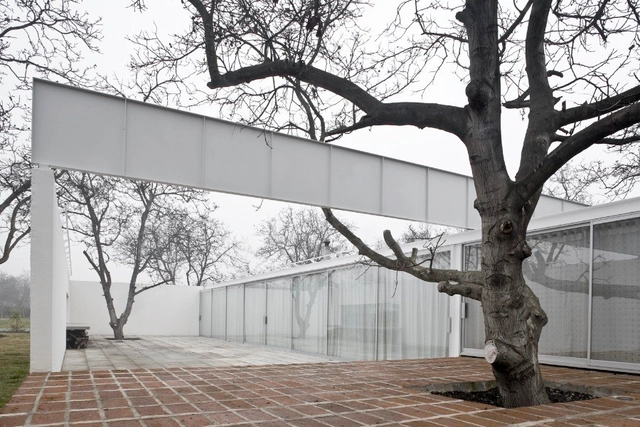
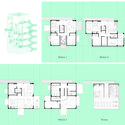
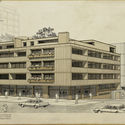
Opening its doors alongside the Infinito Vão exhibition, “Two Houses by Paulo Mendes da Rocha” will be on display until February 10, 2019, at the House Gallery. Curated by Nuno Sampaio, “Two Houses” offers the opportunity to visit two unique projects from the collection of architect Paulo Mendes da Rocha, which, in line with the transatlantic focus of this program, are located in Portugal and Brazil.
Ever since we announced the results of the competition for the “New Biobío Regional Theater,” an initiative led by the Regional Government and the Architecture Area of the Council of Culture and the Arts, we had been eagerly looking forward to seeing the winning proposal finally built.
https://www.archdaily.com/1113761/the-narrative-behind-the-theater-designed-by-smiljan-radic-eduardo-castillo-and-gabriela-medrano-for-the-biobio-regionPola Mora
The Institut Ramon Llull has presented the project RCR. Dream and Nature_Catalonia in Venice in Barcelona, an exhibition showcasing RCR Arquitectes as part of the collateral events of the 16th Venice Architecture Biennale, set to open on May 26.
Representing Catalonia at the 2018 Venice Biennale, the project is co-curated by journalist Pati Núñez and architect Estel Ortega alongside the 2017 Pritzker Prize-winning firm. Together, they have created a space free of scale models or blueprints to "investigate and rethink humanity's relationship with the world, located at the La Vila estate in Vall de Bianya (Girona, Catalonia)," according to an official statement from the Catalan institute.
Thanks to its geographical and climatic characteristics, Bogotá has great potential for the development and enjoyment of nature tourism. The Colombian capital is bordered by the beautiful Eastern Hills, which connect with countless parks and trails that welcome visitors.
Among its natural wonders is the Sumapaz Páramo, the largest of its kind in the world. Exploring each of these places is undoubtedly an experience that few have the opportunity to enjoy and admire. As a result, numerous activities have sparked public interest in weaving together a city rich in environmental assets, including parks, rivers, wetlands, and gardens.
The 2018 CEMEX Pavilion competition was conceived to provide the student community of Guadalajara with an opportunity and a voice to express their aspirations, interests, concerns, and critiques of the profession, channeling them into an intervention within the courtyard of a heritage house in the city's historic center, which functions as a workshop and cultural center. The event is organized by eSCALA, CENTROmx, and TEMAdc—groups made up of students and alumni of the Centro Universitario de Arte, Arquitectura y Diño of the Universidad de Guadalajara—and the winners of the 2018 CEMEX Pavilion Competition, which included one first-place and two second-place projects, were recently published.
Brazil's greatest living architect, Paulo Mendes da Rocha does not appreciate architecture alone. Music is also part of his daily life, and this playlist—shared with us by his daughter, Joana Mendes da Rocha—features some of the musical preferences of our Golden Lion.
As we contemplated the vestibule of the Laurentian Library, I distinctly remember paraphrasing Giorgio Vasari: I thank God for being born in the time when Álvaro Siza is alive and for being worthy of having him as a master on such friendly terms. A much more eloquent version was dedicated to the "divine" Michelangelo Buonarroti in the original Lives of the Most Excellent Painters, Sculptors, and Architects (1568), yet it rang just as true in the presence of the "mystic" Siza – an epithet bestowed by Eduardo Souto de Moura. At that moment in Florence, the architect of sculpture and the sculptor of architecture met metaphysically face to face in the form of a staircase, whose silhouette would outlive time, transformed by the Baroque and reinterpreted by many authors – from Charles Garnier to Alvar Aalto – yet perhaps by none with more enthusiasm than Álvaro Siza himself.
Javier Reverte once said that "the adventure of travel consists of being able to experience the daily lives of other people in places far from your home as an extraordinary event." It is precisely within those extraordinary events that, upon arriving in a new country, we undergo an adaptation process that transforms the extraordinary into the everyday. Whether you share a language with your host country or face an unfamiliar tongue, the first few months are a crash course in absorbing countless new concepts—from discovering you can buy cigarettes at pharmacies to distinguishing the distinct calls of trucks selling tacos, tamales, or sweet potatoes. We learn new terms to define daily life, while simultaneously relearning familiar words that take on entirely new meanings.
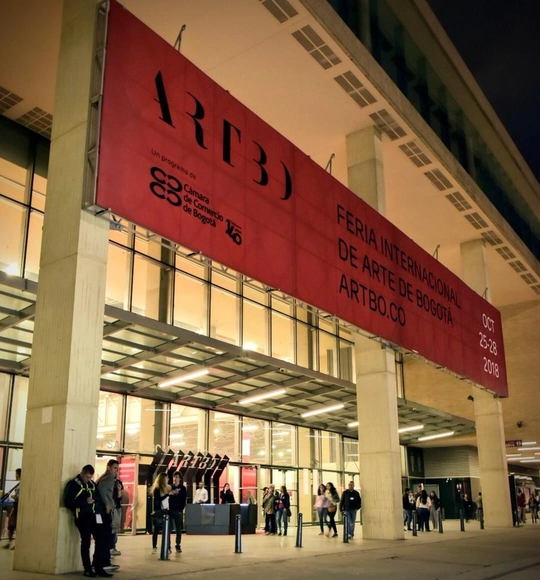
During the Bogotá International Art Fair (ARTBO), held between October 24 and 28, Colombian artist Miller Lagos was awarded the second edition of the Kubik Prize. According to the organization, the prize “commissions a project that bridges art and architecture from an innovative perspective for the benefit of the city and its inhabitants.”
“In his recent work, the artist has undertaken projects in public spaces, examining the relationship between human populations and their bodies of water,” Kubik Lab stated, explaining its decision.
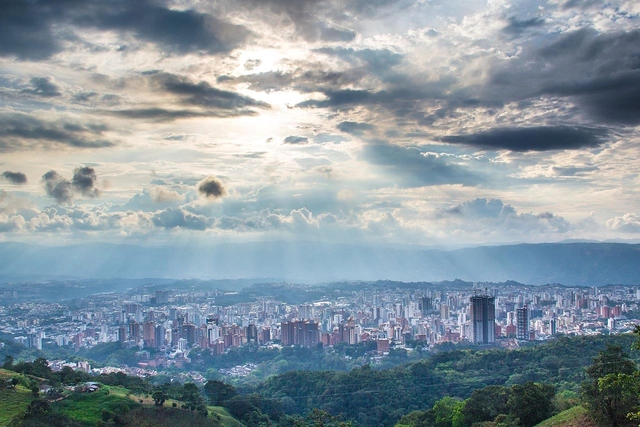
Bucaramanga is located 959 meters above sea level on a plateau in Colombia's Cordillera Oriental. Composed of 17 communes, it has a population of 528,575, while its metropolitan area is home to more than 1,141,700 people. Over the past 30 years, the city has systematically lost its public space due to abandonment, neglect, rapid urban growth, and a lack of coordinated political and planning initiatives that could foster direct communication between residents, public officials, academics, and private sector representatives.
The strategic project “Public Space: The Skin of Democracy” is a suite of initiatives designed by the Bucaramanga municipal government—and integrated into the city's current development plan—aimed at reconfiguring and renovating municipal public spaces. The initiative was launched by the Mayor's Office of Bucaramanga for the 2016–2019 term.
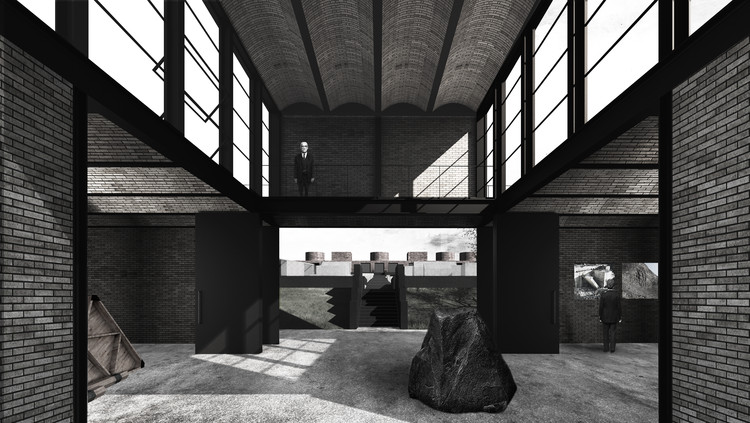
The team comprising Diego Concha, Tomás Aguirre, and Trinidad Hermosilla (Universidad Finis Terrae) has won first place in the XXXII CAP Chile Competition. Designed for the Quillayes tailings of the Los Pelambres mining company (Coquimbo Region), the project seeks to "recover and reuse mining waste through the use of highly mineral-resistant plants for the reduction and future mitigation of environmental risks on the site," according to the authors.
The competition jury explains that the project proposes "a new way of conserving, actively addressing environmental issues frequently present in the territory. It takes existing elements as a starting point and combines them with a series of contrasting geometries resolved using steel."
Videos
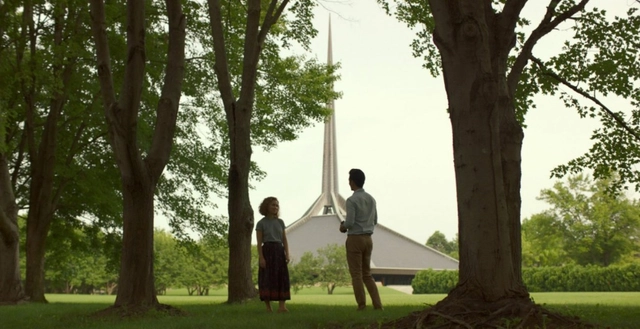
Iglesia Cristiana del Norte / Eero Saarinen. Image Cortesía de Versus Entertainment
Throughout the history of cinema, there are numerous examples of a close and deep relationship between film and architecture. The film 'Columbus', recently released in Spain and the feature debut of South Korean director Kogonada, is a magnificent example of how significant architecture can be an essential factor in the development of a film project. Set in the American city of the same name, the film serves as a genuine and wonderful tribute to its architecture and urban environment.
In the 1950s, through the Cummins Foundation and in collaboration with the city of Columbus, industrialist J. Irwin Miller launched a program to subsidize the construction of public buildings designed by prominent architects. In this way, Columbus, Indiana, became a sort of open-air museum, eventually coming to be regarded as a mecca of modern architecture. During those years, more than 60 buildings were constructed by great masters of the Modern Movement, such as Harry Weese, Cesar Pelli, I.M. Pei, Eero and Eliel Saarinen, Richard Meier, Robert Venturi and James Stewart Polshek, to name a few.
A few days ago, we reported that BD Bacatá, Colombia's tallest skyscraper, has yet to open after a series of delays, and new reports from the local press make it clear that the outlook for its 4,200 investors is not improving.
The developer BD Promotores owes its suppliers an estimated 4 billion Colombian pesos (1.46 million USD) "for finishes and leases." Following a lawsuit filed by three suppliers demanding the payment of 750 million Colombian pesos (273,750 USD) for services rendered, "the only way out after declaring insolvency was the seizure of the trademark" by the Superintendency of Industry and Commerce (SIC), according to a report by local newspaper La República.
In the presence of officials from the Ministry of Culture, Dra. Lidia Camacho, general director of the National Institute of Fine Arts, Mtra. Irene Muñoz Trujillo, director of the Mixed Fund for Tourism Promotion of Mexico City, and Maria Laura Medina de Salinas, honorary president of the Design Week México board, the general director of Design Week México and World Design Capital CDMX 2018, Emilio Cabrero, announced the details of the activity program for World Design Capital CDMX 2018.
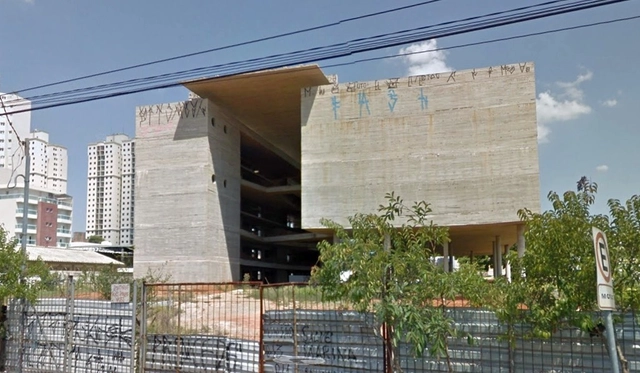
Museu do Trabalho e do Trabalhador in São Bernardo do Campo. Image via Google Street View
Designed by the firm Brasil Arquitetura, the Museum of Labor and the Worker is located in the city of São Bernardo do Campo. Once completed, it is set to house records of the "memory of the working world, from the arrival of the Portuguese to the present day." Although 5,500 square meters have already been built, construction has been halted and the site has been abandoned for about a year and a half.
In an op-ed published in the newspaper Folha de S. Paulo, Brazilian Pritzker laureate Paulo Mendes da Rocha and former UN Special Rapporteur Raquel Rolnik suggest that halting the museum's construction—officially blamed on suspected project overpricing—is actually more closely linked to an aversion to the cultural narrative surrounding the project.
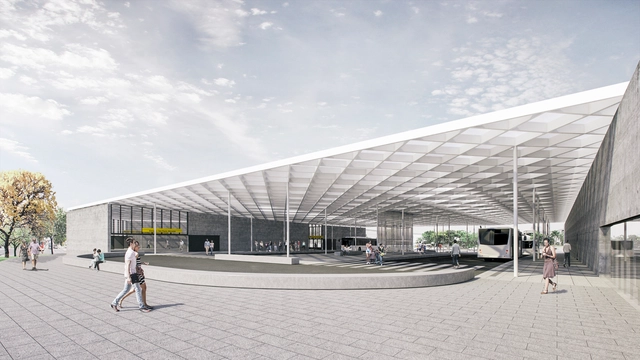
The São Paulo - Morumbi Station is part of the second implementation phase of the São Paulo Metro’s Line 4 – Yellow and is currently nearing completion. The project features two external entrances located at the intersection of Francisco Morato and Jorge João Saad avenues, as well as integration with the SPTRANS bus terminal.
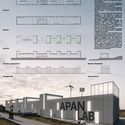
Through the Center for Sustainable Development Research (CIDS), Infonavit launched an open call for architecture and engineering firms to design the "Materials, Energy, and Water Laboratories" Building. Aiming to research and experiment with new materials, industrialized components, and spatial characteristics that foster the development of social housing, the building will be part of the complex named "Infonavit Housing Practical Research and Experimentation Laboratory" in "San Miguel del Arco," Apan, Hidalgo.
The brief required the proposal to be designed as a program container. Specifically, the design for this Ideas Competition had to house three major research spaces (materials, energy, and water) tailored to the specific testing and research needs of each laboratory, which will be developed in detail during the executive project phase with the winning firm. A key requirement for these spaces was spatial flexibility and versatility in both plan and section.
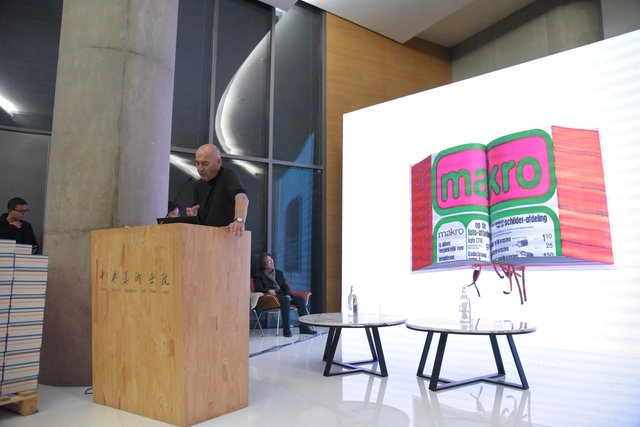
On the evening of November 2, Rem·Koolhaas held a book launch for Elements of Architecture at the Central Academy of Fine Arts (CAFA). Hosted by Dean Zhu Pei, the event featured a roundtable discussion with artist Xu Bing, Mohsen·Mostafavi (Dean of the Harvard Graduate School of Design), and Stephan·Petermann, the book's editor. Koolhaas opened with a brief presentation introducing the book and the journey behind its publication. During the panel, the speakers engaged in an in-depth discussion on architectural details, differences between Eastern and Western book cultures, and the relationship between books and space. Below is a recap of this remarkable event.
In this edition of International Women's Day, we have joined forces with the Colombian print publication de-Arq (Universidad de los Andes) to explore the work of five contemporary Colombian women architects, who represent distinct, complementary approaches within our discipline: design, research, teaching, and experimentation.
Today, we profile María Cecilia O'Byrne, an architect from the Universidad de los Andes. She is an academic, manager, and researcher with a particular interest in Le Corbusier's legacy both in Colombia and worldwide. "To be able to say anything about Le Corbusier, I had to study, learn, and understand both his work and the vast world of knowledge that it encapsulates," O'Byrne comments. "I have Le Corbusier to thank for turning me into a person with a certain cultural background," she adds.
Listed as a World Heritage Site, the Historic Center of Salvador, Bahia, in the heart of the Pelourinho neighborhood, is home to the city's Cathedral Basilica, which dates back to the 17th century. One of Brazil's most significant sacred buildings, the basilica underwent a three-year-and-eight-month restoration process. Beyond returning its celebrated features to public view, the intervention revealed spaces and artifacts previously unknown or long thought lost.
Mark Wigley asserts that architects, rather than builders, are talkers. "Architects do not make solid objects. They make discourses about objects," Wigley argues in “Typographic Intelligence” (2002). This becomes particularly relevant when linked to philosopher Michel Foucault's concept of discourse. In *The Order of Discourse*, Foucault argues that discourses consist of a series of statements or propositions that communicate a certain idea, defining everything that can be said about a topic by shaping a specific way of understanding reality.
Discourses, then, are not merely a specific glossary of words; rather, they encompass the meanings or ideologies conveyed through them. With this in mind, I want to suggest that architecture can be understood as a discipline in which a set of discourses operates, managed by a regulatory body that constantly validates which of them generate architecture and which do not. When examining the discourses that operate within architecture, we find that several can coexist and justify one another, while others ignore and exclude each other—shaping different statements of truth. There may even be discursive strategies that appear extinct due to disuse or deliberate concealment.
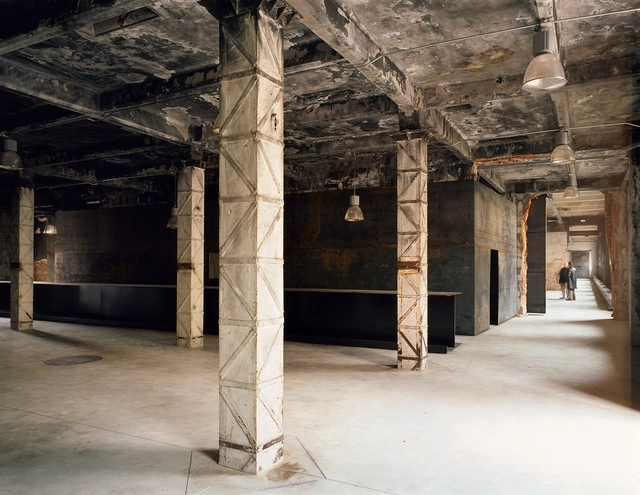
On this occasion, architect Rodrigo Rieiro Díaz, from the ARKRIT Collective, presents an article that explores how certain contemporary architects have refused to hide building scars resulting from material processes in rehabilitation projects, in a bid to emphasize the pre-existing structure as an aesthetic asset.
While it is true that not painting—or covering with joint covers—the marks of material processes during building adaptive reuse projects represents a financial saving, there seems to be a desire among certain contemporary architects that goes far beyond simply cutting a line item from the budget.
Indeed, there is a contemporary tradition—the reuse of industrial buildings as art spaces—where this practice is common. This model of an exhibition space, halfway between a gallery and an artist's studio and geared toward a young, urban audience, already has a history of at least forty years. Yet there is a certain consecration of the method in its adoption by the city councils of major European cities for their cultural institutions, and in the highly favorable reception of these interventions in academic and professional circles.
After evaluating 94 submissions from across Colombia, ArchDaily announced the six winning projects of the third ArchDaily Thesis Competition in Colombia. The selection, chosen by our editorial jury, includes built works, historical research, and master plans: ranging from a rural residential prototype to an in-depth study of the *Edificio de Renta*, a popular residential format in Bogotá between the 1940s and 1970s.
For this edition, we introduced a new evaluation stage: a second jury made up of prominent Colombian architects was tasked with choosing the Grand Winner2018. The members were Lina Toro, Carlos Cano (OPUS, Medellín), and Jorge Noreña (Ruta 4, Pereira).
"While architecture requires rigor, dedication, and communication skills, it also demands strengthening connections with urbanism and landscape, as well as with other disciplines that make transformative ideas viable," comments Carlos Cano in the jury's evaluation, which we invite you to read below.
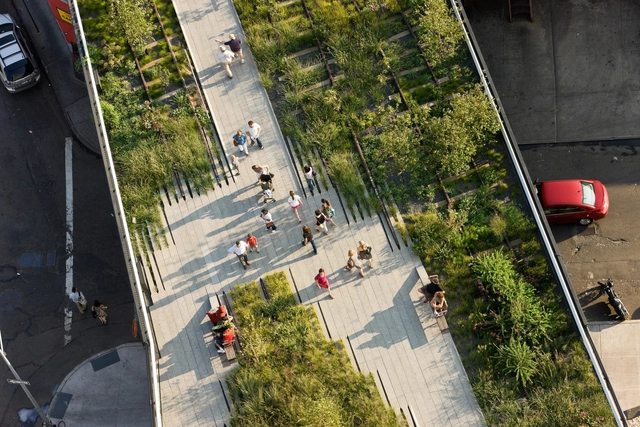
In this second installment on the ongoing transformations in New York City, Kosme de Barañano focuses on the project that, at the turn of the 21st century, triggered one of the city's most profound transformations: the High Line park.
https://www.archdaily.com/1113737/reflections-on-changes-in-new-york-city-the-high-lineKosme de Barañano
.gif?1538085748)







-1.jpg?1518763923&format=webp&width=640&height=580)