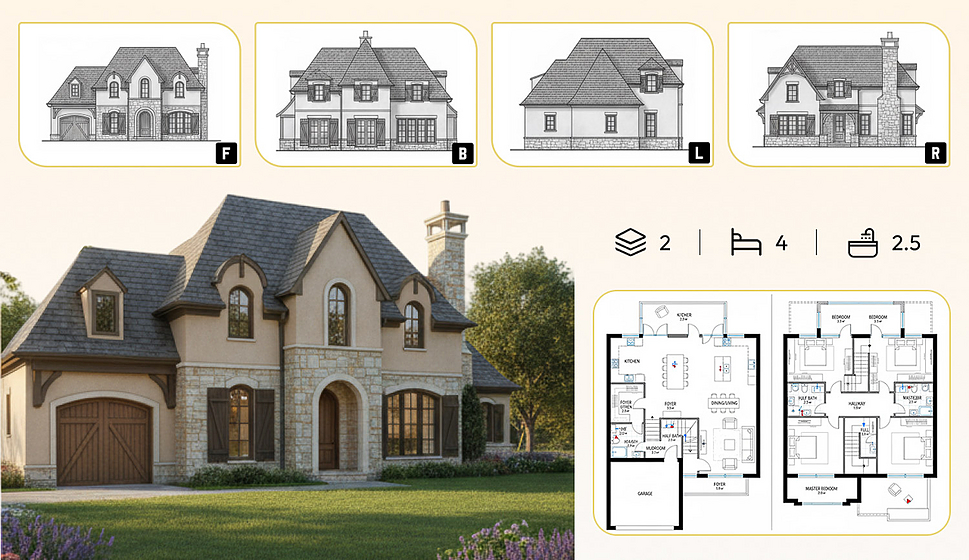
This guide covers a workflow that moves from project parameters to generated floor plans, 3D perspective views, exterior design exploration, and site context visualization, using AI tools in place of preliminary CAD and rendering work.
This guide covers a workflow that moves from project parameters to generated floor plans, 3D perspective views, exterior design exploration, and site context visualization, using AI tools in place of preliminary CAD and rendering work.
ArchDaily's curatorial team strives every day to present our readers with the most significant, inspiring, and innovative projects, while also ensuring a diverse representation of global architecture.
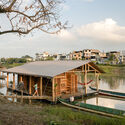
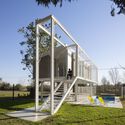
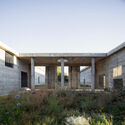
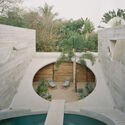
As part of our 2023 Year in Review retrospective on ArchDaily, we look back and reflect on what was published over the past year. Residential architecture remains one of our most visited categories of built projects, generating immense interest among our users worldwide. With this in mind, we have selected the 50 best houses published this year on ArchDaily en Español, offering a brief showcase of the form and character of residential architecture across the Spanish-speaking world.
ArchDaily's curation team strives daily to present our readers with the most significant, inspiring, and innovative projects, expanding the knowledge and repertoire of students and architects worldwide. From small renovations to projects designed from scratch, residential architecture is a constant in the daily practice of most firms. Year after year, we see the deep interest this typology sparks: it remains the most popular category among our audience.

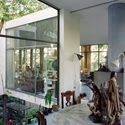
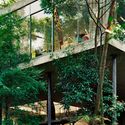
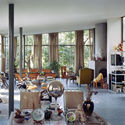
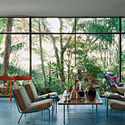
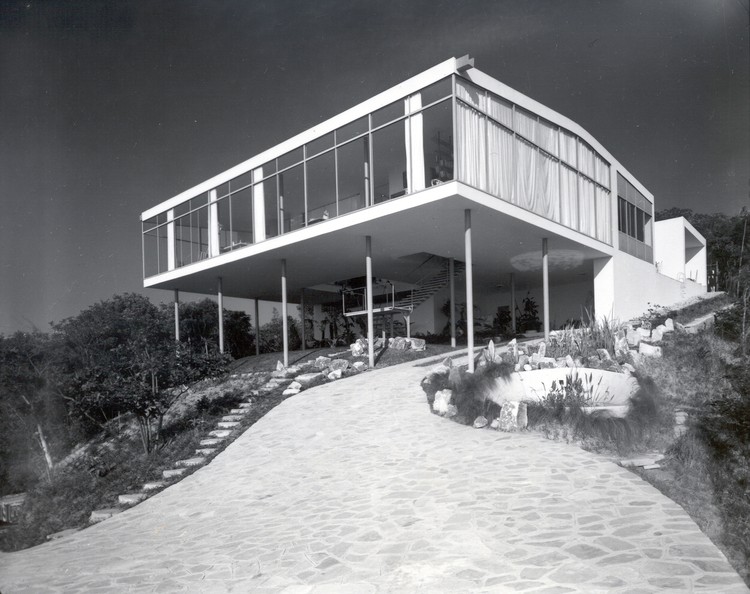
When we think of the residential designs of Italian architect Lina Bo Bardi, the immediate image that comes to mind is her private residence in São Paulo (1951)—more precisely, the image of its glazed social pavilion, captured from a low angle. This perspective further dramatizes the contrasting relationship between that light, suspended orthogonal volume and the steep natural slope of the terrain.
I would venture to say that no other work of Brazilian architecture is as well-known from a single photograph. This image, which has illustrated nearly every publication on the architect since the building's completion nearly 70 years ago, and which indeed justifies its famous moniker, the “Glass House,” exposes the unequivocal modern condition of this project—or, at least, the portion revealed by the angle of this celebrated photograph: a transparent, prismatic volume suspended on slender pillars set back from the edge of the floor slab and, consequently, free-standing within the elevated space.
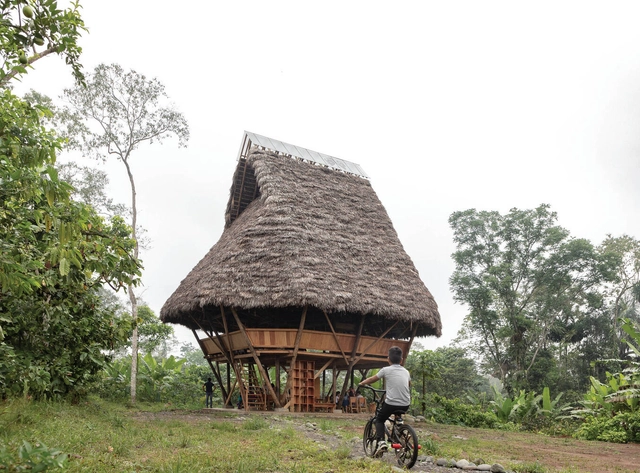
The Fondazione Teatro dell'architettura has announced the architecture firm Al Borde (Ecuador) as the winner of the 2024 BancaStato Swiss Architectural Award. Founded in Quito by Pascual Gangotena, David Barragán, Maríaluisa Borja, and Esteban Benavides, Al Borde conceives a collective approach to design and construction, paying special attention to climate variables, the involvement of local communities, traditional construction techniques, and innovation. As they state, Al Borde “inhabits the territory of questioning, where certainties about what architecture should or should not be are constantly under construction.”
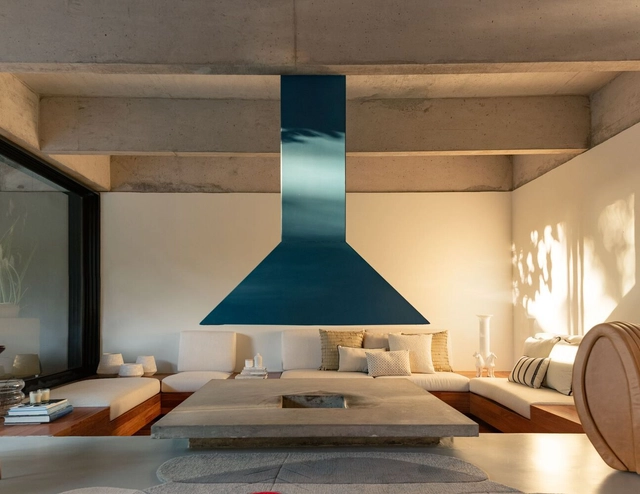
We are about to enter the coldest season of the year in the Southern Hemisphere: winter. When considering how to heat a home, one of the first solutions that comes to mind is the fireplace. After all, the fire brings warmth and provides a cozy gathering space. In addition, its design and placement can be key to the spatial composition of a room.
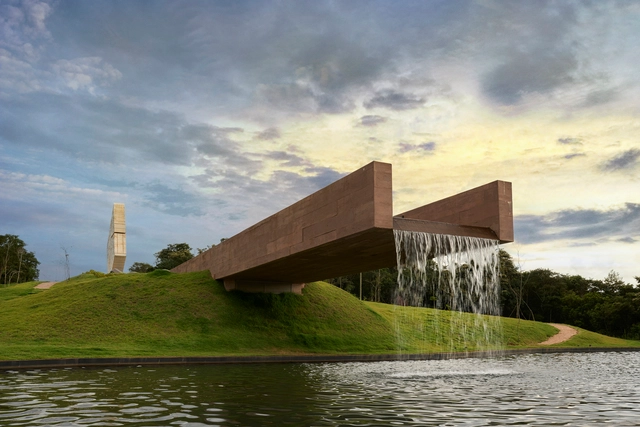
On January 25, 2025, six years after the collapse of the Córrego do Feijão mine dam in Minas Gerais, the Brumadinho Memorial was inaugurated. Designed by the firm Gustavo Penna Arquiteto & Associados (GPA&A) and built on the very site of the tragedy, the memorial was developed in collaboration with the victims' families to preserve memories, offer a space for mourning, and encourage reflection on the disaster.
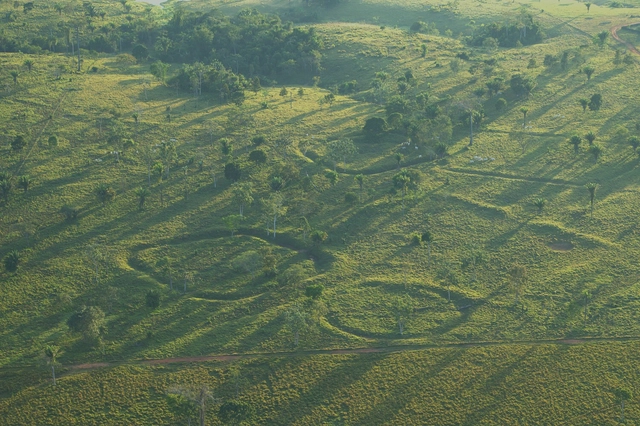
Brazil's participation in the 19th International Architecture Exhibition – La Biennale di Venezia will be marked by the exhibition (RE)INVENÇÃO, curated by architects Luciana Saboia, Matheus Seco, and Eder Alencar of the collective Plano Coletivo. The initiative, organized by the Fundação Bienal de São Paulo in partnership with the Ministries of Culture and Foreign Affairs, invites a reflection on the connections between nature and the city, exploring ancestral infrastructures and their potential reinterpretation in contemporary Brazil.
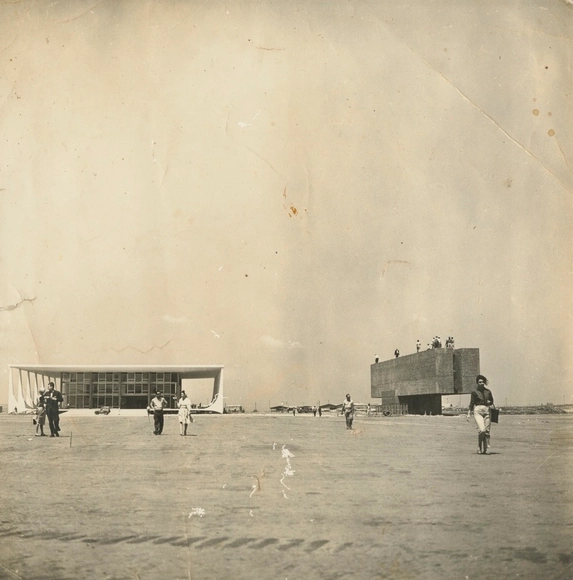
The Federal District of Brasília and Casa da Arquitectura in Portugal have signed an agreement to share the digital archive of Lucio Costa, the urban planner behind Brasília's Pilot Plan. The signing ceremony took place on February 18, 2025, at the Buriti Palace, in the presence of the governor of the Federal District, Ibaneis Rocha, the executive director of Casa da Arquitectura, Nuno Sampaio, and the Portuguese Minister of Culture, Dalila Rodrigues.
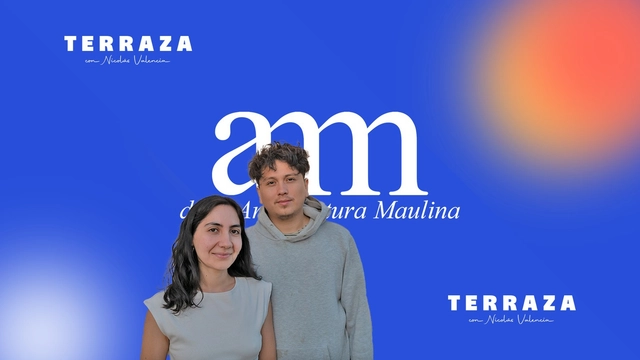
Nicolás Valencia speaks with Chilean architects Matías González Ulloa and Sofía Carrión Bobadilla, creators of Área Verde and leaders of Arquitectura Maulina, a digital platform focused on the architecture, territory, and reflections of Chile's inspiring Maule region.
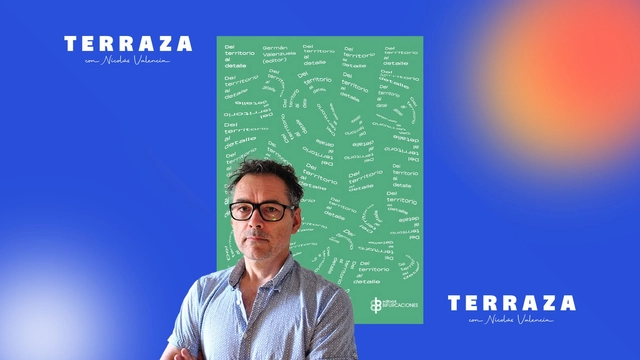
Nicolás Valencia speaks with Chilean architect Germán Valenzuela about the book Del territorio al detalle (Bifurcaciones), a selection of the most interesting contemporary architects in Latin America, from Al Borde to Rozana Montiel, including Mauricio Rocha, Inés Moisset, and Solano Benítez.
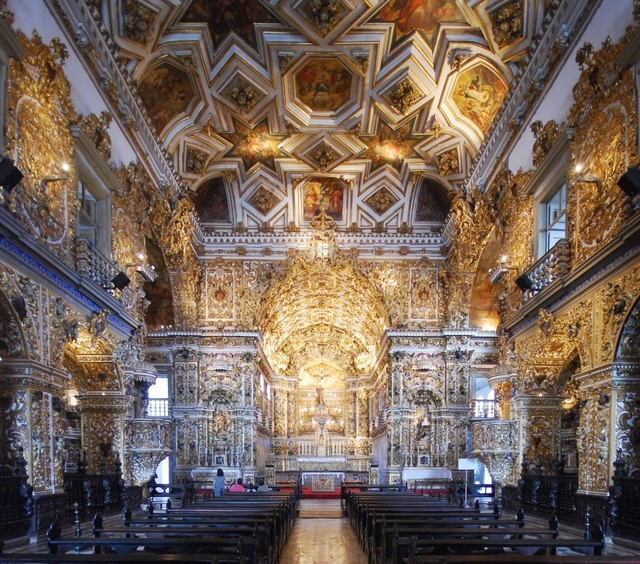
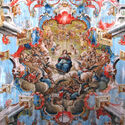
What happened at the conventual Church of Saint Francis of Assis in Salvador is yet another sad chapter in a process afflicting Brazilian cultural heritage, which has intensified in recent years with the fires at the National Museum in Rio de Janeiro, the Cinemateca, and the Museum of the Portuguese Language in São Paulo. Consequently, over the last few days, there has been intense debate regarding who is to "blame" for what occurred in Salvador, or who bore the "responsibility" to prevent this disaster, which also claimed the life of a young tourist: whether the church administrators, IPHAN (the National Institute of Historical and Artistic Heritage), or local cultural and heritage agencies. This is a difficult and indeed important issue to discuss, demanding careful investigation into the causes of the incident. Yet the debate must be broader, aimed above all at considering how we can prevent such events from happening: greater investment, greater appreciation of artistic and architectural heritage, stricter and more effective safety protocols, preventive conservation, and heritage education. In the days following the incident in Salvador, numerous colonial-period buildings were closed across the country under the claim that they, too, might collapse. Our heritage demands attention—in many cases, urgently.
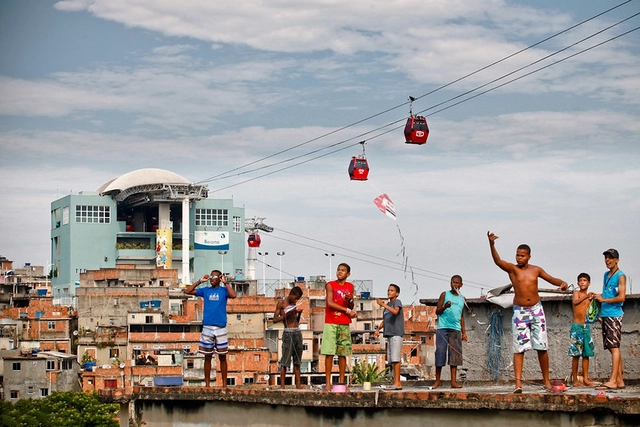
"There is coconut candy and peteca
Let the child play
Today is a day of celebration
The ibejada comes to bless."
— Song for the erês
Streets come alive when they belong to the erês and die when they belong to cars. I dream of a project that I intend to put into practice when time allows: writing a manual of the fabulous rules of hopscotch, carniça, button football, preguinho, capture the flag, ring-around-the-rosy, lenço-atrás, slope soccer, dodgeball, and the variations of marbles. The title is already set: "The Loving Ecology of Street Games."
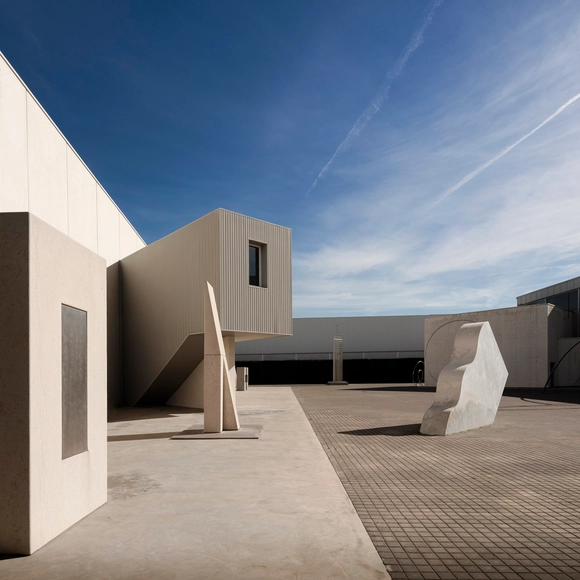
The MArch Valencia Postgraduate School offers a unique educational proposal, featuring three postgraduate programs and two master's degrees designed to effectively connect academic knowledge with professional experience. Its teaching methodology is based on a practical approach and collaboration with renowned professionals and architecture and design studios, providing students with the necessary tools to excel in a highly competitive job market.
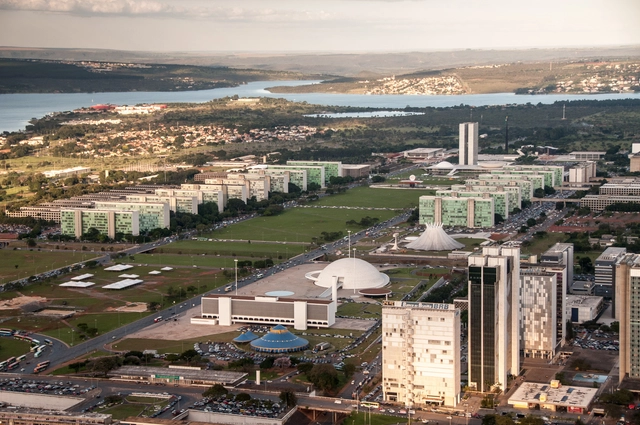
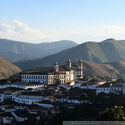
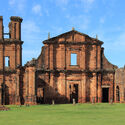
In July of this year, UNESCO designated the Roberto Burle Marx Site as a World Heritage site. As a result, Brazil now has 23 sites and practices inscribed on the World Heritage List, which brings together properties, ensembles, and practices of tangible and intangible value.
According to UNESCO, the 23 listed properties and practices in Brazil can be divided into Cultural Heritage—"composed of monuments, groups of buildings, or sites that have outstanding universal historical, aesthetic, archaeological, scientific, ethnological, or anthropological value"—and Natural Heritage—"outstanding physical, biological, and geological formations, habitats of threatened animal and plant species, and areas of outstanding scientific, conservation, or aesthetic value."

On August 17, Brazil celebrated National Heritage Day, 21 days after a protest set fire to the statue of Bandeirante Borba Gato in the southern zone of São Paulo. This contradiction opens up an important discussion: how are we constructing memory in our cities? What are we valuing as our country's heritage?
The term historical and cultural heritage refers to the tangible and intangible creations of a given culture within society. What defines a cultural asset as heritage is its historical and social relevance, which can be linked to collective and individual memory, as it is through these memories that we understand the past. From an architectural perspective, the term heritage is constantly associated with historic buildings that typically embody Catholic religious values or the bourgeois lifestyle of the elite.
We invite you to participate in the ArchDaily en Español Building of the Year Award. In its sixteenth edition, we give our readers the responsibility of recognizing and rewarding the projects that have had the greatest impact on the discipline. By voting, you become part of an unbiased jury network recognizing the most relevant works built in Latin America and Spain over the past year. There are only a few days left before voting closes, where the 3 winners of the ArchDaily en Español 2025 Building of the Year Award will be selected from among the 15 finalists.
Registered users can vote for their favorite project once a day. The nomination stage ends on April 9 at 11:59 PM (GMT-3).

We invite you to participate in the ArchDaily Brasil 2025 Building of the Year Award. Now in its ninth edition, we task our readers with the responsibility of recognizing and rewarding the projects that have made the greatest impact on the profession. By voting, you become part of an impartial network of jurors recognizing the most relevant projects built in Portuguese-speaking countries over the past year. Only a few days remain in the voting stage, which will select the three winners of the ArchDaily Brasil 2025 Building of the Year Award from the 15 finalists.
Registered users can vote for their favorite project once a day. The voting stage closes on April 9 at 11:59 PM (GMT-3).

Last week, we announced the 15 finalists for the 2025 ArchDaily Brasil Building of the Year Award, which celebrates the best of Lusophone architecture by inviting our readers to vote for their favorite projects built in Portuguese-speaking countries. Now, the time has come to reveal the three grand winners!
This year, first place went to the Seedling Nursery - Ocupação Fazendinha, a simple and sensitive small-scale project developed by the Projects Department of the School of Architecture at the Federal University of Minas Gerais. Second place was awarded to Casa da Carnaúba Várzea Queimada in the state of Piauí, designed by the firm Rosenbaum, while third place went to the Requalification of the Municipal Square of Ribeira de Pena in Portugal, designed by the studio AXR - Arquitetura e Design.
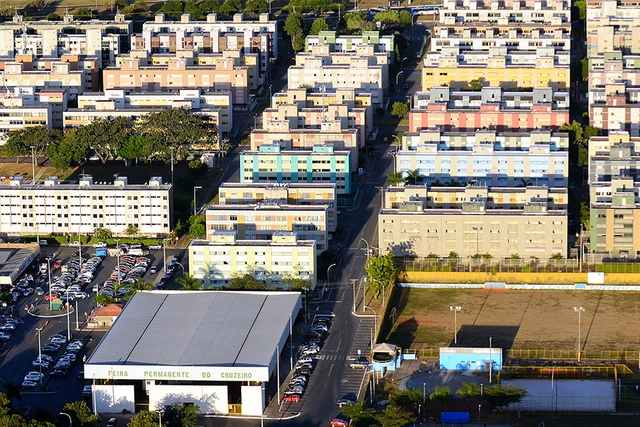
Over 60 years ago, Brasília emerged from the Brazilian interior. Developed in a desolate cerrado between 1956 and 1960, the city that replaced Rio de Janeiro as the nation's capital was a joint creation of urban planner Lúcio Costa and architect Oscar Niemeyer.
With its winged shape, Brasília became a powerful symbol, representing one of the purest embodiments of the hope, splendor, and ingenuity of 20th-century architecture.
The 8th {CURA} Award has announced the winners of its competition, which was themed around collective housing for the 21st century. The competition invited participants to reflect on new ways of living in the city, focusing primarily on issues of urban mobility, density, and bioclimatic efficiency.
Each project was evaluated individually, based on criteria such as consistency with the proposed theme; conceptual and architectural quality; creativity and critical vision in the proposed solution; suitability to the urban and territorial context; quality of graphic representation and clarity in communicating the proposal; social and environmental impact; and compliance with the competition brief. Team identities were only revealed after the jury's final decision.
Maps are fundamental tools for understanding the built environment. Rather than just representing locations, they allow us to visualize spatial relationships, recognize urban patterns, overlay layers of information, and produce new ways of reading a territory. In architecture, they can help reveal how projects are distributed across cities, identifying which areas concentrate investments or remain on the margins. Furthermore, maps are never neutral: all cartographic representation involves choices—such as data selection, spatial boundaries, and projections used—that can carry political intentions, reinforcing or questioning power structures and worldviews.
In partnership with the platform PLACE, developed by the firm OSPA, ArchDaily Brasil presents an interactive map featuring most of the projects published on the site in recent years. Each point provides information such as images, location, and technical data about the works. The initiative uses exclusively public data available on the platform and includes projects in almost every Brazilian state.
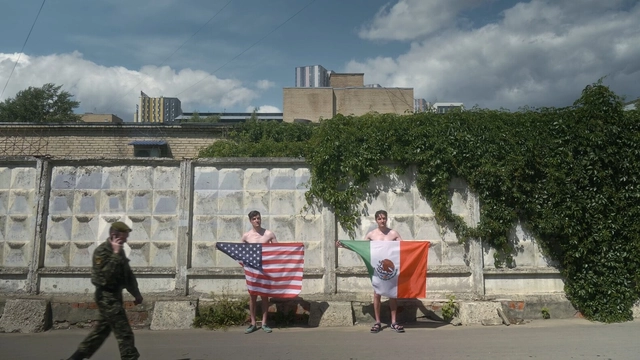
At a time of profound social, spatial, and cultural change, the 12th edition of the Arquiteturas Film Festival invites reflection on how physical and symbolic borders shape the built environment, influencing daily life and collective dynamics. What role do architecture and urban thinking play in understanding this changing world?
Since the cultural center INSTITUTO took over its organization in 2021, the festival has established itself as a critical platform connecting cinema, architecture, and spatial practices to discuss urgent issues. In recent years, it has addressed migration, ecological crises, decolonization, and new ways of living. In 2025, the focus turns to the 'border' in its multiple dimensions.
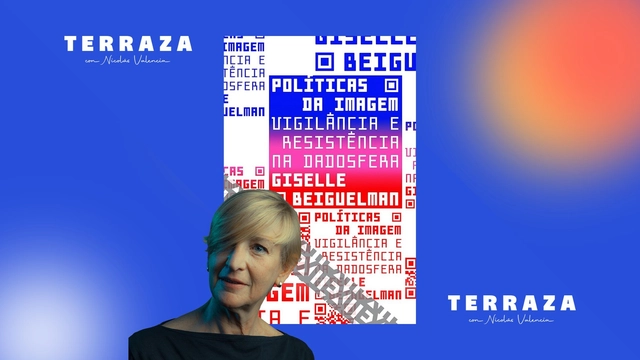
At the FIESP Cultural Center in São Paulo, Nicolás Valencia sits down with Brazilian artist Giselle Beiguelman to discuss artificial intelligence, data centers, and coup plotters, drawing from her book Políticas da Imagem, her exhibition Venenosas, Nocivas e Suspeitas, and her research project Domingo no Golpe.
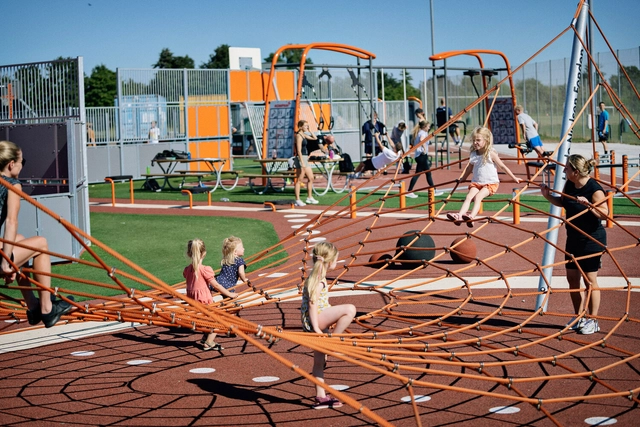
Play, as a human activity, is a multidimensional practice: it stems from biology, is socially transmitted, and is situated within the architectural realm. Within this interrelation, while play introduces dynamics and narratives that invite us to explore alternative ways of inhabiting the world, architectural projects provide the physical and sensory support needed to unlock these possibilities, with play structures serving as the medium connecting the two. Consequently, a defining relationship emerges between play, the built environment, and its evolution over time.