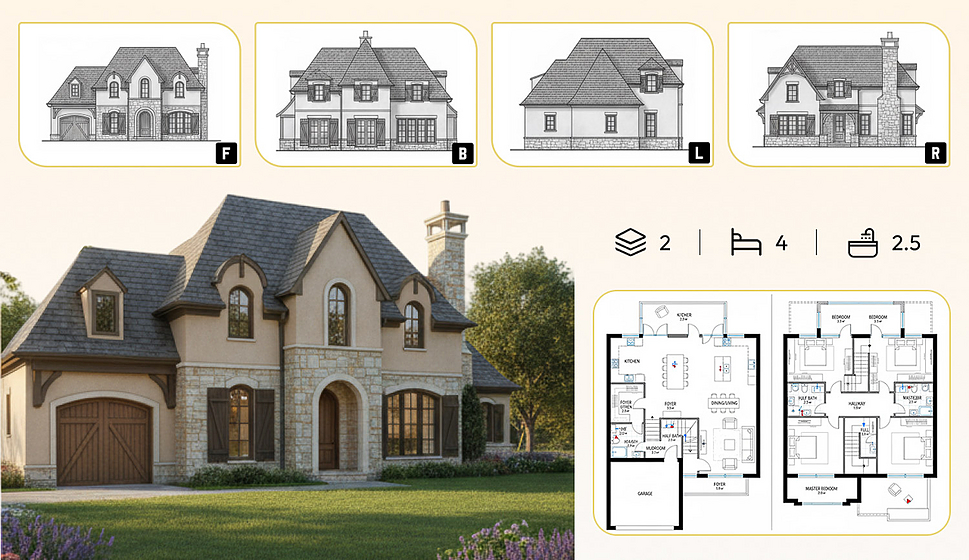
This guide covers a workflow that moves from project parameters to generated floor plans, 3D perspective views, exterior design exploration, and site context visualization, using AI tools in place of preliminary CAD and rendering work.
This guide covers a workflow that moves from project parameters to generated floor plans, 3D perspective views, exterior design exploration, and site context visualization, using AI tools in place of preliminary CAD and rendering work.

We must slow down traffic in Brazilian cities—and fast. This is a public health issue, as traffic crashes are among the leading causes of death worldwide. It is also a matter of quality of life and equity, as cities that effectively reduce vehicle speeds become safer, more welcoming, and more vibrant for everyone.

From May 5 to 15, Barcelona's Plaza Real was transformed into one of the hubs for debates on architecture and the city during the MODEL Festival. The ephemeral installation "Occupy the Center with the Word"—led by the ELISAVA Barcelona School of Design and Engineering under the direction of Roger Paez, in collaboration with Manuela Valtchanova, Albert Fuster, and Toni Montes—sought to "create optimal conditions for both encounters and disagreements to take place, always through the spoken word."

Two years after receiving the complete archive of Paulo Mendes da Rocha, Portugal's Casa da Arquitectura inaugurated its Digital Building last weekend. Marking the institution's shift toward the inescapable virtual world, the project consists of digitizing the archive accumulated since the organization was founded in 2017.
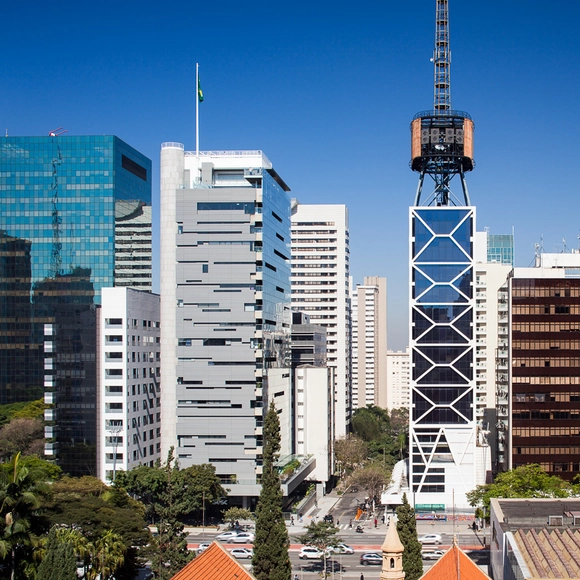
The 13th edition of the Architecture Biennial, organized by IAB-São Paulo, will open on May 27. It emerges from a reality of intense transformations brought about by the Covid-19 pandemic worldwide, which demanded major efforts to reorganize urban, social, and professional dynamics for survival.
Travessias (Crossings), the theme of this edition, recognizes that the pandemic reinforces socio-spatial inequalities that were already established, not only in Brazil but globally, understanding that these structures undergo physical and symbolic fragmentations rooted in violent processes of colonization and historical erasure. As a result, they trigger numerous manifestations of oppression – such as racism, sexism, ableism, and coloniality – in Brazil and other territories.

Architects and designers, as well as psychologists and sociologists, recognize that aesthetics and its underlying philosophy have the power to change how we perceive the world around us. Consequently, a deeper understanding of what is beautiful has the power to reshape how people respond to their environment.
Exploring the different meanings of aesthetics in architecture—from "form follows function" to the aesthetics of the metaverse—can help us understand the potential of our physical and virtual environments on the path toward a better world.
Much has already been written on the subject, but we now want to open the debate to you, our readers. Share your thoughts on what makes a building or a city beautiful.
Leave your comments in the form below. These will be selected and published in an upcoming article.

The Global Designing Cities Initiative (GDCI) released its Global Street Design Guide to help urban planners with the challenging task of including all users of urban spaces in their designs. The publication became a benchmark and has now inspired a dedicated companion guide focused on children. The guide Designing Streets for Kids (translated into Portuguese as Desenhando Ruas para Córiaças) is already available in several languages, including Portuguese.

The canals of Amsterdam, the capital of the Netherlands, span more than 100 kilometers and are not immune to plastic pollution. However, a clever invention has arrived in the city to address this issue: “The Great Bubble Barrier,” a technology that creates bubbles in the water to make collecting plastic waste easier.

According to Victor Carvalho Pinto, an attorney specializing in Urban Law and a legislative advisor to the Brazilian Federal Senate, supporting the modernization of city and state administrations—so-called "institutional development"—is more critical than funding municipal public works. In an exclusive interview with Geocracia, Carvalho Pinto, coordinator of the Cities and Regulation Hub at Insper's Arq.Futuro Cities Lab, stated he is not concerned about the dissolution of the Ministry of Cities, as the federal budget, Caixa Econômica Federal, and BNDES already allocate non-repayable grants for many municipal projects.

From early 20th-century hygienism to the macro-planning of urbanization in the 1970s, the urban model aimed at carving out wide avenues to connect neighborhoods (the center and its extensions) via motorized transport: the city on wheels. This North American urbanization model, adopted by Brazilian cities, privileges high-rise development and private vehicles over public transit.

Located in the neighborhood of São Cristóvão in Rio de Janeiro, the Prefeito Mendes de Moraes Residential Complex, better known as Pedregulho, was designed by architect Affonso Eduardo Reidy in 1947 to house public servants of the then-Federal District. The project marks a moment of international recognition for Reidy's architectural and urban design work, while also highlighting his significant partnership with Carmen Portinho.
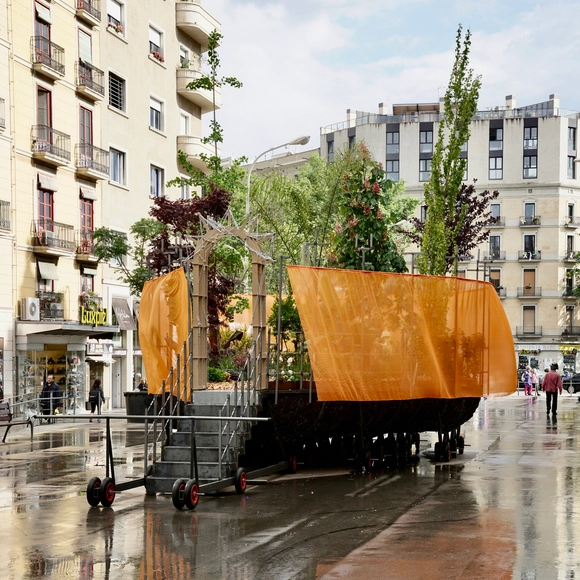
"Arca de Convivencia" is a temporary installation designed by LEA Atelier and TAKK Architecture for the Model Festival—an event that, for ten days in May, turned the city of Barcelona into a testing ground for experimentation and debate. Located on Ronda de Sant Antoni, this mobile artifact houses a multitude of trees, plants, shrubs, and insects, reminding us of the urgent need to create public spaces that reverse the effects of global warming and foster biodiversity.
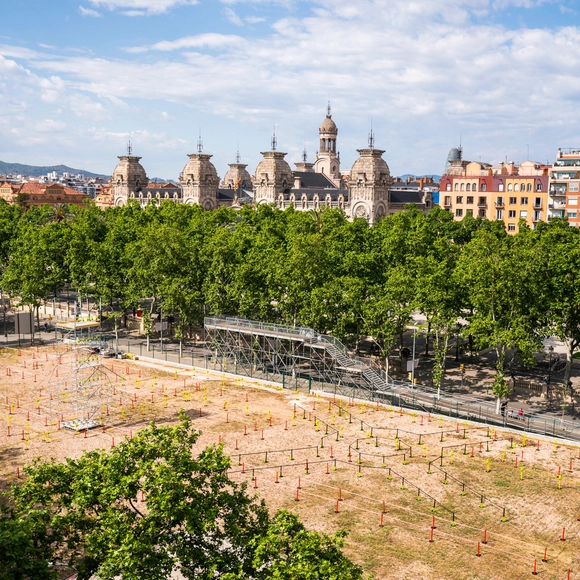
"Memoria Cronotópica" is a temporary installation by the studio FLEXOARQUITECTURA that took place on the site of Barcelona's former municipal courts during the Model Festival — an event that for ten days in May turned the city into a site for experimentation and debate.
The project sought to reflect on the logic of circularity and reuse through the documentation and juxtaposition of the site's lost architectures between the 7th and 21st centuries—from the medieval necropolis to the courthouse building, including the Fusina gardens and the Palau de Belles Arts.
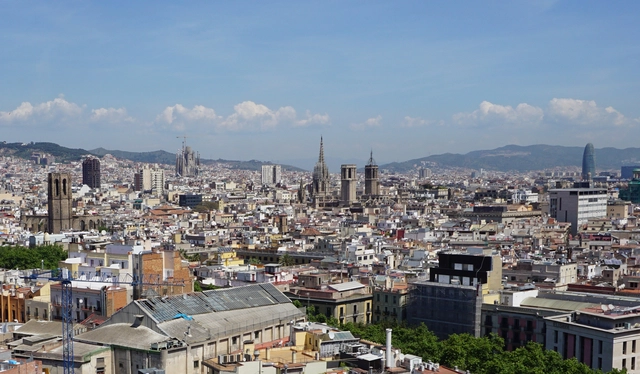
Laura Foraster i Lloret is the Secretary General of DIPLOCAT, a public-private consortium aimed at connecting Catalonia with the rest of the world and promoting initiatives that project its image abroad. Its 38 members include key public institutions as well as leading organizations from the business, social, labor, academic, and sports sectors—ranging from Futbol Club Barcelona to the University of Barcelona.
During the Model Barcelona Architectures Festival, which took over the city in May—an event already paving the way for the city's designation as the 2026 World Capital of Architecture—she joined us to discuss how architecture serves as a fundamental tool for presenting and projecting the region abroad. Read Laura Foraster i Lloret's key reflections below.
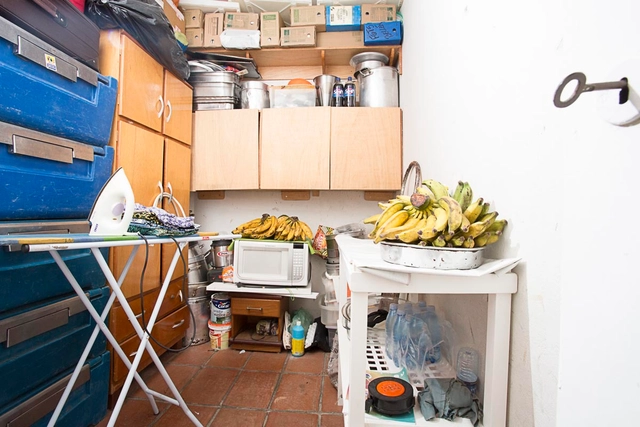
The room built for workers to "rest"—as current discourse attempts to camouflage the origin and meaning of the well-known "service room," "maid's room," or "storage room" typically located next to the service areas of contemporary homes—holds a historical, cultural, social, and economic significance within today's context that is rarely questioned.
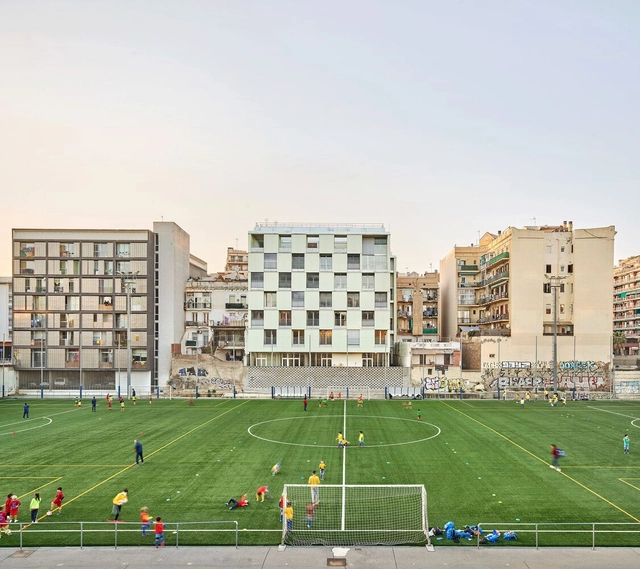
Is there a future for our cities if we do not transition to a sustainable way of life? For some time, urban sustainability has adopted a perspective focused more on climate change than on a holistic vision that incorporates society and the way we live in community.
What new ways of living are we experiencing amidst social, economic, and ecological shifts? Ultimately, we must bring to the table examples from different parts of the world to understand the latest trends in how we live in our cities.
We want to hear from you—not only about examples of co-living, cooperatives, and any new type of social housing you consider a benchmark, but also your thoughts on the matter. Selected comments from the form below will be published in an upcoming article.

99+Imaginaris invited renowned architects from around the world to speculate on the future of Barcelona. Within the context of the Model Festival, curators Eva Franch i Gilabert and Josep Maria Montaner, alongside the design, coordination, and exhibition design by the Enric Miralles Foundation, brought together a wide-ranging series of sketches, ideas, visions, and models—from an edible Barcelona by Areti Markopoulou to a Barcelona of inflection points by Zaida Muxí.
The resulting exhibition catalog is a diverse archive of drawn manifestos—a document that allows us to review and debate future ways of living in the city. The curatorial text for 99+Imaginaris, along with the individual visions of its contributors, is presented below.
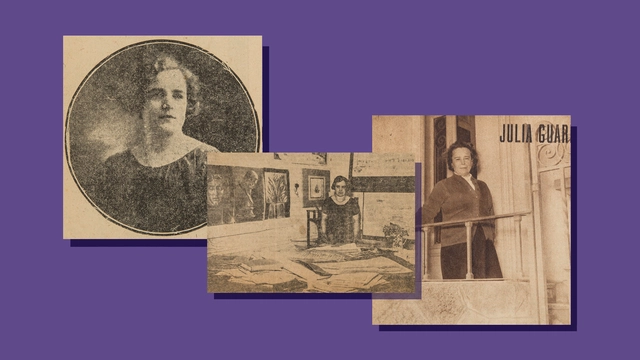
Born on July 17, 1897, Julia Guarino Fiechter became the first woman to earn an architecture degree in Uruguay, in 1923. Although she was originally from Éboli, in the Italian province of Salerno, she grew up and spent her entire professional life in Uruguay. After graduating from the Faculty of Architecture at the Universidad de la República, she also worked as a draftsperson and educator.

Brazilian architects Mário Rubem Costa Santana and Rafael Lamary Silva Santos received a special mention in the Children's House competition in Senegal, organized by the Kaira Looro organization. The competition sought proposals for a "space aimed at preventing child malnutrition" in Sub-Saharan Africa.

The 13th International Architecture Biennial enters its final week of activities—ending on Sunday, July 17—and brings very special attractions for those who have already visited or have yet to experience the Biennial.
Between July 8 and 17, the event features debates, conferences, short film screenings, a cycling tour, and much more, in this first in-person edition since the pandemic. The exhibition has been running since May 27 at Sesc Avenida Paulista and Centro Cultural São Paulo.

In urban planning discourse, advocacy for public transit is as widely agreed upon as it is frequently repeated. Proposals such as transit-oriented development (TOD), which advocates for coordinating urban density with transit corridors, have gained traction over recent decades. They have moved from academia into the recommendations and case studies of institutions like the World Bank, into political platforms and official documents, and are already visible in various urban interventions worldwide—from Curitiba to Toronto, and particularly in Asia.
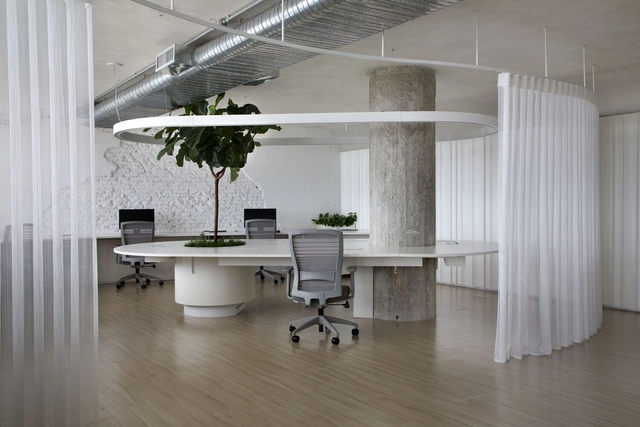
"Less is more!", "ornament is a crime", are some of the modern phrases that shaped the western architectural language in the last century and still continue to be a strong influence when thinking about spaces. Minimalism, even if it is hardly carried out within its original essence, still tends to value emptiness, aesthetic cleanliness and the purism of space.
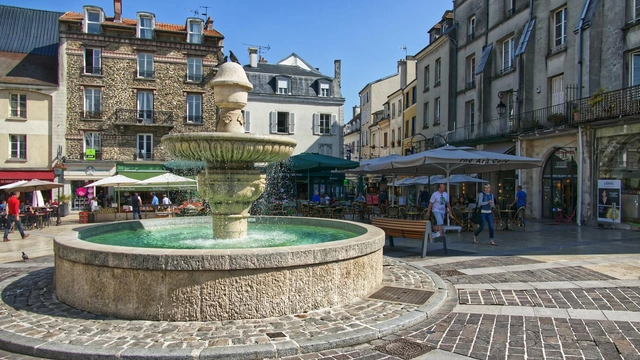
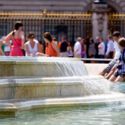
A direct consequence of global warming, heatwaves have become increasingly devastating and frequent with each passing summer. The most recent of these has been sweeping across Europe for days, worsening in western nations, such as Belgium and the United Kingdom. The melting runway surface at Luton Airport and the fires in the village of Wennington, London, and in Calatayud, southwestern Spain, are just some of the incidents that underscore the critical scale of this crisis.
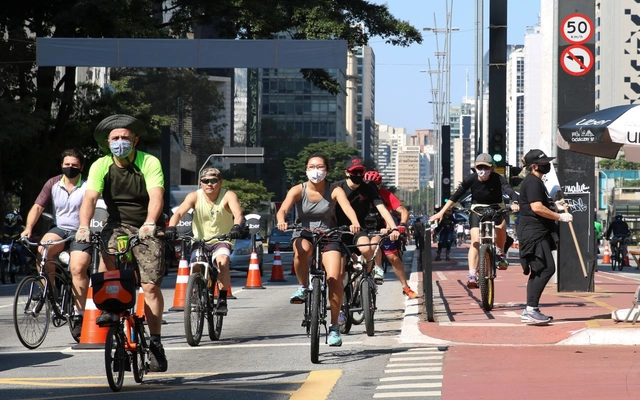
Since 2011, the Aromeiazero Institute has been promoting the "Bike Parada não Rola" (A Stationary Bike Doesn't Roll) campaign. The initiative partners with residential building managers to identify abandoned bicycles in condominium bike racks.
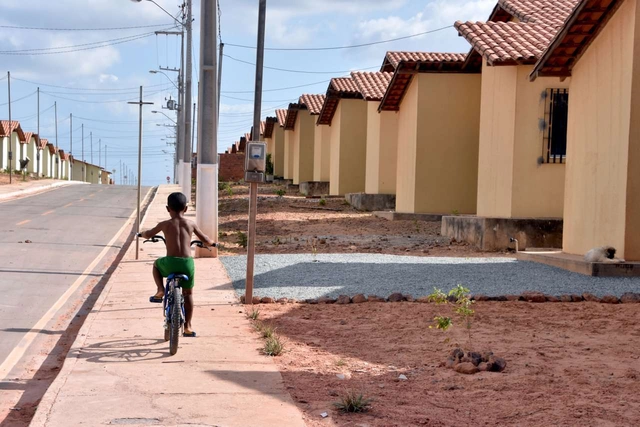
For another episode in the series on Social Interest Housing (HIS), Arquicast has selected a crucial chapter of our recent history: the Minha Casa Minha Vida Program (MCMV). The episode discusses the foundations of the so-called housing deficit, the program's progress, and its shortcomings.