The Northern Hemisphere is known for its harsh winters, with sub-zero temperatures that stand in stark contrast to the Brazilian summer, often keeping people indoors and making them feel a bit down.
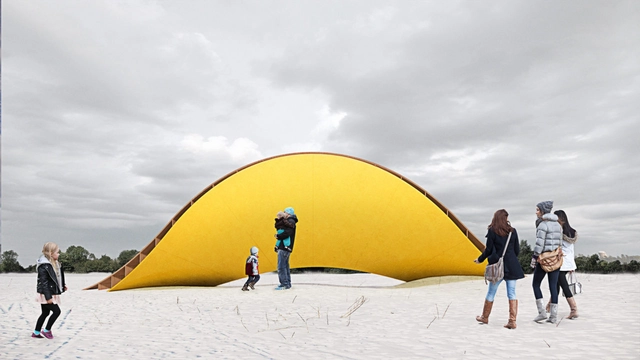
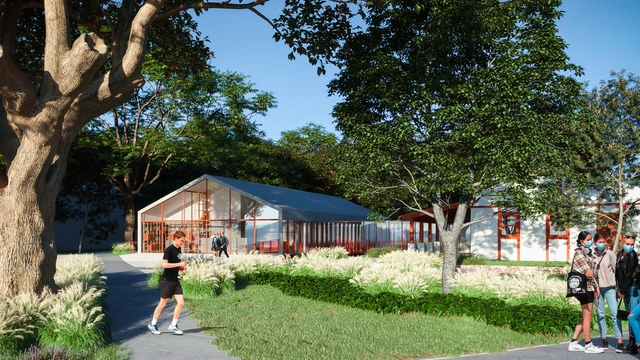
A Brazilian project aims to help counter this by bringing a "second sun" to Winnipeg. Selected in an international public competition, the "Sunset" installation, designed by São Paulo-based architecture firm Democratic Architects, seeks to revitalize the Canadian city during its coldest months, when average temperatures drop to minus 39 degrees.
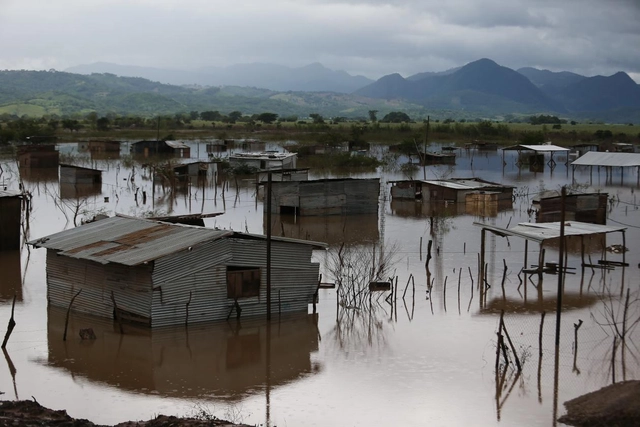
Flooding after a Category 4 hurricane in Nicaragua. The increased intensity of storms is linked to climate change. Photo: European Union, 2020/D. Membreño
High in the Andes, glaciers have retreated and shrunk under the effects of climate change. Around four million people depend on the glaciers for water, yet they have lost nearly a meter of thickness over the last 20 years.
https://www.archdaily.com/1132495/commitments-ambition-and-frustration-latin-americas-progress-on-climate-issuesAlex Simpkins, Caroline M. Rocha Frasson, Héctor Donado e Carolina Genin
On Wednesday, December 7, 2022, the Chilean Ministry of Housing and Urbanism (Minvu) announced that architect Joan MacDonald, who served as undersecretary of this ministry between 1990 and 1994, has become the first woman to win the National Urbanism Award. The award ceremony will be held in January 2023.
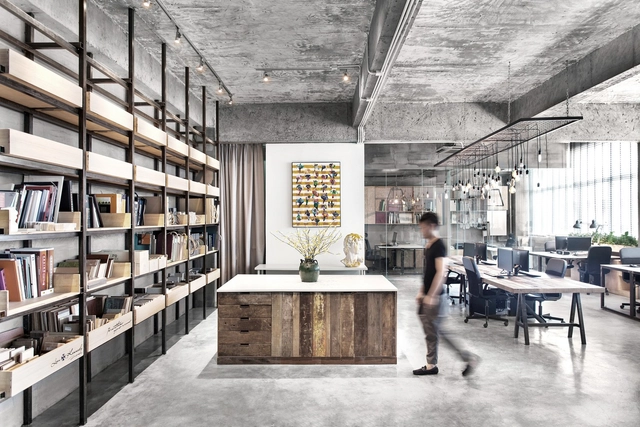
SUPERTOMATO is a service-oriented company specializing in workplace design. With a client-centric approach, we deliver forward-looking, sustainable, and highly effective workspace solutions.
By constantly exploring how people work, SUPERTOMATO aims to design office environments that embody corporate brand culture. We believe such workspaces not only inspire and enhance productivity but also foster physical and mental well-being.
SUPERTOMATO helps clients optimize their workspace investments, delivering value through strategic design that seamlessly integrates aesthetics and functionality.
Beyond participating in the design of the Xiong'an Citizen Service Center—a national-level project in China—our team has built a diverse portfolio of active projects spanning Hong Kong, the United States, and India.
SUPERTOMATO constantly finds new momentum through self-reflection:
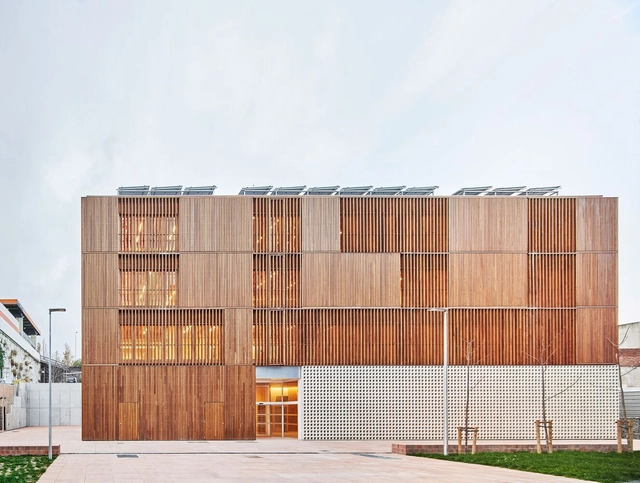
The finalist projects for the 2022 edition of the Mapei Award have been announced. The prize aims to promote sustainable architecture by recognizing projects that combine high architectural quality with the lowest possible environmental impact. Addressing the social and environmental challenges of the 21st century, the Mapei Award is presented to both new construction and renovation projects.
Founded in 2014, PROJECT Profile Architecture is an internationally recognized design and research collective. Currently, the team consists of over a dozen members, with studios in Beijing, Shanghai, and Shenzhen. Its founders, Chang Ke and Li Wenhan, graduated from Delft University of Technology in the Netherlands and the University of Applied Arts Vienna, respectively. Registered architects in the Netherlands, they practiced for several years at major design firms in Europe and China. As specialists in urban renewal and public architecture, the core philosophy of PROJECT Profile Architecture is built on "demand as context, resistance as driver, and innovation as inquiry." PROJECT Profile Architecture seeks to break the boundaries of design, crossing the limits of scale and category to define each design commission as an integrated, comprehensive "PROJECT." The firm focuses on the unique parameters of each PROJECT, strategically proposing tailored solutions and exploring new spatial programs and typologies—particularly those emerging from civil society. By connecting design with real life, they activate and channel the vitality generated by these new models, aiming to contribute to contemporary urban and rural spatial design.
PROJECT Profile Architecture provides full-process design consulting services ranging from programming, architecture, landscape, and interiors to furniture, product design, signage systems, and construction consulting. Instead of treating design as isolated cases, they use the concept of the "PROJECT" to transform design into a continuous, research-driven system with a creative core. They are committed to exploring architectural research and practice rooted in China's current socio-political landscape. The firm operates through a collaborative, research-oriented methodology where all design staff participate in project discussions and decision-making. Viewing design as a form of collective intelligence, they uncover new ideal mechanisms within reality through diverse perspectives. Integrating localized practice with civic engagement defines their current trajectory. By balancing small-to-medium-scale bespoke commissions with large-scale public architecture competition entries, PROJECT Profile Architecture strives to carve out a viable path for a localized professional architectural practice—one that bridges market demands and academic inquiry. Now, we warmly invite you to join us and forge this path together.
We are pleased to present the finalist projects for the 2022 Obra do Ano Award. After two weeks of nominations, the favorite projects have been chosen from hundreds of buildings constructed in Portuguese-speaking countries. Our expert jury, composed of our own readers, has once again done an excellent job selecting these 15 projects.
From today until March 30 at 11:59 PM (Brasília time - GMT-3), you can vote once a day for the projects you consider to be the best examples of contemporary Lusophone architecture. The results will be announced on March 31.
A quick search is all it takes to realize there is no shortage of knowledge, experience, and innovation surrounding mobility within and between urban centers. Arquicast invites two experts on the subject to join the debate: architect Fernando Lima, PhD in Urbanism from UFRJ, adjunct professor at UFJF, and Visiting Professor at Pennsylvania State University; and administrator Rodrigo Tortoriello, who holds an MBA in Transportation Engineering from UFRJ and is the former Extraordinary Secretary of Urban Mobility for Porto Alegre.
Belo Horizonte-MG. Photo by ciqueira, via Visualhunt
During the final discussions for the approval of Belo Horizonte's Master Plan in 2019, the proposed charging of the Onerous Grant of the Right to Build (OODC) sparked intense debate and emerged as the main political obstacle to its passage. Several institutions, including UN-Habitat, took a stance on the matter. Ultimately, what is the OODC and what are the effects of this planning instrument on the urban territory?
https://www.archdaily.com/1132430/what-is-the-onerous-grant-of-the-right-to-build-and-how-it-helps-make-cities-more-just-and-sustainableBruno Felin, Laura Azeredo, Luana Betti e Priscila Pacheco
Architect Emilio Tuñón. Image via Ministerio de Transportes, Movilidad y Agenda Urbana
Today, it was announced that architect Emilio Tuñón has been awarded the 2022 National Architecture Prize, presented by the Ministry of Transport, Mobility, and Urban Agenda (Mitma).
The firms Gênesi and EVO Arquitetos were awarded third place in the national competition Iconicidades, organized by the Government of the State of Rio Grande do Sul and launched in April this year. The initiative sought to select the best proposals for transforming public spaces into areas that stimulate the creative economy in the cities of Pelotas, Rio Grande, Santa Maria, Cachoeirinha, and São Leopoldo.
https://www.archdaily.com/1132427/genesi-and-evo-arquitetos-awarded-in-the-requalification-competition-for-the-casa-da-feitoria-and-immigrant-museum-in-sao-leopoldoArchDaily Team
Founded in Shanghai in 2013, genarchitects is a full-service design practice led by three principals: Fan Beilei, Kong Rui, and Xue Zhe. The practice's design work and academic research have been widely published in leading academic journals and professional media, including Architectural Journal, World Architecture, Time + Architecture, New Architecture, and Architecture China. Their work has also been featured in numerous monographs published by prestigious international publishers such as Thames & Hudson (UK), Birkhäuser (Germany), Images Publishing (Australia), and China Architecture & Building Press. Their recently completed project, "Dingshu Adult Education School," was featured as the cover story of the May 2022 issue of Architectural Journal. Other completed projects have been exhibited at prestigious venues and events, including the Venice Biennale of Architecture, the China-Europe Architectural Invitation Exhibition, the Harvard GSD exhibition on contemporary Chinese architecture, and the Shanghai Urban Space Art Season (SUSAS).
The principals of genarchitects currently serve as guest design studio instructors at the Department of Architecture, Tongji University, teaching in the Experimental Class for Interdisciplinary and Creative Talents. They have also served as guest critics at Southeast University, Tianjin University, and the China Academy of Art, and have been invited to deliver academic lectures at renowned institutions and venues, including Tongji University, Nanjing University, the University of Hong Kong Shanghai Study Centre, TEDx, and the Power Station of Art (PSA) in Shanghai.
No País dos Arquitectos is a podcast created by Sara Nunes, who also runs the architectural film production company Building Pictures. The podcast aims to profile the professionals, projects, and stories behind leading contemporary Portuguese architecture. With just over 10 million inhabitants, Portugal is a fascinating country when it comes to this professional field, and its architectural output punches far above its population or territorial scale.
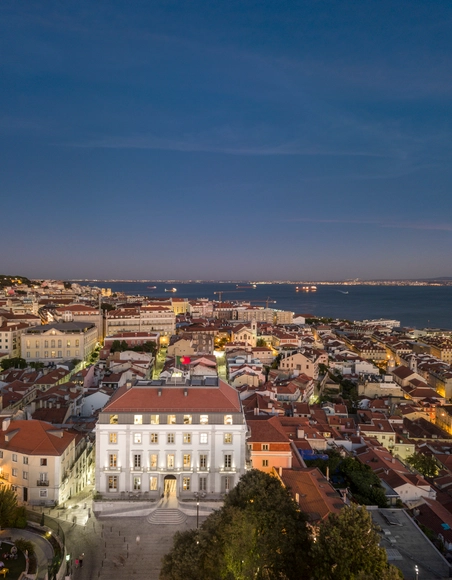
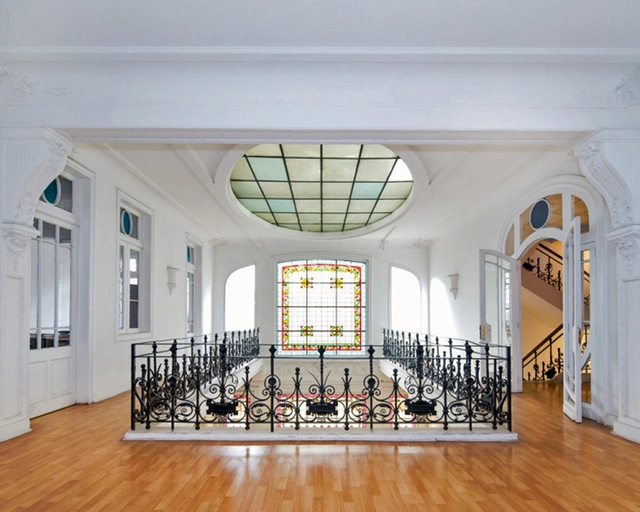
In this episode of the fourth season, Sara talks with Teresa Nunes da Ponte about the restoration of the Palácio de Santa Catarina and the centuries of history in the city of Lisbon. Listen to the conversation and read part of the interview below.
The 2022 Shenzhen Creative Home Design Week (hereinafter referred to as "Design Week") has successfully concluded. Against the ongoing backdrop of the pandemic, ArchDaily partnered with MEFine to present a themed design forum, "One Step Ahead: Contemporary Reflections on Dwelling." Hosted as part of "Design Out Loud"—a forum series dedicated to design and creativity curated by Design Dome—the event has successfully come to a close, leaving behind a wealth of memorable insights.
https://www.archdaily.com/1132480/archdaily-x-shenzhen-creative-home-design-week-forum-one-step-ahead-contemporary-reflections-on-dwellingDai Le
The pioneering Black feminist Gloria Jean Watkins – better known by her lowercase pseudonym bell hooks – recently passed away at the age of 69. She leaves behind countless ideas that serve as the foundation for modern critiques of race, class, and gender.
Following her death, an essay published by hooks in 1998 resurfaced on a blog she occasionally wrote for, Lion’s Roar. The piece, titled “Design: A Happening Life,” is so relevant today that it is hard to believe it was written 25 years ago.
Since ArchDaily launched its recruitment services, we have received job postings from architecture firms of various scales across China, from Beijing and Shenzhen to Hangzhou. With their unique styles, these practices are active across diverse architectural sectors, seeking talented designers to join their teams. Below is a curated selection of eight firms currently hiring, along with some of their representative projects. We encourage interested readers to apply.
No País dos Arquitectos is a podcast created by Sara Nunes, who also runs the architectural film production company Building Pictures. The project aims to introduce the professionals, projects, and stories behind leading contemporary Portuguese architecture. With just over 10 million inhabitants, Portugal is a highly intriguing country in this professional field, with an architectural output that punches far above its weight in relation to its population or territorial scale.
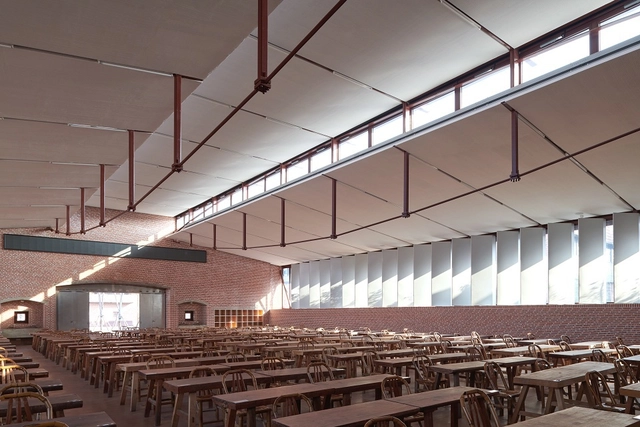
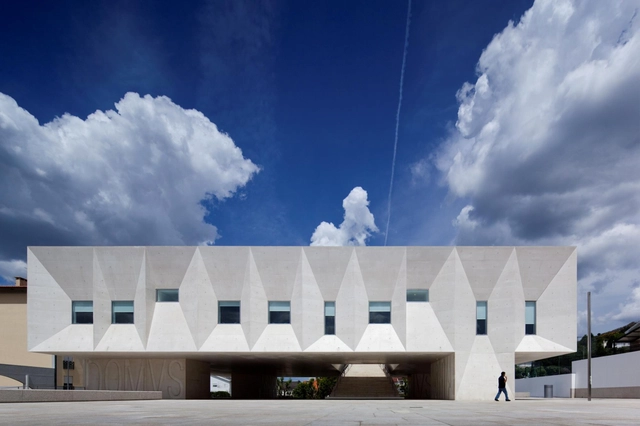
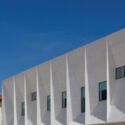
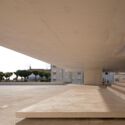
In this episode, Sara talks with architect Pedro Guimarães, from the office Barbosa & Guimarães Arquitectos, about the design of the Gouveia Courthouse (Palácio da Justiça de Gouveia). Listen to the full interview and read an excerpt of the transcript below:
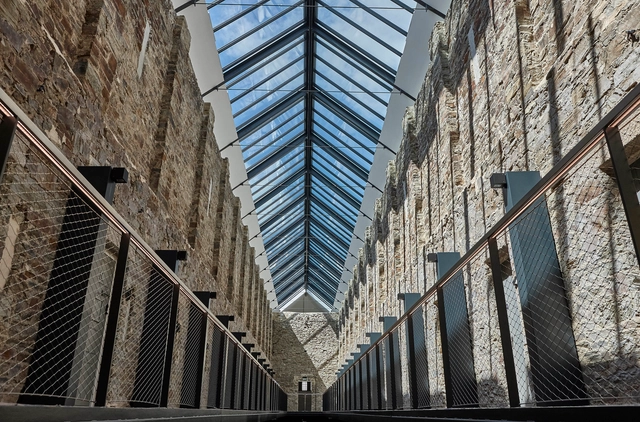
The Bodmin Jail Hotel. Image Courtesy of VELUX Commercial
Converting the 18th-century Bodmin Jail into a modern hotel presented architects with significant design challenges, as the historic infrastructure imposed strict physical constraints. Listed buildings are subject to rigorous preservation guidelines regarding heritage protection, building character, thermal comfort, and the integration of natural light.
Such design challenges often complicate architectural planning, particularly in adaptive reuse projects. Common obstacles include sourcing materials that match or replicate the existing historic fabric. During the planning phase, spatial layout, occupant comfort, and the integration of modern technology must be carefully balanced with contemporary design principles. For the Bodmin Jail Hotel, a key requirement was integrating skylights into the existing, iconic pitched roof.
The CA Awards and Honors are among the most prestigious recognitions for architects in Chile, honoring 12 registered members for their work and contribution to the country's architectural field. Coinciding with the closing of Architecture Month and the commemoration of the 80th anniversary of the Colegio de Arquitectos de Chile, the award ceremony will take place on Thursday, August 25, at 6:00 PM. The event will also be broadcast via FB Live and on the YouTube channel of the Colegio de Arquitectos.
Registration is now open for the 24th IABsp Awards 2022—a traditional and prestigious award in the field of architecture and urbanism organized by the Institute of Architects of Brazil, an institution with over a century of history. “This edition seeks to consolidate the advances of the national edition held in 2021, aligning the categories and subcategories with the reality of our profession.” Hannah Machado, Co-president of IABsp
Until November 21, architects and urban planners can register for free through the website.Participation is limited to IAB members from any of the state departments across the country with works and proposals executed in the state of São Paulo since January 2017. Fortunately, applicants can also join the institute during the registration period.
https://www.archdaily.com/1131844/applications-open-for-the-24th-iabsp-awardsArchDaily Team
"Domingos Libro" is hosted by Carmelo from Enorme Studio, delving into forgotten architectural publications, books, and architecture magazines from the '60s, '70s, and '80s that hold some of the most fascinating backstories.
After a hiatus in 2022, the series returned with episode 19, titled “Siempre Joven” (Forever Young). It focuses on Ettore Sottsass Jr. and how, at 62—when mere mortals would be contemplating retirement—he founded a studio alongside four twenty-somethings that would change the history of design.
Valode & Pistre (VP) is one of Europe's top ten architecture firms and the largest in France. Founded in 1980 by Denis Valode and Jean Pistre, the firm is headquartered in Paris, with branch offices in Beijing, Moscow, and Dubai. Their portfolio spans 35 countries and regions worldwide, encompassing a diverse range of typologies and scales. Widely acclaimed internationally, the practice has also received the Équerre d'Argent, France's highest architectural honor.
Their built portfolio focuses primarily on large-scale public buildings, commercial complexes, and residential developments, including office buildings, international exhibition and convention centers, mixed-use commercial centers, research facilities, hospitality venues, museums, universities, hospitals, and high-end residential projects.
In China, the firm's landmark projects include the Liaoning Cultural Venues, Sanya Haitang Bay International Duty-Free Shopping Mall, Haikou International Duty-Free City, Hangzhou Grand Exhibition Center, Jinan International Convention and Exhibition Center, Wuhan International Exhibition Center, and the Shenzhen World Exhibition & Convention Center—currently one of the largest single-structure buildings in the world. Committed to bringing top-tier French expertise to local Chinese projects, the practice delivers tailor-made designs that emphasize physical realization and human scale, ensuring satisfaction for clients and end-users alike.
Women's subway car in São Paulo. Image: Fábio Rodrigues Pozzebom/Agência Brasil
“Our cities are patriarchies written in stone, brick, glass, and concrete.” The words of British feminist geographer Jane Darke lay bare an undeniable fact: urban development across the globe has always been the work of men. In executive roles, “the majority makes choices ranging from economic policy to housing planning, from the location of schools to bus seats, without realizing how these decisions affect women, let alone worrying about it,” says Canadian Leslie Kern, a geographer with a PhD in women’s studies from York University.
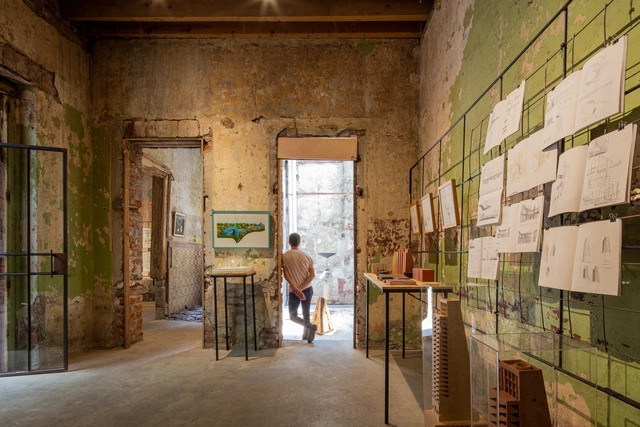
As part of a new initiative led by Francesca Borgonovo and Luis Young in Mexico City, "Preludio"—the inaugural exhibition of BY Galería—was presented from August 25 to September 3 at Proyecto Público Prim. This space arises from the question: "Is it possible to materialize architectural thought?"