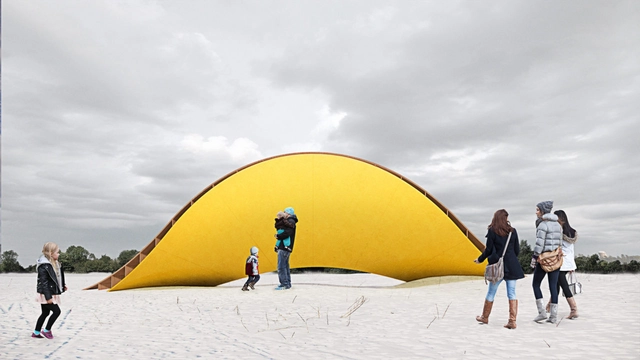
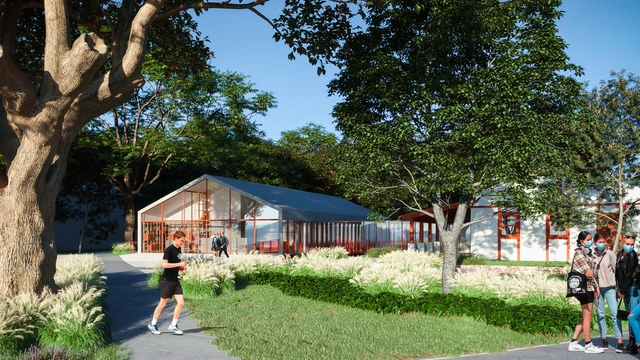
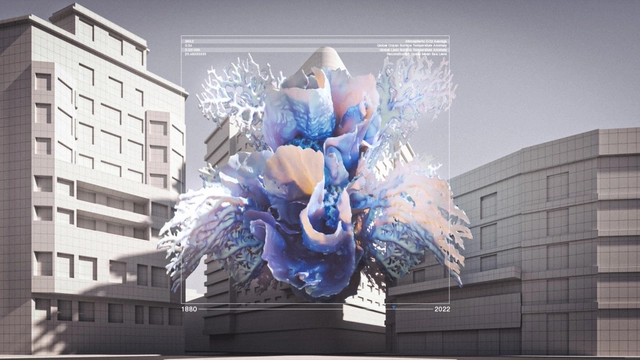
This mobile installation adapts to achieve structural parasitism, prompting us to rethink how we occupy the inert and hidden spaces that make up our cities.
As part of the ideas competition organized by the Buenos Aires Institute of Technology (ITBA), Aisenson Arquitectos, together with associated firm MGHS, won first prize for the design of the institution's main headquarters building, to be located along the central axis of the Innovation Park in the Autonomous City of Buenos Aires.
Today is the day to discover the finalists of ODA2022: the award for the best Spanish-language architecture. Our expert jury—meaning you, our readers—has selected 15 of your favorite projects from nearly 1,000 architectural works built across Latin America and Spain.
This award has become a true tradition, now in its 14th edition. It is an invitation extended to all our readers to recognize the works published during 2021 that inspired them and represent the identity of their local contexts in a globalized planet, shaping the way architecture is made in Latin America and Spain within an increasingly heterogeneous and multicultural world.
Starting today, and until next Wednesday, March 30, at 11:59 PM (GMT -3), you can explore each of the finalists in detail and vote for the work that best represents the Spanish-language architecture that inspires us, defines us, and leaves a mark on us. Discover all the finalist projects below.
The 2022 Obra del Año Award is brought to you by Dornbracht, renowned for its leading architectural designs, which can be found internationally in bathrooms and kitchens.
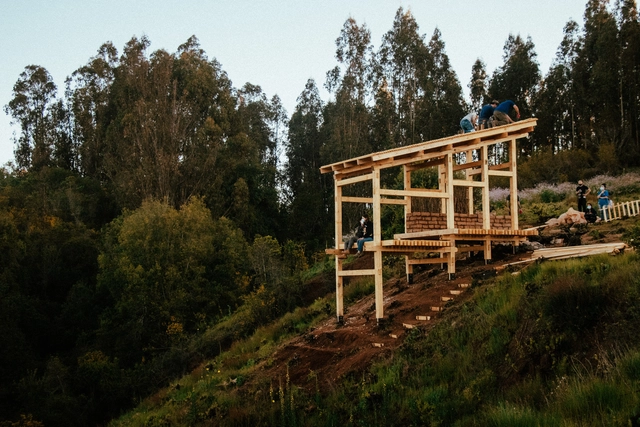
Students and faculty from the Architecture program at UDD SurSur in Concepción, Chile, traveled to the Ñuble Region to build Project 3, the Dañe Üñüm Lookout. This project, led by third- and fourth-year students, introduced them to new construction processes where joinery, timber, and adobe were key to shaping the design. The process was guided by school faculty and subject-matter experts, specifically the Hermanos Ducci collective for mortise-and-tenon joinery and architect Amanda Rivera for earth construction.
For its 43rd edition, the Grand Jury of the 2022 Konex Awards has selected the 100 most outstanding figures of the last decade in Argentine Visual Arts, spanning the period from 2012 to 2021. Honoring five individuals in each of the 21 established disciplines, the awards and diplomas of merit will be presented on Tuesday, September 13.
No País dos Arquitectos is a podcast created by Sara Nunes, who also runs the architectural film production company Building Pictures. The podcast aims to profile the professionals, projects, and stories behind leading contemporary Portuguese architecture. With just over 10 million inhabitants, Portugal is a fascinating country when it comes to this professional field, and its architectural output punches far above its population or territorial scale.
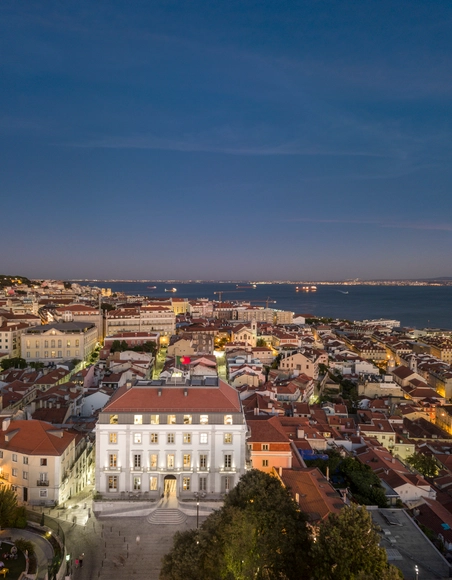
In this episode of the fourth season, Sara talks with Teresa Nunes da Ponte about the restoration of the Palácio de Santa Catarina and the centuries of history in the city of Lisbon. Listen to the conversation and read part of the interview below.
The 2022 Shenzhen Creative Home Design Week (hereinafter referred to as "Design Week") has successfully concluded. Against the ongoing backdrop of the pandemic, ArchDaily partnered with MEFine to present a themed design forum, "One Step Ahead: Contemporary Reflections on Dwelling." Hosted as part of "Design Out Loud"—a forum series dedicated to design and creativity curated by Design Dome—the event has successfully come to a close, leaving behind a wealth of memorable insights.
https://www.archdaily.com/1132480/archdaily-x-shenzhen-creative-home-design-week-forum-one-step-ahead-contemporary-reflections-on-dwellingDai Le
The Northern Hemisphere is known for its harsh winters, with sub-zero temperatures that stand in stark contrast to the Brazilian summer, often keeping people indoors and making them feel a bit down.
A Brazilian project aims to help counter this by bringing a "second sun" to Winnipeg. Selected in an international public competition, the "Sunset" installation, designed by São Paulo-based architecture firm Democratic Architects, seeks to revitalize the Canadian city during its coldest months, when average temperatures drop to minus 39 degrees.
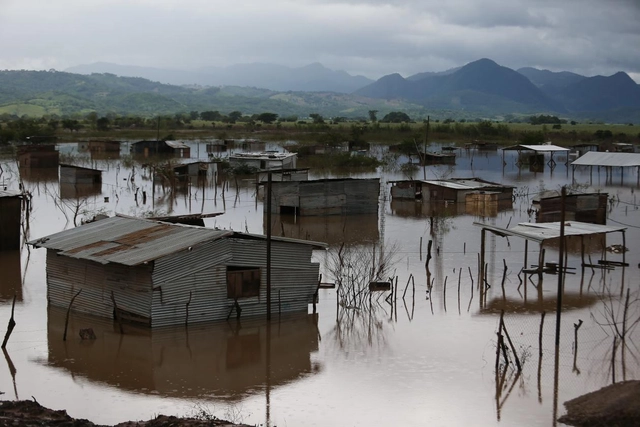
Flooding after a Category 4 hurricane in Nicaragua. The increased intensity of storms is linked to climate change. Photo: European Union, 2020/D. Membreño
High in the Andes, glaciers have retreated and shrunk under the effects of climate change. Around four million people depend on the glaciers for water, yet they have lost nearly a meter of thickness over the last 20 years.
https://www.archdaily.com/1132495/commitments-ambition-and-frustration-latin-americas-progress-on-climate-issuesAlex Simpkins, Caroline M. Rocha Frasson, Héctor Donado e Carolina Genin
On Wednesday, December 7, 2022, the Chilean Ministry of Housing and Urbanism (Minvu) announced that architect Joan MacDonald, who served as undersecretary of this ministry between 1990 and 1994, has become the first woman to win the National Urbanism Award. The award ceremony will be held in January 2023.
Belo Horizonte-MG. Photo by ciqueira, via Visualhunt
During the final discussions for the approval of Belo Horizonte's Master Plan in 2019, the proposed charging of the Onerous Grant of the Right to Build (OODC) sparked intense debate and emerged as the main political obstacle to its passage. Several institutions, including UN-Habitat, took a stance on the matter. Ultimately, what is the OODC and what are the effects of this planning instrument on the urban territory?
https://www.archdaily.com/1132430/what-is-the-onerous-grant-of-the-right-to-build-and-how-it-helps-make-cities-more-just-and-sustainableBruno Felin, Laura Azeredo, Luana Betti e Priscila Pacheco
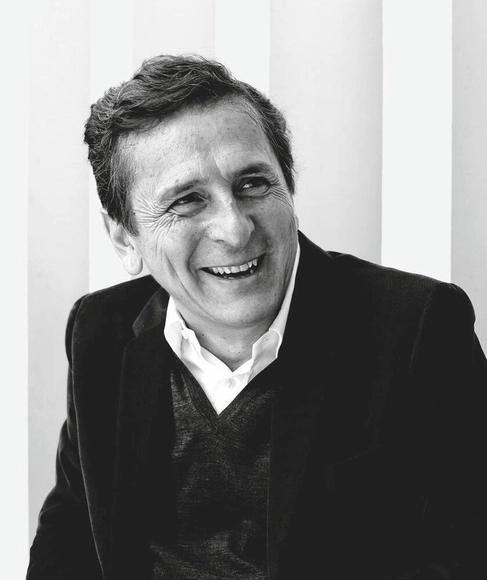
Architect Emilio Tuñón. Image via Ministerio de Transportes, Movilidad y Agenda Urbana
Today, it was announced that architect Emilio Tuñón has been awarded the 2022 National Architecture Prize, presented by the Ministry of Transport, Mobility, and Urban Agenda (Mitma).
The firms Gênesi and EVO Arquitetos were awarded third place in the national competition Iconicidades, organized by the Government of the State of Rio Grande do Sul and launched in April this year. The initiative sought to select the best proposals for transforming public spaces into areas that stimulate the creative economy in the cities of Pelotas, Rio Grande, Santa Maria, Cachoeirinha, and São Leopoldo.
https://www.archdaily.com/1132427/genesi-and-evo-arquitetos-awarded-in-the-requalification-competition-for-the-casa-da-feitoria-and-immigrant-museum-in-sao-leopoldoArchDaily Team
Founded in Shanghai in 2013, genarchitects is a full-service design practice led by three principals: Fan Beilei, Kong Rui, and Xue Zhe. The practice's design work and academic research have been widely published in leading academic journals and professional media, including Architectural Journal, World Architecture, Time + Architecture, New Architecture, and Architecture China. Their work has also been featured in numerous monographs published by prestigious international publishers such as Thames & Hudson (UK), Birkhäuser (Germany), Images Publishing (Australia), and China Architecture & Building Press. Their recently completed project, "Dingshu Adult Education School," was featured as the cover story of the May 2022 issue of Architectural Journal. Other completed projects have been exhibited at prestigious venues and events, including the Venice Biennale of Architecture, the China-Europe Architectural Invitation Exhibition, the Harvard GSD exhibition on contemporary Chinese architecture, and the Shanghai Urban Space Art Season (SUSAS).
The principals of genarchitects currently serve as guest design studio instructors at the Department of Architecture, Tongji University, teaching in the Experimental Class for Interdisciplinary and Creative Talents. They have also served as guest critics at Southeast University, Tianjin University, and the China Academy of Art, and have been invited to deliver academic lectures at renowned institutions and venues, including Tongji University, Nanjing University, the University of Hong Kong Shanghai Study Centre, TEDx, and the Power Station of Art (PSA) in Shanghai.
The finalist projects for the 2022 edition of the Mapei Award have been announced. The prize aims to promote sustainable architecture by recognizing projects that combine high architectural quality with the lowest possible environmental impact. Addressing the social and environmental challenges of the 21st century, the Mapei Award is presented to both new construction and renovation projects.
Founded in 2014, PROJECT Profile Architecture is an internationally recognized design and research collective. Currently, the team consists of over a dozen members, with studios in Beijing, Shanghai, and Shenzhen. Its founders, Chang Ke and Li Wenhan, graduated from Delft University of Technology in the Netherlands and the University of Applied Arts Vienna, respectively. Registered architects in the Netherlands, they practiced for several years at major design firms in Europe and China. As specialists in urban renewal and public architecture, the core philosophy of PROJECT Profile Architecture is built on "demand as context, resistance as driver, and innovation as inquiry." PROJECT Profile Architecture seeks to break the boundaries of design, crossing the limits of scale and category to define each design commission as an integrated, comprehensive "PROJECT." The firm focuses on the unique parameters of each PROJECT, strategically proposing tailored solutions and exploring new spatial programs and typologies—particularly those emerging from civil society. By connecting design with real life, they activate and channel the vitality generated by these new models, aiming to contribute to contemporary urban and rural spatial design.
PROJECT Profile Architecture provides full-process design consulting services ranging from programming, architecture, landscape, and interiors to furniture, product design, signage systems, and construction consulting. Instead of treating design as isolated cases, they use the concept of the "PROJECT" to transform design into a continuous, research-driven system with a creative core. They are committed to exploring architectural research and practice rooted in China's current socio-political landscape. The firm operates through a collaborative, research-oriented methodology where all design staff participate in project discussions and decision-making. Viewing design as a form of collective intelligence, they uncover new ideal mechanisms within reality through diverse perspectives. Integrating localized practice with civic engagement defines their current trajectory. By balancing small-to-medium-scale bespoke commissions with large-scale public architecture competition entries, PROJECT Profile Architecture strives to carve out a viable path for a localized professional architectural practice—one that bridges market demands and academic inquiry. Now, we warmly invite you to join us and forge this path together.
We are pleased to present the finalist projects for the 2022 Obra do Ano Award. After two weeks of nominations, the favorite projects have been chosen from hundreds of buildings constructed in Portuguese-speaking countries. Our expert jury, composed of our own readers, has once again done an excellent job selecting these 15 projects.
From today until March 30 at 11:59 PM (Brasília time - GMT-3), you can vote once a day for the projects you consider to be the best examples of contemporary Lusophone architecture. The results will be announced on March 31.
A quick search is all it takes to realize there is no shortage of knowledge, experience, and innovation surrounding mobility within and between urban centers. Arquicast invites two experts on the subject to join the debate: architect Fernando Lima, PhD in Urbanism from UFRJ, adjunct professor at UFJF, and Visiting Professor at Pennsylvania State University; and administrator Rodrigo Tortoriello, who holds an MBA in Transportation Engineering from UFRJ and is the former Extraordinary Secretary of Urban Mobility for Porto Alegre.
Primeiro lugar. Image Cortesia de Prefeitura Municipal de Flores da Cunha-RS e Instituto de Arquitetos do Brasil – Departamento do RS (IAB RS)
The national competition for the redevelopment of Avenida 25 de Julho in Flores da Cunha, RS—organized by the municipal government in partnership with the Institute of Architects of Brazil – Rio Grande do Sul Department (IAB RS) and supported by the Council of Architecture and Urbanism of RS (CAU/RS) and the Brazilian Association of Landscape Architects (ABAP)—has announced its winning projects.
Videos
Los augurios. Image Cortesía de Festival Model
How do we actually give citizens the ability to discover and understand what is happening around their cities? This is one of the key questions raised by Eva Franch, artistic director alongside Beth Galí and José Luis de Vicente of Model - Barcelona Architectures Festival.
How do we bring these issues to the table, into public debate, and into the public sphere? One answer could lie in augmented realities—technologies that allow us to visualize parts of the real world overlaid with new information through a technological device. For this architecture event, in addition to the five temporary physical installations scattered throughout the city, five augmented reality installations were produced, reflecting the event's different themes: Between-Generations, Between-Cultures, Between-Species, Between-Classes, and Between-Materials.
Established by master plans, zoning indexes consist of a set of regulations that govern building dimensions relative to the lot on which they are built. These requirements vary according to the zone in which the land is located and are divided into three main principles: Lot Coverage, Floor Area Ratio (FAR), and Permeability Rate. Learn what each one means and how to calculate them below.
The pioneering Black feminist Gloria Jean Watkins – better known by her lowercase pseudonym bell hooks – recently passed away at the age of 69. She leaves behind countless ideas that serve as the foundation for modern critiques of race, class, and gender.
Following her death, an essay published by hooks in 1998 resurfaced on a blog she occasionally wrote for, Lion’s Roar. The piece, titled “Design: A Happening Life,” is so relevant today that it is hard to believe it was written 25 years ago.
.jpg?1653069637&format=webp&width=640&height=580)