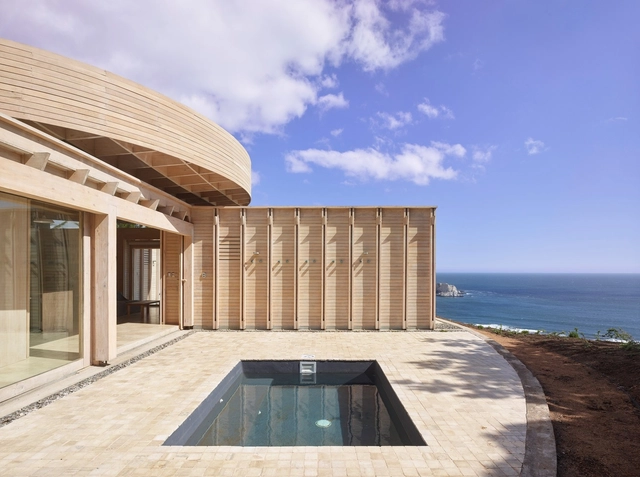
It is 12:11 PM on November 7 (2018). An "S" on the door indicates who this bathroom is supposedly for. I am in a bathroom located in a small building designed in the 1950s by Vilanova Artigas, the Brazilian modernist architect, in the Santa Cecília neighborhood. This is my second time inside, and to me, it is still a space slowly revealing itself. At first, what really caught my attention was the almost-purple blue cast by the blacklight, which tints every tone in the room toward that color. It brings a deep sense of serenity during the day.
Architect Severiano Mario Porto passed away today, December 10. At 90 years old, the architect died at 11 a.m. this Thursday from coronavirus. The burial will take place tomorrow, December 11, at the Parque da Colina cemetery in Niterói, Rio de Janeiro. In compliance with social distancing guidelines, the wake will be open only to the family.
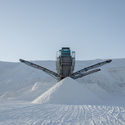
La serie titulada Agua, minería y éxodo forma parte de una investigación visual llevada adelante por el fotógrafo Marcos Zegers que explora las tensiones culturales y las alteraciones territoriales derivadas de las actividades mineras y extractivas en el desierto de Atacama.
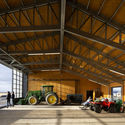
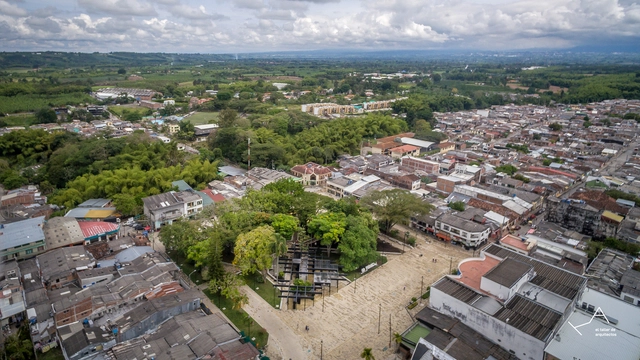
In Latin American countries, the most common method for distinguishing rural areas from urban spaces is based on analyzing the number of residents in a given zone, classifying as "rural" any locality with a population under 2,000. In these contexts, low density and scattered development typically allow the natural landscape to predominate over the built environment.
Originally published as "El espacio público en asentamientos de origen informal: una construcción colectiva del espacio social" in the third edition of Revista CLEA —an annual publication of the Latin American Coordinator of Architecture Students (CLEA)—, this article argues that the most important aspect of public space is the opportunity it offers to build ourselves as citizens.
The production and meaning of public space in informal settlements are driven by the people who inhabit them. Consequently, the process of forming the concept of publicness is forged from the moment of occupying a void that lacks municipal services (Hernández, 2011). This stems from the fundamental need for shelter, which shapes this void through housing as the primary objective of the individual.
Isaac Michan Daniel of Michan Architecture, as well asLuis Beltrán del Río García and Andrew Sosa Martínez of the Mexican firm VRTICAL, have been recognized with the 2020 Architectural League Prize. Established in 1981 to recognize exemplary and provocative work by young practitioners, the Architectural League Prize is an annual competition organized by The Architectural League and its Young Architects + Designers Committee. This year's jury was comprised of the Young Architects + Designers Committee—Kutan Ayata, Mira Henry, and Kevin Hirth—alongside Lucia Allais, Paul Lewis, Anna Puigjaner, and Nanako Umemoto.
In the architecture of Peru, concrete took center stage during the development of the Modern Movement. In pursuit of a new urban geography, many architects set out to renew their architectural languages. As a result, new concrete buildings—residential, office, and commercial towers—began to emerge across the city, leaving behind the Neocolonial and Republican styles that had long characterized Lima's architecture. Today, the structural advantages, versatility, expressiveness, and aesthetic value of concrete continue to make it a preferred choice for many architects, keeping exploration around the material highly relevant.
One thing that unites all human beings is that during the first years of our lives, we absorb our surroundings to develop as we grow. Consequently, education plays an irreplaceably important role. In early childhood, however, learning differs from more theoretical methods, as young children assimilate knowledge through continuous experience, developing their motor skills and their sense of dimension and space in relation to their own scale and body.
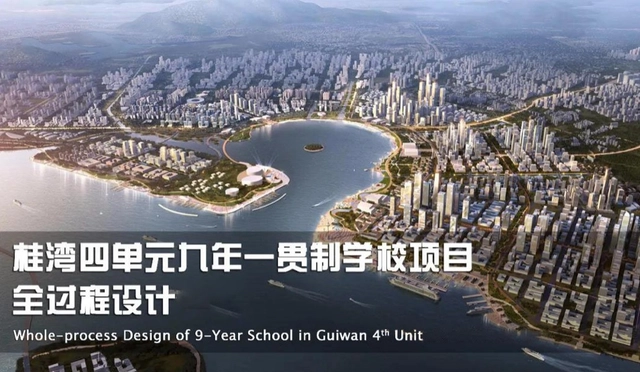
On July 23, the prequalification meeting for the international tender of the full-process design of the Guiwan Unit 4 Nine-Year Consistent School Project was successfully held. The jury was composed of renowned domestic architects and educational architecture experts. As Qianhai's first nine-year consistent public school, the project is a crucial pillar for establishing Qianhai as an educational hub and an effective practice in exploring full-process design management models. After carefully reviewing the conceptual proposals and commercial bids of the 76 registered applicants, the jury ultimately selected 5 shortlisted firms to proceed to the next stage.
https://www.archdaily.com/1123654/shenzhen-guiwan-unit-4-school-competition-seven-chinese-and-international-teams-shortlisted-for-pre-qualificationMilly Mo
The main source of spread—and likely the origin—of the novel coronavirus (COVID-19), first detected in December 2019, is believed to be the Wuhan seafood market in China. From the facility's workers and vendors, the virus began to spread, initially affecting the local population and subsequently reaching more than 200 territories and countries worldwide. Today, three months after the WHO's declaration characterizing the disease as a pandemic, traditional wholesale and retail markets have come under scrutiny as potential contagion hotspots. How can food access be guaranteed for a population without posing a risk to distributors, vendors, and buyers?
Active since 2006, the São Paulo-based practice 23 SUL, composed of partners Gaú Manzi, Ivo Magaldi, Luís Pompeo, Luiz Ricardo Florence, Moreno Zaidan, Tiago Oakley, and André Sant’Anna da Silva, features a portfolio across a wide range of scales, spanning from the domestic to the urban sphere, with projects developed for both private clients and the public sector.
"La Ciudad como Texto" (The City as Text) was the theme of the Arqfilmfest panel discussion, where designer Carola Ureta detailed her project focusing on public space and its transformations: facades, historical figures, and walls serving as a canvas to immortalize the social sentiment following Chile's October 2019 social uprising.
https://www.archdaily.com/1123663/santiago-after-october-the-city-as-text-by-carola-uretaArchDaily Team
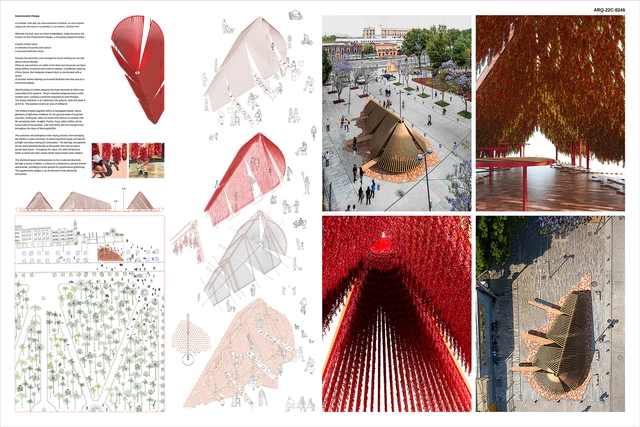
For the fifth time, the MEXTRÓPOLI Architecture and City Festival held the Arquine No. 22 | MEXTRÓPOLI Pavilion 2020 competition. On January 13, from 10:00 a.m. to 3:00 p.m., the jury—composed of Tatiana Bilbao, Ruth Estévez, Carlos Facio, Alberto Odériz, Saidee Springall, and Alejandro Tapia (as technical juror)—met at the Arquine offices to evaluate the 292 submitted proposals out of the 389 registered.
https://www.archdaily.com/1123664/results-22nd-arquine-competition-mextr-poli-pavilion-2020ArchDaily Team
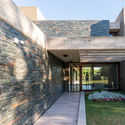
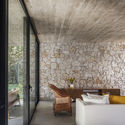
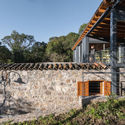
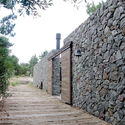
Historically, stone materials have offered ancient cultures the ability to build robust structures by interlocking stones of various shapes and sizes. The simplicity of the technique and its ability to deliver efficient, durable results have sustained the transmission of this construction method over time, enabling multiple contemporary architectural variations and reinterpretations.
Icons at Risk is an international initiative led by the organization Iconic Houses that seeks to protect and preserve residential projects—private homes, housing developments, and residential complexes—considered of high architectural relevance as representative examples of the ideas and principles of the Modern Movement. The initiative is based on the premise that many iconic homes around the world are currently disappearing—either falling into irreversible neglect, being radically transformed, or ultimately demolished—due to a lack of protective legislation. Because they are part of recent history, many of these structures—particularly houses from the second half of the 20th century—are not yet recognized as "heritage" and therefore lack sufficient legal protection. In many cases, these works serve as physical manifestos that reveal the aspirations and creative pursuits of 20th-century architects and designers within each country's specific urban landscape, making their historical significance clear.
In the daily routine of our conventional workday, we are influenced by many distractions that affect productivity, which have already become routine. However, now that we no longer lose time commuting and are restricted to activities we can do at home, we manage our time with more holistic priorities.
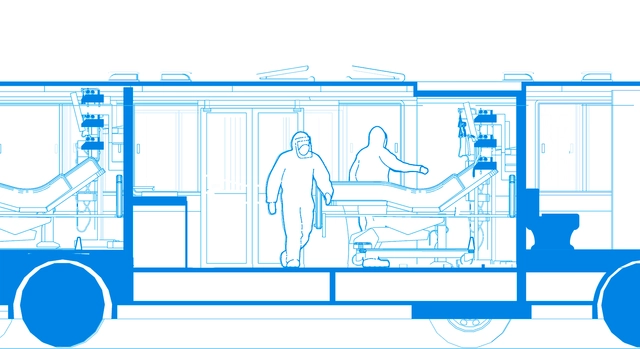
The Bogotá-based firm 57Uno focuses its practice on sustainability and has now channeled its creativity toward resilience and adaptability through Arquitectura en Tránsito (Architecture in Transit). This proposal aims to address the health emergency caused by COVID-19 by repurposing decommissioned buses from one of the primary contributors to poor air quality in the Colombian capital.
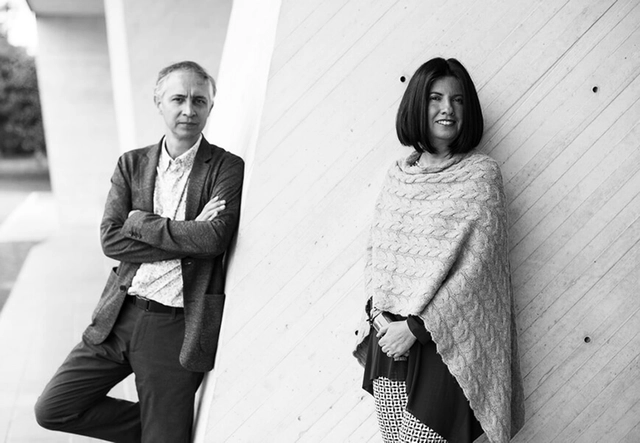
Daniel Bonilla y Marcela Albornoz. Image Cortesía de taller de arquitectura de bogotá
At the start of the lockdown period, ArchDaily conducted a series of interviews and talks in a more informal format. This allowed us to share a space via Instagram Live with some of the most influential contemporary architecture practices from our local sites and around the world.
Here, we present the conversation we had on our Colombian site with the founders of one of the country's most internationally and nationally renowned firms: Daniel Bonilla and Marcela Albornoz, leaders of taller de arquitectura de bogotá. Below is the transcript of our conversation.
When choosing the structural system for a house, several priority factors dictate the decision, with time and money being two of the most critical. While steel structures may not always be the most economical option, their prefabrication significantly accelerates construction times and, consequently, optimizes the overall budget. Moreover, they contribute to the project's aesthetic, providing lightness and a contemporary character.
In the following interview, we delve into his inspirations and ways of incorporating these new technologies, while also discussing his projections for the future of timber in Chile.
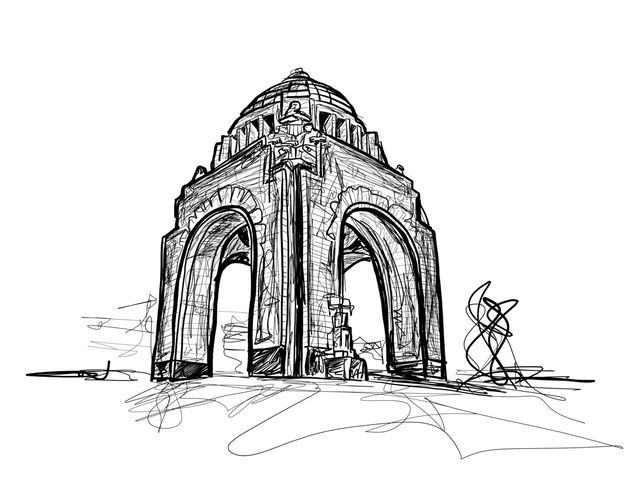
"Traveling Without Leaving Home" is a project by artist and designer Jorge Cejudo, also known as “Cejas.” Over the course of seven months, he shared a pandemic-born series of over 200 drawings on his Instagram account @soyelcejas, reconnecting with his followers after the emergency lockdown by inviting them to join him in imagining journeys through various cities around the world.
This article is a contribution from the Medellín-based firm El Taller de Arquitectos, who share their experience in structuring their practice by understanding and approaching architecture competitions as commissioned projects. Read on to explore their insights.
https://www.archdaily.com/1123680/el-taller-de-arquitectos-how-to-approach-architecture-competitions-as-commissions-in-colombiaEl Taller de Arquitectos
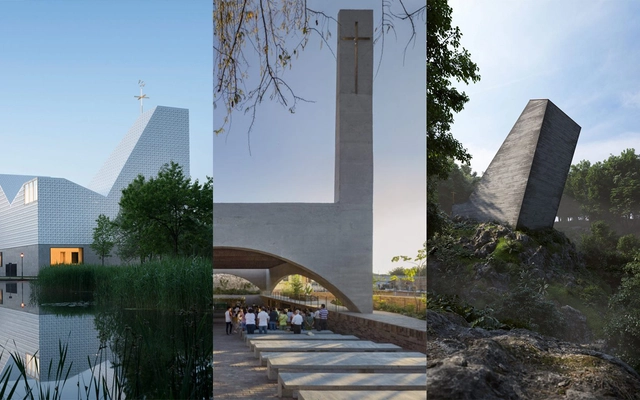
For the seventh time, the Frate Sole Foundation has launched the 2020 edition of the International Sacred Architecture Award, open to all professionals who have designed a church over the last decade (since October 4, 2010) within Christian denominations.
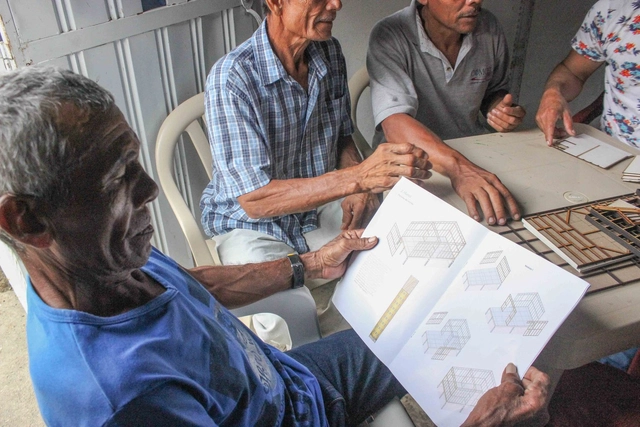
Social housing is one of the most compelling topics for our readers, representing a systemic challenge across most of Latin America. In Colombia, this challenge is even greater when it comes to rural social housing (known as VISR in Spanish), as inadequate infrastructure hinders dignified coverage throughout the country.