On Monday, July 27, at 8:00 PM, Gregório Duvivier will be the guest on the next episode of Meia Hora com o BrCidades. Duvivier is an actor, writer, columnist for Folha, host of HBO's Greg News, and a comedian with the Porta dos Fundos channel. He will discuss humor and democracy with Paolo Colosso and Tainá de Paula. The program will be broadcast live and simultaneously on BrCidades' Facebook, YouTube, and Twitter channels. Click the link, set a reminder, and join BrCidades:
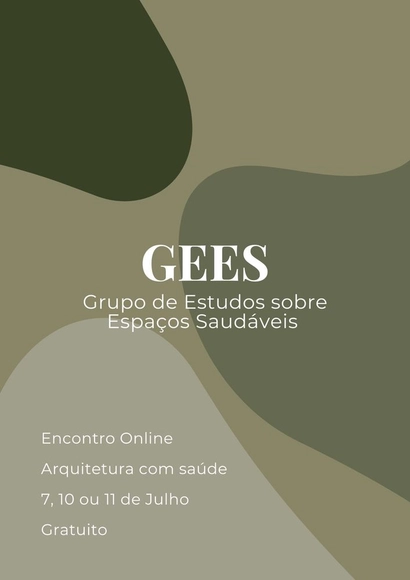
The Architecture and Health Study Group is a monthly event dedicated to discussing topics such as neuroscience applied to architecture, as well as the 9 Foundations of healthy buildings.
New award to recognize projects and initiatives that improve walking conditions in Brazilian cities The first edition of the Walkable City Award, organized by SampaPé! with the support of ITDP Brazil and Walk21, will reward and highlight public sector efforts to improve walkability in Brazilian cities in recent years.
We invite everyone to the launch discussion for Log 62, featuring a special session dedicated to architectural criticism in South America. The issue features essays from several countries, including Chile, Bolivia, Colombia, and Brazil. The panel will include editor Jaime Solares Carmona (PhD candidate, Yale University) and contributors Frederico Costa (PhD candidate, Unicamp), Mariana Alves (professor, U. Presb. Mackenzie), and Mariana Wilderom (professor, U. São Judas Tadeu).
"Brutalist Italy: The Art of Concrete" Photographs by Italians Roberto Conte and Stefano Perego will be presented at the Polo Cultural ItaliaNoRio in an exhibition making its Brazilian debut.
PLEA 2026 (Passive and Low Energy Architecture) is one of the world's most important international conferences on sustainable architecture, bioclimatic design, building science, energy efficiency, and urban resilience. The 2026 edition will take place from July 27 to 31, 2026, in San José, Costa Rica, marking the first time this prestigious gathering is held in Central America.
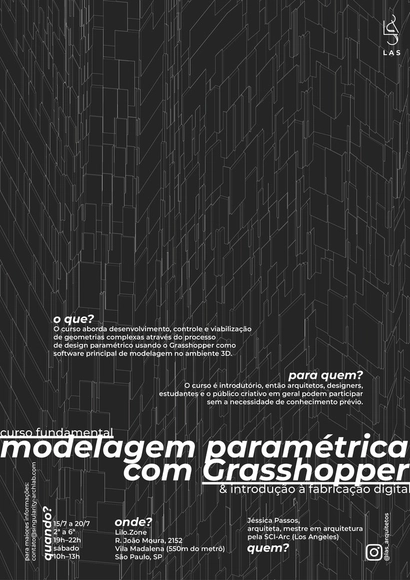
We will cover the development, control, viability, and fabrication of complex geometries by associating project parameters using Grasshopper, the most advanced generative modeling software for architecture and design.
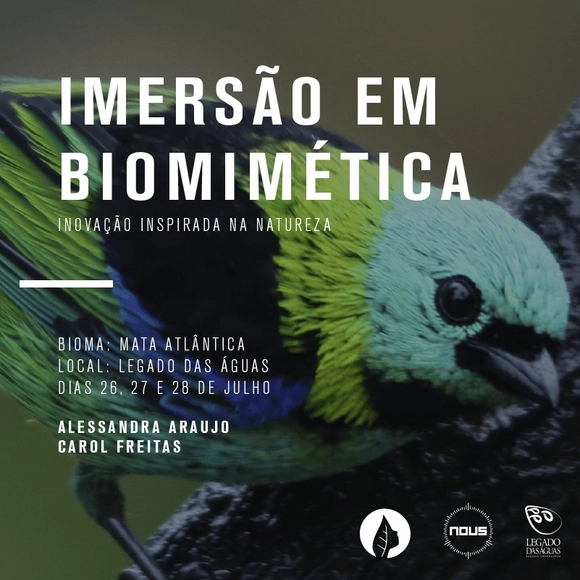
Drawing inspiration from nature to create innovative projects is the core concept of biomimicry. This science studies the vast array of strategies nature employs to ensure the survival and reproduction of living organisms on the planet. By understanding these strategies, it is possible to foster innovation across all forms of design. We utilize the creative journey known as Biomimicry Thinking, which enables nature-inspired creation even for those without a background in science.
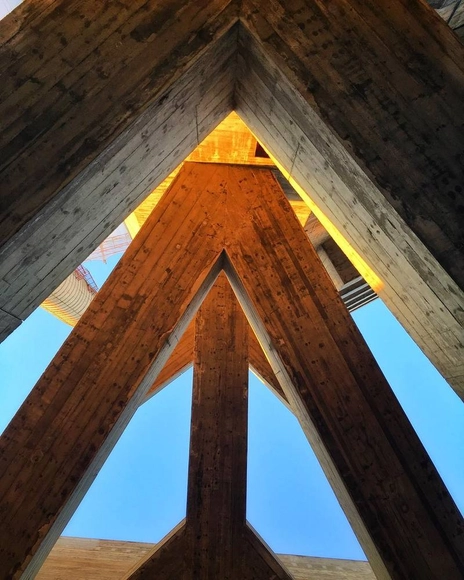
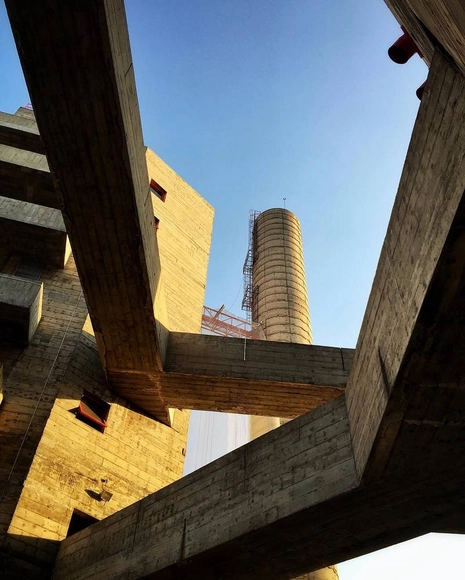
The "Modern Architecture in São Paulo" course presents a special edition in July focusing on Lina Bo Bardi. The sessions will feature historical-critical theoretical approaches to the architect's work, in addition to guided tours of two projects: MASP and SESC Pompéia. During these tours, the architecture will be experienced and discussed in detail on-site.
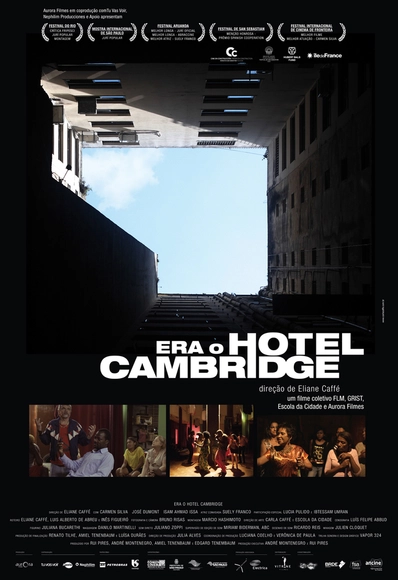
The award-winning film directed by Eliane Caffé chronicles the journey of refugees newly arrived in Brazil who, alongside homeless workers, occupy an old abandoned building in downtown São Paulo. The film ‘Era o Hotel Cambridge,’ directed by Eliane Caffé and winner of numerous awards, will be screened for free this Thursday, July 4th, at 7:00 PM at Espaço Itaú de Cinema, in an event hosted by Escola da Cidade and Arq.Futuro. The feature film, which premiered commercially in 2017 and inspired a book published by Edições Sesc São Paulo, follows the journey of refugees newly arrived in Brazil who, together with homeless workers, occupy an old abandoned building in downtown São Paulo. Amidst the daily tension of the threat of eviction, the film reveals personal dramas, comedic situations, and diverse worldviews. The screening will take place at Espaço Itaú de Cinema (Rua Augusta 1475), Room 1, starting at 7:00 PM. Following the screening, at 8:30 PM, there will be a panel discussion with guest speakers on the topic of the ‘Right to the City.’ Admission is free. The debate will feature Claudete Lindoso, representative of the MSTC (Movimento Sem Teto do Centro); Tomas Alvim, co-founder of Arq.Futuro; Carla Caffé, professor at Escola da Cidade; and Mariana Chiesa Gouveia Nascimento, who holds a master’s and doctorate in State Law. The film’s art direction was developed in partnership with students from the Escola da Cidade – Faculty of Architecture and Urbanism, a pedagogical and artistic experience that explored the boundaries between architecture and cinema, and between art and education. The project’s preparation took two years and was managed by a collective that transformed the entire building—a real-life conflict zone—into the creative set for the film. This collective was composed of four main groups: architecture students from Escola da Cidade, the film’s production team, leaders from the FLM (Frente de Luta pela Moradia), and the group of refugees. Through workshops held within the occupation, the raw material for refining the script and art direction emerged. The boldness of this experiment ensured the film’s authenticity and dramatic power. The experience led to the book ‘Era o Hotel Cambridge: arquitetura, cinema e educação,’ by architect, art director, and Escola da Cidade professor Carla Caffé. Written in graphic novel format and featuring interviews and essays, the book portrays the process of creating the film’s art direction, costumes, and set design with the participation of the school’s students, extending the pedagogical process beyond the school’s walls. Cinema with Architecture The partnership between architecture and cinema in this film is evident not only in the script but also in the approach to the film set, representing an unprecedented way of combining filmmaking with architectural practice. The sets were not designed to be dismantled, but rather to last as long as the occupation exists. In the script, the occupied building breathes like a character; the film unveils the subtleties of vernacular design, born from improvisation and the limits of survival. The building’s maintenance serves as one of the backdrops for the relationships between the characters. Conflicts are intertwined with the need to care for the space, such as the natural spring in the building’s basement, which still flows daily as it is located on the former bed of the Saracura River, one of the major tributaries of the Anhangabaú Valley. Recently, the Cambridge building was declared an area of social interest by public authorities, awaiting a retrofit for low-income housing. However, the highlight of this experience was strengthening the students' political engagement and helping them grasp the importance and social responsibility of the architect, working at the margins, influencing and provoking transformative situations and perspectives. Some of the film’s sets were designed to address not only the script’s requirements but also the needs of the Cambridge community. The students held open presentations for the residents of the occupation so that everyone could understand and provide feedback on the projects to be implemented. “The set design, understood as ephemeral architecture, was treated as a way to equip the meeting points and interaction areas of the building’s common spaces to encourage the movement’s spirit of collectivity,” comments professor Carla Caffé. The collaborative nature of the practical activities was extended through workshops by the Spanish collective Basurama (www.basurama.org), which develops architecture and urban resignification projects by utilizing discarded materials collected from recycling points throughout the city of São Paulo. The team was sensitized to the abundance and disposal of reusable materials, such as fruit crates, pallets, abandoned furniture, and tires, transforming them into shelves, armchairs, work tables, and objects that would be used both as set elements for the film and by the occupation itself. List of Festivals and Awards: – 8th Cinemigrante International Film Festival | Best International Feature Film (Periférica Cine Award) and Best Latin American Feature Film (CineMigrante/IOM Award) – Argentina, 2017 Best International and Latin American Feature Film – International Film Festival and Forum on Human Rights | Honorable Mention (International Jury) – Switzerland, 2017 – 2nd Brazilian Cinema Week | National Cinematheque of Mexico – Mexico, 2017 - Cine Brasil Marginal Exhibition – Switzerland, 2017 – 33rd Reflections of Iberian & Latin American Cinema | Villeurbanne Festival – France, 2017 – 29th Cinélatino Film Festival | Toulouse Meetings – France, 2017 – 39th Créteil International Women's Film Festival – Maison Des Artes | Films de Femmes – France, 2017 – 20th Tiradentes Film Festival – 2017 – Dominican Global Film Festival – Dominican Republic, 2017 – 40th Göteborg Film Festival – Sweden, 2017 – 9th Bengaluru International Film Festival – India, 2017 – 5th Diaspora Film Festival – Korea, 2017 – 35th Munich International Film Festival | International Independents – Germany, 2017 – 21st Résistances Film Festival – France, 2017 – 40th São Paulo International Film Festival | Best Film (Audience Award) – 2016 – 18th Rio de Janeiro International Film Festival | Première Brasil | FIPRESCI Critics' Award, Best Film (Audience Award), and Best Editing – 2016 – 64th San Sebastián International Film Festival | Horizontes Latinos | Spanish Cooperation Award | Honorable Mention – Spain, 2016 – 8th Border International Film Festival | International Competitive Section | Best Film and Best Performance (Carmen Silva) – 2016 – 11th Fest Aruanda of Brazilian Audiovisual | Best Feature (ABRACCINE Jury), Best Feature (Official Jury), and Best Actress (Suely Franco) – 2016 - 7th Pachamama International Film Festival | Border Cinema | Closing Session – 2016 – 18th Tbilisi International Film Festival – Georgia, 2016 - 20th Tallinn Black Nights Film Festival – Estonia, 2016 – 63rd San Sebastián International Film Festival | Industry Award | Cine en Construcción 28 | Finishing Support – Spain, 2015 – Hubert Bals Fund | Post-production Support – Netherlands, 2015 CREDITS (FILM): Era o Hotel Cambridge Director: Eliane Caffé Produced by: Rui Pires, André Montenegro, Edgard Tenembaum, and Amiel Tenenbaum Art Director: Carla Caffé and students from Escola da Cidade Director of Photography and Camera: Bruno Risas Editing: Márcio Hashimoto Cast: José Dumont, Carmen Silva, Isam Ahamad Issa, and Guylain Mukendi Guest Actress: Suely Franco Special Appearance: Lucia Pulido and Ibtessam Umran Genre: Drama Production: Aurora Filmes Co-production: Tu Vas Voir (France), Nephilim Producciones (Spain), and Apoio (Brazil) Distribution: Vitrine Filmes
The Modern Architecture in São Paulo course presents a special edition in July dedicated to Lina Bo Bardi. The sessions will feature historical-critical theoretical approaches to the architect's work, in addition to guided tours of two projects: MASP and SESC Pompéia. During these tours, the architecture will be experienced and discussed in detail on-site.
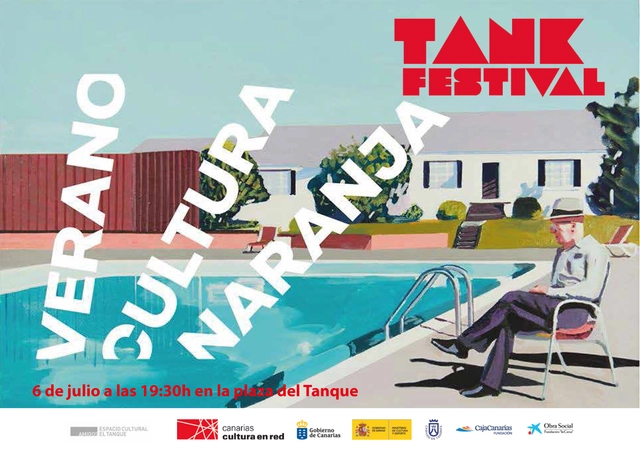
Poster for the 5th Canary Islands Tank Festival, 2019
As part of the fifth edition of the Tank Festival, on July 6, 2019, at 7:30 p.m., in the vacant lot currently surrounding the El Tanque Cultural Space in Santa Cruz de Tenerife, the works of more than 30 artists will be displayed—literally—on a tower created from wooden chairs. This action will advocate for strengthening the Cultural Space through consistent programming and appropriate public funding, as well as for the renovation of its surroundings based on the design by architect Fernando Menis, who proposed a banana tree garden.
The "Modern Architecture in São Paulo" course is offering special editions in July and August dedicated exclusively to Lina Bo Bardi. The sessions will provide historical-critical theoretical approaches to the architect's work, in addition to guided tours of two projects: MASP and SESC Pompéia. During these visits, the architecture will be experienced and discussed in detail on-site.
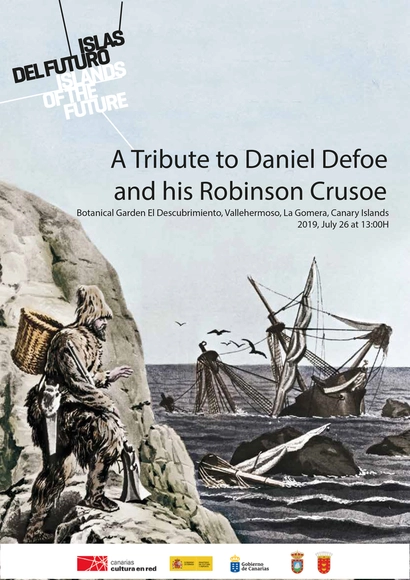
Poster for the closing event of the "Islands of the Future: Art, Architecture, and Thought" festival
Islands have always exerted a peculiar fascination on the individual and collective imagination, as evidenced by their diverse representations in art, culture, and literature, as well as their success in the contemporary tourism industry. While in exile and attempting to familiarize herself with the Caribbean islands, María Zambrano wrote: "the role of islands is to act as a magnet that draws the imagination toward something primary, not yet corrupted by human nature." This tendency to project the most idyllic places onto the edges of the sea persists in the collective imagination today. When we think of summer or vacations, our minds often gravitate toward the mental construction of islands—places where we dream and fantasize that happiness, calm, and harmony are possible alongside a sunset.