Three teams will be selected as winners of the Warming Huts Competition: Arts + Architecture Competition on Ice from submissions of designs for a warming hut or art installation. Winning entries will be placed along the River Trail located on the Assiniboine and Red rivers in Winnipeg, Manitoba. A jury will select the winning designs based on their creativity in use of materials, providing shelter, poetics of assembly and form, integration with the landscape, and ease of construction.
A pandemic has swept the globe and we are facing new challenges. Covid-19 has changed our way of living as it spreads through respiratory droplets, by direct contact with infected persons, or contaminated objects and surfaces. We have been forced to retreat into our homes in quarantine and isolation, making us to re-think our multifunctional spaces.
Architects have always been asked to breathe new life into ancient architectures inherited from the past or into historical –often monumental– artefacts that no longer respond to the customs and needs of the contemporary society. Nevertheless, the ancient architectures tell our story, therefore deserve to be restored with interventions that bring along a hint of modernity and show the trace of the design activity. The Architecture for Heritage course has been created on these premises.
XVI World Biennale of Architecture is an open international forum with professional participation of architects and students from all over the world, profiling a panorama of the tendencies and achievements of contemporary world architecture. Participants will discuss the topic “Value of Diversity in the Globalization Era”, will exchange of ideas with leading masters of the world contemporary architecture and will take part in the different sections of Interarch 2020.
Accelerate the City: Designing Resilient Urban Futures
Time moves slowly in architecture. While the technological, financial, transport, and commercial industries of the world evolve at an unprecedented, exponential rate, the evolution of cities themselves is not keeping pace. While everyday commodities, from phones to cars to banking systems, change before our eyes, we continue to live and work in buildings designed for a past era, and depend on urban infrastructures long past their capacities.
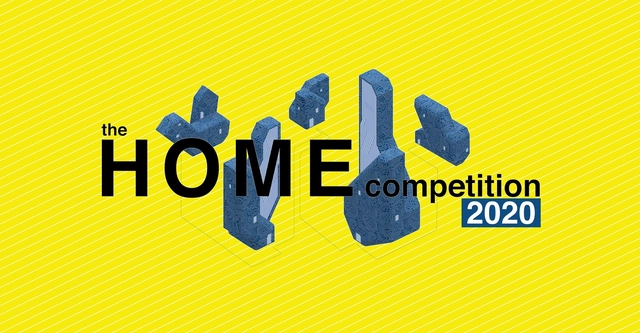
How do we define “home”? Although our ideas about home are constantly being rethought, the careful examination of “home” has recently come to our attention for architects and nonarchitects alike. Almost everyone has had to confront their perspective of “home” as they have adapted workplaces, social gatherings, fitness routines, and everyday life. We now not only internalize a home, but look at how our homes digitally connect to the rest of the world.
The festival attracts between 50-100.000 audiences every year to a public program of guided tours, film screenings, debates, seminars, workshops and exhibitions focusing on architecture and urbanism.
The 47th Nisshin Kogyo Architectural Design Competition
“Play” meaning in various ways, including playing like an infant, having fun with friends, indulging in drinks or gambling, taking breaks between work and study, having the leeway to things, seeking beauty in literature and art isolated from the secular world, and giving space to machinery part connection. In any case, it is like a source to life, an act full of humanity contrary to pursuing functionality and rationality.
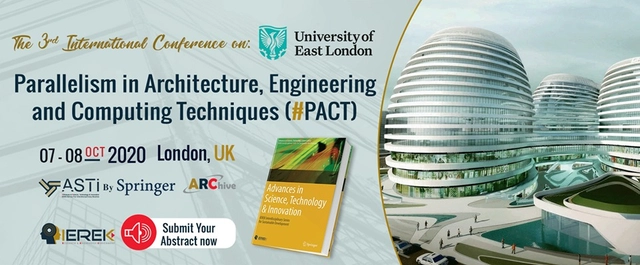
This conference unveils the latest trends of architectural technologies and computational thinking as a way of improving the performance of computational design software in architectural and engineering discourses. In a fast-paced world and in light of recent technological advancements due to industrialization and globalization, the way we see the universe has changed. That being said, the conference will shed a light on the ways in which parallelism can be integrated into different architectural and computing dialogues through stimulating a discussion on topics of Complex Digital Fabrication, Augmented Reality, Intelligent Environments, Advanced Fabrication Technologies, Big Data and more.
Founded in 315 BC and named after princess Thessalonike of Macedon, the sister of Alexander the Great, Thessaloniki is a historic city that has developed through the ages. Thanks to its location at the northwest corner of the Aegean Sea, Thessaloniki became a multi-ethnic metropolis. Hellenes, Romans, Ottoman Turks, Slavs and Jews passed through the centuries, leaving their mark on the city's culture and architectural style.
Tamayouz is delighted to invite students of architecture, urban design, urban planning, architecture technology and landscape design worldwide to register and submit their graduation projects. An independent international jury will review all entries and select the winners of Tamayouz International Graduation Projects Award.
Sadr City, also known as Al Thawra City, is located on the far eastern side of Baghdad in Al Rusafa. The original name, Al Thawra City (meaning revolution in Arabic), derives from the July 14, 1958 revolution. The city’s name was later changed to Al Sadr City after Mohammad Sadeq Al-Sadr – an important religious cleric – following the fall of Baghdad and the invasion of Iraq in 2003. In this brief, we will refer to it as ‘Almedina’, or ‘the city’, as locals often do.
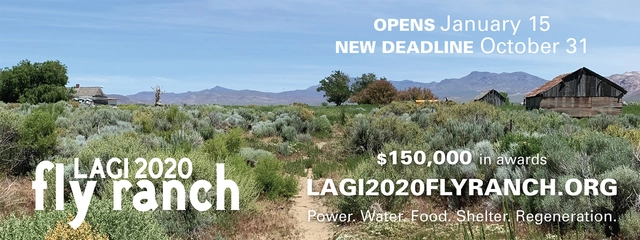
Land Art Generator Initiative and Burning Man Project have partnered to launch a multi-disciplinary design challenge—LAGI 2020 Fly Ranch—that will create the foundational infrastructure of Fly Ranch. The project is open to everyone everywhere and seeks creative solutions to systems of energy, water, food, shelter, and regeneration. You are invited to propose your regenerative artwork in this unique and stunning landscape. In 2021 selected design teams will be provided with an honorarium grant for the purpose of building a functional prototype on site.
"Mater of the waterless" Brian Li Zhang - TeamMinus
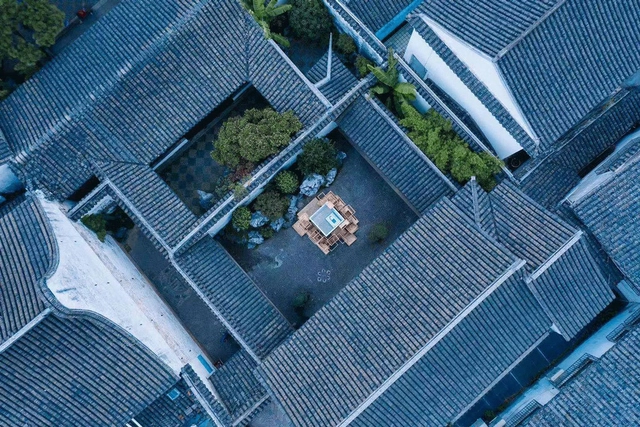
The project curated by Luca Molinari Studio, opened to the public on the 28th of October in Suzhou at the Master of the Nets Garden. The curatorial project aims to create a place where best contemporary culture and the strongest tradition can dialogue.
Espaço Interior is part of a research project concerning the construction of architectural imagination. It is also the title of one of the five main exhibitions at this year's Lisbon Architecture Triennale, curated by Mariabruna Fabrizi and Fosco Lucarelli. The exhibition aims to investigate the space between interior and exterior realities, seeking out those moments where these two realms interact most vividly.
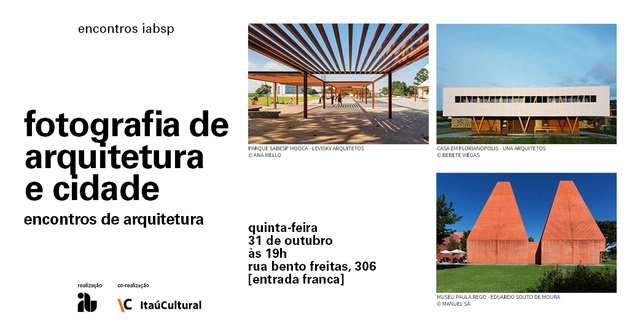
The fourth edition of the "Encontros de Arquitetura" (Architecture Encounters) will address the theme of architectural and urban photography, aiming to debate the ways in which space is represented through photography. Drawing on the contributions of each participant, the discussion will explore how differing perspectives and technical approaches result in unique narratives of the built environment.


.jpg?1592595648&format=webp&width=640&height=580)




.jpg?1584367191&format=webp&width=640&height=580)