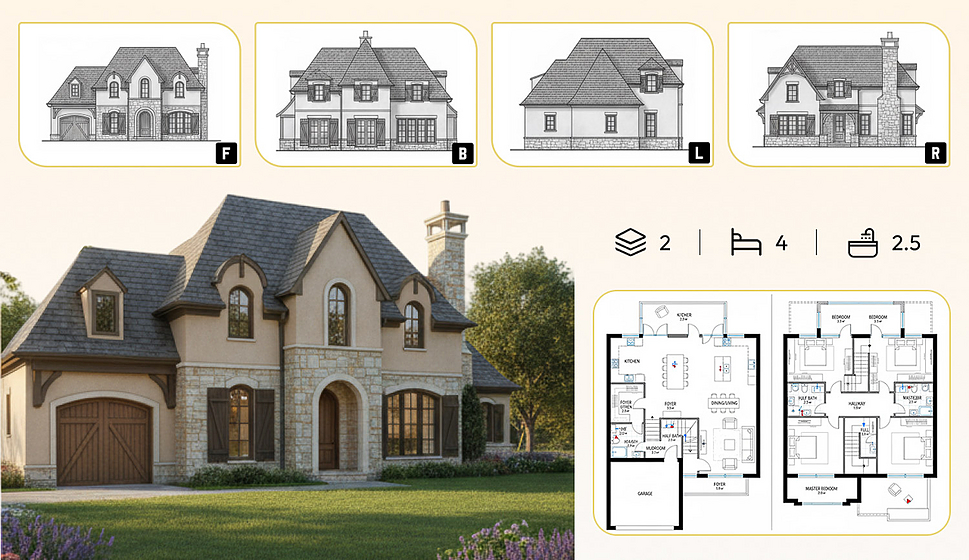
This guide covers a workflow that moves from project parameters to generated floor plans, 3D perspective views, exterior design exploration, and site context visualization, using AI tools in place of preliminary CAD and rendering work.
This guide covers a workflow that moves from project parameters to generated floor plans, 3D perspective views, exterior design exploration, and site context visualization, using AI tools in place of preliminary CAD and rendering work.

Don't be fooled. Size really does matter. Particularly when it comes to new urban housing developments, where the challenge of squaring housing density with quality of life and sustainability remains key.
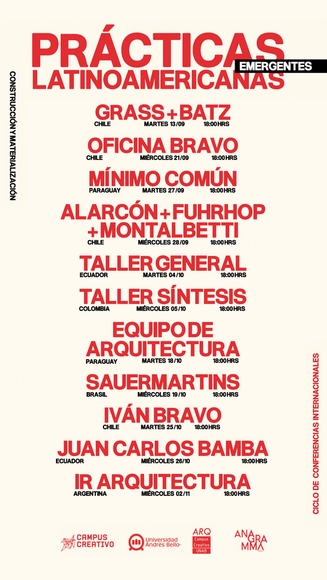
Campus Creativo and the School of Architecture at the Viña del Mar campus, through the Construction 1: Materialization course led by Sebastián López and Nicolás Olguin, invite you to a series of lectures and discussions featuring various emerging Latin American architectural collectives.

Hospitality is an industry made of people being hospitable to people, and our interaction with places is its foundation. If the zeitgeist of our era lies in the perpetual dance of shock and awareness of how we treat each other and the planet we live on, what considerations should we pose to inform and shape what’s next for hotels? If there’s ever been a moment to think about the future of hospitality, this is it.
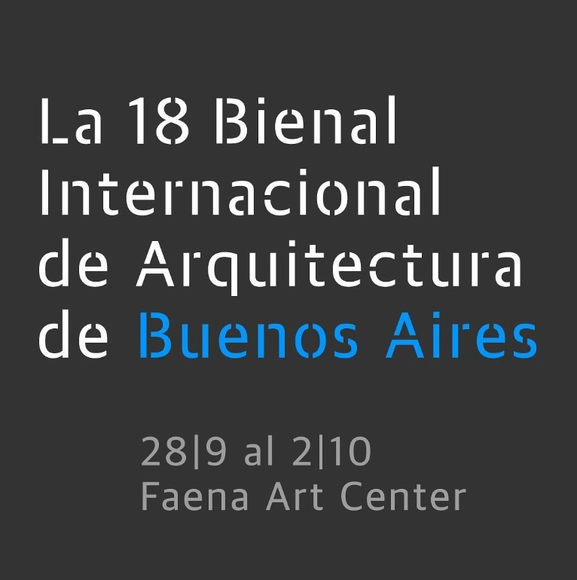
From September 28 to October 2, the 18th edition of the Buenos Aires International Architecture Biennial will take place at the Faena Art Center in Puerto Madero, featuring an exhibition that will bring together the most prominent professionals in contemporary architecture. Designed to serve as a platform for connection and visibility, the event will include a central exhibition and a conference program featuring national and international leaders in architecture and urbanism, alongside a series of special activities and associated programs. Admission is completely free and open to the public.
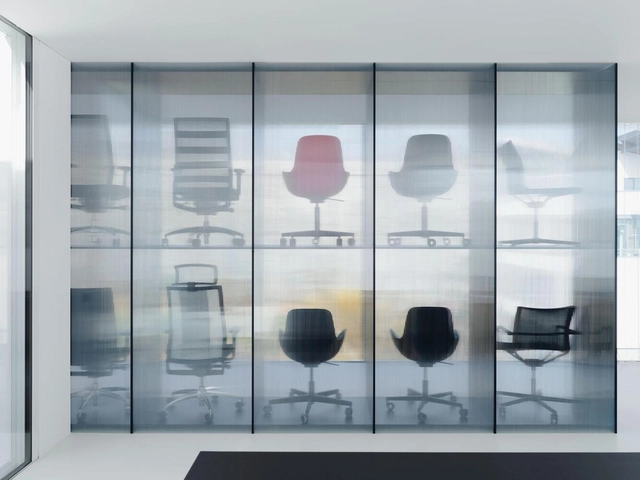
Anyone who has been writing about design for 25 years has seen many trends come and go. In retrospect, I even have to smile when I think about some of the theories – such as the one that things would ‘disappear’. That was actually predicted a good two decades ago with the advance of digitalisation.
Today, we know that analog hasn’t disappeared – and that we still want to live with things that can be kept and touched. The return of the vinyl record, for example, was unthinkable for many – and yet record players are enjoying great popularity again. Especially because we now have access to millions of songs via our smartphones, there's something special to the ceremony of putting on a record.
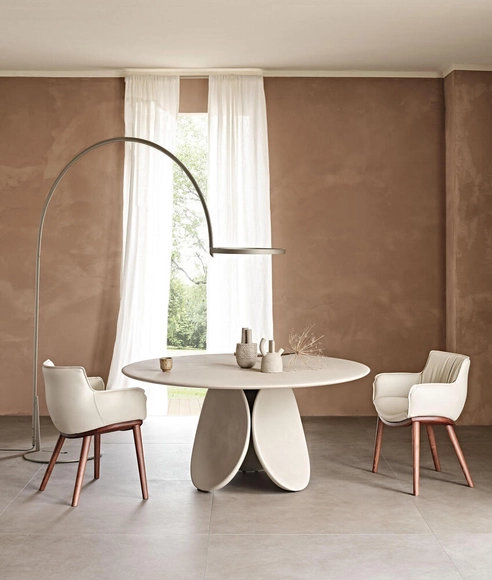
Even before the ‘C’ word came to dominate our lives, homes were starting to be viewed as sanctuaries, and our furniture required to work ever harder in form and function to coset us. Straight lines have been warping and chairs starting to envelop, while the soothing textures and patterns of nature are in high demand.

The Rio, an Anti-Racist City congress invites us to rethink the city as a democratic, open, and humanized environment. By developing a city project rooted in the fight against racism, it seeks to promote well-being for everyone, in every corner of Rio de Janeiro.

The 7th {CURA} Prize continues the initiative of hosting ideas competitions with themes aligned with current discussions in architecture, urbanism, and society, aiming to delve deeper into the discourse on contemporary Brazil.
Since 2020, the COVID-19 pandemic has further exposed social fragility. While the entire country was subjected to the federal government's incompetence and inhumane cruelty, it is clear that not all segments of the population were affected in the same way.
The new NOA outdoor living centre in Belgium offers boundless inspiration for the realisation of creative outdoor concepts, thanks to the collaboration of 24 high-end outdoor-living brands. Watch the video to find out more.
The story of the memorable curtain brightening up the DAAily bar at Swiss Corner during Milan Design Week is about more than just its colourful, natural patterns. As the Swiss-born artist Douglas Mandry, creator of the work in collaboration with Bally and Christian Fischbacher, explained during his Live Talk alongside the installation at the DAAily bar, "My work is driven by the global change we’re facing, addressing issues of climate change and environmental consciousness through visible elements."

Slow living is a trend inspired by growing interests in mindfulness and sustainability – and our growing cultural need to escape from the negative effects of fast-paced digital living and high consumption. Yet how exactly can the design of our interior and exterior spaces interpret this trend and help us slow down?

As companies rattle their social and environmental consciences and define new goals toward the achievement of absolute circularity, the whole lexicon of furniture design and manufacture is on the move. While exploring ways to limit its impact on the world’s ecological balance to zero, the industry is mobilising a whole army of r’s: from reuse and repurpose, to recycle and repair, remanufacture and replace, and increasingly also rental.

In a world where our understanding of what makes something luxury is being turned on its head, the once humble construction material, MDF, is coming off pretty well. When it comes specifically to the realm of design and architecture, what is now considered luxurious is not so much the shiny, rare resource, but the thoughtfully and sustainably produced. It’s defined not by carat or lustre, but by circularity, durability and adaptability. In the right hands, humble can become noble.

'You'll always find me in the kitchen at parties,' goes the old pop song from the 1980s.
But when it comes to Sven Rensinghoff, the marketing chief at premium German bathroom brand Bette, it’s mostly the bath. The first time I met him, a number of years ago, he was in the middle of a photo shoot at the ISH Frankfurt trade fair, lying in one of the manufacturer’s latest, high-end tubs. Clothes on, I should add. No water.
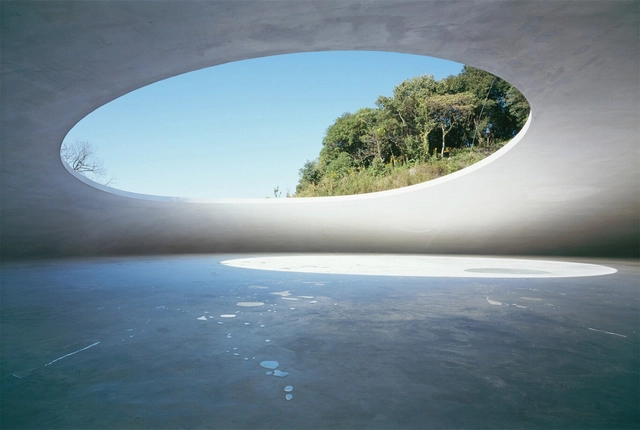
The course presents an overview of traditional, modern, and contemporary Japanese architectural production across four independent yet complementary modules. Drawing on cultural and historical contexts, the course analyzes the work of prominent Japanese architects from the 1930s to the present day. It also explores symbolic spatial and temporal relationships grounded in aesthetic principles such as ma, basara, wabi-sabi, yûgen, and mono no aware, among others. The goal is to broaden the repertoire regarding Japanese architecture and culture, offering exposure to new perspectives through lecture-based sessions.

BoConcept‘s Chelsea chair is designed by Karim Rashid, an industrial designer well known for his organically shaped products. With its rounded corners and simple format, it seems utterly natural and basic, almost like a non-design. Yet, obviously, a lot of thought and experimentation has gone into the process of creating such an unambiguous object.
Thirty years ago, a contemporary classic was launched by Dornbracht: TARA. The bathroom series became the brand's best selling offering, as its versatility and timeless modernism allowed for its widespread use. As the German luxury fittings manufacturer celebrates thirty decades of its most popular bathroom series, it's looking ahead and introducing new product variants and finishes to the modern classic.

To start the day in a relaxed state of mind, it is good to have a natural sense of inner calm, or, failing that, a peaceful space to retreat to where stress can be left outside. In their first collaboration, Duravit and designer Sebastian Herkner transform the bathroom into a place of true well-being – for the restorative cleansing of body, mind and soul. Here, there really is nothing to remind one of everyday life, as the Zencha bathroom series transports us away, paying homage to the traditional tea ceremonies of Japan.