1. ArchDaily
  2. Mini

Mini

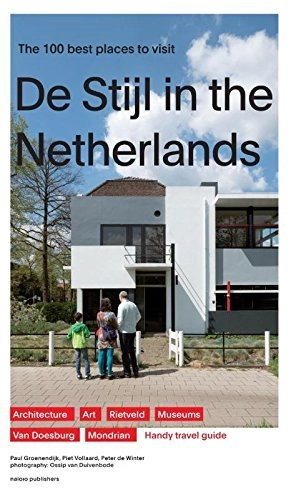
Guide to De Stijl in the Netherlands: The 100 Best Spots to Visit

Description via Amazon. The Dutch art movement De Stijl and its eponymous magazine have long exerted a strong influence on art and architecture, at home in the Netherlands and abroad. Published on the occasion of De Stijl’s centenary anniversary, the Guide to De Stijl in the Netherlands: The 100 Best Spots to Visit is the first publication to assemble, in a single practical and accessible guide, the 100 most important buildings, monuments and places of interest related to De Stijl. From icons such as the Rietveld-Schröderhuis in Utrecht and Café De Unie in Rotterdam to less well-known objects and places of interest (like De Stijl stained glass windows), all accompanied by surprising facts, details and practical information, this handy volume will become the De Stijl bible for those wanting to discover the Netherlands in primary colors.

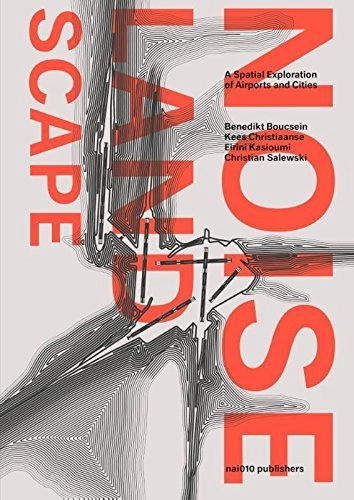
The Noise Landscape

The expansive areas around large airports, affected by noise, infrastructure, and transient forms of architecture, have until now not been researched as a phenomenon. But these noise landscapes are emerging worldwide, often surpassing the neighbouring city in size, and sometimes rivalling it in economic importance. On the basis of eight European case studies (Amsterdam, Zurich, London-Heathrow, Frankfurt, Munich, Madrid and the two Paris airports) this book provides the first account of how these landscapes emerged as the result of technical determinations, what is taking place in them, and how they can be interpreted.

Dutch Dikes

The Netherlands has many thousands of dikes. A pivotal element in the Dutch landscape and one of the oldest features of the country's extensive water management program, the dikes of the Netherlands have significant cultural, historical and environmental value. But despite their importance to the history, economy and culture of the Netherlands (and their contemporary international relevance as the world scrambles to develop and implement effective flood-control strategies), Dutch dikes have never been properly mapped out or systematically studied. Many of them fail to meet current safety standards, though they are still a ubiquitous presence in the Dutch landscape. In this book, built around research producing the first dike map of the Netherlands, the Dutch dikes are for the first time described, interpreted and portrayed in all of their surprising variety of functions and guises.

Post-War Reconstruction in the Netherlands 1945-1965: The Future of a Bright and Brutal Heritage

Europe was hurt badly during the Second World War. The Netherlands, despite the dimensions of the task ahead, the poverty and the signifi cant war damage, took up reconstruction expeditiously. Bombed cities and villages re-emerged from the rubble and thanks to central management, the Netherlands were redeveloped spatially. In economic and social terms, signifi cant innovations took place as well.

Writingplace: Investigations in Architecture and Literature

Writingplace marks an emerging discussion on the relationship of literature and architecture. The book, which grows out of an online platform of the same name, offers reflections on the role played by written language as a crucial element of architecture culture, and on the potential of using literary methods in architectural and urban research, education and design.For readers interested in the transdisciplinary encounters between architecture and literature, this volume offers both theoretical contributions that address concepts such as narrative and literary imagination, and contemporary explorations regarding the practical operability of literary approaches.

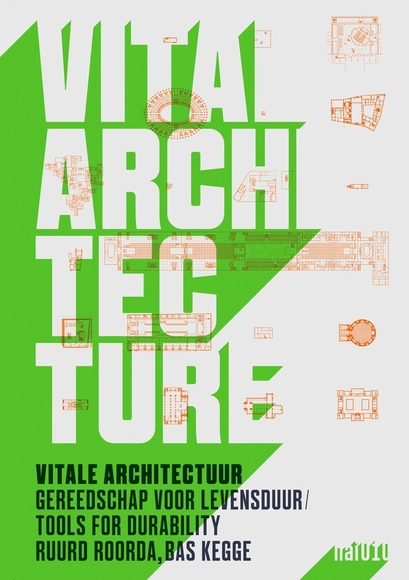
Vital Architecture: Tools for Durability

From the Pantheon in Rome to the Zollverein in Essen, “vital architecture” describes buildings with a future value, buildings whose architecture determines and guarantees their lifespan. The spatial quality of such buildings is the core of their value and sustainability, even--or especially--when their use changes. Vital Architecture focuses on the clients, users, architects and designers of such buildings.

Imagine No.10: Rapids 02

In 2014, a 3D-printed Canal House by DUS architects caught the attention of the world. Imagine 10 explores the potentials of Additive Manufacturing for architecture by discussing its implications for design and construction processes, and presents research projects and ideas for future applications.

Call for Applications: Summer [IN]STITUTE in Environmental Design

UC Berkeley's College of Environmental Design is now accepting applications from prospective participants in the 2016 Summer [IN]STITUTE in Environmental Design. This six week intensive summer program gives students the opportunity to test their enthusiasm for the material and culture of environmental design.

Concéntrico 03, Logroño´s Architecture and Design Festival

Architects and designers from Singapore, Brazil, Chile, Germany, France, Portugal and Spain participate in Concéntrico 03, the urban festival of ephemeral installations in Logroño.

Five days, from April 27th to May 1st, where urban design and architecture construct "a city within the city" to improve people's lives.

The route through the Festival's installations, as well as the various offices and debate forums, will offer the public the opportunity to reflect upon the city space and its influence on the lives of those that reside within it, regardless of their condition.

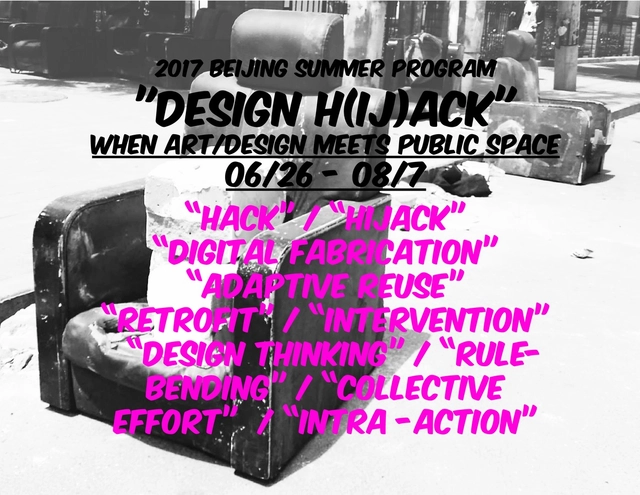
"DESIGN H(ij)ACK" When Art/Design Meet Public Space

2017 Beijing Summer Program (6-weeks)
"DESIGN H(ij)ACK" When Art/Design meet Public Space
From June 26th till August 7th

2017 AZ Awards Gala

The AZ Awards for Design Excellence celebrates the finalists and winners at a gala celebration on Friday, June 23 from 6 to 10 pm. Join colleagues and designers from around the world as we celebrate the very best in international architecture, interiors and product design. For more information and to get tickets, please visit http://azm.ag/AZAwardsGala17

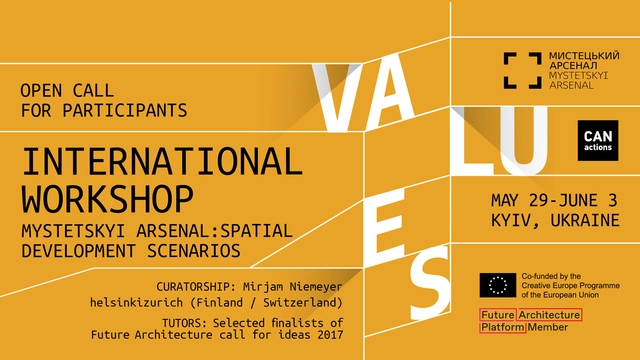
International Workshop Mystetskyi Arsenal: Spatial Development Scenarios

Format: 6-day international and interdisciplinary workshop in the framework of the 10th International Architecture Festival CANactions 2017 (with full-time involvement)
Curatorship: Mirjam Niemeyer / helsinkizurich (Finland / Switzerland)
Tutors: Selected finalists of the Future Architecture Platform: call for ideas 2017
Participants' profile: Critically-thinking practitioners, researchers, and artists with background in urban design, city planning, and architecture, economics, political and cultural studies, journalism, sociology and other related fields
Number of participants: Up to 24
CANactions provides: Accommodation in a hostel in the center of Kyiv (May 28 - June 4, 2017), lunches and coffee breaks, free tickets to all events of the International Architecture Festival CANactions 2017
Deadline for applications: May 07, 2017
Apply now: https://goo.gl/forms/3zIGL9C62NT1Vb253

Venice: A Provocative Paradox

Moderator: Louise Braverman, FAIA
Panel: Cynthia Davidson, James Biber, FAIA, Max Levy, FAIA

SCI-Arc Announces MAIN EVENT 13 Honoring Thom Mayne and Merry Norris

SCI-Arc is pleased to announce MAIN EVENT 13 returns to its Downtown Los Angeles Art District campus (960 E 3rd St, Los Angeles, CA 90013) supporting their endowment scholarship fund. This year, MAIN EVENT 13 will showcase SCI-Arc’s annual schoolwide exhibition of final thesis projects and presentations of its most talented and promising young minds. This most anticipated event will also will also recognize two stand-out pioneers in the field of design and architecture - famed Pritzker-Prize-winning architect and founder of Morphosis, Thom Mayne and arts advocate Merry Norris, founder of Merry Norris Contemporary Art.

"Architecture and the Art Museum" Panel Discussion

What is the place of the museum in the modern city? What role does architecture play? How can these buildings be effectively interpreted?

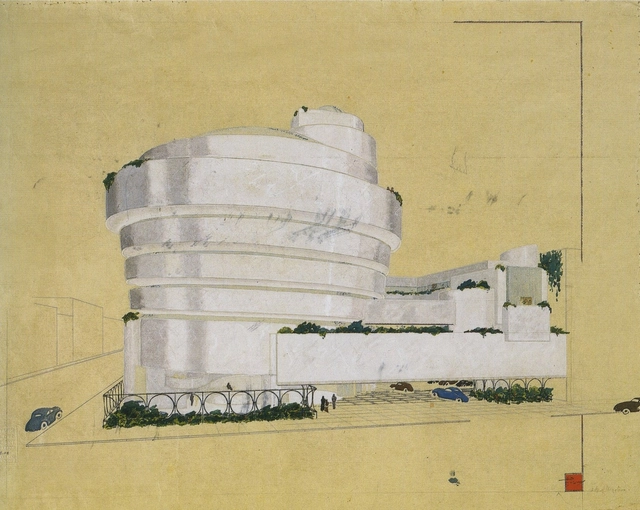
Frank Lloyd Wright’s design for the Guggenheim Museum in Manhattan broke with all existing conventions, setting a new standard for the postwar art museum and, together with the Museum of Modern Art, firmly establishing the city of New York as the cultural capital of the 20th century. A decade later, the significance of this new architectural genre was not lost on Georges Pompidou when he commissioned the cultural center that would eventually carry his name—and launch the successful careers of its architects, Renzo Piano and Richard Rogers—hoping that it would position Paris as New York’s cultural rival.

The Fantastic Seashell of the Mind: The Architecture of Mark Mills

Description via Amazon. Mark Mills was a visionary architect, a Frank Lloyd Wright apprentice whose innovative designs grow beyond Wright's work to uniquely blend structural principles and the organic forms of seashells. When he heard Wright say that seashells are Nature’s perfect architecture, Mark made that idea the foundation of his life’s work. As seashells change their forms to meet the needs of their inhabitants, so Mark adapted structural roof systems to shelter his clients, and he made them spectacularly beautiful.

The NAi Effect: Creating Architecture Culture

Since its first iterations in the early 19th century, the architectural museum has been one of the most significant forces in the creation and dissemination of architectural culture to a wide audience, while also serving as an important locus of authority for architectural discourse and practice. Architect and scholar Sergio Figueiredo’s new study, The NAi Effect: Creating Architecture Culture, elucidates the social and cultural aims of architecture museums and their impact in creating architecture culture through a critical survey of the history and the legacy of one such institution, the Netherlands Architecture Institute (NAi) in Rotterdam. This volume embarks on a probing exploration of one of the most important architectural institutions in the world, offering new insights into its history, how cultural policy operates on the ground, and how cultural institutions relate to a fast-changing global context.

LA+ Journal: Identity: Interdisciplinary Journal of Landscape Architecture

Ever since the 18th Century when Alexander Pope advised his peers to “consult the genius of place,” the idea that designers could interpret and then express the essential identity of a place has been venerated in landscape architecture. This issue of LA+ is devoted to critically exploring the nexus between place and identity with contributions from disciplines as varied as landscape architecture, architecture, philosophy, literature, ethics, marketing, anthropology, history, politics, and visual arts.

You've started following your first account!

Did you know?

You'll now receive updates based on what you follow! Personalize your stream and start following your favorite authors, offices and users.