Romullo Baratto is an architect with a PhD from FAUUSP and Managing Editor of ArchDaily. He previously coordinated the editorial team of the 11th São Paulo Architecture Biennial and served as Managing Editor of ArchDaily Brasil, where he led the platform to win the FNA Award—the first time the honor was granted to a media outlet. He collaborated on the editing of the book "Concrete Jungle", published by gestalten, and has curated architecture exhibitions in Brazil, Chile, Denmark, and Italy, as well as delivered lectures and moderated debates in Spain, the United States, and Portugal. His doctoral thesis investigates the urban landscapes of São Paulo through cinema. His work spans academic research and editorial practice, communicating architecture through texts, interviews, lectures, curatorship, and photography. Follow him on Instagram @romullobf.
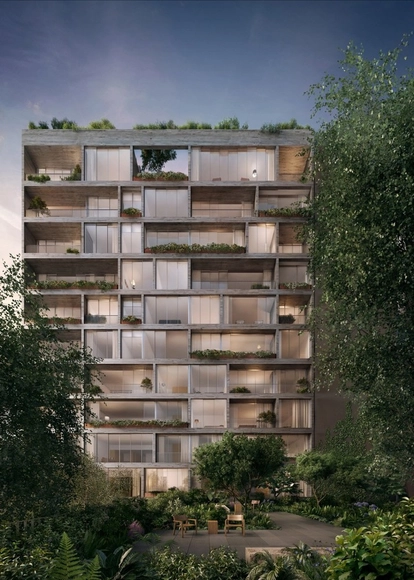
"Jardim" building, north tower. Image by Isay Weinfeld. Via YIMBY New York
Named "Jardim," the new residential project by Isay Weinfeld in New York is nearing completion. Comprising two towers positioned perpendicularly on a site adjacent to Zaha Hadid's first residential building in the city, the Brazilian firm's project is structurally well advanced, and cladding installation has already begun.
Known for its public transit system, Curitiba is taking an interesting step toward active mobility. Since last week, the capital of Paraná has been testing a type of pavement that generates electricity from the vibrations created along its bike paths.
Installed on the Belém River bridge near the Palácio 29 de Março in the city's Civic Center, the pavement captures vibrations from bicycles and pedestrians, converting them into enough electricity to power signal lights along the path.
The International Seminar "Innovative Management of Historic Neighborhoods – Restoration Factory" is an initiative by the Council of Architecture and Urbanism of Brazil (CAU/BR), in partnership with CAU/SP and the Graduate Program in Architecture and Urbanism at FAU-Mackenzie, with support from IAB/SP and CAPES (Coordination for the Improvement of Higher Education Personnel, under the Ministry of Education).
In the 57th meeting of the open course Arquitetura Paulistana, taught by architect Marco Artigas, students visited the Teatro Brasileiro de Comédia, designed by the firm Urdi Arquitetura. Begun in 2013, the project covers over 3,000 square meters of built area and involved collaboration with lighting, audiovisual, acoustic, and structural engineering professionals.
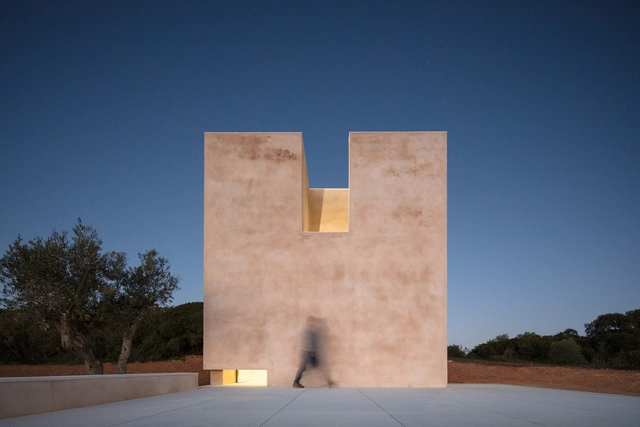
Portuguese architectural photographer João Morgado shared with us a series of images from Álvaro Siza's latest project, the Capela do Monte. This chapel is located in Barão de São João, in the Algarve region of Portugal. Part of the Monte da Charneca complex, Capela do Monte was commissioned in 2016 by a Swiss-American couple residing there.
Inaugurated in March of this year, the sandy colored, 10.34 x 6.34-meter structure was built at the highest point of a hill and can only be accessed by foot. Its monolithic geometry suggests, from outside, a serenity from the inner space. The wooden furniture within the chapel were all designed by Siza and manufactured by Serafim Pereira Simões Successors of Porto.
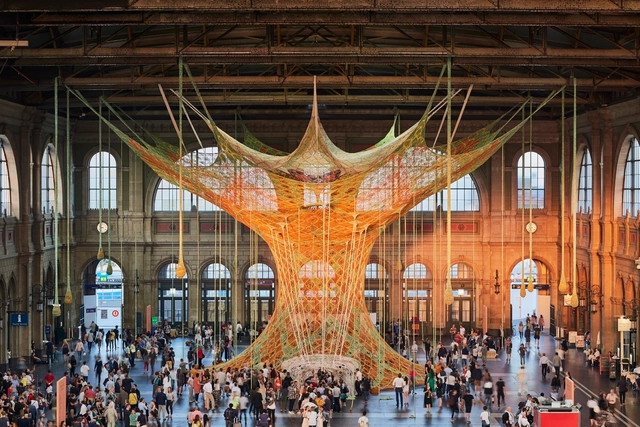
Brazilian contemporary artist Ernesto Neto recently realized a colorful sculpture made of hand-knotted cotton strips in the atrium of Zurich's Central Station. Titled Gaia Mother Tree, the installation resembles a giant tree and extends from the station's roof to its floor.
Exhibited by the Fondation Beyeler, Neto's sculpture is an immersive work of art, a space that one can enter into and walk around or remain and meditate. The Gaia Mother Tree will be on display until July 29th. A series of activities for adults and children, including musical concerts, workshops and debates, is scheduled to take place under the net of cotton.
The Belo Horizonte Municipal Secretariat of Culture has reopened the Pampulha Art Museum following a suspension of its projects, exhibitions, and the Bolsa Pampulha program. Since the 16th of this month, visitors can participate in the *Museu por Dentro* (Museum from Within) project, which offers a closer look at the museum's history, architecture, and collection, as well as its surrounding landscape.
The new initiative offers various activities, such as a guided tour of the building's interior and telescope viewing of the Pampulha Modern Ensemble, which includes the Church of Saint Francis of Assisi, the Casa do Baile, the Yacht Tennis Club, the Kubitschek House, and the Art Museum itself.
The film of the “Lake Pavilion” by depA, produced by Building Pictures, reveals the project's magical side, making viewers feel as though they have stepped into a landscape from the Brothers Grimm's fantastic stories.
However, the landscape is not German, but Portuguese. The project was built on the lake in Serralves Park and remained open between July 2017 and May 2018. It was commissioned for the exhibition “Live Uncertainty: An Exhibition from the 32nd São Paulo Biennial.”
The Council of Architecture and Urbanism of Brazil (CAU/BR) has sent an open letter to the president of the National Institute of Historic and Artistic Heritage (Iphan), historian Kátia Bogéa, demanding the professional minimum wage for architects selected through the national competition launched last week.
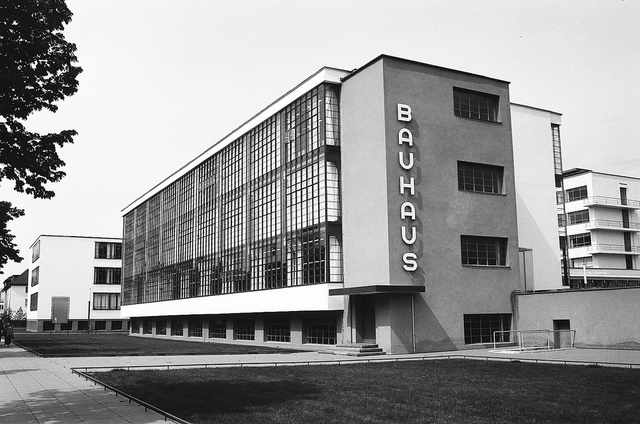
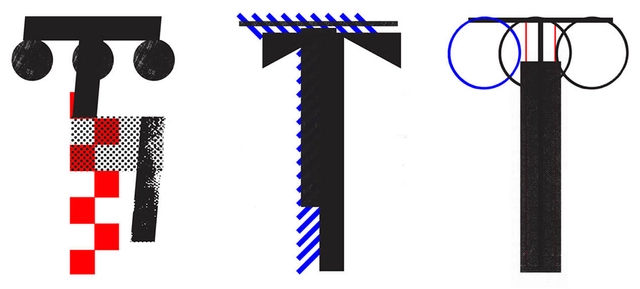
The idea of a total work of art - Gesamtkunstwerk - guided several schools and movements in the 19th century, including the Bauhaus, which brought the term into the modern era. With the school's unstructured architecture and avant-garde furniture design came new ways of designing clothing, graphics and painting, etc. In the Bauhaus different fields influenced each other, diluting the border between art and industry as they evolved together. When the school was closed 1933 many projects were left unfinished.
In order to revive some of the work begun at the Bauhaus, Adobe launched the Hidden Treasures project to revive five fonts inspired by the original designs of five of the school's masters: Joost Schmidt, Xanti Schawinsky, Reinhold Rossig, Carl Marx and Alfred Arndt.
This week, the National Institute of Historic and Artistic Heritage (Iphan) released the call for applications for a civil service examination that will open 411 positions across the country. Organized by the Brazilian Center for Research in Assessment and Selection and Promotion of Events (Cebraspe), the selection process was authorized on May 3 by the Ministry of Planning, Budget, and Management (MP) and is the result of a strong national mobilization aimed at highlighting the importance of preserving Brazilian cultural heritage to society.
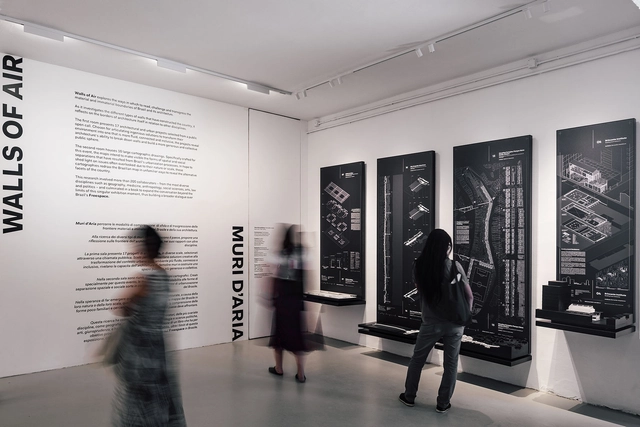
The chapter The Limits of Objects addresses the theme of Walls of Air at the scale of architectural and urban interventions, in an attempt to measure the capacity of recent Brazilian production to mediate conflicting relationships between the public and private realms.
In contrast to the cartographic approach, which maps the multiple types of barriers that shape the Brazilian territory, this section presents architectural objects that encourage transcending the walls present in our cities. The selected proposals share the motivation of investigating new ways to deal with the limits, divisions, and ruptures of urban fabrics. At the same time, they bring to light the pressing need to use design as a means to transform conditions of exclusion into opportunities to bring people together.
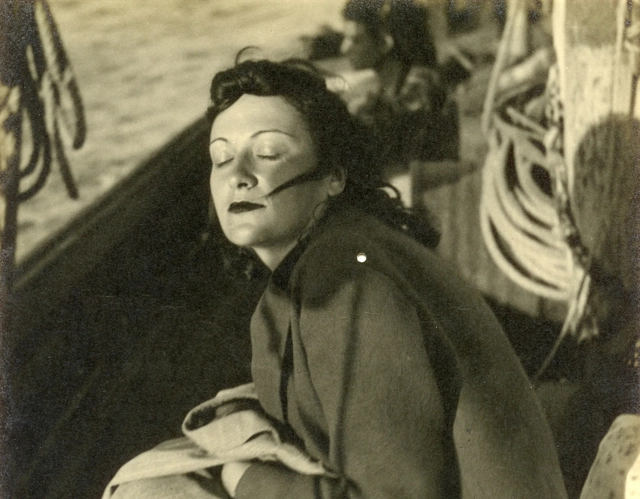
Having previously been the subject of a 2015 art installation by Isaac Julien titled Stones Against Diamonds, Italian-Brazilian architect Lina Bo Bardi will now have her life portrayed on screen in the film Ghost of Lina Bo Bardi, directed by Julien.
The 5th Lisbon Architecture Triennale has announced its title and theme: “The Poetics of Reason.” This title asserts that, despite its subjective and non-scientific dimensions, architecture is grounded in reason, and its goal is to shed light on the specificity of this rationality. Indeed, a foundation in reason and rationality is essential for understanding architecture—making it accessible to everyone, not just architects.
The Instituto Tomie Ohtake AkzoNobel Architecture Prize has announced the selected projects for its 2018 edition. In its fifth year, this is the first time the prize has selected 13 finalist projects, rather than 10 as in previous editions.
Text description from the architects. At the 15th edition of the Venice Biennale, Alejandro Aravena invited us to look at new fields of action, projects that intend to improve life quality and stories of success that are worth getting to know. Thus, Samuel Gonçalves, founder of the SUMMARY studio, the youngest studio invited, was selected to present his work “infrastructure-structure-architecture” with the purpose of showing the concept behind his project Gomos System.
The video's story begins with the estate already rehabilitated. We are confronted with the question: “What if time turned back?” and the video unfolds by defying the old Portuguese saying, inviting the viewer to take a journey back in time through the construction process to the moment when the building lay in ruins. In the end, a passing train brings us back to the present, leading us to learn more about the rehabilitated project.